The moment of diving into the water marks the true beginning of every underwater adventure. Whether you're stepping off a boat in El Nido's tropical waters or wading in from a coral sand beach, how you enter the water can determine the safety and success of your entire dive. This seemingly simple act requires careful consideration of conditions, equipment, and technique. For divers exploring Palawan's vibrant reefs and walls, mastering proper water-entry methods becomes second nature, but the fundamentals remain crucial every single time.
Understanding Water Entry Techniques
Different diving situations demand different approaches to diving into the water. The method you choose depends on your location, equipment configuration, water conditions, and personal comfort level.
Giant Stride Entry
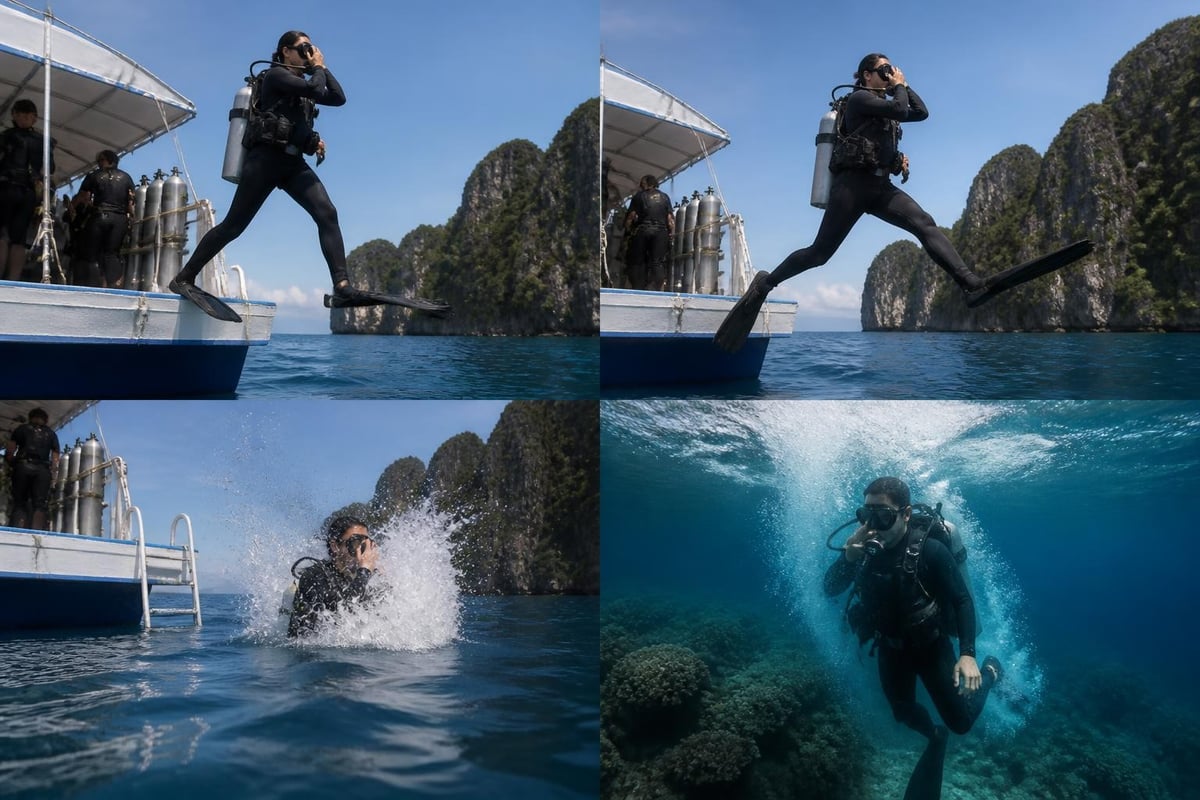
The giant stride remains the most common boat-entry technique for scuba divers worldwide. Standing at the edge of the dive platform with full gear, you take one confident step forward while bringing your other leg up to meet it, entering the water vertically with minimal splash.
Key elements of a proper giant stride:
- Hold your mask firmly against your face with one hand
- Secure your regulator with the same hand
- Keep your BCD inflator in the other hand
- Look straight ahead at the horizon, never down
- Step out confidently with authority
The beauty of this technique lies in its simplicity and effectiveness. When executed correctly, you enter cleanly, maintain control of your equipment, and surface immediately in a vertical position ready to signal the boat crew.
Backward Roll Entry
Smaller boats with low sides often require the backward roll method. Sitting on the gunwale with your back to the water, you simply roll backward in a tucked position, allowing momentum to carry you into the water.
This technique demands trust and practice. First-timers often hesitate, but the controlled roll becomes second nature after a few repetitions. The Discover Scuba Diving program provides excellent opportunities to practice this entry method under professional supervision in El Nido's calm bays.
| Entry Method | Best For | Skill Level | Conditions |
|---|---|---|---|
| Giant Stride | High platforms, dive boats | Beginner+ | Calm to moderate |
| Backward Roll | Small boats, low sides | Beginner+ | Calm to moderate |
| Controlled Seated Entry | Shore, docks, platforms | All levels | Any |
| Wade Entry | Shallow beaches | All levels | Calm |
Shore Entries and Wade-Ins
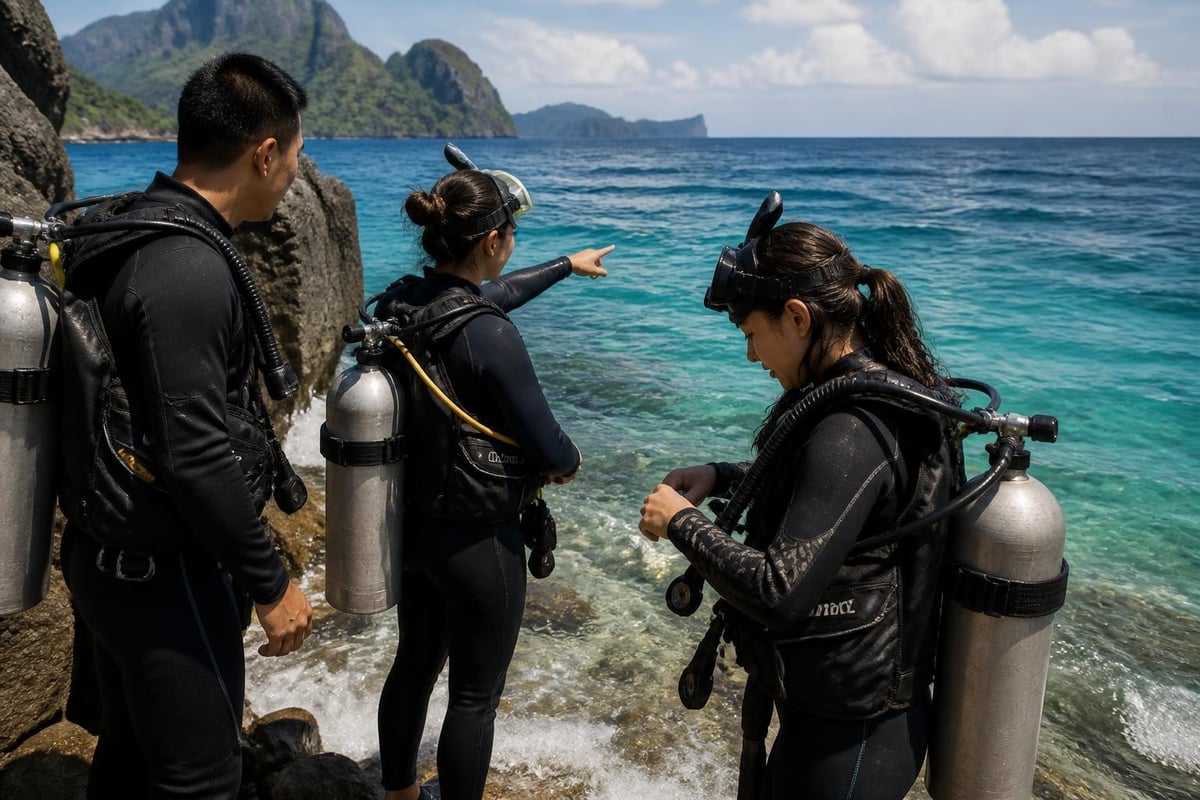
Diving into the water from shore requires different considerations entirely. Rocky entries, coral-sand beaches, and varying depths all influence your approach. The British Sub-Aqua Club’s shore diving guidance provides excellent safety protocols for beach entries.
Shore entry considerations:
- Survey the entry point thoroughly before gearing up
- Watch wave patterns for several minutes
- Plan your entry route and exit route
- Communicate clearly with your buddy
- Time your entry between wave sets
- Never turn your back on incoming waves
In Palawan, many spectacular dive sites feature shore access. Understanding tides and currents becomes essential when timing your entry and exit, particularly at sites with significant tidal flow.
Pre-Entry Safety Checks
The minutes before diving into the water represent your final opportunity to identify and correct equipment issues. Rushing this phase invites problems that could have been easily prevented.
The Buddy Check Process
Every dive begins with a thorough buddy check. This systematic review ensures both divers are properly configured and ready for the underwater environment.
Standard buddy check elements:
- BCD: Inflator connected, releases functional, proper fit
- Weights: Secured properly, quick-release accessible
- Releases: All clips, buckles, and releases working
- Air: Tank valve fully open, pressure checked, regulator breathing smoothly
- Final check: Mask, fins, computer, and all accessories secured
This simple acronym has prevented countless incidents. The Divers Alert Network’s incident data consistently shows that thorough pre-dive checks reduce preventable accidents significantly.
Environmental Assessment
Before diving into the water, experienced divers read environmental conditions carefully. Surface conditions often differ dramatically from what awaits underwater.
- Surface current direction and strength
- Wave height, frequency, and direction
- Visibility estimates from the surface
- Weather changes on the horizon
- Boat traffic and surface hazards

Physical Preparation for Water Entry
Your body's readiness matters as much as your equipment's readiness. Diving into the water with full scuba gear places immediate demands on your cardiovascular system and requires good physical conditioning.
Hydration and Thermal Considerations
Dehydration increases decompression sickness risk significantly. Many divers underestimate fluid loss in tropical environments like El Nido, where heat and humidity accelerate perspiration even before entering the water.
Drink water consistently throughout the morning before your dive. Avoid alcohol the night before and morning of diving. Watch for early dehydration signs: dark urine, headache, unusual fatigue.
Managing Pre-Dive Anxiety
Even experienced divers occasionally feel nervous before diving into the water. This natural response becomes problematic only when it interferes with proper procedure or decision-making.
Techniques for managing dive anxiety:
- Focus on your breathing, slow and deep
- Review your training mentally
- Trust your equipment and preparation
- Communicate any concerns to your buddy or instructor
- Remember that you can always postpone or cancel a dive
The professional instructors guiding dives around Palawan understand anxiety management well. They've helped thousands of divers work through pre-dive nerves to enjoy incredible underwater experiences.
Entry Technique Variations by Location
Different diving environments around El Nido and Palawan require adapted approaches to diving into the water safely and efficiently.
Boat Diving in El Nido's Waters
Traditional Filipino bangkas and modern dive boats both serve Palawan's diving community. Each vessel type presents unique entry considerations.
Bangka outriggers sit low to the water with narrow platforms. Divers typically use a controlled seated entry or modified backward roll. The boat's stability and crew positioning matter significantly when multiple divers enter simultaneously.
Purpose-built dive boats offer raised platforms perfect for giant strides. Their stability and space allow full gearing before entry. Many operations space entries to avoid crowding in the water.
Wall and Deep-Site Entries
When diving sites with dramatic underwater walls or immediate depth, diving into the water requires extra attention to buoyancy control. Descents often begin immediately after entry.
Wall-site entry protocol:
- Ensure your BCD has adequate air for positive buoyancy
- Enter the water with inflated BCD
- Confirm buddy positioning before deflating
- Begin controlled descent together
- Establish neutral buoyancy before approaching the wall
These sites showcase some of Palawan's most spectacular marine environments. Proper entry technique preserves your air supply and starts your dive calmly rather than in a rushed recovery from over-weighting or poor buoyancy.
Common Entry Mistakes and Solutions
Observing divers over years reveals patterns in common errors when diving into the water. Recognition helps prevention.
Equipment Issues at Entry
Problem: Mask flooding immediately upon entry
Solution: Press mask firmly during entry, exhale slightly through nose on impact
Problem: Regulator falls from mouth during entry
Solution: Keep regulator hand firmly in place, bite down on mouthpiece during entry
Problem: BCD over-inflation causing difficulty descending
Solution: Add only enough air for positive surface buoyancy, not maximum inflation
Problem: Weight belt slipping or shifting during entry
Solution: Ensure proper threading and secure buckling before approaching entry point
Physical Coordination Challenges
First-time divers often struggle with the physical coordination required when diving into the water wearing 15-20 kilograms of equipment. This normal learning curve improves rapidly with practice.
Balance differs significantly with scuba gear. Your center of gravity shifts backward with the tank. Fins extend your foot length considerably. The BCD and regulator restrict head movement. These factors combine to make simple walking feel awkward initially.
| Common Challenge | Cause | Solution |
|---|---|---|
| Loss of balance entering | Center of gravity shift | Wider stance, confident movement |
| Mask flooding | Insufficient pressure on entry | Firm mask hold, slight nose exhale |
| Regulator dislodgment | Loose grip or bite | Secure mouthpiece, hand pressure |
| Immediate submersion | Under-inflation | Check BCD inflation before entry |
| Difficulty gathering at surface | Poor finning | Practice surface swimming techniques |
Medical Considerations
Understanding your body's physiological response to diving into the water helps prevent serious medical issues. The comprehensive research on decompression illness emphasizes prevention through proper procedure.
Equalization and Sinus Health
Never dive with sinus congestion or ear blockage. The inability to equalize pressure can cause severe pain and permanent damage. When diving into the water with compromised sinus passages, even shallow depths become dangerous.
If you cannot equalize easily on the surface before descending, abort the dive. No dive site is worth risking ear barotrauma or sinus squeeze.
Cardiovascular Demands
The physical exertion of gearing up, walking in full equipment, and diving into the water elevates heart rate and blood pressure temporarily. Individuals with cardiovascular conditions should complete medical clearance before diving.
Pre-existing conditions don't necessarily preclude diving, but they do require medical consultation and often additional precautions. The Divers Alert Network’s medical guidance offers detailed information on fitness for diving.
Training Progressions for Entry Mastery
Learning proper technique for diving into the water follows a logical progression through professional training programs. Each certification level builds competence and confidence.
Beginner Training Focus
Initial scuba training emphasizes controlled entries in confined water before progressing to open water. Students practice each entry type repeatedly until muscle memory develops.
The confined water environment allows instructors to correct technique without environmental complications. Students learn to manage equipment, maintain buoyancy, and enter confidently before facing real-world conditions.
Advanced Skills Development
More experienced divers refine entry techniques for challenging conditions: surge, current, reduced visibility, and unfamiliar entry points. Advanced training incorporates decision-making about whether and how to enter under marginal conditions.
Night diving adds another dimension to entry considerations. Diving into the water in darkness requires excellent equipment familiarity and enhanced buddy awareness. Many divers discover that night entries feel more controlled than anticipated because they focus intensely on each step.
Environmental Responsibility
How we approach diving into the water affects the marine environment we've come to explore. Responsible entry technique protects fragile ecosystems while ensuring sustainable access to dive sites.
Reef and Bottom Protection
Shore entries near coral require extreme care. Never walk on living coral. Identify sand channels for entry and exit. Maintain neutral buoyancy immediately to avoid contact with the bottom.
Shallow reef entries demand particular attention. In areas with one to two meters of depth, even experienced divers must move slowly and maintain excellent control to avoid accidental damage.
Minimizing Disturbance
Large groups entering simultaneously can disturb marine life and reduce everyone's diving experience. Staggered entries allow animals to settle between disturbances and give each diver space to establish proper buoyancy and trim.
Palawan's rich marine biodiversity deserves our protection. Careful, controlled entries demonstrate respect for the underwater world we're privileged to visit. You can explore more about sustainable diving practices through educational resources.
Special Considerations for Palawan Diving
El Nido's unique geography and marine environment present specific factors when diving into the water at local sites.
Current Awareness
Several popular Palawan dive sites feature significant current. Understanding tidal flow patterns helps time entries for optimal conditions. Entering during slack tide provides easier descents and more relaxed diving.
When current is running, the entry technique matters even more. Divers must descend quickly to avoid surface drift away from the boat or intended dive site. Strong currents can separate buddies or carry divers past the anchor line if they delay descent.
Seasonal Weather Patterns
The northeast monsoon (November through April) brings Palawan's best diving conditions: calm seas, excellent visibility, and comfortable water temperatures. Diving into the water during these months rarely presents weather challenges.
The southwest monsoon (May through October) can create rougher surface conditions on exposed sites. Entries require more attention to wave timing and boat positioning. Many operators shift to protected sites during periods of sustained southwest winds.
Local Marine Life
El Nido's waters host creatures that require awareness during entry. Jellyfish occasionally drift through dive sites seasonally. Sea urchins cluster in shallow areas near some entry points. Simply watching where you place your hands and feet prevents most encounters.
The World Health Organization’s drowning prevention guidance emphasizes awareness of environmental hazards when entering water, principles equally applicable to scuba diving.
Emergency Procedures
Despite careful preparation, complications occasionally arise when diving into the water. Knowing appropriate responses prevents minor issues from becoming serious incidents.
Lost or Damaged Equipment
If your mask is knocked off during entry: Surface immediately, secure your mask, clear it properly, and signal you're okay before descending.
If you lose a fin on entry: Surface, alert your buddy, and decide whether to retrieve it or abort the dive. Never descend with only one fin.
If your regulator malfunctions immediately after entry: Switch to your alternate air source, establish buoyancy, signal the boat, and abort the dive for equipment inspection.
Medical Emergencies
Should a diver experience medical distress upon diving into the water-chest pain, severe cramping, disorientation, or breathing difficulty-immediate surface support and emergency response become critical.
Training includes emergency procedures for exactly these scenarios. Professional dive operations maintain oxygen, first aid equipment, and emergency communication systems. Understanding that recompression therapy exists as treatment for serious dive injuries provides important context, though prevention remains infinitely preferable to treatment.
Building Confidence Through Experience
Comfort with diving into the water develops gradually through repeated exposure under varying conditions. Each dive adds to your experience base and reinforces proper technique.
New divers often feel apprehensive before their first boat entries. This normal reaction fades as familiarity grows. By your tenth or twentieth entry, the process feels routine rather than intimidating.
Progressive confidence building:
- Start in calm, controlled conditions
- Practice each entry type multiple times
- Gradually increase environmental challenge
- Reflect on what worked well after each dive
- Identify specific areas for improvement
- Seek feedback from instructors and experienced divers
Many divers find that their confidence grows exponentially during certification courses and consolidates during their first dozen post-certification dives. Choosing well-organized dive operations that prioritize safety and proper procedure accelerates this learning curve.
Practical Tips from Palawan Diving Professionals
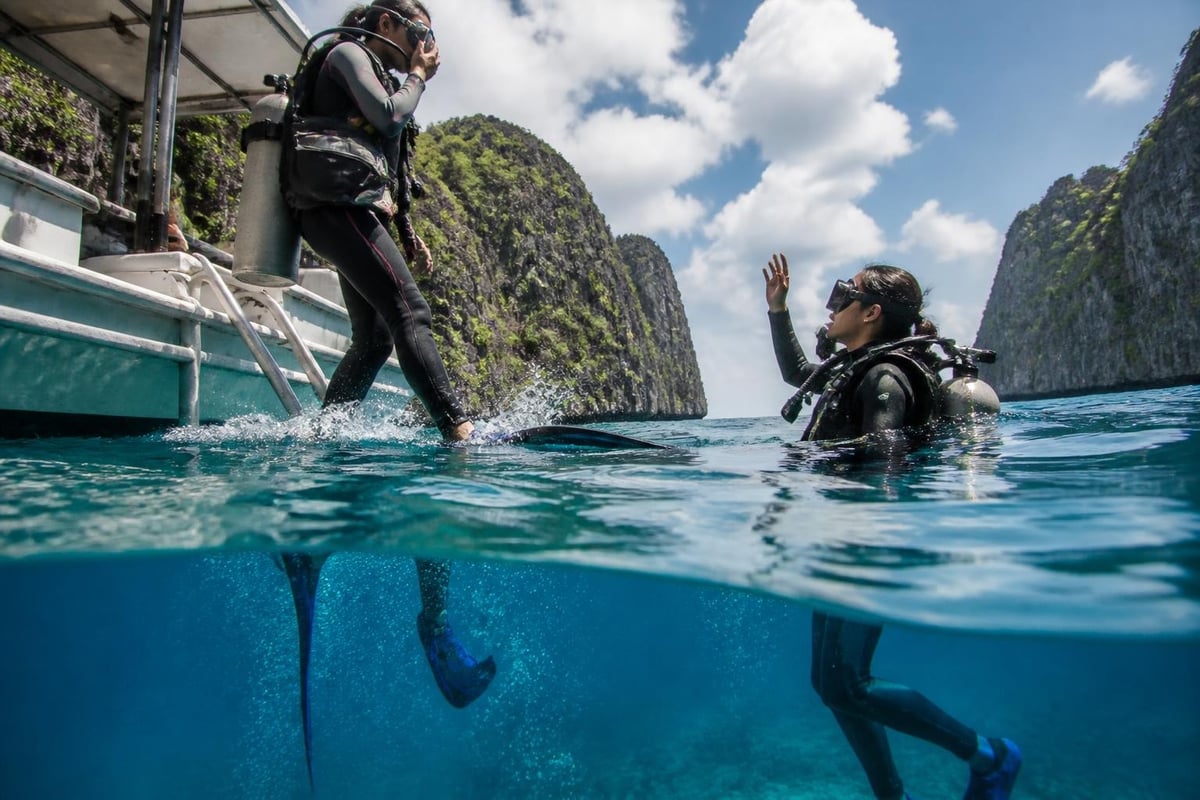
Decades of combined experience guiding divers in El Nido's waters have taught local professionals numerous practical insights about diving into the water safely and efficiently.
Experienced diver recommendations:
- Arrive at the dive boat well-rested and properly hydrated
- Complete your buddy check before the boat reaches the dive site
- Watch several divers enter before your turn to assess conditions
- Enter decisively rather than hesitating at the platform edge
- Establish positive buoyancy immediately and confirm buddy position
- Take a moment to relax and breathe normally before descending
- Never feel pressured to enter if you're uncomfortable with conditions
These simple practices prevent the majority of entry-related issues. They reflect accumulated wisdom from observing thousands of successful dives and learning from occasional incidents.
Year-Round Diving Opportunities
Palawan's tropical location provides diving into the water opportunities throughout 2026 and beyond. While seasonal variations affect conditions, skilled divers can enjoy El Nido's underwater world in every month.
Peak season delivers near-perfect conditions: calm seas, warm water, and exceptional visibility. Shoulder seasons offer fewer crowds and still-excellent diving. Even during the monsoon transition periods, protected sites remain accessible and reward divers with vibrant marine life.
Planning your diving holiday around personal schedule often matters more than chasing theoretical perfect conditions. Well-managed dive centers operate safely year-round by selecting appropriate sites for prevailing conditions.
Integration with Accommodation
Serious dive travelers increasingly value integrated accommodation and diving facilities. Staying beachfront where you can walk to your dive boat eliminates transportation hassles and maximizes diving time.
Modern dive resorts in El Nido combine comfortable lodging with professional dive centers, allowing you to wake up, have breakfast, and be diving into the water within an hour. This convenience particularly appeals to divers focused on maximizing bottom time during limited vacation days.
Some operations offer complete packages including accommodation, meals, and diving, simplifying planning and often providing better value than booking components separately.
Mastering the techniques for safely diving into the water transforms this critical moment from a source of anxiety into a confident, routine procedure. Whether entering from boats, shores, or platforms, proper technique protects you, your equipment, and the marine environment you've come to explore. When you're ready to experience El Nido's world-class diving with expert guidance and comprehensive support, Palawan Diving offers professional instruction, immaculate equipment, and intimate knowledge of the region's most spectacular sites. Start your underwater adventure with operators who prioritize safety, environmental responsibility, and unforgettable marine encounters.