The decision to learn diving opens a door to one of Earth's most extraordinary environments. Whether you've dreamed of exploring coral reefs, swimming alongside tropical fish, or discovering underwater landscapes, scuba certification transforms that dream into reality. In 2026, learning to dive is more accessible than ever, with structured training programs, experienced instructors, and world-class locations like El Nido, Palawan offering ideal conditions for beginners. This guide walks you through everything you need to know about starting your scuba journey, from choosing the right course to mastering essential skills in crystal-clear tropical waters.
Understanding Scuba Certification Levels
When you learn diving, you'll encounter several certification levels designed to build your skills progressively. The structure ensures safety while giving you freedom to explore at your own pace.
Entry-Level Certifications
Open Water Diver represents the foundation of recreational scuba diving. This globally recognized certification allows you to dive independently with a buddy to depths of 18 meters (60 feet). The course typically requires 3-4 days and combines theory, confined water practice, and open water dives.
Scuba Diver offers a shorter alternative, allowing you to dive under professional supervision to 12 meters. While more limited, it's perfect for vacation divers who want to try scuba without committing to a full Open Water course.
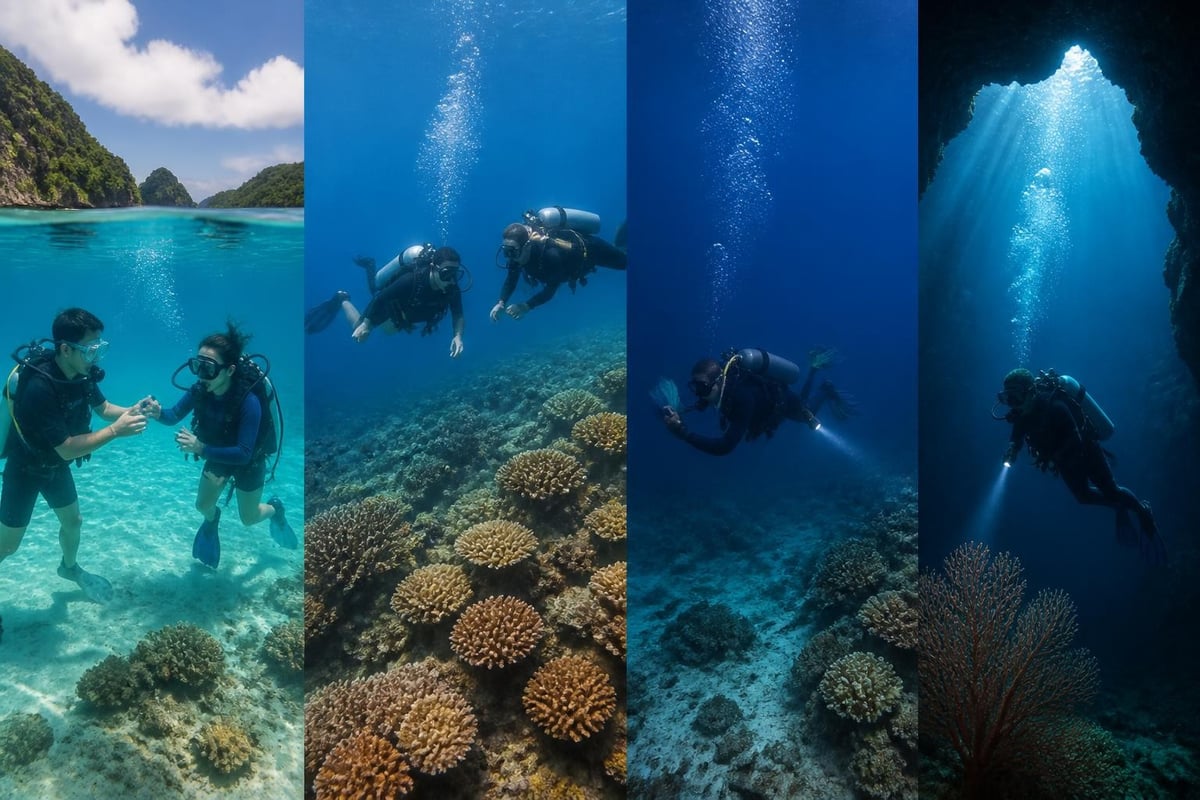
Before full certification, many beginners start with an introductory experience. These supervised shallow-water sessions let you try scuba equipment and basic skills before committing to a complete course.
Advanced Training Options
Once certified, you can expand your capabilities through continuing education:
- Advanced Open Water: Adds deep diving, navigation, and three specialty dives of your choice
- Rescue Diver: Develops problem-prevention and emergency-response skills
- Specialty Courses: Focus on specific interests like wreck diving, underwater photography, or nitrox
- Professional Levels: Divemaster and instructor certifications for those pursuing diving careers
The PADI certification FAQ provides detailed information about prerequisites, course structure, and certification outcomes for each level.
What Happens During Your Training
Learning to dive follows a proven three-part structure that builds confidence and competence systematically.
Knowledge Development
The academic component covers essential theory through self-paced online learning or classroom sessions. You'll study:
| Topic Area | Key Concepts |
|---|---|
| Physics | Pressure, buoyancy, and gas behavior underwater |
| Physiology | How diving affects your body, breathing, and circulation |
| Equipment | Proper use and maintenance of scuba gear |
| Environment | Marine life interaction and conservation practices |
| Planning | Dive tables, computers, and buddy procedures |
Modern courses blend video presentations, interactive quizzes, and knowledge reviews. Most students complete this portion in 8-12 hours at their own pace.
Confined Water Sessions
Pool training introduces scuba skills in a controlled environment. These sessions focus on equipment setup, breathing techniques, buoyancy control, and emergency procedures.
The PADI pool sessions guide explains what to expect during confined-water training. You'll practice skills repeatedly until they become automatic, starting in shallow water and progressing to deeper sections.
Essential skills you'll master include:
- Regulator recovery and clearing
- Mask clearing and removal
- Buoyancy control using your BCD
- Safe ascent and descent procedures
- Emergency sharing of air supplies
- Navigation using compass and natural references
Open Water Dives
The final phase takes your skills into the real ocean environment. Four open water dives (or more, depending on your course) apply everything you've learned in actual diving conditions.
For those ready to take the next step beyond an introductory dive, the Open Water Diver Course in El Nido combines small class sizes with experienced instructors and some of the Philippines' clearest waters, making it an ideal environment to build confidence during your certification dives.
These certification dives typically reach depths between 5 and 18 meters, gradually increasing as your confidence grows. You'll demonstrate skills, explore marine life, and experience the freedom of underwater breathing in a natural setting.
Choosing Where to Learn Diving
Location dramatically impacts your learning experience. The right environment makes skills easier to master and creates positive memories that fuel your diving passion.
Tropical vs. Temperate Waters
Tropical destinations offer significant advantages for beginners:
- Water temperatures of 27-29°C (80-84°F) require minimal thermal protection
- Excellent visibility (often 15-30 meters) helps you see your instructor and surroundings
- Calm conditions and gentle currents reduce stress for first-time divers
- Abundant marine life makes every dive engaging and memorable
Temperate waters provide valid training but require thicker wetsuits or drysuits, which add complexity for beginners still mastering buoyancy control. Limited visibility can make communication and skill demonstration more challenging.
Why El Nido Excels for Training
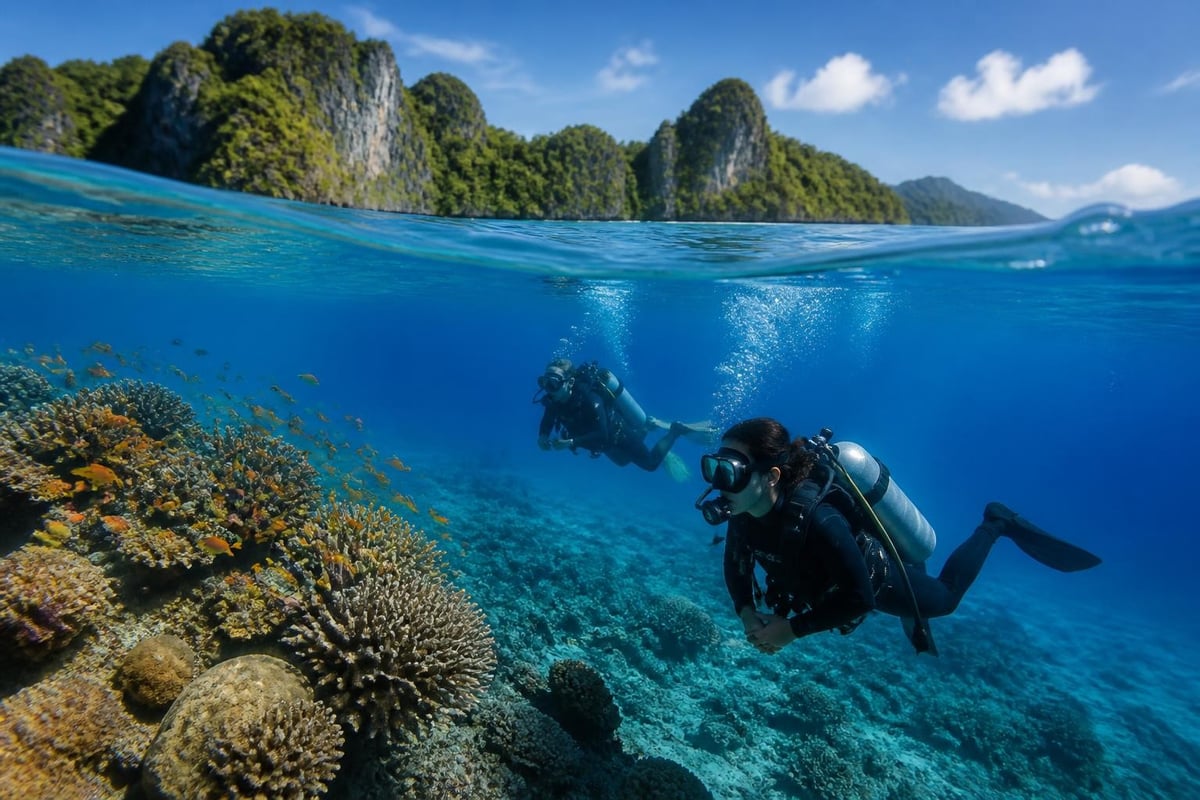
El Nido, Palawan has earned its reputation as an exceptional location to learn diving for several practical reasons. The sheltered bays provide naturally calm conditions, while the diverse depth ranges accommodate progression from shallow skills practice to deeper certification dives.
Water clarity in El Nido regularly exceeds 20 meters, allowing students to maintain visual contact with instructors throughout training. The variety of marine life keeps students engaged without overwhelming them, creating positive associations with the underwater environment from day one.
The beginner’s guide to diving in El Nido provides detailed information about local conditions, seasonal considerations, and what makes this region particularly suitable for first-time divers.
Health and Fitness Requirements
Scuba diving is accessible to most healthy individuals, but certain medical conditions require evaluation before you learn diving.
Medical Screening
All training agencies require students to complete a medical questionnaire before starting a course. The form asks about conditions that might affect your ability to dive safely:
- Respiratory issues: Asthma, collapsed lung, or chronic breathing problems
- Cardiovascular conditions: Heart disease, high blood pressure, or circulation disorders
- Ear and sinus problems: Chronic congestion, surgery, or equalization difficulties
- Neurological concerns: Seizures, migraines, or loss of consciousness
- Diabetes: Requires careful management and medical clearance
If you answer yes to any question, you'll need written clearance from a physician familiar with diving medicine before starting training. The DAN medical fitness guidelines provide authoritative recommendations for medical screening.
Physical Fitness Expectations
You don't need to be an athlete to learn diving, but reasonable fitness helps. Students should be able to:
- Swim 200 meters continuously (any stroke) or 300 meters with mask, fins, and snorkel
- Tread water or float for 10 minutes
- Carry basic scuba equipment (approximately 15-20 kg) short distances
- Climb a boat ladder while wearing equipment
These requirements ensure you can handle normal diving situations comfortably. If you have concerns about meeting these standards, speak with your instructor about options for additional support or preparation.
Essential Skills You'll Master
Learning to dive means developing both physical skills and mental awareness. These competencies build progressively throughout your training.
Core Physical Skills
Buoyancy control stands as the most important skill for comfortable, safe diving. You'll learn to achieve neutral buoyancy-neither sinking nor floating-using your BCD and breathing. Proper buoyancy protects marine life, reduces air consumption, and prevents uncontrolled ascents.
Regulator skills ensure you can breathe reliably underwater. Training covers normal breathing techniques, recovering a regulator that's been displaced, and clearing water from the mouthpiece. You'll also practice sharing air with a buddy in simulated emergency situations.
Equalization techniques prevent ear discomfort as pressure increases during descent. Most students learn the Valsalva maneuver initially, though instructors introduce alternative methods for those who find it difficult.
Mental and Awareness Skills
Successful divers develop strong situational awareness, constantly monitoring depth, air supply, bottom time, and their buddy's location. You'll learn to:
- Plan dives based on limits and conditions
- Communicate effectively using hand signals
- Recognize and prevent problems before they become emergencies
- Make conservative decisions that prioritize safety
- Respect marine environments and practice minimal-impact diving
The NAUI learn to dive overview describes skill progression and what beginners can expect from structured scuba instruction across all training levels.
Equipment and What You'll Need
Understanding scuba equipment removes mystery and builds confidence as you learn diving. While dive centers provide gear during training, knowing each component's function helps you become a safer, more capable diver.
Essential Scuba Equipment
| Equipment | Function | Notes for Beginners |
|---|---|---|
| Mask | Provides air space for vision | Personal fit is crucial; try several styles |
| Fins | Efficient underwater propulsion | Open-heel with boots offers versatility |
| Snorkel | Surface breathing without air | Basic J-style works well for most students |
| Regulator | Delivers air from tank at ambient pressure | Training equipment provided; learn proper breathing |
| BCD | Buoyancy control device | Jacket or back-inflate styles available |
| Dive Computer | Tracks depth, time, and decompression limits | Rental available; consider purchasing after certification |
| Wetsuit | Thermal protection | 3mm suits work well in El Nido's warm water |
| Weight System | Counteracts buoyancy | Proper weighting learned during training |
What to Bring to Training
Most students purchase personal items (mask, snorkel, fins) before or during their course, as proper fit significantly impacts comfort. All other equipment is provided during training.
Recommended personal items for training days:
- Swimsuit and towel
- Reef-safe sunscreen
- Water bottle for hydration
- Light snacks for surface intervals
- Motion sickness medication if needed
- Log book (usually provided by your instructor)
Conservation and Responsible Diving
Modern scuba training integrates environmental awareness from the beginning. Learning to dive includes understanding your role in protecting underwater ecosystems.
Minimal-Impact Diving Practices
Buoyancy control protects fragile coral and marine life from damage. Properly weighted, neutral divers avoid accidental contact with the bottom or marine organisms. This skill takes practice but becomes second nature with experience.
Look but don't touch applies to all marine life. Handling animals causes stress, disrupts natural behaviors, and can damage protective mucus layers. Photography provides lasting memories without impacting wildlife.
The Project AWARE resources offer practical guidance for conservation-minded diving and participation in citizen science activities.
Supporting Marine Protection
New divers can contribute to ocean health through informed choices:
- Use reef-safe sunscreen that doesn't contain oxybenzone or octinoxate
- Avoid single-use plastics during dive trips
- Participate in underwater cleanups when opportunities arise
- Support dive operators who follow sustainable practices
- Report marine debris or unusual sightings to conservation organizations
Understanding why Palawan ranks as the Philippines’ top dive destination includes recognizing the conservation efforts that maintain these pristine underwater environments.
Overcoming Common Beginner Concerns
Most people considering scuba have legitimate questions and concerns. Addressing these honestly helps you make informed decisions about learning to dive.
"I'm worried about breathing underwater"
This ranks as the most common concern among beginners. The sensation feels unnatural initially, but humans adapt remarkably quickly. Training introduces underwater breathing gradually, starting in shallow water where you can easily stand up if needed.
Regulators deliver air on demand with each breath. You'll discover that breathing underwater is actually easier than swimming at the surface because you don't need to time breaths between waves.
"What about sharks or dangerous marine life?"
Popular media dramatically overstates marine life risks. In reality, most underwater creatures avoid divers. El Nido's reefs host abundant fish life, occasional turtles, and reef sharks (which are naturally cautious around humans).
Your training covers proper behavior around marine life: maintain distance, move slowly, avoid sudden gestures, and never corner or chase animals. These simple practices ensure safe, respectful wildlife encounters.
"I have trouble equalizing pressure"
Ear equalization challenges affect many beginners, but instructors teach multiple techniques beyond the standard Valsalva method. Descending slowly, equalizing frequently (every meter), and trying different techniques usually solves the issue.
In rare cases where equalization remains difficult, some students need evaluation by an ear, nose, and throat specialist. Most equalization challenges resolve with practice and proper technique.
Understanding Nitrogen Narcosis
As you progress beyond basic certification, you'll learn about nitrogen narcosis-an intoxication-like effect that can occur at depth. The NCBI review on nitrogen narcosis provides medically reviewed information about physiology and safety implications relevant to advancing divers.
Time and Cost Considerations
Understanding the investment required to learn diving helps you plan appropriately and choose the right course structure.
Course Duration Options
Standard pace (3-4 days) works well for most students who can dedicate consecutive days to training. This structure maintains momentum and allows skills to build naturally without long gaps between sessions.
Flexible scheduling spreads training over a week or more, accommodating other vacation activities or work commitments. This works particularly well for families or groups with varying schedules.
Referral programs let you complete theory and pool work at home, then finish open water dives at a destination like El Nido. This maximizes vacation time spent actually diving rather than in classrooms.
Investment Expectations
Course fees typically include instruction, equipment rental, certification processing, and boat costs for open water dives. Materials (online learning access or books) may be separate.
Additional costs to consider:
- Personal equipment purchases (mask, fins, snorkel)
- Accommodation near quality dive centers
- Additional fun dives after certification to build experience
- Travel and meals during training days
- Optional specialty courses or continuing education
Many dive operators offer package deals that combine accommodation with training, often representing better value than booking components separately.
Making the Most of Your Training
Your attitude and preparation significantly impact how much you gain from learning to dive.
Pre-Course Preparation
Physical preparation helps you feel comfortable in the water. If you're not a confident swimmer, take swimming lessons before scuba training. Practice basic snorkeling to get used to breathing through a tube and clearing water from your snorkel.
Mental preparation involves reviewing course materials before confined water sessions. Most agencies provide online access to videos and reading materials weeks before your course starts. Familiarizing yourself with concepts beforehand makes practical sessions more productive.
During Training
Ask questions whenever something isn't clear. Instructors expect questions from beginners and appreciate students who seek understanding rather than nodding along in confusion.
Practice makes permanent. During pool sessions, repeat skills until they feel natural. If you struggle with a particular skill, request additional practice time. Quality instructors will work with you until you're comfortable.
Stay relaxed and breathe slowly. Many beginners hold their breath unconsciously or breathe rapidly when stressed. Conscious, rhythmic breathing improves air consumption, buoyancy control, and overall comfort.
Post-Certification
Continue diving soon after certification. Skills fade without practice. Many instructors recommend completing 10-20 dives within your first year to solidify what you've learned.
Consider additional training relatively soon. The Advanced Open Water course adds valuable skills (particularly deep diving and navigation) that make you a more versatile, confident diver.
Keep a log book documenting every dive-location, conditions, depth, time, marine life sightings, and personal notes. This record tracks your progression and helps you remember favorite sites worth revisiting.
Beyond Recreational Diving
While most students learn diving for recreation, scuba skills open doors to various professional and specialized applications.
Career Pathways
Professional diving careers include:
- Dive instruction: Teach others to dive at resorts, aboard liveaboards, or at local dive centers
- Underwater photography: Document marine life for publications, conservation, or commercial clients
- Marine science: Conduct research, monitoring, and conservation work
- Commercial diving: Inspection, construction, and maintenance work in various industries
The GDI Scientific Diving Manual details training standards and course content for those interested in academic or scientific diving applications.
Freediving Alternatives
Some students discover interest in breath-hold diving, which offers different challenges and rewards than scuba. The AIDA 1 guidelines outline current curriculum and safety guidance for beginner freediving students.
Both disciplines teach respect for the underwater environment, proper breathing techniques, and buddy safety procedures, though equipment and depth limits differ significantly.
Finding the Right Instructor and Dive Center
Your instructor significantly influences your learning experience and long-term diving enjoyment. Choose carefully based on more than just price.
Key Selection Criteria
Instructor-to-student ratios matter enormously for learning quality. Maximum ratios are typically 4:1 in confined water and 8:1 in open water, but smaller groups (2:1 or private instruction) provide more personalized attention.
Experience and specialization in teaching beginners indicates instructors who understand common challenges and communicate effectively with nervous students. Ask about instructor certifications, years teaching, and total students certified.
Equipment quality and maintenance reflects overall operational standards. Well-maintained, properly fitting gear makes learning easier and safer. Modern, regularly serviced equipment suggests professional operations.
Questions to Ask Prospective Dive Centers
- What's your maximum student-to-instructor ratio for my course?
- Where will we conduct open water dives, and what are conditions typically like?
- What's included in the course fee, and what costs extra?
- What happens if I need extra time to master a skill?
- How do you handle seasickness or medical concerns during training?
- What continuing education options do you offer after certification?
Visit Submariner Diving’s contact page to ask specific questions about training options, scheduling, and local diving conditions in El Nido.
Learning to dive represents an investment in lifelong adventure, opening access to environments and experiences impossible to enjoy any other way. With proper training from qualified instructors, appropriate health screening, and practice in quality conditions, scuba diving becomes a safe, rewarding activity that connects you with nature in profound ways. Whether you're drawn to vibrant reefs, curious marine life, or the meditative calm of weightless breathing underwater, starting your scuba journey in locations like El Nido sets you up for success. Ready to take the plunge? Submariner Diving offers professional PADI courses, experienced instructors, and El Nido's crystal-clear waters-an ideal combination for beginning your underwater adventures with confidence and proper guidance.