Learning to snorkel opens an entirely new world beneath the waves, and a snorkeling class provides the foundation for safe, confident exploration of marine environments. Whether you're planning your first trip to El Nido's crystal-clear waters or hoping to improve your technique before exploring Palawan's vibrant reefs, structured instruction makes all the difference. A quality program teaches more than just breathing through a tube-it builds water confidence, introduces marine awareness, and instills practices that protect both you and the underwater ecosystems you'll visit.
Why Take a Snorkeling Class Instead of Learning on Your Own
Many people assume snorkeling requires no formal instruction, but a structured snorkeling class addresses critical skills that self-taught snorkelers often miss. Proper breathing techniques, efficient fin kicks, and mask-clearing procedures aren't intuitive-they're learned behaviors that prevent panic and conserve energy in the water.
Structured programs typically cover:
- Equipment selection, fitting, and maintenance
- Breathing rhythm and tube-clearing methods
- Surface swimming techniques and body positioning
- Mask-clearing and water-entry procedures
- Marine-life identification and reef etiquette
- Safety protocols and buddy-system fundamentals
Beyond technical skills, instructors provide real-time feedback that accelerates learning. They spot inefficient movements, correct potentially dangerous habits, and build your confidence in controlled conditions before you venture into open water. This guidance proves especially valuable in tropical destinations like El Nido, where strong currents, varying visibility, and unfamiliar marine environments can challenge even experienced swimmers.
The American Red Cross offers comprehensive water-safety resources that many snorkeling programs incorporate into their curricula, ensuring participants understand both personal safety and environmental responsibility.
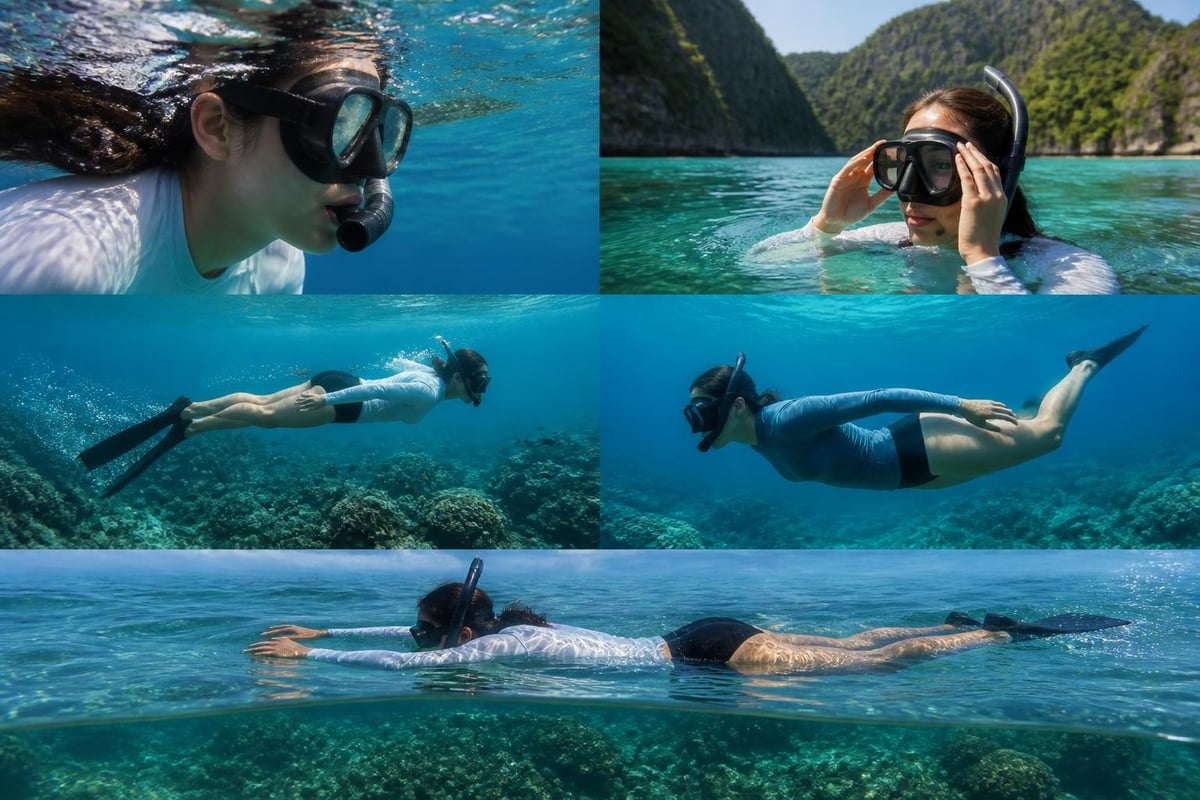
Understanding Different Types of Snorkeling Classes
Not all snorkeling instruction follows the same format. Programs range from quick resort orientations to multi-day certification courses, each serving different needs and experience levels.
Resort and Hotel Orientations
Many beachfront properties offer complimentary snorkeling briefings for guests. These 30-60 minute sessions typically cover basic equipment use and local site information but rarely include in-water instruction. They work well for confident swimmers who need only location-specific guidance about currents, entry points, and marine hazards.
Beginner Snorkeling Classes
Dedicated beginner programs run 2-4 hours and include both pool or shallow-water practice and guided open-water experience. Instructors work with small groups (typically 4-6 participants) to ensure everyone masters fundamentals before progressing to reef environments.
| Program Component | Duration | Focus Area |
|---|---|---|
| Equipment fitting and theory | 20-30 min | Proper gear selection and adjustment |
| Confined water skills | 45-60 min | Breathing, clearing, swimming technique |
| Open water supervision | 60-90 min | Guided reef exploration with coaching |
Advanced and Specialty Programs
Some operators offer specialty snorkeling courses focused on marine biology, underwater photography, or free-diving fundamentals. These programs assume basic competency and build specific skills for participants with clear goals-whether that's identifying fish species, capturing underwater images, or extending breath-hold duration for deeper exploration.
For those considering moving beyond snorkeling altogether, exploring scuba diving programs represents a natural progression. The Discover Scuba Diving experience provides an ideal introduction for snorkelers curious about breathing underwater and exploring greater depths around El Nido's spectacular dive sites.
Essential Skills Covered in a Quality Snorkeling Class
A comprehensive snorkeling class addresses both physical technique and knowledge-based competencies that keep you safe and comfortable in marine environments.
Equipment Mastery
Mask skills form the foundation:
- Selecting proper mask size and fit
- Creating an effective seal without over-tightening
- Clearing water from the mask without surfacing
- Preventing and managing mask fog
- Recognizing when replacement is necessary
Snorkel technique includes proper mouthpiece positioning, breathing rhythm development, and both blast and displacement clearing methods. Quality programs teach participants to remain calm when water enters the tube and to clear it efficiently without panic.
Fin selection and use receives less attention than it deserves. Instructors demonstrate how different fin styles affect propulsion, teach efficient flutter and frog kicks, and explain how proper finning protects both the snorkeler's energy reserves and the fragile reef below.
Water Entry and Surface Skills
Different environments require different entry methods. A good snorkeling class covers:
- Beach entries through surf zones
- Boat entries using ladders or giant-stride techniques
- Rocky-shore entries with surge considerations
- Platform and pier entries with depth awareness
Surface swimming posture affects both safety and efficiency. Instructors teach streamlined positioning that minimizes drag, proper head angle for comfortable breathing, and relaxed arm positioning that conserves energy during extended sessions.
Marine Awareness and Conservation
The best programs integrate environmental education throughout instruction. Students learn to identify common marine species, understand reef ecosystems, and practice reef-friendly behaviors that minimize their impact on sensitive environments.
The Reef Environmental Education Foundation provides excellent resources for incorporating citizen-science elements into snorkeling education, teaching participants to observe and document marine life in ways that contribute to conservation efforts.
Choosing the Right Snorkeling Class for Your Needs
Selecting appropriate instruction requires honest assessment of your swimming ability, comfort level in water, and specific goals for learning.
Consider these factors:
- Current swimming competency: Can you comfortably swim 200 meters without stopping?
- Water confidence level: How comfortable are you in deep water or conditions with limited visibility?
- Physical fitness: Do you have the stamina for 60-90 minutes of continuous swimming?
- Previous water-sport experience: Have you tried bodyboarding, surfing, or kayaking?
- Medical considerations: Do you have breathing difficulties, ear problems, or conditions affecting water activities?
Instructor Qualifications and Experience
Quality instructors hold certifications from recognized organizations and possess extensive local knowledge. Look for programs where instructors:
- Maintain current CPR and first-aid certification
- Have water-safety instructor (WSI) or equivalent credentials
- Know local marine conditions, seasonal variations, and site-specific hazards
- Speak your language fluently enough to explain technical concepts
- Maintain appropriate instructor-to-student ratios (ideally 1:6 or better)
Location-Specific Considerations in El Nido
El Nido's unique marine environment presents both opportunities and challenges for snorkeling instruction. The area's protected lagoons and calm bays provide ideal learning conditions, while nearby walls and channels offer progression sites for building skills.
Local programs benefit from year-round warm water (26-29°C), excellent visibility during dry season (November through May), and diverse marine ecosystems within short boat rides. However, seasonal monsoons, occasional strong currents, and varying surge conditions mean that instructor familiarity with local sites proves essential.
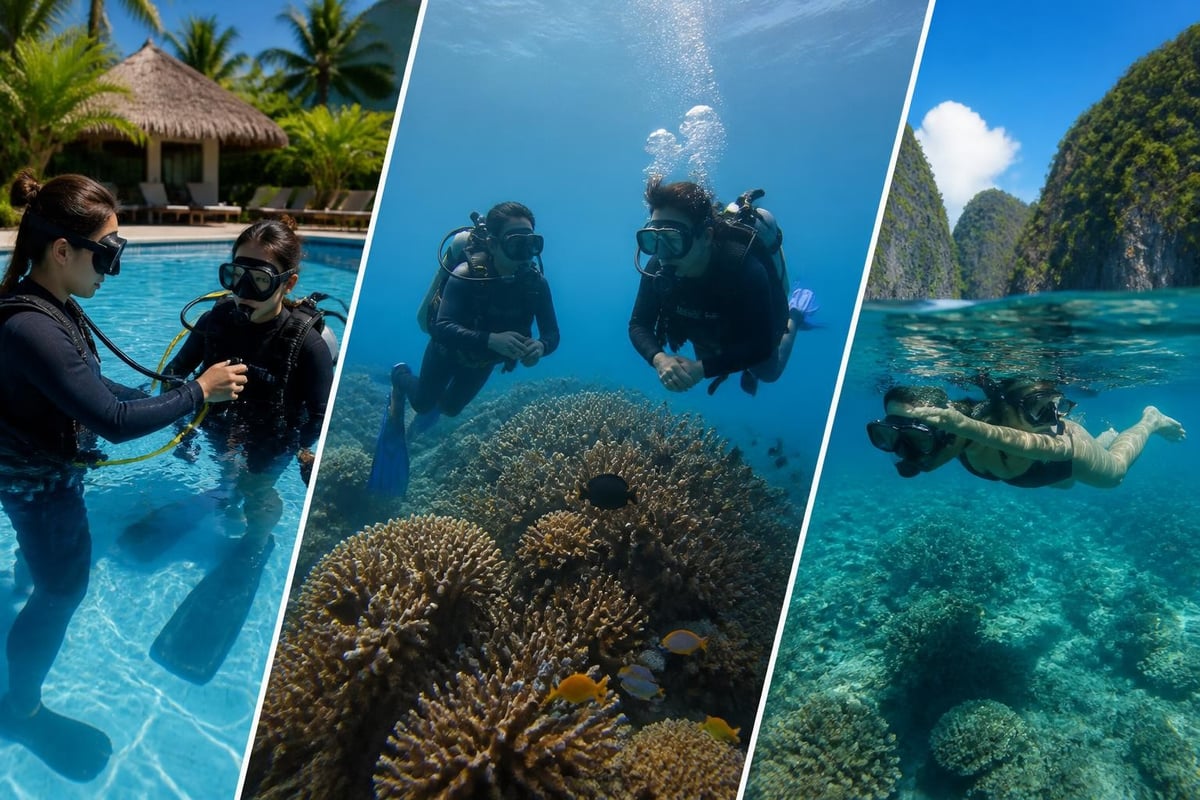
What to Expect During Your First Snorkeling Class
Understanding the typical structure of a beginner snorkeling class helps manage expectations and prepare mentally for the experience.
Pre-Class Preparation
Most programs request that you arrive 15-20 minutes early for paperwork completion. You'll sign a liability waiver, complete a basic health questionnaire, and receive an overview of the day's schedule. Bring reef-safe sunscreen, a towel, and any prescription masks if needed-though quality operators provide well-maintained rental equipment.
Confined Water Session
The first in-water portion occurs in a pool, shallow bay, or protected lagoon where you can stand if needed. This segment typically runs 45-60 minutes and focuses on fundamental skills in a controlled environment.
You'll practice:
- Proper mask fitting and seal testing
- Breathing through the snorkel while face-down
- Clearing water from the snorkel using both methods
- Removing and replacing the mask underwater
- Basic fin techniques and body positioning
- Hand signals for underwater communication
Instructors work individually with participants who need extra support while others practice independently. This personalized attention ensures everyone achieves basic competency before moving to open water.
Open Water Experience
Once the group demonstrates confined-water proficiency, the class moves to a nearby reef or natural snorkeling site. This 60-90 minute session puts skills into practice while exploring actual marine environments under close supervision.
Your instructor leads the group in a tight formation, regularly checking each participant and pointing out marine life. They'll demonstrate proper approaches to marine animals, show how to manage currents, and model non-destructive interaction with the reef environment. This guided experience builds confidence while ensuring safety and environmental protection.
Building Skills Beyond the Basic Snorkeling Class
Completing a beginner program opens pathways for continued skill development and specialized training.
Marine Biology and Identification
Advanced classes often incorporate marine-life identification, teaching participants to recognize common fish families, understand reef ecology, and distinguish between similar species. These programs transform casual snorkeling into active learning, making each water session more engaging and educational.
The National Park Service snorkeling resources provide excellent supplementary materials for building identification skills and understanding marine ecosystems beyond your initial class.
Photography and Documentation Skills
Underwater photography classes teach snorkelers to capture their experiences while maintaining proper buoyancy and reef distance. Instruction covers camera settings, composition techniques, lighting challenges, and ethical approaches to marine-life photography that prioritize animal welfare over the perfect shot.
Free-Diving Fundamentals
For snorkelers interested in diving deeper and staying down longer, free-diving courses build breath-hold capacity, teach equalization techniques for pressure management, and develop skills for underwater maneuvering without scuba equipment. These programs require strong snorkeling foundations and good cardiovascular fitness.
Safety Protocols and Emergency Procedures
Responsible snorkeling instruction dedicates significant time to safety awareness and emergency response.
Buddy System Implementation
| Buddy Responsibility | Description | Check Frequency |
|---|---|---|
| Visual contact | Maintain sight of your partner | Every 30-60 seconds |
| Equipment monitoring | Watch for gear problems or difficulty | Continuous during activity |
| Assistance readiness | Be prepared to provide immediate support | Always |
| Communication | Use agreed signals, stay within earshot | Ongoing |
Quality programs emphasize that the buddy system isn't optional-it's the primary safety mechanism for recreational snorkeling. Instructors teach participants to choose compatible buddies, establish pre-dive plans, and maintain discipline about staying together even when distracted by marine life.
Environmental Hazard Recognition
Classes address site-specific hazards that snorkelers encounter in tropical waters. In El Nido and throughout Palawan, these include:
- Current assessment: Learning to read surface conditions, understand tidal influences, and recognize when conditions exceed your skill level
- Marine-life awareness: Identifying potentially dangerous species (jellyfish, sea urchins, lionfish) and maintaining safe distances
- Boat traffic: Understanding vessel approach routes, sound recognition, and surface signaling in areas with active boat activity
- Weather changes: Recognizing approaching storms, understanding how weather affects conditions, and knowing when to exit the water
Emergency Response Basics
Every snorkeling class should cover fundamental emergency procedures including distress signaling, proper flotation techniques when tired or cramping, and basic rescue assists for helping a struggling buddy. Advanced programs often include simulated emergency scenarios where participants practice these skills under instructor supervision.
Ocean conservation awareness extends to emergency response, teaching snorkelers to avoid damaging reefs when dealing with difficulties and to use proper techniques that protect both themselves and the marine environment.
Integrating Snorkeling Skills with Scuba Diving Exploration
Many snorkelers eventually become curious about scuba diving, and the skills developed in a quality snorkeling class transfer directly to diving fundamentals. Comfort with masks, breathing techniques, fin propulsion, and marine awareness all support the transition to breathing underwater with scuba equipment.
El Nido's remarkable underwater landscapes include walls, channels, and reef systems that extend well beyond snorkeling depths. While surface exploration reveals incredible marine diversity, scuba certification unlocks access to completely different ecosystems in the same location. The skills and water confidence built during your snorkeling class provide the perfect foundation for scuba instruction.
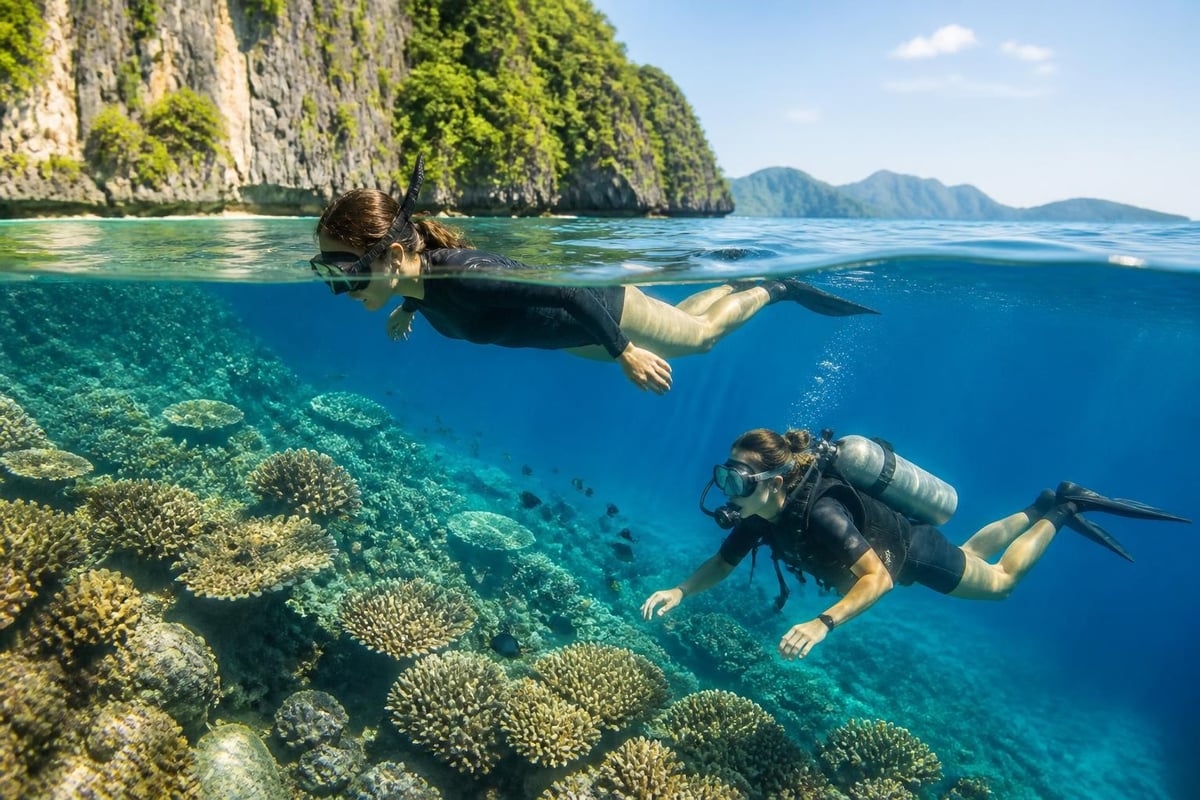
Maintaining Skills and Continuing Your Snorkeling Education
Skills deteriorate without practice, making regular water time essential for maintaining the competencies learned in your snorkeling class.
Recommended practice schedule:
- Within two weeks of class: Snorkel at least twice to reinforce new skills
- Monthly during active season: Regular sessions maintain muscle memory and comfort
- Pre-trip refreshers: Review key skills before any significant snorkeling trip
- Annual skill assessment: Revisit fundamentals each year to identify areas needing improvement
Many experienced snorkelers benefit from occasional refresher sessions with instructors, particularly before trips to challenging environments or after extended breaks from the water. These brief tune-ups correct bad habits that may have developed and update knowledge about equipment advances or changed best practices.
Local marine environments provide the best practice venues. In El Nido, diverse snorkeling sites offer conditions ranging from calm, shallow lagoons perfect for skill maintenance to more challenging locations that push your abilities and build confidence. Regular exploration of familiar sites also develops your marine-identification skills and deepens your connection to local ecosystems.
Environmental Responsibility and Reef Protection
Every quality snorkeling class should emphasize environmental stewardship as a core component of marine recreation. Understanding your impact on reef ecosystems and adopting protective practices ensures these remarkable environments survive for future snorkelers to enjoy.
Reef-friendly practices include:
- Maintaining neutral buoyancy without standing on or grabbing coral
- Using only reef-safe sunscreen that doesn't contain harmful chemicals
- Observing marine life from appropriate distances without harassment
- Never feeding fish or altering natural behaviors
- Participating in beach cleanups and removing trash encountered while snorkeling
- Supporting conservation-focused operators and marine-protected areas
The NOAA sanctuary educational resources provide excellent materials for understanding marine-protection efforts and learning how individual actions contribute to broader conservation goals. Many snorkeling programs incorporate these resources into their instruction, connecting participants to the larger movement of ocean stewardship.
Beyond passive protection, many snorkelers become active conservation advocates. Programs exist throughout Palawan where trained volunteers participate in reef monitoring, document marine-life populations, and contribute data to scientific research. Your snorkeling class represents the first step toward potentially meaningful involvement in marine conservation.
Planning Your Snorkeling Education in El Nido
El Nido's position as a premier marine destination makes it an exceptional location for snorkeling instruction. The area's protected bays provide ideal learning conditions, while nearby reefs offer progression opportunities as skills develop.
When planning your snorkeling class in the area, consider timing your visit during the dry season (November through May) for optimal visibility and calm conditions. Water temperatures remain comfortable year-round, but monsoon-season wind and rain can limit access to the best sites and reduce learning opportunities.
Quality instruction requires dedicated time-plan at least a half-day for comprehensive beginner classes, and consider building several days into your itinerary for practice and skill consolidation. The most effective learning combines formal instruction with independent practice, allowing you to apply new skills while memories remain fresh.
Local operators offering integrated accommodation and water-sports instruction provide convenience and continuity. Staying at beachfront properties where your snorkeling class launches directly from shore eliminates transportation hassles and allows for spontaneous practice sessions when conditions are ideal.
A well-structured snorkeling class transforms an intimidating experience into confident exploration, giving you the skills and knowledge to safely enjoy Palawan's remarkable underwater world. Whether you're preparing for your first ocean swim or refining techniques developed through casual practice, quality instruction accelerates your learning and deepens your connection to marine environments. Palawan Diving offers comprehensive programs for snorkelers ready to expand their underwater adventures, from surface exploration to full scuba certification in El Nido's crystal-clear waters-reach out to discover which program matches your goals and experience level.