Choosing the dive spot for your next underwater adventure shapes the entire experience. Whether you're planning your first ocean descent or adding another site to your logbook, understanding what makes a location suitable for your skills, interests and comfort level ensures a safe, rewarding dive. From current strength and visibility to marine biodiversity and accessibility, every element contributes to whether a site becomes a highlight or a challenge. In El Nido's crystal-clear waters, where coral gardens meet dramatic walls and sheltered bays host vibrant reefs, knowing how to assess and select the dive spot that fits your profile turns a good trip into an unforgettable one.
Understanding What Makes the Dive Spot Right for You
Not all dive sites suit every diver. The dive spot that excites an experienced technical diver might overwhelm a newly certified beginner, while a shallow bay perfect for training could bore someone seeking adrenaline and big pelagics.
Skill Level and Certification Limits
Your certification card defines your depth and environment boundaries. Open Water divers are trained to 18 meters, Advanced divers to 30 meters, and deeper specialties extend those limits further with proper training and experience.
Key certification considerations:
- Maximum depth rating for your level
- Required specialties (wreck, deep, drift)
- Supervised vs. independent diving privileges
- Environmental experience (current, surge, low visibility)
Beyond the card, honest self-assessment matters more. If you've logged only a handful of dives since certification, the dive spot with strong currents and deep walls isn't the wise choice, even if technically within your rating. Competence grows with practice, and choosing sites that gently stretch your abilities builds confidence and skill safely.
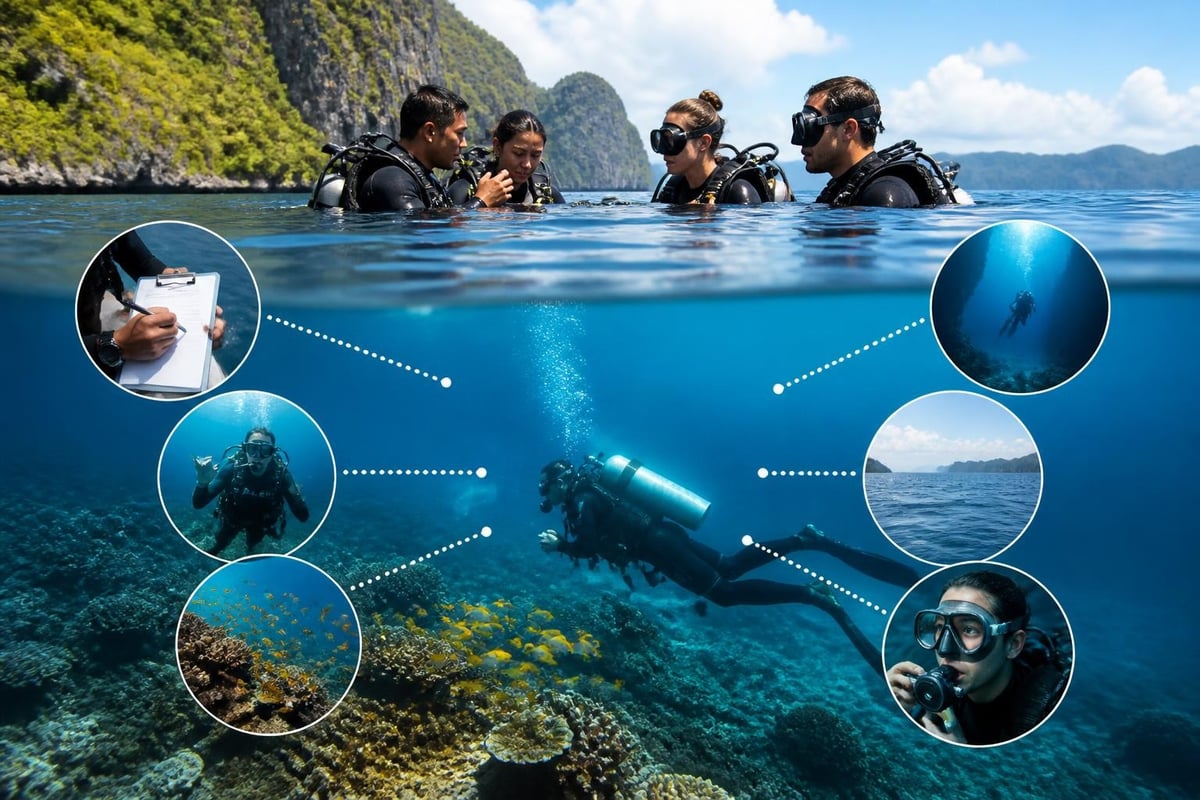
| Diver Level | Suitable Conditions | Ideal Sites | Progression Focus |
|---|---|---|---|
| Beginner (0-20 dives) | Sheltered, shallow, minimal current | Protected bays, house reefs, training platforms | Buoyancy, navigation basics, marine-life ID |
| Intermediate (20-50 dives) | Moderate current, varied depth, good visibility | Sloping reefs, gentle walls, easy wrecks | Deep diving, advanced navigation, photography |
| Advanced (50+ dives) | Strong current, challenging navigation, varied conditions | Drift dives, deep walls, complex wrecks, pelagic sites | Specialty skills, rescue, leadership training |
Environmental Conditions and Seasonal Patterns
The dive spot you select should match not just your skills but also the day's conditions. Current, visibility, wave action and temperature fluctuate with season, tide and weather. Even world-class sites become unsafe when conditions deteriorate.
In El Nido, the dry season from November through May offers the most consistent diving, with calm seas, excellent visibility and minimal rain. The wet season brings afternoon storms and reduced visibility but can also deliver nutrient-rich water that attracts larger marine life. Understanding these patterns helps you choose the dive spot that delivers the experience you want when you want it.
Professional dive operators continually assess conditions and adjust site selection accordingly. They monitor wind direction, swell height, current tables and recent diver reports. When choosing the dive spot independently, applying the same diligence prevents disappointment and enhances safety.
Marine Life and Underwater Topography
What you hope to see underwater should heavily influence the dive spot you choose. Different environments host different species, and matching your interests to the habitat increases your chances of memorable encounters.
Reef Systems and Hard Coral Gardens
Healthy coral reefs teem with life. Colorful reef fish, hunting predators, cleaning stations and invertebrate diversity make shallow to mid-depth reefs ideal for macro photography, marine biology students and divers who love vibrant, busy scenes.
The dive spot featuring extensive hard coral cover supports the greatest biodiversity. Branching, table and massive coral formations create structure for thousands of species, from tiny gobies and nudibranchs to parrotfish, groupers and reef sharks. El Nido's protected reefs offer exceptional examples, with sites around Miniloc, Dilumacad and the outlying islands showcasing pristine coral health.
What to expect at coral-reef dive spots:
- High fish density and species variety
- Excellent macro subjects (shrimp, crabs, nudibranchs)
- Shallow depths suitable for longer bottom times
- Gentle to moderate currents on most sites
- Strong potential for turtle and ray encounters
When researching the dive spot, ask about coral health and recent marine-life sightings. Scientific research shows that protecting recreational dive sites delivers measurable conservation and economic benefits, and choosing operators committed to reef preservation ensures the sites you love remain healthy for future divers.
Walls, Drop-Offs and Deep Structures
Vertical walls and steep drop-offs create dramatically different ecosystems from shallow reefs. The dive spot featuring wall topography often attracts pelagic species, larger fish and deep-water specialists. Currents along walls can be stronger, and depth management requires more attention.
Walls offer thrilling diving. You drift along vertical limestone or coral faces, peer into caverns and overhangs, and watch the blue-water column for cruising jacks, barracuda and occasional sharks. Depth changes rapidly, making buoyancy control and dive computer monitoring critical skills.
For those ready to push their limits safely, the Advanced Open Water course includes deep and navigation specialties specifically designed to prepare divers for challenging environments like walls and drop-offs, ensuring you have the skills to enjoy these spectacular sites confidently.
Safety Considerations When Selecting the Dive Spot
Safety starts long before you descend. Choosing the dive spot with your physical condition, experience level and risk tolerance in mind prevents incidents and ensures enjoyable diving.
Current Strength and Navigation Challenges
Current can turn an easy dive into an exhausting struggle or, if harnessed correctly, deliver an exhilarating drift experience. The dive spot with predictable, moderate current suits confident swimmers and experienced divers. Sites with variable or strong current demand advanced skills and careful planning.
Current assessment checklist:
- Check tide tables and current predictions
- Confirm surface conditions (wind, wave action)
- Review entry and exit points with your guide or buddy
- Understand the planned route and contingency options
- Carry a surface marker buoy (SMB) and know when to deploy it
Navigation difficulty varies by site complexity. Simple reef formations with clear landmarks make navigation straightforward. The dive spot featuring caves, swim-throughs or labyrinthine coral structures requires compass skills and spatial awareness. Lost divers burn air rapidly, risk separation from their group and may surface far from the boat.
Medical and Emergency Preparedness
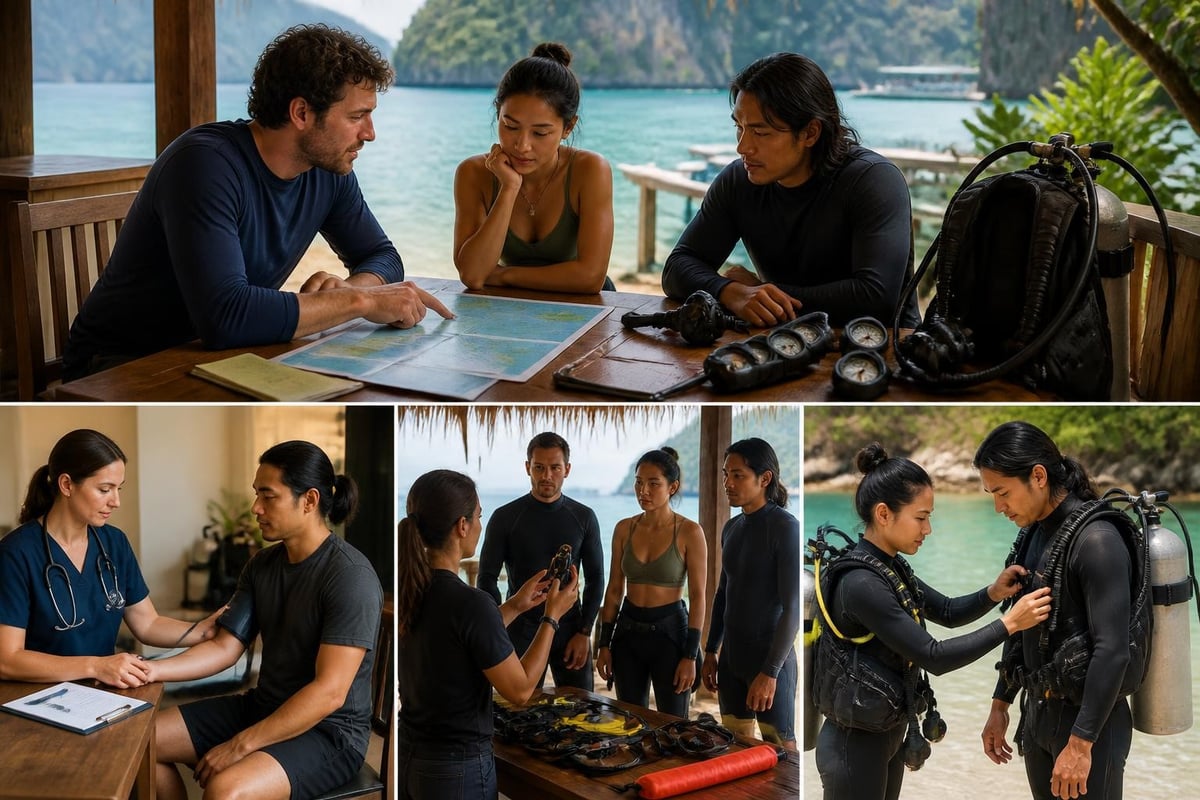
Every diver should dive within their medical fitness limits and know the emergency protocols for the dive spot they've chosen. Remote locations with limited medical infrastructure require greater self-reliance and conservative dive planning.
Before selecting the dive spot, consider:
- Distance to the nearest recompression chamber
- Availability of emergency oxygen and first aid
- Communication systems (radio, phone signal, emergency beacons)
- Evacuation routes and transportation options
Divers Alert Network provides practical safety guidance covering medical fitness, trip planning and dive-site research. Their preparedness scorecard helps divers assess risks and make informed choices about the dive spot based on their health, skills and the available support systems.
Professional operations follow strict safety standards. NOAA’s Diving Standards & Safety Manual outlines certification, training and operational protocols that, while designed for scientific diving, offer valuable insights into the safety expectations any diver should hold when assessing the dive spot.
Protected Areas and Conservation Ethics
Many of the world's best dive sites lie within marine protected areas (MPAs), where regulations safeguard ecosystems and enhance the diving experience. Understanding how MPAs affect the dive spot helps you dive responsibly and support conservation.
Marine Protected Areas and Dive Site Management
MPAs restrict activities to varying degrees, from fully protected no-take zones to multi-use areas where diving is encouraged but fishing is controlled. The dive spot within a well-managed MPA typically offers healthier reefs, more abundant marine life and better visibility than unprotected areas.
El Nido's protected waters benefit from local and national conservation efforts. Choosing the dive spot within these zones supports the communities and organizations working to preserve marine biodiversity.
NOAA’s MPA program explains how protected status affects recreational activities like diving, and IUCN guidance on protected-area categories details how non-extractive recreation fits into MPA planning. Understanding these frameworks helps divers recognize the value of protection and choose operators who respect boundaries.
| Protection Level | Restrictions | Typical Marine Life | Diver Experience |
|---|---|---|---|
| No-take zone | No fishing, no collection, diving only | Highest fish density, large predators, healthy coral | Pristine, abundant, unfished populations |
| Partial protection | Limited fishing, seasonal closures | Moderate fish density, recovering populations | Good biodiversity, improving health |
| Unprotected | Minimal regulation | Variable, often depleted stocks | Dependent on local practices |
Research on marine protected areas for dive tourism shows that ecological, economic and social benefits align when the dive spot is managed sustainably. Healthy reefs attract divers, generating income that supports conservation and local livelihoods.
Underwater Heritage and Archaeological Sites
Some dive spots feature wrecks, historical structures or submerged archaeological sites. These locations carry cultural and historical significance beyond their recreational appeal. UNESCO’s Convention on the Protection of the Underwater Cultural Heritage provides legal and ethical frameworks for diving at heritage sites.
When choosing the dive spot with historical significance:
- Research the site's history and cultural context
- Follow all regulations and entry requirements
- Never touch, remove or disturb artifacts
- Photograph respectfully and report any damage
Heritage sites offer unique glimpses into maritime history. Wrecks tell stories of trade, conflict and human endeavor, while submerged settlements reveal ancient civilizations. Diving these sites responsibly ensures they remain intact for future generations.
Matching Personal Goals to the Dive Spot
Your diving goals-whether photography, training, relaxation or adventure-should guide your site selection. The dive spot that serves a photographer's needs differs greatly from one ideal for practicing skills or simply enjoying the underwater environment.
Photography and Videography Objectives
Underwater photographers seek specific subjects, lighting conditions and backgrounds. Macro shooters prefer shallow reefs with high invertebrate diversity, calm water and long bottom times. Wide-angle photographers want big fish, dramatic topography and excellent visibility.
The dive spot with consistent conditions allows photographers to work methodically, refining compositions and waiting for the perfect moment. Rapid current or poor visibility frustrates creative work. Sites with cleaning stations, feeding areas or resident species increase the odds of capturing compelling images.
Ideal conditions for underwater photography:
- Visibility 15+ meters for wide-angle work
- Calm water for stable shooting platforms
- Shallow depths (10-20 meters) for optimal color and light
- High biodiversity or signature species for compelling subjects
- Minimal diver traffic to avoid stirred sediment
Training and Skill Development
Beginners benefit from the dive spot specifically designed or naturally suited for learning. Shallow water, sandy bottoms, minimal current and easy entries allow students to focus on skills without environmental distractions.
Confined-water training areas and protected bays provide controlled environments for mastering buoyancy, regulator recovery, mask clearing and navigation basics. As skills develop, graduating to more challenging sites builds confidence and competence progressively.
If you're looking to expand your capabilities, choosing the dive spot for a structured course ensures you learn in optimal conditions. For those taking their first breaths underwater, the Discover Scuba Diving experience introduces diving fundamentals in safe, shallow environments designed for comfort and success.
Logistics and Practical Considerations
Beyond the underwater environment, practical factors influence how suitable the dive spot is for your trip. Access, cost, weather dependence and available services all shape the overall experience.
Accessibility and Travel Requirements
The dive spot might be a short boat ride from your accommodation or require hours of travel by multiple transport modes. Proximity affects fatigue, cost and schedule flexibility. Remote sites often deliver pristine conditions but demand more time and resources.
Consider:
- Boat travel time and sea conditions
- Road or air access to the departure point
- Accommodation proximity to dive operators
- Availability of equipment rental and support services
For divers seeking convenience alongside world-class diving, staying at a beachfront dive resort eliminates many logistical headaches. The El Nido Dive & Stay Package combines accommodation and diving in one location, allowing you to wake steps from the water and board your dive boat directly from shore. The Beach House offers this seamless experience, with Cloud 9 rooftop restaurant and bar providing the perfect setting to relax between dives.
Budget and Value Alignment
Cost varies widely by location, operator and service level. The dive spot at a premium resort offers top-tier equipment, small groups and luxury amenities, but budget-conscious divers can find excellent diving at more affordable operations without sacrificing safety or quality.
Cost factors to evaluate:
- Per-dive or package pricing
- Equipment rental fees
- Boat and fuel surcharges
- Park or site entry fees
- Travel and accommodation expenses
Value means different things to different divers. For some, the dive spot that offers rare species or world-class visibility justifies higher costs. Others prioritize frequency and affordability, choosing sites that allow more dives within their budget. Matching spending to your priorities ensures satisfaction regardless of the price point.
Building Your Dive-Site Knowledge Over Time
No single dive defines your underwater journey. Each site teaches something new, building a mental library of environments, species and techniques. Choosing the dive spot deliberately, reflecting on each experience and varying your selections accelerates learning and keeps diving fresh and exciting.
Logbook Analysis and Site Comparison
Your logbook is more than a certification requirement. It's a personal record of conditions, marine life, challenges and achievements. Reviewing entries reveals patterns: which conditions you handle best, what environments excite you most and where you need more practice.
Compare sites you've dived:
| Site Name | Max Depth | Visibility | Current | Marine Highlights | Personal Rating |
|---|---|---|---|---|---|
| South Miniloc | 22m | 20m | Mild | Sea turtles, reef sharks | 4.5/5 |
| Dilumacad Tunnel | 18m | 18m | None | Barracuda school, soft corals | 5/5 |
| Nat Nat Beach | 12m | 15m | Gentle | Macro life, nudibranchs | 4/5 |
This analysis helps you choose the dive spot that matches your current mood and goals while identifying skills to develop or environments to revisit.
Continuous Learning and Exploration
The best divers remain perpetual students. Each new certification, specialty course or mentored dive expands your capabilities and opens access to more challenging and rewarding sites. As your skills grow, the dive spot you once considered beyond reach becomes accessible, then comfortable, then a platform for even greater challenges.
Diving's beauty lies in its endless variety. From shallow coral gardens to deep walls, wrecks to caves, tropical reefs to cold-water kelp forests, every environment offers unique rewards. Building a diverse site portfolio makes you a more competent, versatile and appreciative diver.
Whether you're exploring El Nido’s diverse dive sites for the first time or returning to deepen your knowledge, each carefully chosen location contributes to your growth as a diver. The underwater world rewards curiosity, respect and preparation with experiences that stay with you long after you surface.
Choosing the dive spot thoughtfully-matching your skills, interests and goals to site conditions and characteristics-transforms good diving into exceptional diving. Whether you're beginning your underwater journey or seeking new challenges, El Nido's pristine waters offer sites for every level and ambition. Palawan Diving provides the local expertise, professional instruction and personalized service to help you discover the perfect dive spot for your next adventure. Start planning your El Nido diving experience today and explore the underwater paradise that awaits.