Tubbataha Reef scuba diving represents the pinnacle of Philippine underwater exploration, offering encounters with some of the most pristine coral ecosystems and abundant marine life in Southeast Asia. Located in the middle of the Sulu Sea, this UNESCO World Heritage Site sits roughly 150 kilometers southeast of Puerto Princesa in Palawan, accessible only by liveaboard vessel during a narrow seasonal window. For divers planning their 2026 season, understanding when to go, what to expect, and how to prepare makes the difference between a good trip and the dive adventure of a lifetime.
Why Tubbataha Reef Stands Apart
Tubbataha Reefs Natural Park covers nearly 100,000 hectares of protected marine sanctuary, making it one of the oldest and most effectively managed marine protected areas in the Philippines. The Tubbataha Management Office enforces strict conservation protocols that have allowed the reef system to flourish since its designation as a national park in 1988.
What makes tubbataha reef scuba diving truly exceptional is the sheer remoteness. No day boats. No casual visitors. Only dedicated liveaboard divers willing to invest the time and resources to reach this isolated atoll system.
The Marine Life Experience
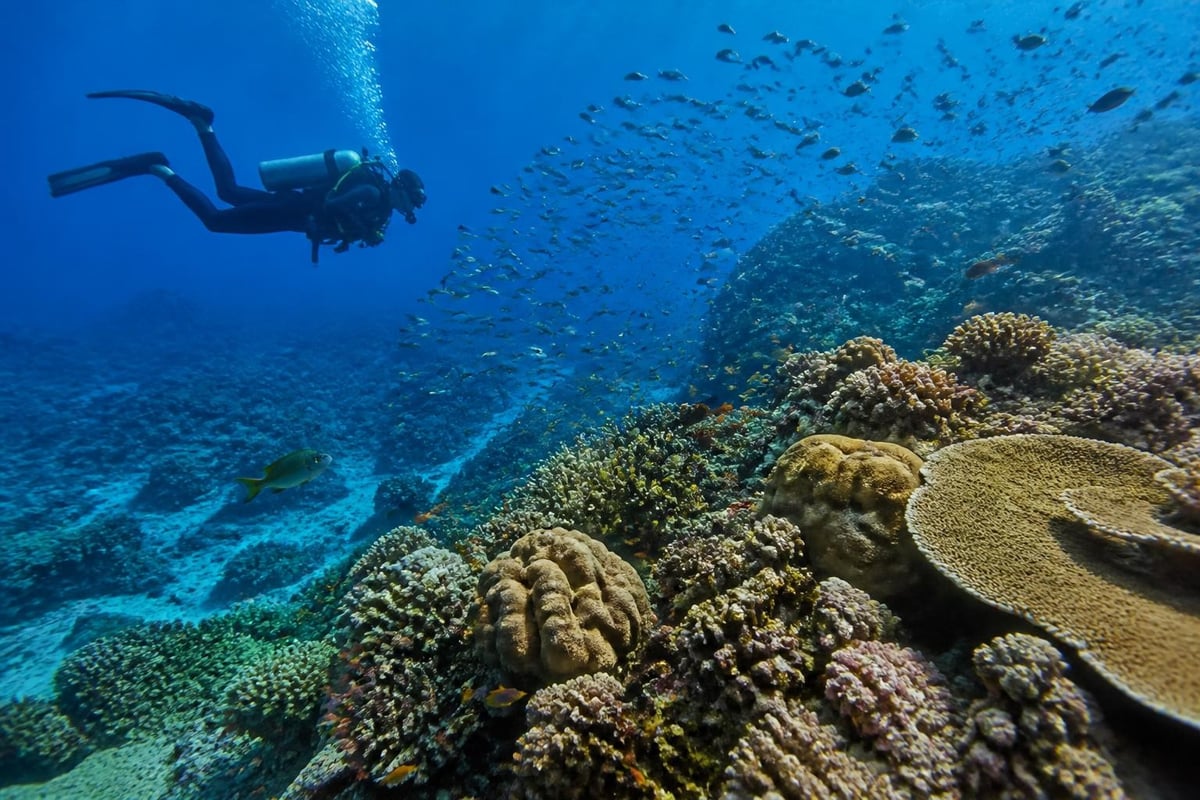
The reef supports over 600 fish species and nearly 400 coral species, creating an underwater landscape unlike anywhere else in the Philippines. Recent scientific surveys, including baseline studies of the fish fauna composition, confirm that Tubbataha maintains oceanic character with healthy populations of apex predators.
Commonly encountered species include:
- Gray reef sharks, whitetip reef sharks, and occasional tiger sharks
- Schools of barracuda, jacks, and trevally
- Manta rays and eagle rays during peak season
- Multiple species of turtles (green, hawksbill)
- Reef-dwelling Napoleon wrasse and bumphead parrotfish
- Diverse macro life including nudibranchs and crustaceans
The presence of healthy shark populations indicates ecosystem balance. Tubbataha reef scuba diving frequently delivers multiple shark sightings per dive, though exact encounters depend on currents, season, and plain luck.
Planning Your Tubbataha Liveaboard Trip
Season and Weather Windows
Tubbataha opens for diving from mid-March through mid-June only. Weather patterns in the Sulu Sea make this the sole viable period for safe vessel operations. The Philippine Department of Tourism confirms these seasonal restrictions apply strictly across all operators.
| Month | Conditions | Best For |
|---|---|---|
| Mid-March to April | Calmer seas, warming water | First-timers, photographers |
| May | Peak visibility, stronger currents | Experienced divers, pelagic action |
| Early June | Variable conditions, end of season | Budget-conscious travelers |
Water temperatures range from 26°C to 29°C throughout the season. Visibility regularly exceeds 30 meters, often reaching 40 meters or more during optimal conditions.
Permits and Entry Requirements
All vessels diving Tubbataha must obtain official permits and comply with strict requirements, including mandatory AIS (Automatic Identification System) and holding tank installations. As a diver, your liveaboard operator handles these logistics, but understanding the regulations helps set appropriate expectations.
Park fees (separate from liveaboard costs) currently run approximately PHP 1,500 per person for Filipinos and USD 100-150 for foreign nationals, subject to annual adjustment. Conservation fees support ranger patrols, research programs, and maintenance of the ranger station on the reef.
The Diving Experience at Tubbataha
North and South Atolls
Tubbataha consists of two main atolls-North (larger) and South (smaller)-plus the separate Jessie Beazley Reef. Most liveaboards spend 3-4 days in the area, completing 3-4 dives daily across multiple sites.
North Atoll highlights:
- Washing Machine – Advanced site with swirling currents and schooling fish
- Black Rock – Vertical wall diving with excellent coral coverage
- Ranger Station – Protected house reef suitable for night dives
- Amos Rock – Pinnacle rising from deep water, magnet for pelagics
South Atoll favorites:
- Delsan Wreck – Shallow wreck colonized by corals
- Ko-ok – Wall diving with resident turtle populations
- Lighthouse – Drift diving along steep drop-offs
Current strength varies significantly between sites and tidal cycles. Experienced dive guides read conditions carefully, adjusting dive plans throughout each day.
Jessie Beazley Reef
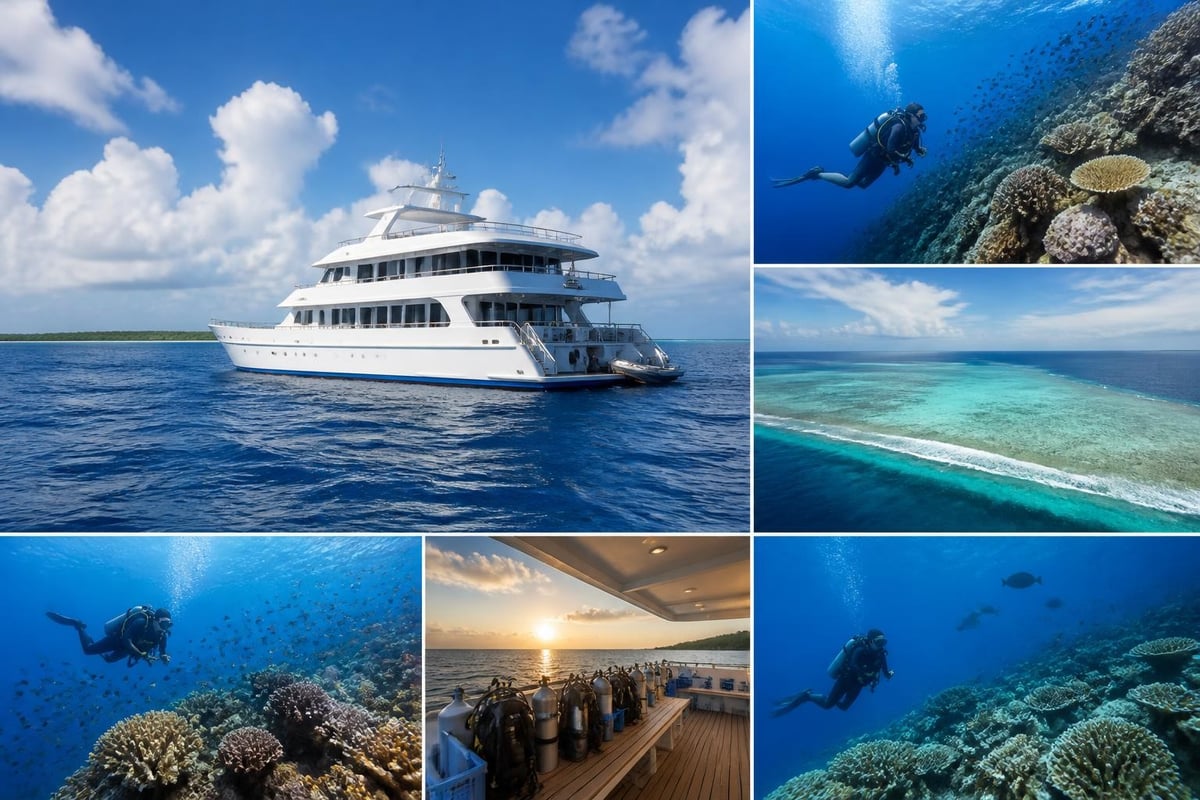
Weather permitting, many itineraries include Jessie Beazley, a separate reef structure roughly 20 kilometers north of the main atolls. This smaller atoll offers dramatic topography and consistently strong currents that attract large schools of jacks and occasional hammerhead sharks.
Conservation and Reef Health
Tubbataha's management success makes it a conservation model for marine protected areas worldwide. The 2024 reef monitoring data from Saving Philippine Reefs shows coral cover averaging 60-75% across survey sites, significantly higher than many Philippine reefs.
No-take policies enforced since the 1990s have allowed fish biomass to recover substantially. Divers in 2026 see the cumulative benefits of decades of protection, including healthy populations of slow-growing, long-lived species that require stable conditions.
Climate Monitoring and Resilience
While Philippine reefs face thermal stress from rising ocean temperatures, research into coral-symbiont associations and zooxanthellae diversity suggests some reef systems show adaptive capacity. Real-time temperature monitoring programs track thermal anomalies at Tubbataha, helping researchers understand bleaching triggers and recovery patterns.
For divers, this translates to relatively stable conditions year-over-year, though no reef system is immune to global trends.
Choosing a Liveaboard Operator
What to Look For
Not all Tubbataha liveaboards offer identical experiences. When comparing operators, consider these factors:
- Vessel size and stability – Smaller boats (12-16 divers) offer more personalized service; larger boats provide more stability during crossings
- Guide-to-diver ratios – Better operators maintain small groups (4-6 divers per guide maximum)
- Nitrox availability – Enriched air extends bottom time on Tubbataha's multi-level profiles
- Photography support – Camera tables, charging stations, and knowledgeable guides matter for serious photographers
- Food quality and dietary accommodation – You'll be aboard for 6-7 days; meals make a difference
Most reputable operators run purpose-built dive vessels with climate-controlled cabins, camera rooms, and dedicated dive decks. Expect to pay USD 2,500-4,500 per person for a full trip, depending on vessel class and cabin selection.
Booking Timeline for 2026
Tubbataha trips sell out months in advance. Book by December 2025 or January 2026 at the latest to secure preferred departure dates. Last-minute availability occasionally opens due to cancellations, but planning ahead ensures better cabin selection and trip timing.
Experience Requirements and Safety
Recommended Certification Level
While Advanced Open Water certification isn't legally required, tubbataha reef scuba diving suits confident, experienced divers most comfortably. Many sites feature:
- Strong, unpredictable currents requiring good buoyancy control
- Deep wall profiles (18-30+ meters typical)
- Blue-water drift sections with limited visual references
- Potential for down-currents or thermoclines
Minimum recommendations:
- 50+ logged dives before attempting Tubbataha
- Recent (within 6 months) dive experience
- Comfort in currents and at depth
- Advanced Open Water or equivalent training
If you're building experience toward a Tubbataha trip, dive sites around Palawan offer excellent preparation, with wall diving, current management, and deep profiles similar to what you'll encounter in the Sulu Sea.
Preparing for Your Tubbataha Adventure
Gear Considerations
Most liveaboards provide tanks (including larger 15L options), weights, and basic rental equipment. Serious divers bring their own:
- Wetsuit – 3mm suitable for most divers; 5mm for those who run cold
- Dive computer – Conservative algorithms recommended for repetitive deep diving
- Reef hook – Essential for enjoying current-swept sites without working constantly
- SMB and reel – Safety equipment for drift diving and blue-water ascents
- Camera system – If photography is a priority
Check baggage allowances carefully. Some operators impose weight limits for the long boat journey from Puerto Princesa.
Health and Fitness
The crossing from Puerto Princesa to Tubbataha takes 10-14 hours each way, depending on vessel speed and sea conditions. Bring seasickness medication even if you don't typically get motion sick. The Sulu Sea can be choppy, particularly in May and early June.
Four dives daily for multiple consecutive days demands physical fitness and proper hydration. The diving itself isn't particularly strenuous, but repetitive exposure and tropical heat accumulate throughout the week.
Beyond Tubbataha: Diving Palawan
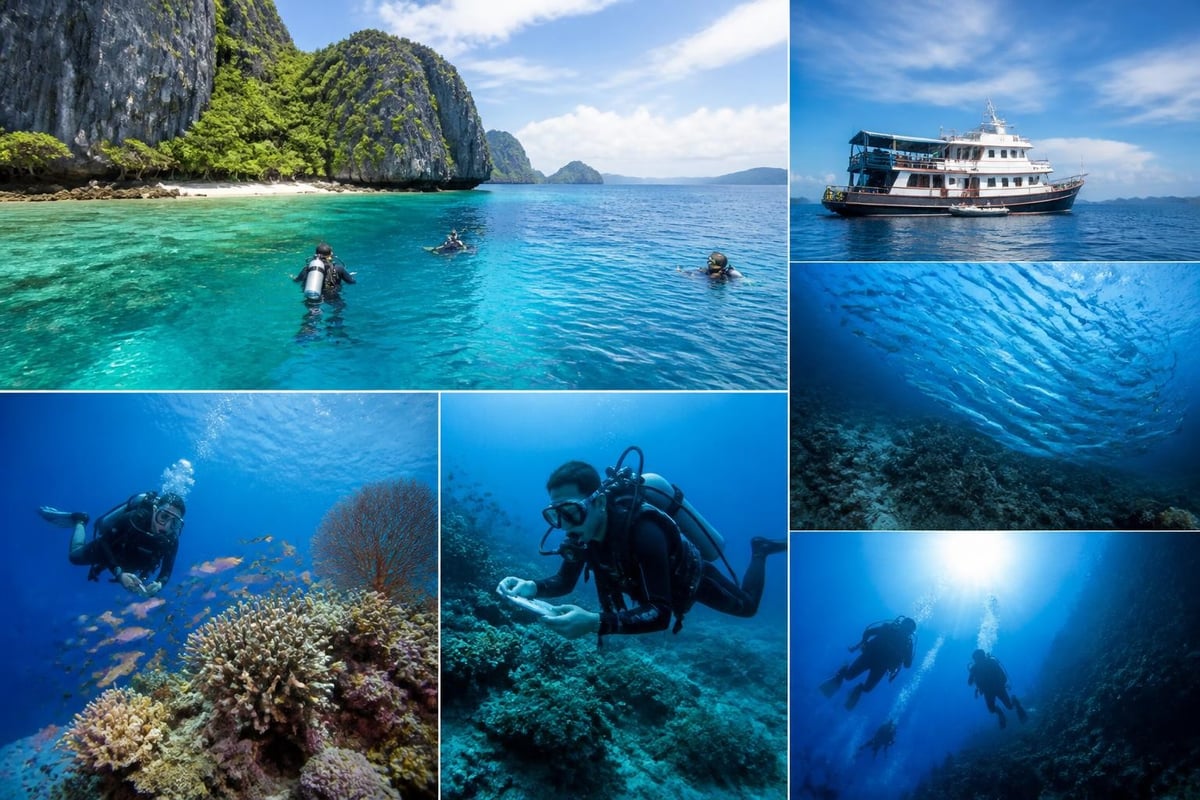
While tubbataha reef scuba diving represents the absolute pinnacle of Philippine diving, most divers combine their liveaboard trip with additional diving around Palawan. El Nido, in northern Palawan, offers world-class diving accessible from shore-based operations.
If you're planning a broader Palawan diving holiday in 2026, consider spending time in El Nido before or after your Tubbataha liveaboard. The region features diverse sites ranging from beginner-friendly reefs to advanced drift dives and caverns. For those wanting the convenience of diving from their accommodation, The Beach House puts you beachfront in El Nido with direct access to diving facilities, including departures from the property itself.
Photography and Marine Documentation
Camera Systems and Techniques
Tubbataha's visibility, marine life density, and dramatic topography make it a premier destination for underwater photographers. Wide-angle opportunities dominate, with schooling fish, shark encounters, and reef panoramas.
Recommended focal approaches:
- Wide-angle (16-35mm equivalent) – Reef scenes, sharks, rays, schools
- Mid-range (60-105mm macro) – Portraits of larger fish, turtle details, reef texture
- Super-macro (100mm+ with diopters) – Nudibranchs, crustaceans, coral polyps
Strobes are essential. Natural light alone rarely captures the reef's true colors beyond 10 meters depth.
Many photographers shoot 200-300 images per day at Tubbataha. Bring sufficient storage cards and backup batteries. Most liveaboards provide 220V charging, but bring international adapters appropriate for Philippine outlets (Type A/B typically).
Marine Life Behavior and Identification
The oceanic character of Tubbataha means pelagic species appear unpredictably. Unlike cleaning stations or feeding sites with regular schedules, Tubbataha's big animal encounters happen when currents, lunar cycles, and plain chance align favorably.
Improving your encounter odds:
- Dive during incoming or changing tides when current brings nutrient flow
- Position yourself in blue water at reef edges rather than tight to walls
- Stay deep (within recreational limits) early in the dive when sharks are most active
- Maintain neutral buoyancy and calm presence when large animals approach
No dive guide can guarantee hammerheads or mantas. The consolation? Even "quiet" dives at Tubbataha offer healthier reef ecosystems and better fish biomass than most Philippine sites on their best days.
Sustainable Diving Practices
Tubbataha's protection depends on visiting divers respecting the environment. Beyond basic reef etiquette (no touching, feeding, or harassment of marine life), specific practices matter:
- Perfect buoyancy control – Even minor fin contact damages slow-growing corals
- Secure all equipment – Dangling consoles and camera clips cause unintentional impact
- Follow guide instructions – Currents change rapidly; stick with your group
- Minimize plastic waste – Most liveaboards have limited waste management; bring reusable bottles
The park's success demonstrates that well-managed marine protected areas work. Your conservation fee and responsible behavior directly support ongoing protection.
After Tubbataha: Continuing Your Philippine Diving Journey
Most divers exit through Puerto Princesa, either flying directly home or continuing to other Philippine destinations. If you have additional time, El Nido diving offers a complete contrast to Tubbataha's remote expeditions.
Shore-based diving from El Nido provides:
- Immediate access – Multiple daily departures, flexible scheduling
- Diverse site types – Walls, reefs, caverns, drift dives, macro sites
- All experience levels – From try-dives to technical diving
- Smaller budgets – Day diving significantly less expensive than liveaboards
The combination of a Tubbataha liveaboard followed by relaxed El Nido diving creates an ideal Philippines dive holiday, maximizing both adventure and variety.
Practical Trip Logistics
Getting to Puerto Princesa
International travelers typically route through Manila, with multiple daily flights to Puerto Princesa (PPS). Flight time is approximately 90 minutes. Booking domestic connections with sufficient layover time (3+ hours) protects against Manila flight delays.
Liveaboards depart from specific marinas in Puerto Princesa, with operators providing detailed meeting instructions. Most departures happen late afternoon or early evening, with the overnight crossing to Tubbataha completed while you sleep.
What to Pack Beyond Dive Gear
| Item Category | Essentials |
|---|---|
| Medications | Seasickness pills, basic first aid, prescription meds (bring extras) |
| Sun protection | High-SPF reef-safe sunscreen, hat, sunglasses, rash guard |
| Comfort items | Books, music, download entertainment (limited/no internet at sea) |
| Clothing | Lightweight, quick-dry clothing; one warm layer for air-conditioned cabin |
| Documentation | Certification cards, dive insurance, passport copies |
Cash (pesos and small USD bills) for tips is customary. Most liveaboards operate on tip-expected service models, typically USD 50-100 per guest for the crew.
Making the Most of Limited Bottom Time
With only 6-7 diving days available and long surface intervals during transits, maximizing your underwater time matters. Nitrox certification extends bottom time substantially, particularly on repetitive deep dives.
A typical day includes:
- Pre-breakfast dive – Deep/adventurous site (06:30-07:30)
- Late morning dive – Second deep dive or wall exploration (10:00-11:00)
- Afternoon dive – Shallower reef dive (14:00-15:00)
- Night dive – Optional, usually at Ranger Station (18:30-19:30)
Surface intervals between dives range from 2-4 hours, providing time for meals, equipment maintenance, photo review, and rest.
Tubbataha reef scuba diving delivers an unmatched combination of pristine reefs, abundant marine life, and true wilderness diving that few destinations worldwide can equal. Whether you're planning your first Tubbataha expedition or building the experience needed to dive the Sulu Sea's crown jewel, the journey starts with your next dive. Palawan Diving offers the training, experience-building dives, and local expertise to help you prepare for world-class Philippine diving adventures, from your first open water certification through advanced expeditions across Palawan's spectacular underwater landscapes.