Starting your underwater adventure through beginner scuba diving opens up an entirely new world beneath the surface. Whether you've dreamed of exploring vibrant coral reefs, swimming alongside tropical fish, or discovering hidden marine ecosystems, learning to dive is more accessible than many people realize. With proper training, the right guidance, and a commitment to safety, anyone in reasonable health can become a certified diver and experience the magic of breathing underwater.
Understanding What Beginner Scuba Training Involves
Beginner scuba certification follows a structured approach designed to build confidence and competence in the underwater environment. Most entry-level courses follow internationally recognized standards that divide training into three distinct components: knowledge development, confined water skills, and open water dives.
The knowledge portion covers essential theory:
- How pressure affects your body underwater
- Dive planning and safety procedures
- Equipment function and maintenance
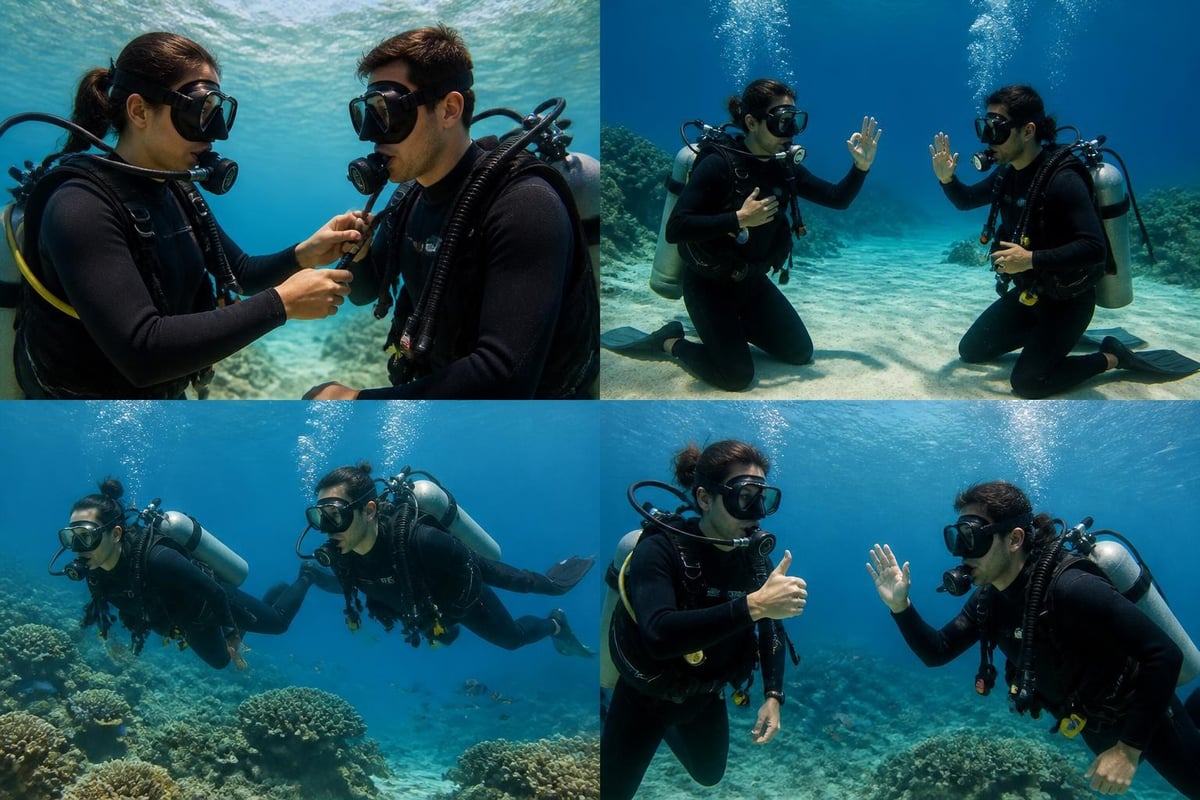
- Underwater communication and navigation basics
- Environmental awareness and marine life interaction
Confined water sessions typically take place in a pool or shallow, protected area where you'll master fundamental skills before venturing into open water. These sessions focus on comfort and muscle memory, allowing you to practice equipment assembly, buoyancy control, mask clearing, and emergency procedures in a controlled setting.
The Structure of Entry-Level Certification
Open water training dives represent the culmination of your beginner scuba journey, where you apply everything learned in real diving conditions. Most courses require four open water dives to depths gradually increasing to 18 meters (60 feet), the maximum depth for newly certified divers.
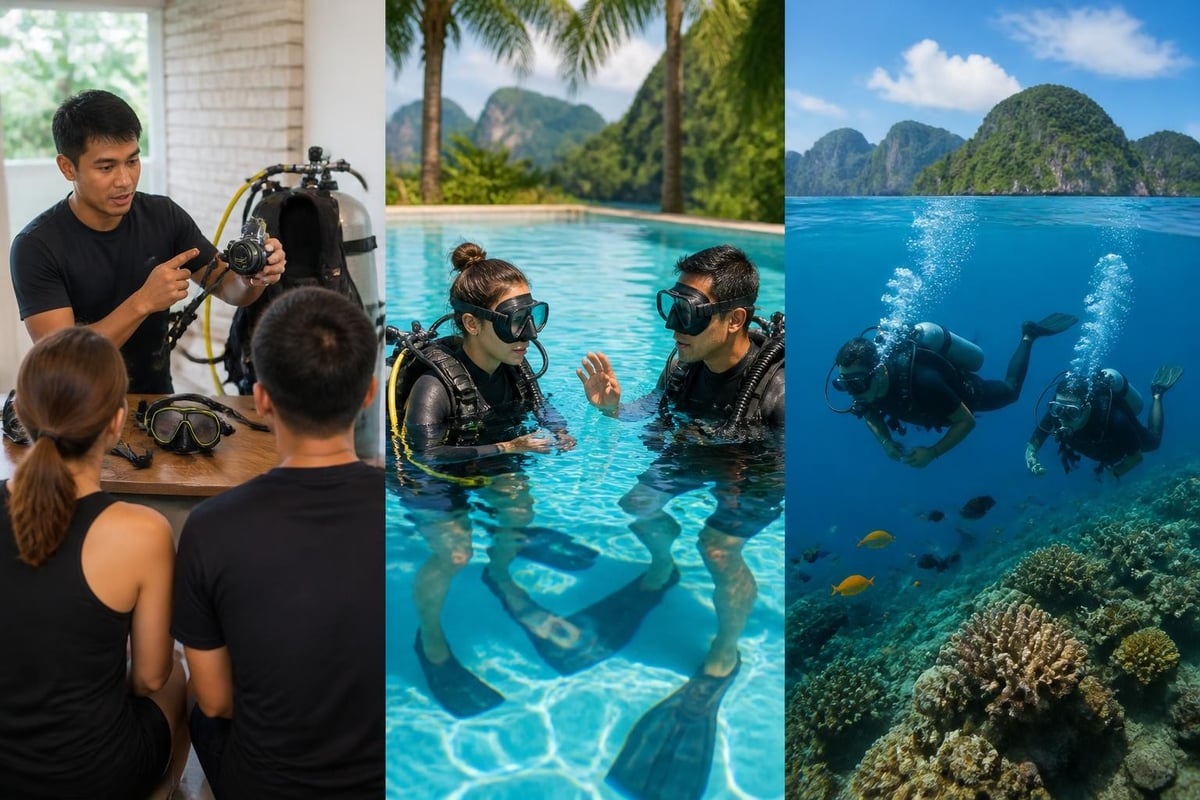
According to the British Sub-Aqua Club’s training overview, standardized beginner courses worldwide share core competencies while allowing flexibility in delivery format. Some students complete certification in as little as three to four days during an intensive program, while others prefer spreading sessions over several weeks.
| Training Component | Time Required | Environment | Focus |
|---|---|---|---|
| Knowledge Development | 5-8 hours | Classroom/Online | Theory and safety |
| Confined Water | 5-7 hours | Pool or shallow bay | Skill practice |
| Open Water Dives | 4 dives (2 days) | Ocean/lake | Real-world application |
The beauty of learning in a destination like El Nido is that your open water training takes place in crystal-clear tropical waters with excellent visibility, calm conditions, and vibrant marine life. This creates an ideal learning environment for beginner scuba students.
Essential Equipment Every New Diver Should Know
Understanding your gear builds confidence and safety. While training centers provide all equipment initially, knowing what each piece does helps you feel more comfortable from day one.
The basic scuba unit consists of:
- Mask and snorkel for surface swimming and underwater vision
- Regulator that delivers air from your tank at ambient pressure
- Buoyancy Control Device (BCD) that holds your tank and controls depth
- Tank containing compressed air (typically 10-12 liters for most beginners)
- Wetsuit for thermal protection and minor abrasion prevention
- Fins for efficient movement underwater
- Weight system to achieve neutral buoyancy
- Dive computer or depth gauge to monitor depth and time
- Compass for basic underwater navigation
Modern equipment is remarkably reliable and user-friendly. Regulators are designed to fail in the open position, meaning if something malfunctions, you'll still have air. BCDs feature multiple inflation and deflation points, giving you precise buoyancy control.
Making Sense of Gear Terminology
When you first encounter beginner scuba equipment, the terminology can seem overwhelming. A "first stage" regulator attaches to your tank and reduces high-pressure air to an intermediate pressure. The "second stage" is the part in your mouth that delivers breathable air on demand.
Your BCD (sometimes called a "wing" or "jacket" depending on style) isn't just a flotation device. It's your buoyancy control center, allowing you to achieve neutral buoyancy at any depth by adding or releasing small amounts of air. This skill becomes second nature with practice.
Personal gear you might consider purchasing early:
- Well-fitting mask (comfort and seal matter more than features)
- Snorkel for surface intervals
- Fins that match your strength and swimming style
- Dive computer to track your dive profiles
Most divers wait until after certification to invest in regulators, BCDs, and wetsuits, instead renting from reputable dive centers while they determine preferences and needs.
Safety Fundamentals for Beginner Scuba Divers
Safety in diving isn't about memorizing emergency procedures. It's about developing good habits, staying within your limits, and understanding how your body responds to the underwater environment. The BSAC Safe Diving Guide emphasizes that most diving incidents result from poor planning, exceeding training limits, or ignoring basic protocols rather than equipment failure or environmental hazards.
Core safety principles include:
- Never hold your breath (continuous breathing prevents lung overexpansion)
- Always dive with a buddy and maintain visual contact
- Plan your dive and dive your plan
- Ascend slowly (no faster than 18 meters per minute)
- Make a safety stop at 5 meters for 3-5 minutes on deeper dives
- Stay well within no-decompression limits
- Monitor your air supply and surface with a reserve
Understanding Pressure-Related Concerns
Equalization is the skill every beginner scuba diver must master early. As you descend, increasing water pressure compresses air spaces in your ears and sinuses. Learning to equalize these spaces by gently adding air prevents discomfort and injury.
The Valsalva maneuver, gently pinching your nose and exhaling against closed nostrils, is the most common equalization technique. However, some divers find other methods like swallowing, wiggling the jaw, or tensing throat muscles more effective. Your instructor will help you find what works best.
According to medical research on diving barotrauma, ear and sinus issues represent the most common medical problems for new divers, but they're almost entirely preventable through proper equalization technique and never diving with congestion.
| Pressure Effect | Depth Range | Prevention | Symptom |
|---|---|---|---|
| Ear squeeze | 0-10 meters | Equalize frequently | Ear pain, fullness |
| Mask squeeze | Any depth | Exhale into mask | Facial discomfort |
| Sinus squeeze | 0-10 meters | Don't dive congested | Facial pain, pressure |
| Lung overexpansion | Ascent | Never hold breath | Prevented by breathing |
Decompression sickness, while rare among recreational divers who follow proper procedures, deserves understanding rather than fear. Research on decompression illness treatment shows that staying within no-decompression limits, ascending at safe rates, and making safety stops provide excellent protection. Your dive computer tracks these parameters automatically, making safe diving straightforward.
Choosing Your First Diving Location
Location matters significantly for beginner scuba experiences. Ideal learning environments offer warm water, good visibility, minimal current, and shallow, protected sites where you can focus on skills rather than fighting conditions.
Tropical destinations like El Nido provide several advantages:
- Water temperatures between 27-30°C (80-86°F) requiring only thin wetsuits
- Visibility often exceeding 15-20 meters
- Abundant marine life that makes every dive memorable
- Protected bays and lagoons perfect for initial training
- Gentle reef slopes ideal for practicing buoyancy control
El Nido's top dive sites include several locations specifically suitable for newer divers, with maximum depths of 12-15 meters, minimal current, and spectacular coral gardens teeming with fish life.
The proximity of dive sites to shore also matters. In El Nido, most popular sites sit within 15-20 minutes by boat, minimizing travel time and maximizing bottom time. Shorter boat rides mean less chance of seasickness and more energy for diving.
What to Expect on Your First Ocean Dives
Your first open water dives focus on demonstrating the skills learned in confined water while gradually building comfort in the ocean environment. Don't expect to go deep or stay down for extended periods initially.
Typical first-dive profiles:
- Dive one: Skills review at 6-8 meters, 25-30 minutes
- Dive two: Buoyancy practice and navigation at 8-10 meters, 30-35 minutes
- Dive three: Increased depth to 12-15 meters, 35-40 minutes
- Dive four: Underwater exploration at 15-18 meters, 35-45 minutes
Between dives, you'll learn to log your experiences, recording depth, time, conditions, and marine life observed. This habit, started during beginner scuba training, continues throughout your diving career and helps track experience for future training.
If you're planning to complete your certification in El Nido and want the convenience of accommodation steps from the dive center, staying at a beachfront property where you can dive directly from your doorstep streamlines the entire experience. The Open Water Diver Course offered by Submariner Diving Center includes small class sizes with experienced instructors who know El Nido's waters intimately.
Building Confidence Through Proper Skill Development
Confidence underwater comes from competence, and competence comes from practice. During beginner scuba training, certain skills feel awkward initially but become automatic with repetition.
Skills requiring the most practice typically include:
- Buoyancy control: Adding and releasing air from your BCD to hover motionless
- Mask clearing: Removing water from your mask while underwater
- Regulator recovery: Finding and clearing your air source if it comes out
- Controlled emergency swimming ascent: Safely reaching the surface in unlikely scenarios
- Neutral buoyancy: Maintaining depth without using your hands or fins
Buoyancy: The Foundation of Good Diving
Buoyancy control separates confident divers from struggling ones. Achieving neutral buoyancy means you neither sink nor float but hover effortlessly at your desired depth. This skill protects delicate coral, conserves energy, reduces air consumption, and makes diving comfortable.
New divers often over-weight themselves, requiring excessive air in their BCD to compensate, which creates a buoyancy roller coaster. Proper weighting, learned during training, means you're slightly negative at the surface with an empty BCD and can achieve perfect neutrality at depth with minimal air.
The secret: make small adjustments. Add air in tiny bursts, wait several seconds for your body to respond, then assess. Dump air gradually using different valves depending on your body position. This patience, difficult initially, soon becomes instinctive.
Health Considerations and Prerequisites
Beginner scuba diving doesn't require exceptional fitness, but certain health conditions warrant discussion with a physician before training. The Divers Alert Network provides comprehensive medical guidance for recreational divers, including questionnaires to identify potential concerns.
Conditions requiring medical clearance include:
- Asthma (especially exercise-induced)
- Heart conditions or history of heart disease
- Seizure disorders
- Diabetes (Type 1 or Type 2)
- Chronic ear or sinus problems
- Certain medications affecting alertness or circulation
Most people with well-controlled medical conditions can dive safely with physician approval. The key is honest disclosure and professional medical evaluation specific to diving.
Age considerations span a wide range. Children can begin training as young as 10 (with depth restrictions), while healthy adults in their 60s, 70s, and beyond successfully complete beginner scuba certification. Fitness matters more than age, you need sufficient strength to handle equipment, swim comfortably, and manage mild exertion.
Pre-Dive Health Habits
Smart divers develop habits that support safe underwater experiences:
- Stay hydrated (dehydration increases decompression risk)
- Avoid alcohol 12-24 hours before diving
- Get adequate sleep (fatigue impairs judgment)
- Don't dive with congestion (equalization becomes difficult or impossible)
- Wait 12-18 hours after diving before flying (altitude increases decompression risk)
These simple practices, emphasized throughout beginner scuba training, protect your health and enhance enjoyment.
The Environmental and Conservation Aspect
Learning to dive includes understanding your impact on fragile marine ecosystems. Good buoyancy control isn't just about personal comfort; it's about protecting coral reefs that take decades or centuries to grow.
Responsible diving practices include:
- Never touching, standing on, or breaking coral
- Avoiding contact with marine life
- Taking only photographs, leaving only bubbles
- Properly disposing of any trash
- Following local regulations and protected area guidelines
According to NOAA’s guidance on marine protected areas, understanding site-specific rules and environmental considerations helps divers make informed choices about where and how to dive while minimizing ecological impact.
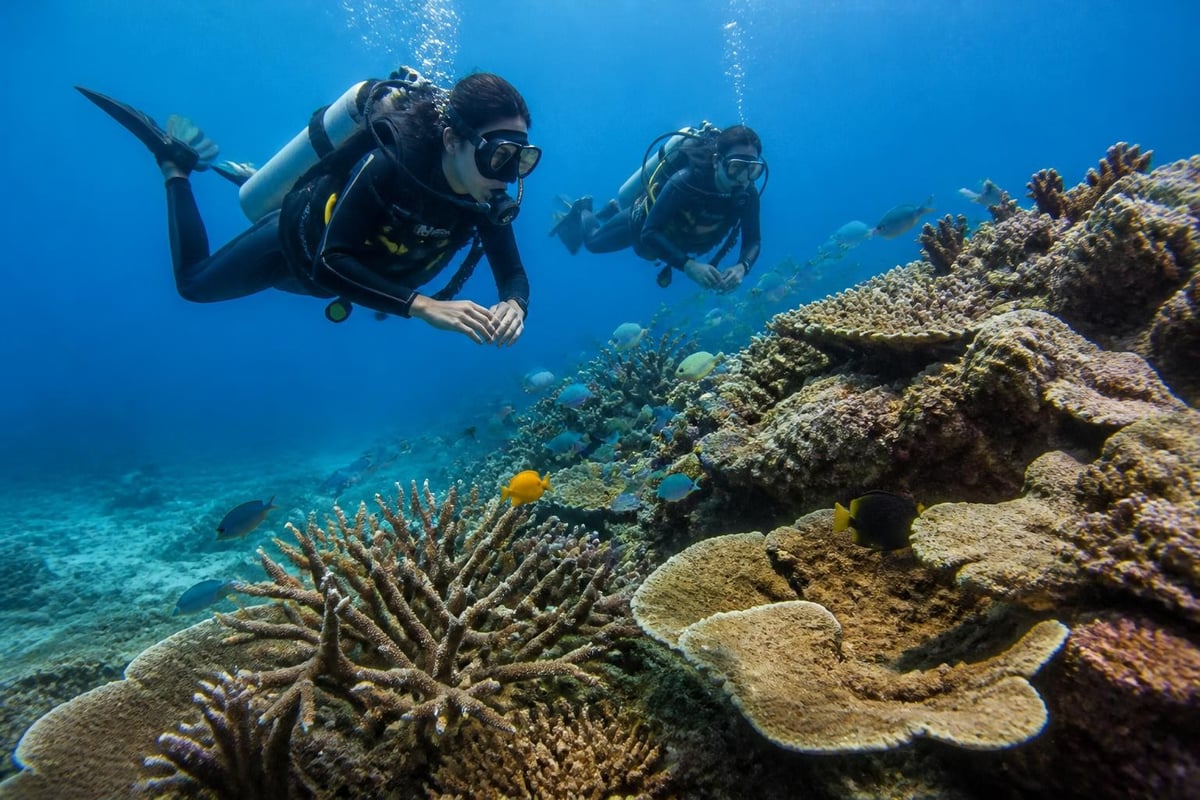
Many divers find that their underwater experiences create a deep appreciation for ocean conservation. What begins as recreational beginner scuba diving often evolves into passionate advocacy for marine protection and environmental awareness.
El Nido's waters fall within several marine protected zones, and responsible dive operators emphasize conservation alongside safety and enjoyment. You'll learn proper reef etiquette from day one, ensuring your diving leaves no negative trace.
What Happens After Certification
Earning your beginner scuba certification marks a beginning, not an endpoint. Your initial qualification allows you to dive with a buddy to 18 meters worldwide, but the underwater world extends far deeper and offers countless specializations.
Common next steps include:
- Logging dives to build experience and confidence
- Advanced training for deeper diving, better navigation, and specialty skills
- Specialty courses in underwater photography, wreck diving, or night diving
- Rescue training to handle emergencies and assist other divers
- Professional development toward divemaster or instructor levels
Most instructors recommend new divers accumulate 20-30 dives before pursuing advanced training, allowing time to become truly comfortable with basic skills. There's no rush, diving remains enjoyable and safe at all experience levels.
The recreational diving environment guidance from WHO emphasizes that continued skill practice and staying within your experience level contribute significantly to long-term diving safety and enjoyment.
Managing Common Beginner Concerns
Nearly everyone starting beginner scuba training shares similar worries. Understanding that these concerns are normal and addressable helps you approach training with confidence.
| Concern | Reality | Solution |
|---|---|---|
| "I'll panic underwater" | Panic is rare with proper training | Gradual skill building in shallow water |
| "I'll run out of air" | Monitoring is continuous; you surface with reserve | Checking gauge becomes automatic habit |
| "Equipment will fail" | Modern gear is extremely reliable | Redundant systems and buddy protocol |
| "I can't clear my ears" | Most people can with practice | Multiple techniques; instructor guidance |
| "Sharks or dangerous marine life" | Encounters are rare and typically harmless | Knowledge reduces unfounded fears |
Your instructor's job includes helping you work through concerns at your own pace. There's no shame in taking extra time on skills that feel challenging, successful completion matters more than speed.
Practical Tips for Your First Training Sessions
Arriving prepared helps you get the most from beginner scuba training. Small details make significant differences in comfort and learning efficiency.
Before your first session:
- Eat a light meal (don't train hungry or overly full)
- Bring a swimsuit, towel, and change of clothes
- Arrive 15 minutes early to complete paperwork
- Bring any prescription medications you need
- Inform your instructor of any concerns or questions
During confined water training, expect to spend 2-3 hours in the water over one or two sessions. This is tiring initially; your body uses muscles in unfamiliar ways and processes new information constantly. Don't schedule demanding activities immediately after training days.
Making the Most of Training Time
Ask questions whenever something is unclear. No question is too basic or simple. Your instructor would rather explain a concept three times than have you proceed with uncertainty.
Practice skills until they feel comfortable, not just until you can barely complete them. The goal isn't checking boxes but building genuine competence that translates to confident, safe diving.
Take notes after each session, especially regarding skills you want to practice more or concepts that remain fuzzy. Reviewing these notes before the next session reinforces learning and helps you track progress.
The Social Aspect of Diving
Diving is inherently social. The buddy system means you'll always dive with a partner, and dive boats bring together people from diverse backgrounds who share passion for the underwater world.
Many lasting friendships form during beginner scuba training. Your classmates share the same excitement, face similar challenges, and celebrate the same achievements. These connections often extend beyond the course, as newly certified divers plan trips together or become regular dive buddies.
Dive communities worldwide welcome newcomers enthusiastically. Whether you're diving locally or traveling to new destinations, you'll find a built-in social network of people eager to share their favorite sites, compare experiences, and welcome you into the broader diving family.
For those planning extended diving holidays in El Nido, staying at beachfront accommodation where the dive community gathers creates natural opportunities to meet other divers, share stories, and discover new dive buddies. The combination of convenient diving access and social atmosphere makes for memorable trips.
The Palawan Diving blog offers additional insights into the local diving community, seasonal conditions, and what to expect when diving in this remarkable region.
Investment: Time and Money
Understanding the investment required helps with planning. Beginner scuba certification typically costs between $350-$600 USD depending on location, with tropical destinations often offering better value than many temperate locations.
Cost typically includes:
- All instructional materials (books or e-learning)
- Pool or confined water facility fees
- Complete equipment rental during training
- Four open water training dives
- Certification processing fees
- Boat transportation to dive sites
Time commitment ranges from 3-4 days for intensive courses to 2-3 weeks for students learning over weekends. E-learning options allow you to complete knowledge development at your own pace before arriving at the training location.
After certification, ongoing costs include equipment rental (until you purchase your own), boat diving fees, air fills, and accommodation when traveling to dive destinations. Many divers find that diving becomes one of their most rewarding hobbies, offering exceptional value for the experiences gained.
Physical Sensations of Breathing Underwater
One of the most common questions about beginner scuba diving is "what does breathing underwater feel like?" The experience is strange initially but becomes completely natural within minutes.
The regulator delivers air on demand, you inhale and it flows, you exhale and bubbles stream upward. Because the regulator supplies air at ambient pressure matching your depth, breathing feels almost normal with slight resistance from the equipment.
Initial sensations typically include:
- Awareness of breathing sounds (your inhalations and exhalations seem louder)
- Slight dryness from compressed air (staying hydrated helps)
- Different breathing rhythm (slower, deeper breaths work best)
- Bubbles rising past your face during exhalation
Most students feel mildly anxious during their first underwater breaths in confined water, but this passes quickly as you realize how well the system works. Within 10-15 minutes, breathing underwater feels surprisingly ordinary.
The key is trusting your equipment and breathing continuously. New divers sometimes unconsciously hold their breath, but your instructor will remind you to maintain steady breathing until it becomes automatic.
Starting your journey through beginner scuba training opens up a world of underwater exploration, marine encounters, and lifelong adventure. With proper instruction, commitment to safety, and gradual skill development, you'll gain the confidence and competence to enjoy diving anywhere in the world. Whether you're dreaming of exploring El Nido's crystal-clear waters, vibrant coral gardens, and diverse marine life, or planning future diving adventures worldwide, Palawan Diving provides the expert instruction, small class sizes, and local knowledge to help you start your diving journey with confidence and discover why the underwater world captivates millions of divers globally.