An advanced open diver course is the PADI Advanced Open Water Diver certification, a short program of five adventure dives that builds on your entry-level card and qualifies you to dive to 30 meters (100 feet). You don't need a long list of logged dives or a written exam, which makes it one of the easiest upgrades to fit into a holiday in El Nido.
Here is how the course is structured, what each dive teaches you, and how to plan it around the weather and sea conditions that shape every day on the water in northern Palawan.
What Is the Advanced Open Water Diver Course?
The PADI Advanced Open Water Diver course is a skills-and-experience program made of five Adventure Dives, and it is designed to be done under the supervision of an instructor rather than in a classroom. Despite the name, you don't need to be an expert to start. The word "advanced" refers to the range of new situations you get to try.
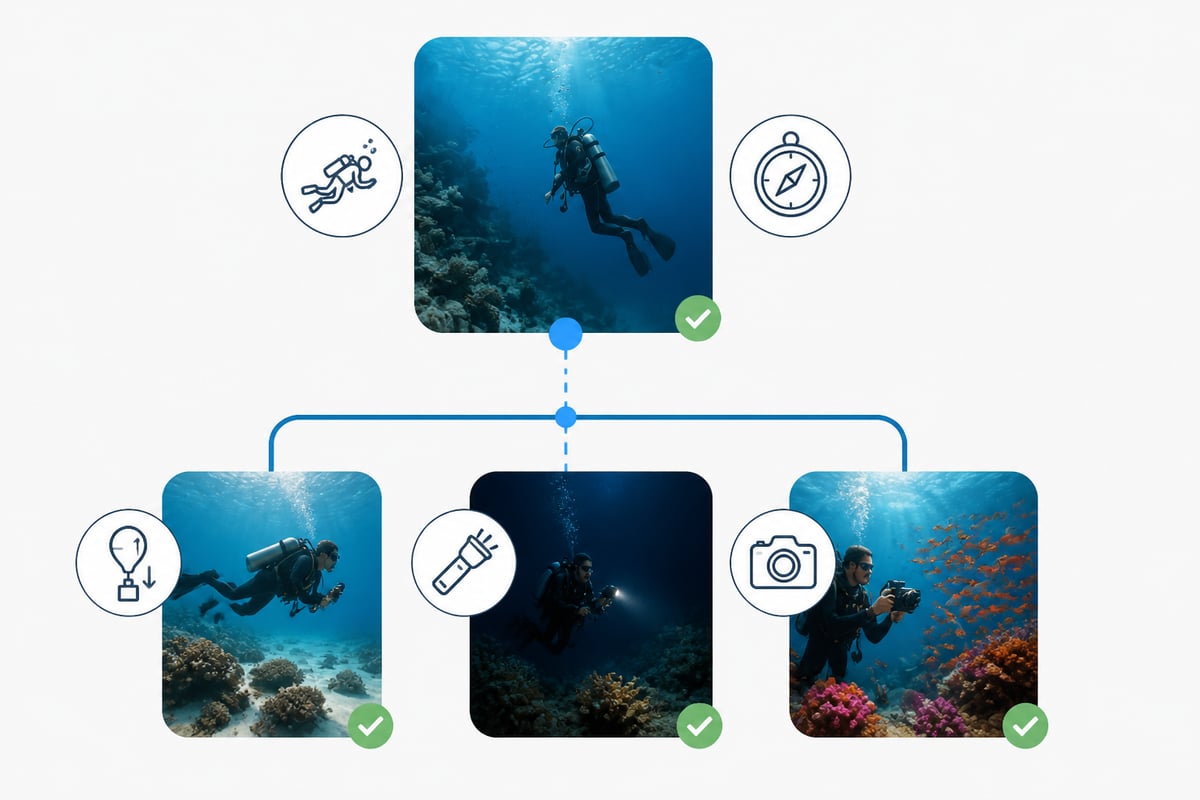
According to PADI, two of the five dives are required (Deep and Underwater Navigation), and you choose the other three. PADI also describes the course as six to eight hours of eLearning with no exam and little classroom time, so most of your attention goes into the water.
A few practical points to know before you book:
- Prerequisite: PADI lists an Open Water Diver, Junior Open Water Diver or qualifying entry-level certification, with no extra logged dives required beyond your original certification dives.
- Minimum age: 15 for Advanced Open Water Diver, and 12 to 14 for the Junior Advanced Open Water Diver certification.
- Credit toward specialties: each Adventure Dive may count toward the first dive of its matching Specialty Diver course, so the course doubles as a sampler.
For the full list of age-related depth limits, PADI's summary of diving restrictions is a useful reference if you are traveling with a teenager.
How Deep Can You Dive With an Advanced Open Water Certification?
With an Advanced Open Water certification you can dive to a maximum of 30 meters (100 feet), and the Deep Adventure Dive in the course is where you first experience that range with an instructor beside you. Standard Open Water divers are limited to a shallower depth, so the extra range is a real change in what you are cleared to do.
Depth is not just a number on your computer. Colors fade, air is consumed faster, and your no-decompression time shrinks, so the deep dive is partly a lesson in planning. Expect to practice checking your gauge, monitoring your depth and time, and doing a simple task at depth so you can see how the environment affects your thinking.
In El Nido, the depth you actually reach on any given day depends on the site and the conditions. Your instructor picks a site that suits the learning goal and the sea state, not one that simply hits the deepest number.
The Five Adventure Dives, Explained
The five Adventure Dives are the core of the course, and each one takes a single skill from "heard about it" to "done it." Two are fixed and three are your choice.
Deep Dive (required)
You descend to the planned depth with your instructor, learn how to plan around no-decompression limits and manage your air, and do a short exercise at depth. It is calm and controlled, with a focus on awareness rather than adrenaline.
Underwater Navigation (required)
You learn to use a compass, count kick cycles to measure distance, and follow a natural route using reef features. Navigation is the skill that makes you a good buddy, because you stop relying on the guide for every turn and start understanding where the boat is.
Your three electives
PADI lists possible electives including Fish Identification, Night, Peak Performance Buoyancy, Digital Underwater Imaging, Search & Recovery and Underwater Naturalist. A good way to choose is to ask what you want to be better at:
- Peak Performance Buoyancy if you want to stop bumping the bottom, use less air and look more relaxed in the water.
- Digital Underwater Imaging if you want better photos and video, since you practice composition and camera handling in the water.
- Fish Identification or Underwater Naturalist if you like knowing what you are looking at, because you learn how to observe and recognize marine life.
- Night if you want to see the reef change after dark, subject to site and conditions.
- Search & Recovery if you like tasks and puzzles, since you learn to locate and lift an object using lift bags and search patterns.
Buoyancy is a popular elective for newly certified holidaymakers. Better trim and calmer breathing can improve every dive that follows, whether you stay in El Nido or head to a bigger trip later.
How the Course Runs in El Nido
The course runs over a short stretch of days, usually alongside normal diving, and the schedule bends around weather and sea conditions rather than a fixed timetable. That is a sensible approach in northern Palawan, where wind and swell can change the best site from one morning to the next.
At Submariner Diving Center, the dive sites are selected by experience level, interests and daily conditions, and private VIP charters stay flexible so the plan can follow the sea. Instructors are professional PADI staff with local knowledge, and the center has over 15 years of diving experience in El Nido.
The location helps too. If you stay at The Beach House, you can keep your gear and transport close at hand, which saves an early-morning trip across town. After a day on the water you can unwind nearby and talk through your dives over dinner, which is a nice way to let the day sink in.
A typical flow looks like this:
- Before you arrive: complete the eLearning at your own pace so your time in El Nido goes to diving.
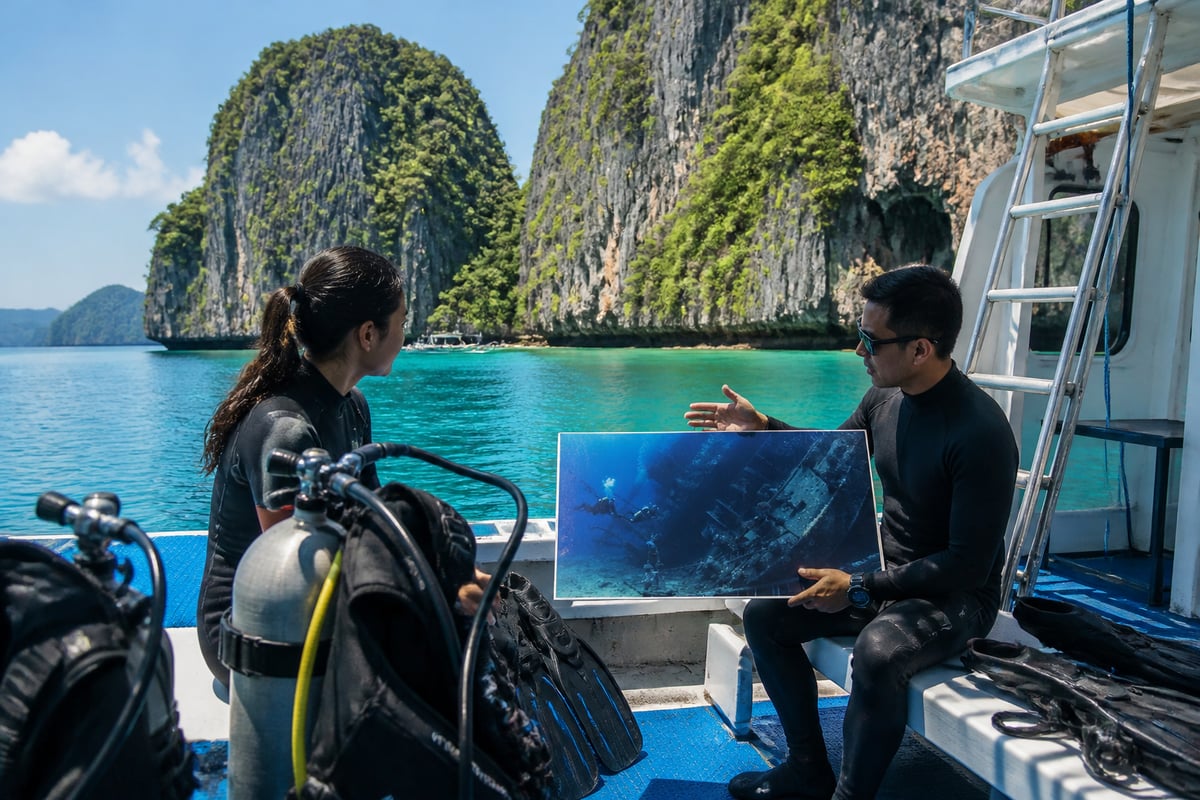
- Briefing: your instructor reviews the dive goals, plans the site and checks your gear.
- Dives: you complete the adventure dives, usually a couple per day, with surface intervals between them.
- Debrief and logbook: you go over what worked, sign off the skills and log each dive.
The Advanced Open Water Course at Submariner Diving Center follows this format, with deep diving, underwater navigation and specialty-style dives around El Nido, and you can book it directly through the center's booking hub.
Who Should Take the Course?
The course suits any certified diver who wants more confidence, more depth range and a better understanding of how conditions affect a dive. You don't need a long dive history, but you do need to be comfortable with the basics from your entry-level course.
It fits especially well if you are:
- A holidaymaker who got certified recently and wants to keep going before the trip ends.
- A couple or small group who want a private, personalized day rather than a crowded boat.
- A certified diver planning a bigger Palawan trip, including something like Tubbataha, where being comfortable at depth and in current matters more.
If you haven't yet done your entry-level course, start with the open water diving courses first, then come back to the advanced program once you've logged a few dives. If you are still choosing between entry-level options, the guide to PADI open water diving explains how that first certification works.
This course isn't aimed at people who only want to float on the surface. If your goal is snorkeling and nothing more, a diving certification is more than you need.
Planning Your Dives: Weather, Conditions and What to Bring
Plan for flexibility. Conditions in El Nido change with the season and the day, and your instructor may swap the sites around to keep the dives safe and enjoyable. That is normal and a sign the team is paying attention to the sea.
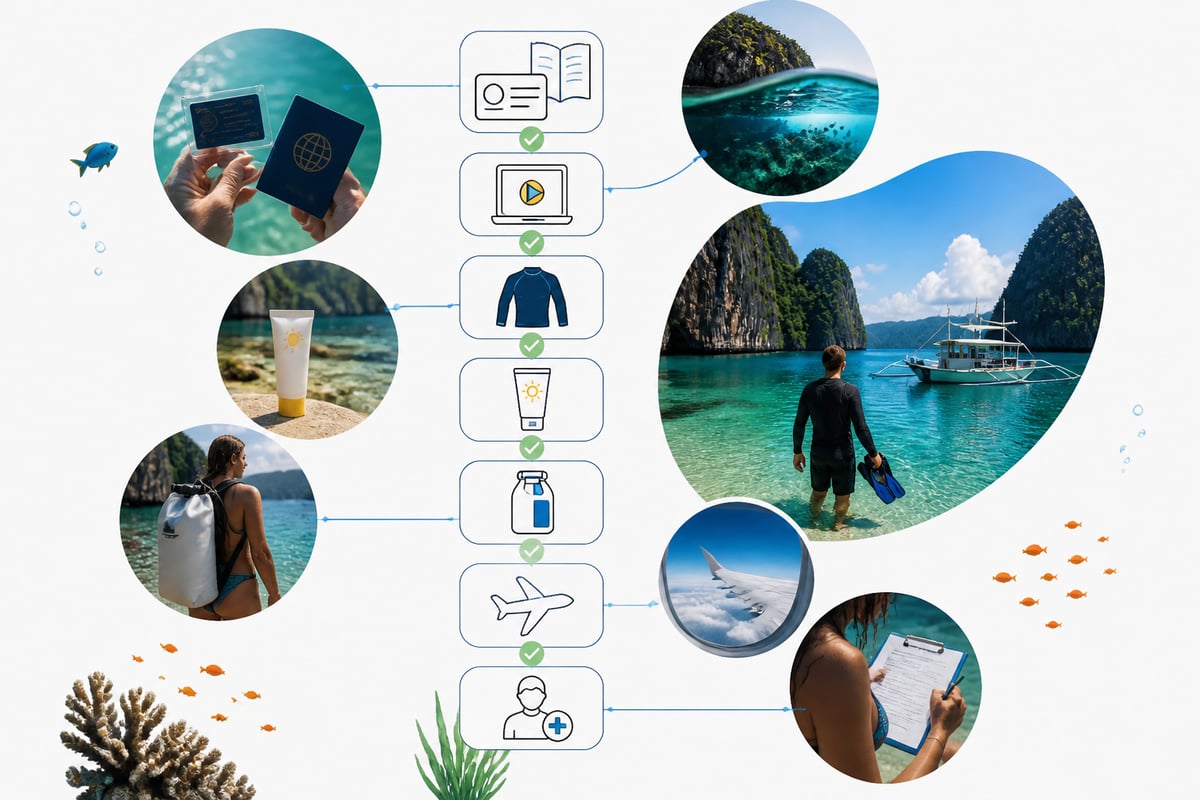
Here is a short checklist for the days you will be on the water:
- Bring your certification card and logbook, plus any medical forms your instructor asks for.
- Finish the eLearning before the first dive day.
- Pack reef-safe sunscreen, a rash guard or light wetsuit and a dry bag for the boat.
- Keep your last day free of flights, since you should leave a sensible gap between diving and flying.
- Tell your instructor about any health concerns, ear problems or medications before you get in the water.
Marine life varies by site and by day, so treat any sightings as a bonus rather than a promise. Your instructor can tell you what is typical for a site without guaranteeing a specific animal.
Beyond the Course: What Comes Next
After the course, the natural next step is a specialty or a longer dive trip. Because each Adventure Dive may count toward the first dive of its related Specialty Diver course, you may already have a head start on a specialty you enjoyed, such as buoyancy or underwater imaging.
If you like the idea of spending more time in the water, a few days of fun diving around El Nido will help you practice the skills you just learned. For ideas on how a diving holiday fits together, the open diving guide covers what to expect from the dive days themselves, and the advanced open water diver overview goes into more detail on the certification.
Divers who are eyeing bigger destinations, Tubbataha included, often use the advanced course as a confidence step. Comfort at depth, with a compass and with good buoyancy makes any liveaboard or remote trip more relaxed.
FAQ
Do I need to do a written exam for Advanced Open Water?
No. PADI describes the course as six to eight hours of eLearning with no exam and little classroom time. Most of the learning happens through the adventure dives themselves, with your instructor.
Why do divers take Benadryl?
Some divers take antihistamines such as Benadryl for allergies or motion sickness, but it can cause drowsiness and affect how you handle pressure and decisions underwater. Talk to your doctor or instructor before diving on any medication, and don't take something new for the first time on a dive day.
Why is a hot shower not advised right after diving?
A very hot shower straight after a dive can affect circulation while your body is still off-gassing nitrogen, so many divers prefer a lukewarm rinse and a short rest first. If you have any doubts, ask your instructor how to manage your surface interval and post-dive routine.
If you are certified and want to add depth and skills to your El Nido trip, check your certification card and finish the eLearning before you travel, then pick your three electives. Submariner Diving Center's Advanced Open Water Course runs from the same building as The Beach House, with flexible private charters that follow the weather, and the team will help you choose dives that suit your experience and goals, so Book Your Diving with Submariner Diving Center when your dates are set.