The Philippines consistently ranks among the world's premier diving destinations, and for good reason. With over 7,000 islands scattered across the Coral Triangle, this archipelago offers an extraordinary diversity of underwater landscapes, marine life, and diving experiences that cater to every skill level. Whether you're chasing pelagic encounters, exploring dramatic walls, or photographing rare critters, finding the best scuba Philippines locations depends on your interests, experience level, and travel timing.
Why the Philippines Stands Out for Scuba Diving
The Philippines sits at the heart of the Coral Triangle, the most biodiverse marine region on Earth. This privileged geography translates directly into what you'll see underwater.
Marine biodiversity here is unmatched. You'll find over 500 species of hard corals and more than 2,000 species of reef fish across Philippine waters. From tiny nudibranchs no bigger than your fingernail to massive whale sharks and manta rays, the range of marine life is staggering.
Diving Conditions Year-Round
Unlike many tropical destinations with narrow diving windows, the Philippines offers year-round diving opportunities. Regional variations mean you can always find excellent conditions somewhere in the archipelago.
- Water temperatures range from 26°C to 30°C throughout the year
- Visibility typically spans 10 to 40 meters, depending on location and season
- Currents vary from gentle drift dives to challenging pelagic sites
- Depth options accommodate everyone from Open Water divers to technical enthusiasts
The country's geographic spread means you're never limited to a single season. When typhoons affect one region, another remains pristine and diveable.
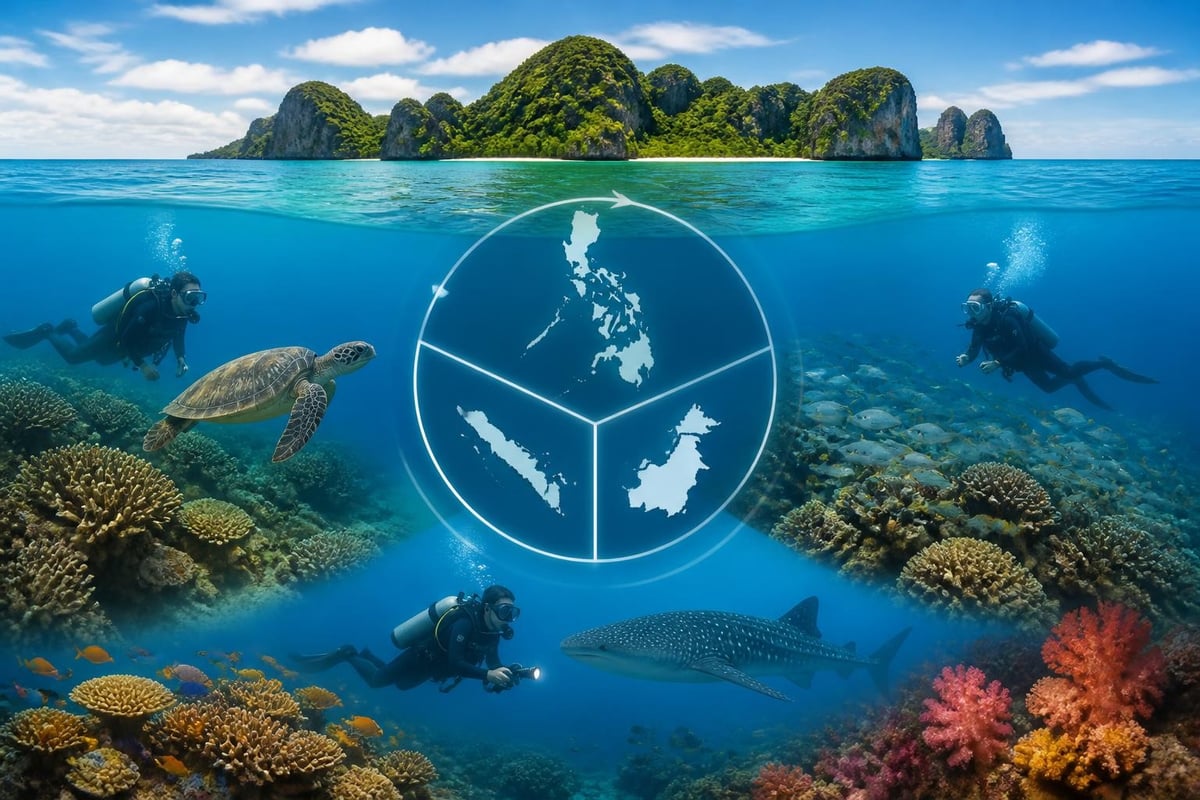
Top Regional Destinations for the Best Scuba Philippines Experiences
The Philippines divides into distinct diving regions, each offering unique underwater characteristics. Understanding these differences helps you choose the right destination for your interests and schedule.
Palawan: Pristine Waters and Dramatic Topography
Palawan consistently earns recognition as one of Asia's most beautiful destinations, and its underwater scenery matches the surface spectacle. The province stretches over 400 kilometers, creating varied diving conditions along its length.
El Nido anchors the northern diving scene with limestone walls plunging into crystal-clear water. The marine life here thrives in protected waters, with healthy hard coral gardens, schools of fusiliers and snappers, and regular turtle sightings. Current patterns bring nutrients that support vibrant reef ecosystems.
For divers staying in El Nido, consider exploring the top dive sites in Palawan to understand what makes this region so special. The combination of dramatic topography and excellent visibility creates memorable diving throughout the year.
If you're planning an extended diving trip to El Nido, staying beachfront makes logistics simple. The Beach House sits right on the beach in central El Nido, home to Submariner Diving Center, where you can literally walk from your room to the dive boat. After diving, the Cloud 9 rooftop restaurant and bar provides the perfect spot to relax and watch the sunset over Bacuit Bay.
Coron offers entirely different diving focused on Japanese shipwrecks from World War II. Over a dozen wrecks rest in diveable depths, many now encrusted with corals and home to dense schools of fish. Wreck diving here ranges from shallow, easily accessible vessels perfect for newer divers to deeper technical challenges.
| Palawan Dive Region | Main Attractions | Best Season | Skill Level |
|---|---|---|---|
| El Nido | Walls, reefs, turtles, clear water | November–May | All levels |
| Coron | WWII wrecks, lakes, reefs | November–June | Open Water+ |
| Southern Palawan | Apo Reef, Tubbataha (seasonal) | March–June | Advanced+ |
Tubbataha Reefs: World Heritage Wonder
Tubbataha Reefs Natural Park represents the pinnacle of Philippine diving. This UNESCO World Heritage site sits 150 kilometers southeast of Puerto Princesa in the Sulu Sea, accessible only by liveaboard during a narrow seasonal window.
The diving here is genuinely world-class. Pristine walls drop into the abyss, covered in healthy hard corals and swarming with fish. Sharks patrol the reefs regularly, including whitetip and blacktip reef sharks, grey reef sharks, and occasional hammerheads. Manta rays cruise the cleaning stations, while large Napoleon wrasse and massive tuna add to the spectacle.
Access requires commitment: liveaboards run only from mid-March through mid-June when sea conditions permit the crossing. The Tubbataha Reefs Natural Park maintains strict management protocols that help preserve this extraordinary ecosystem. Recent monitoring shows the reefs remain in excellent condition despite climate pressures affecting other Philippine sites.
Visayas: Central Philippines Diving Hub
The Visayas region forms the heart of Philippine diving, with numerous destinations clustered around accessible hubs.
Malapascua Island draws divers specifically for its thresher sharks. Early morning dives at Monad Shoal offer regular encounters with these elegant pelagic sharks visiting cleaning stations. Recent research on thresher shark behavior at this site helps inform sustainable diving practices that protect these vulnerable animals.
Moalboal provides excellent shore diving with sardine runs that create living walls of millions of fish. The Pescador Island marine park nearby offers walls dropping to 60 meters, covered in whip corals and soft corals, with regular turtle and shark sightings.
Dauin and Apo Island specialize in muck diving and macro photography. The black sand slopes around Dauin hide extraordinary critters: frogfish, blue-ringed octopus, flamboyant cuttlefish, and countless nudibranch species. Apo Island's marine sanctuary showcases what effective protection achieves, with huge schools of jacks and healthy coral coverage.
Verde Island Passage: The Center of Marine Biodiversity
Scientists call the Verde Island Passage the "center of the center" of the Coral Triangle. This narrow strait between Luzon and Mindoro concentrates marine biodiversity at levels unmatched anywhere else on Earth.
The passage contains more species of shore fish and corals than any comparable-sized area globally. This extraordinary richness stems from complex current patterns, varied habitats, and the meeting of different water masses.
Anilao: Macro Photography Paradise
Anilao sits at the northwestern entrance to Verde Island Passage, easily accessible from Manila. This makes it a favorite weekend destination for Manila-based divers and a convenient first stop for international visitors.
Muck diving defines the Anilao experience. Black sand slopes and rubble areas hide incredible biodiversity in miniature.
- Frogfish in multiple species and colors
- Mimic octopus and wonderpus
- Multiple species of pipefish and seahorses
- Rare nudibranchs found nowhere else
- Blue-ringed octopus and flamboyant cuttlefish
The density of rare critters here attracts underwater photographers from around the world. Many dive centers cater specifically to photography, with camera rooms, charging stations, and guides trained in critter spotting.
Beyond the muck, Anilao offers wall diving and reef dives with good coral coverage. The variety ensures interesting diving across multiple days.
Mission Blue’s recognition of Verde Island Passage as a Hope Spot highlights ongoing conservation efforts and community monitoring programs working to protect this irreplaceable ecosystem. Research on Marine Protected Area planning in the region demonstrates how science informs conservation decisions.
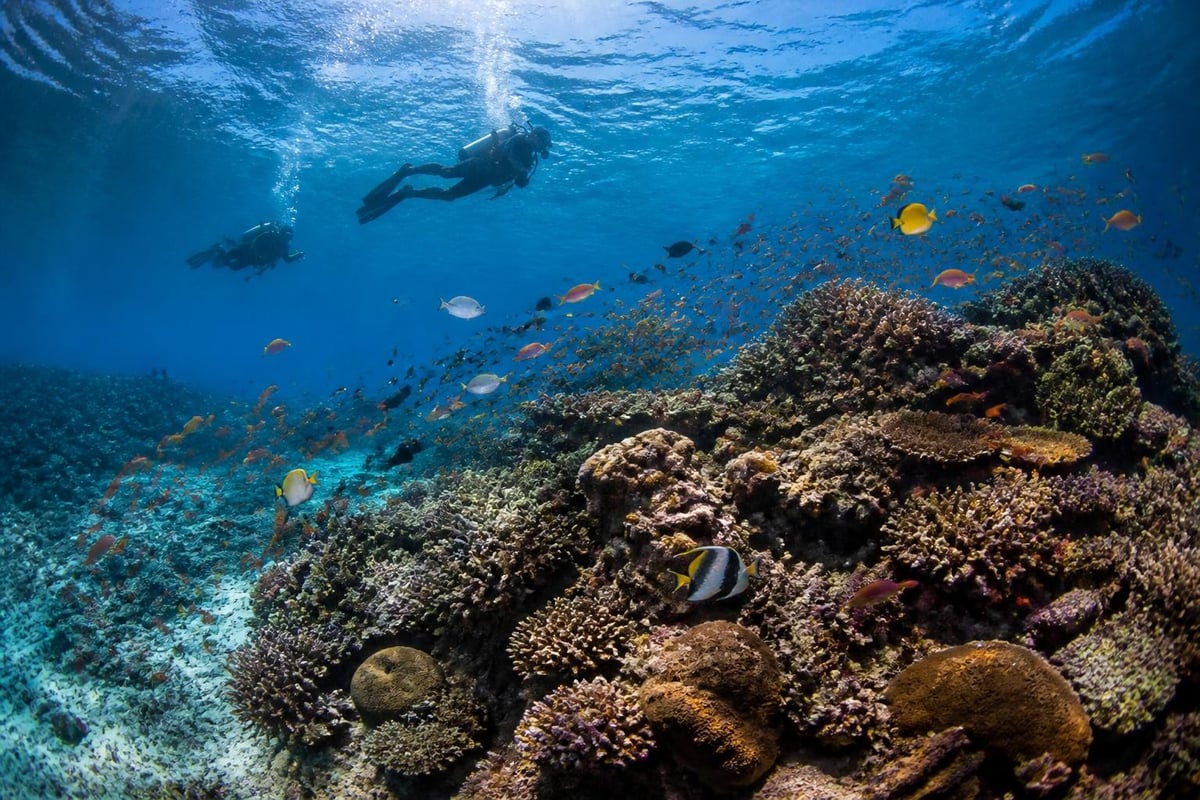
Planning Your Best Scuba Philippines Trip
Choosing when and where to dive in the Philippines requires understanding seasonal patterns and matching destinations to your interests.
Seasonal Considerations
The Philippines experiences two primary seasons that affect diving conditions differently across regions.
Dry season (November through May) brings calm seas, excellent visibility, and minimal rain to most areas. This represents peak diving season for Palawan, the Visayas, and most popular destinations. Water temperatures stay comfortable, and boat operations run reliably.
Wet season (June through October) brings monsoon rains and rougher seas to western regions, but some eastern areas remain diveable. Typhoons can impact travel plans, though they're usually tracked well in advance. Some dive centers close during the wettest months, while others continue operating when conditions permit.
The comprehensive guide to Philippine diving breaks down seasonal patterns by region, helping you time your trip appropriately.
Matching Dive Sites to Your Interests
The best scuba Philippines destination for you depends on what you want to see and experience underwater.
| Interest | Recommended Destinations | Best Months |
|---|---|---|
| Pelagic encounters | Tubbataha, Malapascua, Apo Reef | March–June |
| Wreck diving | Coron, Subic Bay | November–June |
| Macro/critters | Anilao, Dauin, Dumaguete | Year-round |
| Walls and reefs | El Nido, Moalboal, Bohol | November–May |
| Learning/courses | El Nido, Puerto Galera | November–May |
Different skill levels also match better with certain destinations. El Nido offers excellent diving for all certification levels, with sites ranging from shallow coral gardens perfect for newly certified divers to deeper walls and drift dives for experienced divers. The protected waters mean conditions stay manageable even when other regions turn rough.
Getting the Most from Your Philippine Diving Adventure
Maximizing your underwater time requires some practical planning beyond choosing destinations.
Dive Training and Certifications
The Philippines offers excellent value for dive training, with experienced instructors, small class sizes, and beautiful training environments. Many divers combine certification courses with their Philippine vacation.
PADI courses are widely available throughout the country. Open Water courses typically run 3-4 days, while Advanced Open Water takes 2-3 days. Instructor quality varies, so choosing established dive centers with good safety records matters.
For divers looking to extend bottom time and dive more safely, Nitrox certification opens up new possibilities on deeper dives and repetitive dive days. Many Philippine dive sites sit in the 18-30 meter range where Nitrox provides real benefits.
Dive Logistics and Trip Structure
Liveaboards versus resort-based diving each offer advantages. Liveaboards reach remote sites impossible as day trips and maximize dive time. Resort-based diving offers more flexibility, comfortable accommodations, and easier integration of non-diving activities or companions.
Most Philippine diving operates as day boat diving from resorts or dive centers. Boats typically run 2-3 tank trips, returning to shore between dives. This allows you to combine diving with exploring, relaxation, and other activities.
Safety Considerations
Philippine diving standards generally maintain good safety protocols, but you should verify your dive operator's credentials and equipment quality.
- Check that instructors and divemasters hold current certifications
- Verify equipment maintenance schedules and oxygen availability
- Ask about emergency protocols and evacuation procedures
- Ensure your dive insurance covers Philippine diving (including chamber treatment if needed)
- Research the nearest hyperbaric chamber location for your destination
The Philippines has several operational hyperbaric chambers, with facilities in Manila, Batangas, Cebu, and Palawan. Knowing the nearest chamber location and evacuation procedures provides important peace of mind.
Conservation and Responsible Diving
The health of Philippine reefs varies considerably based on protection levels and management quality. Your choices as a diver impact these ecosystems.
Marine Protected Areas (MPAs) demonstrate what effective conservation achieves. Sites like Apo Island and well-managed areas in El Nido show dramatically higher fish biomass and coral cover compared to unprotected areas. Supporting dive operators who respect marine parks and follow sustainable practices helps maintain these special places.
Recent conservation reports from organizations monitoring Tubbataha and other key sites show both successes and ongoing challenges. Climate change impacts like coral bleaching affect Philippine reefs as they do globally, making responsible diving practices even more critical.
Responsible diving practices protect the reefs you came to see:
- Perfect your buoyancy control to avoid damaging corals
- Never touch, chase, or harass marine life
- Don't feed fish (it changes their behavior and ecology)
- Take only photos, leave only bubbles
- Choose dive operators committed to sustainable practices
- Avoid single-use plastics and support ocean conservation efforts
The detailed mapping of Philippine dive sites helps divers understand site conditions and plan appropriately skilled dives, reducing the chance of accidents that damage reefs.
Making Your Best Scuba Philippines Experience Happen
With so many outstanding options, planning a Philippine diving trip can feel overwhelming. Start by identifying your primary interests, then match them to appropriate destinations and seasons.
For first-time visitors, focusing on a single region makes sense. Spend a week diving one area thoroughly rather than rushing between multiple destinations. This approach reduces travel stress and allows you to really appreciate each location.
For experienced divers, combining different regions in one trip showcases the Philippines' diversity. You might spend time at Tubbataha during its limited season, then finish with several days of macro diving in Anilao or reef diving in El Nido.
The combination of affordable costs, extensive dive infrastructure, friendly local culture, and extraordinary underwater biodiversity makes the Philippines hard to beat as a dive destination. Whether you're taking your first breaths underwater or logging your thousandth dive, these islands offer something special.
From world-class walls and pristine reefs to rare critters and historical wrecks, the best scuba Philippines has to offer spans the full spectrum of diving experiences. The diversity of sites, reliable conditions, and exceptional marine life create unforgettable underwater adventures across all seasons and skill levels. If you're ready to explore El Nido's crystal-clear waters and vibrant reefs, Palawan Diving offers expert guidance, quality equipment, and personalized diving experiences that showcase this remarkable region at its best. Whether you're earning your first certification or seeking your next underwater adventure, the waters of Palawan are waiting.