Snorkeling opens a window into some of the planet's most extraordinary underwater ecosystems, requiring nothing more than a mask, fins, and a sense of adventure. Whether you're floating above Caribbean coral gardens, gliding alongside sea turtles in the Galápagos, or exploring the vibrant reefs of Southeast Asia, finding the best snorkeling sites transforms a simple beach day into an unforgettable encounter with marine life. In 2026, snorkelers have more choices than ever, but knowing which sites deliver clear water, healthy reefs, and abundant biodiversity makes all the difference between a good day and a truly exceptional one.
What Makes a Snorkeling Site Exceptional
Not all underwater spots offer the same experience. The best snorkeling sites share several defining characteristics that set them apart from average coastal areas.
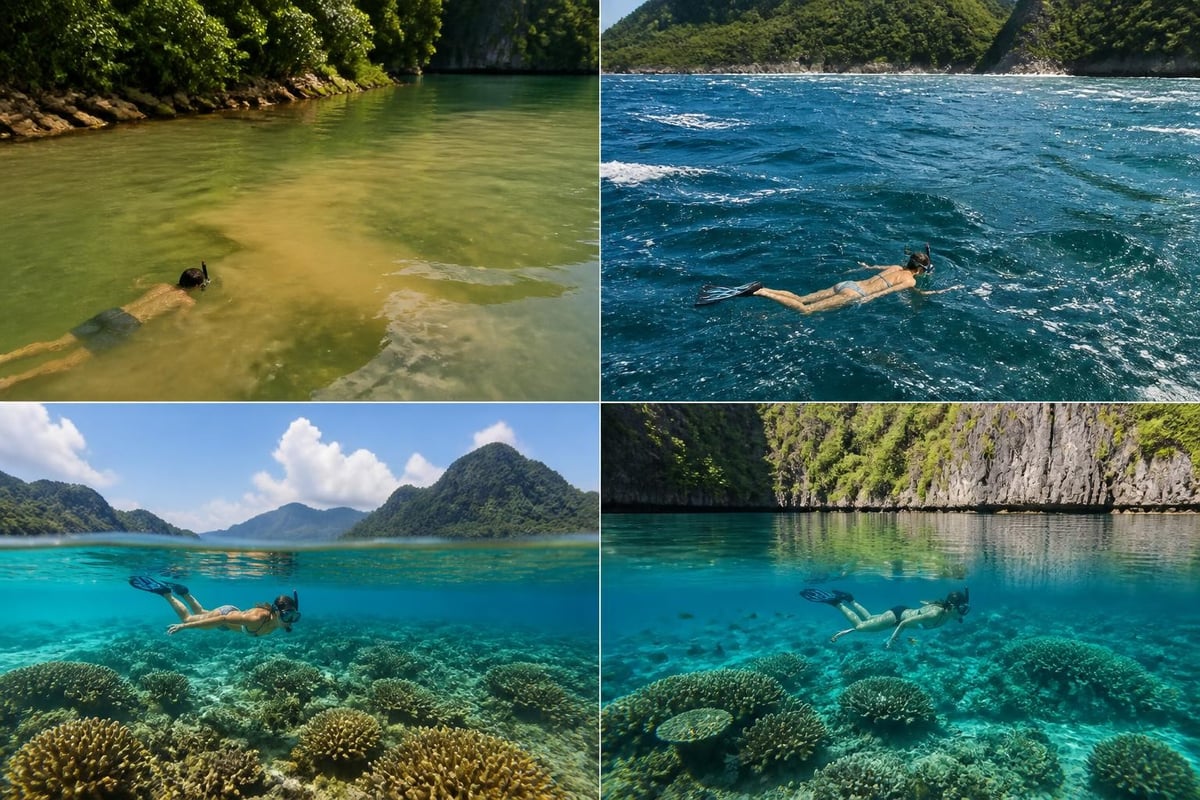
Crystal-Clear Visibility
Water clarity is non-negotiable for memorable snorkeling. Sites with visibility exceeding 15 meters allow you to spot marine life from the surface and appreciate the full scope of reef formations below.
Key visibility factors include:
- Limited river runoff and sediment
- Minimal wave action and surge
- Distance from urban development
- Protected status reducing boat traffic
- Seasonal weather patterns
The calmest conditions typically occur during dry seasons when rainfall decreases and winds settle. In El Nido, the November-to-May window offers the clearest water, with visibility often reaching 20-30 meters at protected sites.
Healthy, Biodiverse Reefs
Coral health directly impacts the quality of your snorkeling experience. National Geographic highlights how the world's best beaches often coincide with thriving reef ecosystems that support diverse marine communities.
| Reef Health Indicator | What It Means for Snorkeling |
|---|---|
| Live coral coverage >50% | Vibrant colors, complex structure, abundant fish |
| Variety of coral species | Multiple habitats, diverse marine life |
| Presence of herbivores | Balanced ecosystem, controlled algae |
| Large fish populations | Healthy food web, predator-prey balance |
| Minimal coral bleaching | Resilient reef, stable conditions |
Unfortunately, UNESCO’s 2024 report on coral reef World Heritage sites documents widespread bleaching events affecting even protected areas, making it crucial to choose sites with demonstrated resilience or active restoration efforts.
Easy, Safe Access
The best snorkeling sites balance underwater rewards with straightforward entry. Shore-accessible locations eliminate boat costs and allow flexible timing, while boat-accessed sites often provide pristine conditions away from coastal development.
Safety considerations include:
- Gentle entry points without strong currents
- Nearby facilities or support services
- Clear weather and sea-state information
- Emergency access and communication
- Local knowledge of conditions
World-Class Snorkeling Destinations
Several regions consistently deliver exceptional snorkeling experiences, each offering unique characteristics and marine encounters.
Caribbean Standouts
The Caribbean basin hosts some of the most accessible snorkeling on Earth. Lonely Planet’s guide to the best Caribbean snorkeling sites covers destinations from Belize's barrier reef to the Cayman Islands' famous Stingray City.
Bonaire's shore-accessible sites allow snorkelers to explore pristine reefs steps from the beach. The island's protected marine park status has preserved coral health better than many Caribbean neighbors.
Cozumel's drift snorkeling along the Mesoamerican Barrier Reef offers an effortless way to cover large reef sections, carried by gentle currents past towering coral formations.
Galápagos: A Living Laboratory
Few destinations rival the Galápagos for unique wildlife encounters. Snorkeling in the Galápagos brings you face-to-face with marine iguanas, sea lions, penguins, and sharks, all remarkably tolerant of human presence.
The cooler water temperatures (18-25°C depending on season) require wetsuits but support a nutrient-rich ecosystem unlike tropical reefs. Sites like Devil's Crown and Kicker Rock combine dramatic volcanic topography with exceptional marine biodiversity.
Pacific Island Gems
The Pacific offers countless snorkeling opportunities, from Hawaii's protected bays to Fiji's soft coral gardens. NOAA’s guide to snorkeling in National Marine Sanctuaries showcases ten remarkable U.S. sites, many in Hawaiian waters.
French Polynesia's lagoons provide sheltered conditions with stunning clarity. Moorea's stingray and shark feeding areas offer guaranteed encounters, though purists prefer natural sites where marine life behaves without human conditioning.
El Nido: Palawan's Snorkeling Paradise
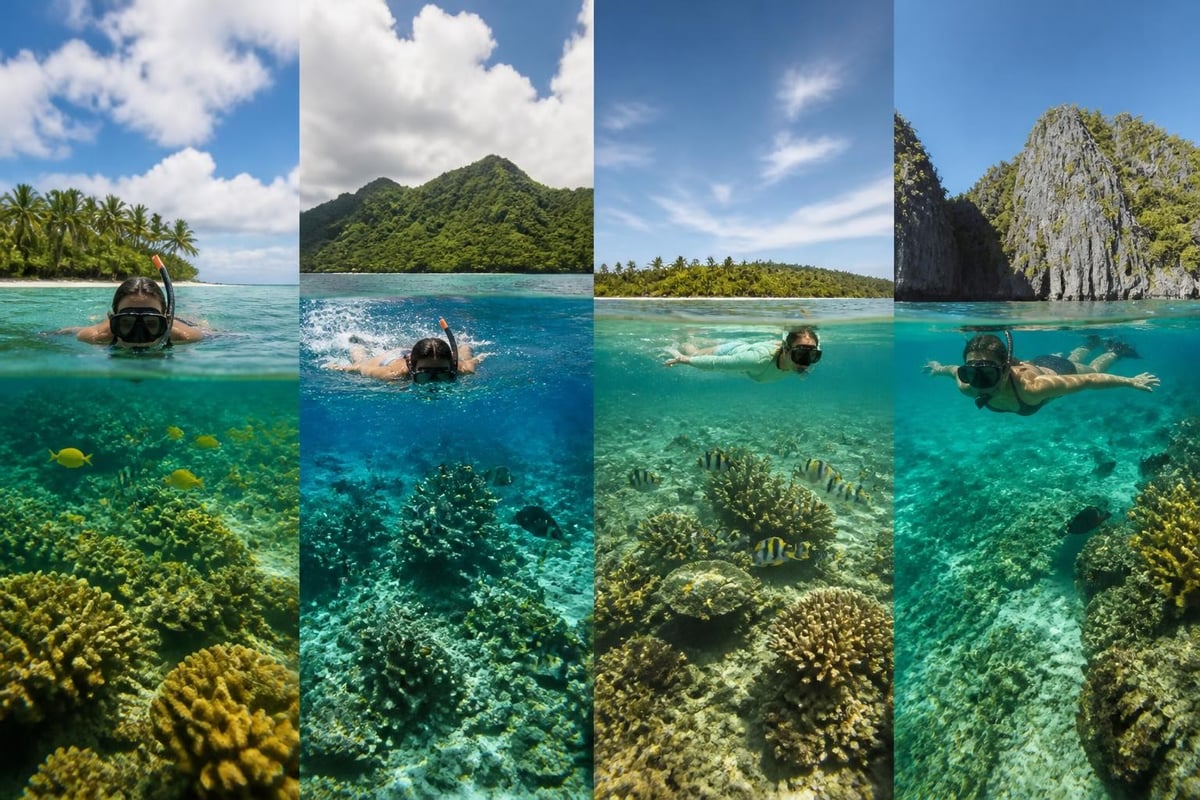
El Nido rivals any global destination for underwater beauty, combining dramatic limestone landscapes with exceptionally healthy reefs. The best snorkeling sites here benefit from protection within marine sanctuary boundaries and limited development pressure.
Bacuit Bay's Protected Reefs
The islands scattered across Bacuit Bay create natural protection from swells and currents, resulting in calm conditions ideal for snorkeling. Sites like Helicopter Island, Matinloc Shrine, and the small lagoons feature shallow coral gardens teeming with reef fish.
What makes El Nido snorkeling exceptional:
- Water temperatures of 27-29°C year-round
- Visibility regularly exceeding 20 meters
- Over 400 fish species documented
- Healthy hard and soft coral coverage
- Minimal bleaching compared to global sites
- Dramatic underwater topography
The marine sanctuaries established around El Nido have proven effective. Fish populations show healthy age structures, with both juveniles and mature adults present, indicating successful breeding and recruitment.
Seasonal Considerations
El Nido's best snorkeling conditions align with the northeast monsoon's dry season from November through May. During these months, calm seas and clear skies create optimal visibility and comfortable surface conditions.
June through October brings southwest monsoon weather with increased rainfall and wind. While snorkeling remains possible, visibility decreases slightly and sea conditions become less predictable. Experienced snorkelers often find fewer crowds offset slightly reduced visibility.
Shore vs. Boat Access
Many of El Nido's finest snorkeling sites require boat access, as the dramatic limestone cliffs that define the landscape often plunge directly into deep water. Island-hopping tours visit multiple sites in a day, though these group tours move on a fixed schedule.
For snorkelers wanting more flexibility and time at each site, private boat charters allow custom itineraries focused entirely on underwater exploration rather than sightseeing. This approach suits serious snorkelers who prioritize bottom time over Instagram-worthy lagoon photos.
If you're combining snorkeling with scuba diving, Submariner Diving Center operates from The Beach House beachfront property, where divers can access both snorkeling and diving opportunities from one convenient location.
Choosing Your Next Snorkeling Adventure
Selecting from the world's best snorkeling sites requires matching your priorities with destination characteristics. Consider these factors when planning your next trip.
Experience Level and Conditions
Beginners benefit from shallow, calm sites with easy entry and minimal current. Locations like Florida's John Pennekamp Coral Reef State Park or Hawaii's Hanauma Bay offer protected conditions perfect for building confidence.
Experienced snorkelers might seek more challenging environments with stronger currents, deeper reefs, or open-water crossings. Sites like Palau's Blue Corner or Egypt's Ras Mohammed reward skill with dramatic topography and larger marine life.
| Skill Level | Ideal Conditions | Example Sites |
|---|---|---|
| Beginner | Shallow (2-6m), no current, shore access | Hanauma Bay, Cozumel beach entry sites |
| Intermediate | Moderate depth (5-12m), gentle current, boat or shore | El Nido islands, Bonaire shore sites |
| Advanced | Variable depth, current, open water | Blue Corner Palau, Galápagos sites |
Budget and Accessibility
Destination costs vary dramatically. Caribbean sites often require international flights plus boat charters, while accessible locations like Florida or Hawaii may cost less for North American travelers despite higher accommodation prices.
El Nido offers exceptional value, with boat tours visiting multiple snorkeling sites for a fraction of Caribbean charter costs. The region's growing tourism infrastructure provides options from budget hostels to luxury resorts.
Conservation Consciousness
NOAA’s coral restoration programs demonstrate the importance of choosing destinations committed to reef health. Sites with active management, enforcement, and restoration efforts deserve your tourism dollars.
Snorkelers can contribute to conservation through citizen science programs like NOAA’s Click-a-Coral project, which uses volunteer-submitted photos to train AI systems for reef monitoring.
Responsible snorkeling practices include:
- Never touching or standing on coral
- Maintaining buoyancy control to avoid fin strikes
- Using reef-safe sunscreen (no oxybenzone or octinoxate)
- Avoiding fish feeding, which alters natural behavior
- Following all marine sanctuary regulations
- Supporting operators with environmental commitments
Snorkeling vs. Scuba Diving: Making the Choice
Many of the best snorkeling sites also offer world-class scuba diving. Understanding the differences helps you choose the right activity for your goals and comfort level.
Accessibility and Training
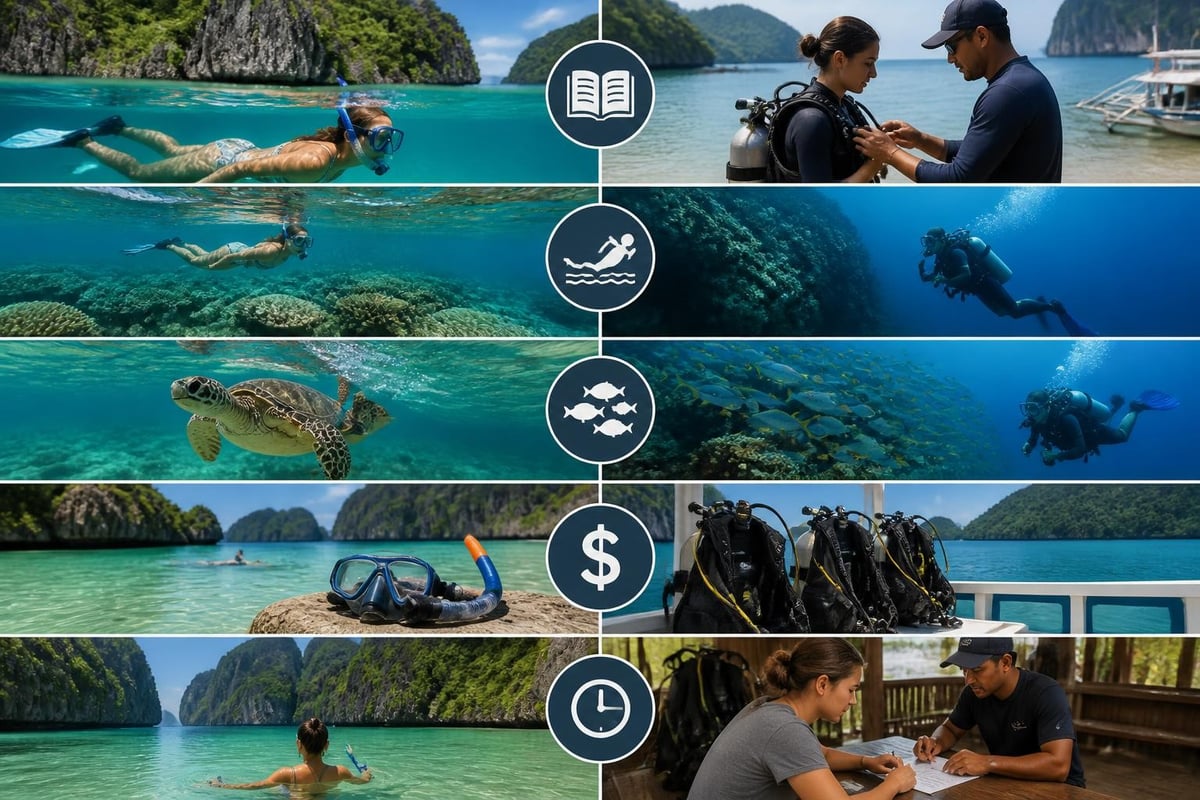
Snorkeling requires minimal equipment and no certification, making it immediately accessible to virtually anyone comfortable in water. You can start exploring reefs within minutes of arriving at the beach.
Scuba diving demands certification, specialized equipment, and greater planning. However, diving unlocks deeper reefs, longer bottom times, and closer encounters with marine life less commonly seen at the surface.
What You'll See
At many sites, snorkeling provides 80% of the reef experience for 20% of the effort and cost. Shallow reef tops often host the highest coral diversity and fish abundance, as sunlight penetration supports photosynthetic corals.
Deeper reefs accessed by scuba diving feature different species adapted to reduced light, including large pelagics, sharks, and unique invertebrates. Wall dives and deep formations remain inaccessible to snorkelers but offer dramatic underwater landscapes.
Trying Both
For travelers in El Nido wanting to experience both activities, various diving options complement snorkeling adventures. Certified divers can explore deeper sections of the same reefs they snorkel, while beginners can start with snorkeling and progress to introductory diving programs if interested.
Essential Snorkeling Gear and Techniques
The right equipment and basic skills transform good snorkeling into great snorkeling. Invest in quality basics and practice fundamental techniques before visiting the best snorkeling sites.
Mask, Snorkel, and Fins
A properly fitting mask creates a watertight seal without excessive pressure. Test the fit by placing the mask against your face without the strap and inhaling through your nose. The mask should stay in place without being held.
Mask selection tips:
- Tempered glass lenses for safety and clarity
- Silicone skirt for comfort and seal
- Low volume design for easier clearing
- Prescription lenses if needed
Snorkels with purge valves simplify water clearing but add complexity and potential failure points. A simple J-tube design works reliably for most snorkelers and forces you to learn proper clearing technique.
Fins provide propulsion while keeping your hands free for photography or stability. Full-foot fins suit warm water and beach entry, while adjustable fins accommodate boots for rocky entries or cooler conditions.
Technique Fundamentals
Efficient snorkeling conserves energy and extends your time in the water. Float face-down with arms at your sides, using gentle fin kicks originating from the hip rather than the knee.
Breathe slowly and deeply through the snorkel, establishing a relaxed rhythm. If water enters the snorkel, either clear it with a sharp exhale (blast method) or surface and drain it by removing the mouthpiece.
Duck diving allows brief descents to examine coral or marine life more closely. Take a deep breath, bend at the waist, and raise your legs vertically. The weight of your legs helps you descend. Equalize ear pressure by pinching your nose and gently blowing.
Safety Equipment
Beyond the basic three-piece kit, safety items improve comfort and security, especially at remote sites.
- Flotation device: Inflatable safety sausage or snorkel vest for rest breaks
- Rash guard or wetsuit: Sun protection and thermal insulation
- Reef-safe sunscreen: Environmental protection for coral ecosystems
- Waterproof camera: Document encounters without touching marine life
- Dive flag: Alerts boats to snorkeler presence (required at some locations)
Making the Most of Your Snorkeling Experience
Preparation and awareness maximize enjoyment and safety at even the best snorkeling sites. Follow these strategies for memorable underwater exploration.
Research and Planning
Study site-specific information before arrival. Understand entry and exit points, typical conditions, and any hazards like currents or marine life requiring caution. Local dive shops and tour operators provide current condition reports.
Tide tables help you time your visit for optimal conditions. Some sites work best at high tide when surge decreases, while others shine at low tide when marine life concentrates in smaller areas.
Environmental Awareness
Responsible snorkeling preserves sites for future visitors. Maintain awareness of your body position and fin placement to avoid contact with coral. Even light touches damage protective mucus layers and invite disease.
Watch for wildlife behavior changes indicating stress. If fish flee or hide, you're too close. Marine life that ignores your presence is comfortable; animals that approach or follow are curious but not threatened.
Photography Ethics
Underwater photography captures memories but shouldn't compromise marine life or reef health. Never touch, move, or harass subjects for better photos. Natural behavior makes more interesting images than staged encounters.
Shoot with available light when possible, as strobes can startle fish and invertebrates. Practice buoyancy control to maintain position without fin strikes or hand grabs. The best photographers prioritize reef conservation over the perfect shot.
Weather, Seasons, and Timing
Understanding seasonal patterns helps you visit the best snorkeling sites during optimal conditions. Global climate zones create distinct windows for different regions.
Tropical Destinations
Most tropical snorkeling sites peak during dry seasons when rainfall decreases and visibility improves. Caribbean sites generally favor December through April, while Southeast Asian locations like El Nido excel from November through May.
Monsoon patterns create predictable seasonal shifts. El Nido's northeast monsoon brings dry conditions and calm seas, while the southwest monsoon increases rainfall and wind. Plan accordingly based on your tolerance for variable conditions and crowd levels.
Temperate Waters
California kelp forests, Mediterranean sites, and other temperate locations follow different patterns. Summer brings warmest water temperatures but may include algae blooms reducing visibility. Fall often provides a sweet spot with residual warmth and improved clarity.
Daily Timing
Beyond seasonal considerations, time of day affects snorkeling conditions. Morning hours typically offer calmer winds and flatter seas before afternoon thermal heating generates wind. Marine life shows different activity patterns throughout the day.
Fish feeding peaks during early morning and late afternoon. Predators hunt actively during these periods, creating more dynamic encounters. Midday light penetrates deepest, illuminating reef details but sometimes causing marine life to shelter in coral formations.
From crystal-clear Caribbean lagoons to the dramatic reefs surrounding El Nido's limestone cliffs, the world's best snorkeling sites offer transformative encounters with marine ecosystems. Whether you're floating above Galápagos penguins or exploring Palawan's protected sanctuaries, each destination rewards curiosity with unforgettable underwater moments. Ready to discover El Nido's exceptional reefs firsthand? Palawan Diving combines world-class snorkeling and diving access with expert local knowledge, helping you explore Bacuit Bay's finest sites in comfort and safety.