Taking your first breath underwater is a transformative experience that opens up an entirely new world. Beginner scuba diving might seem daunting at first, but with proper training, quality equipment, and the right approach, anyone in reasonable health can learn to explore the underwater realm safely. Whether you're dreaming of swimming alongside tropical fish in crystal-clear waters or discovering vibrant coral reefs, understanding what beginner scuba diving involves will help you start your journey with confidence and realistic expectations.
What Makes Beginner Scuba Diving Different From Advanced Diving
When you're just starting out, beginner scuba diving focuses on building fundamental skills in controlled environments before progressing to open water. Unlike advanced divers who tackle deep wrecks, strong currents, or technical diving, beginners work within strict depth limits and calm conditions.
Training Depth Limitations and Supervision
Entry-level certification limits you to maximum depths of 12 meters (40 feet) during training dives, with full certification allowing depths up to 18 meters (60 feet). These conservative limits ensure you're always within easy reach of the surface while you develop core competencies.
Key beginner restrictions include:
- Maximum depth of 18 meters after certification
- Direct instructor supervision during all training dives
- Buddy system requirements at all times
- No decompression diving or overhead environments
- Calm water conditions with good visibility
Research from Divers Alert Network shows that adherence to training limits significantly reduces incident rates among new divers. The controlled progression allows you to master buoyancy, equalization, and emergency procedures before facing more challenging dive conditions.
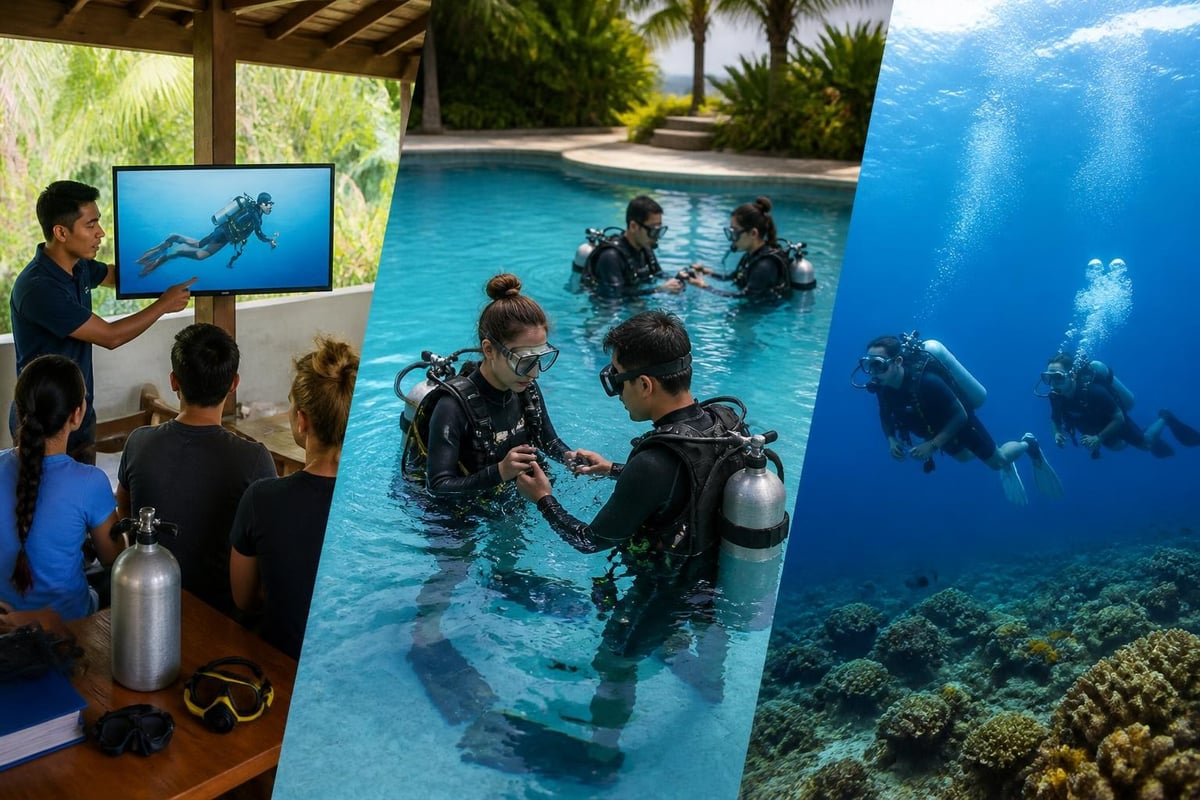
Essential Skills You'll Master During Beginner Scuba Diving Training
Beginner scuba diving certification requires mastering approximately 20 core skills that become second nature with practice. These aren't just checkboxes on a form, they're life-saving competencies that every diver relies on throughout their diving career.
Buoyancy Control: The Foundation of Good Diving
Achieving neutral buoyancy means you neither sink nor float, hovering effortlessly at your chosen depth. According to buoyancy management research, proper buoyancy control reduces air consumption by up to 30%, protects fragile marine environments, and prevents exhausting fin kicks.
You'll learn to adjust buoyancy using three tools:
- Breath control – Shallow breathing to descend, deeper breathing to ascend
- BCD inflation – Adding or releasing air from your buoyancy compensator
- Weight distribution – Proper weighting eliminates the need for constant adjustments
Equipment Management and Self-Sufficiency
Your instructor will teach you to assemble, check, and troubleshoot your gear independently. This includes regulator setup, tank pressure verification, and pre-dive safety checks that follow the BWRAF acronym (BCD, Weights, Releases, Air, Final check).
Critical equipment skills include:
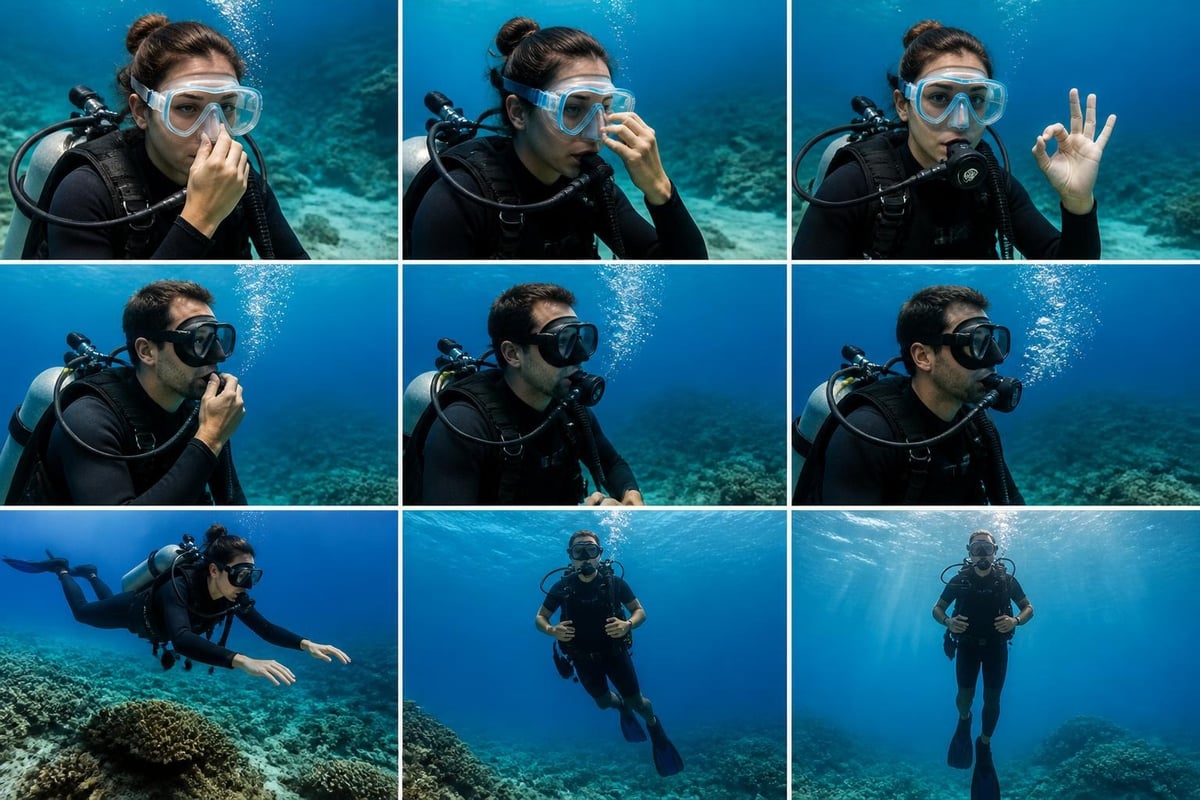
- Clearing a flooded mask underwater
- Recovering and clearing your regulator
- Switching to your alternate air source
- Controlled emergency swimming ascents
- Managing free-flowing regulators
Navigation and Dive Planning Fundamentals
Even beginner scuba diving courses introduce basic underwater navigation using natural references and compass headings. The NOAA Diving Standards & Safety Manual emphasizes that all divers should be able to return to their entry point using basic navigation skills.
Choosing Your First Scuba Certification Path
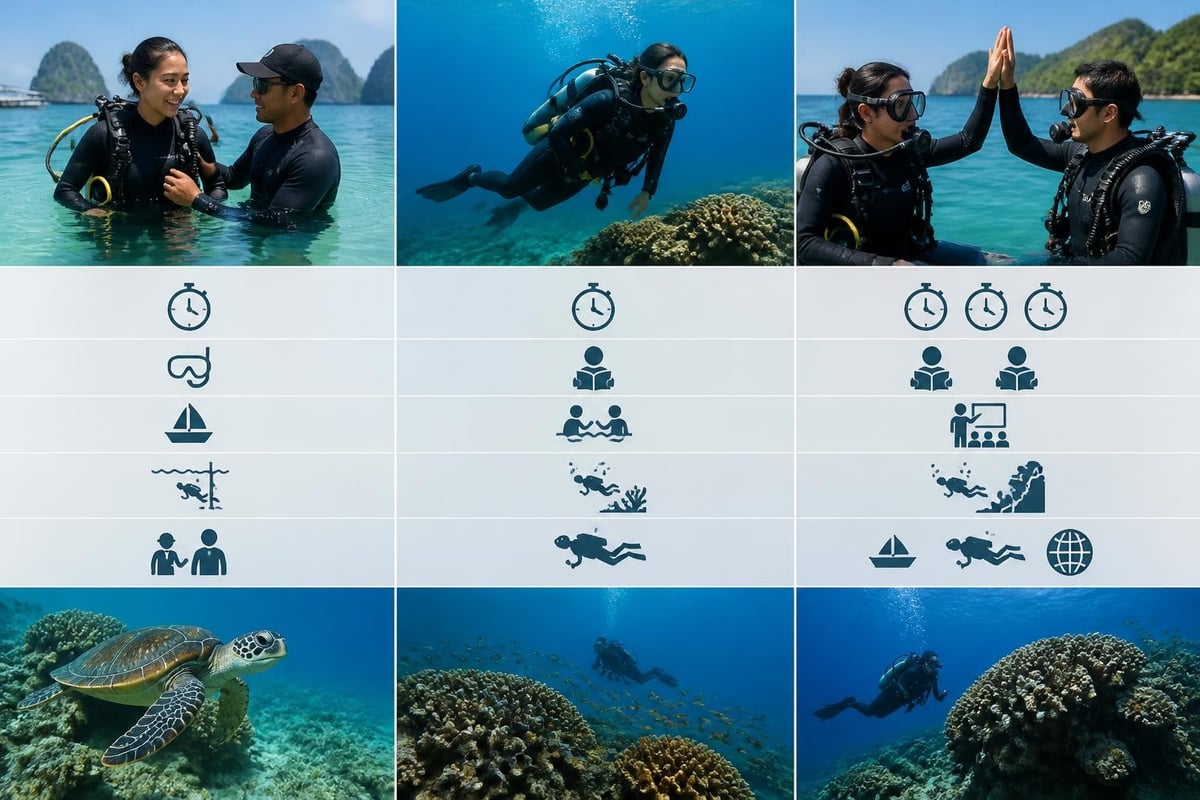
Several agencies offer beginner scuba diving certification, with PADI, SSI, and NAUI being the most recognized worldwide. While teaching methods vary slightly, all reputable agencies meet international training standards (ISO 24801-2) for autonomous divers.
| Certification Type | Total Training Time | Open Water Dives | Depth Limit |
|---|---|---|---|
| Try Dive / Discover | 2-4 hours | 1 dive (6-12m) | 12 meters |
| Scuba Diver | 2-3 days | 2 dives | 12 meters |
| Open Water Diver | 3-4 days | 4 dives | 18 meters |
Open Water Diver: The Full Certification
The Open Water Diver course is the most comprehensive beginner scuba diving certification, allowing you to dive anywhere in the world (within recreational limits) without direct supervision. Training combines knowledge development through online learning or classroom sessions, confined water skill practice in a pool or calm bay, and four open water certification dives.
In El Nido's warm, clear waters, certification becomes not just training but an unforgettable experience. Completing your open water dives on pristine reefs surrounded by tropical fish makes the learning process genuinely enjoyable rather than purely academic.
Discover Scuba Diving: Testing the Waters
If you're not ready to commit to full certification, a Discover Scuba Diving experience lets you try beginner scuba diving under close instructor supervision. You'll learn basic safety concepts, practice essential skills in shallow water, then complete a guided dive to about 12 meters.
This option works perfectly for travelers who want to experience scuba during a Palawan vacation without dedicating four days to certification. The Discover Scuba Diving program gives you a genuine underwater adventure while determining if you want to pursue full certification later.
Health Requirements and Physical Fitness for Beginner Scuba Diving
You don't need to be an athlete to start beginner scuba diving, but certain health conditions require medical clearance before training. Most dive centers use a standardized medical questionnaire that screens for conditions affecting pressure equalization, breathing function, or cardiovascular health.
Common Medical Considerations
Conditions requiring doctor's approval:
- Asthma or reactive airway disease
- Heart conditions or high blood pressure
- Diabetes (controlled with medication)
- Ear or sinus problems
- Seizure disorders
- Pregnancy (absolute contraindication)
The health data from active U.S. divers shows that most medically-cleared divers participate safely when following conservative dive profiles. Age alone isn't a barrier, with divers from 10 to 70+ successfully completing beginner scuba diving certification.
Basic Swim Requirements
You'll need to demonstrate basic swimming competency before certification. Requirements typically include swimming 200 meters (any stroke) or 300 meters with mask, fins, and snorkel, plus treading water or floating for 10 minutes. These aren't competitive standards, just confirmation that you're comfortable in water.
Equipment Essentials for Your First Dives
During beginner scuba diving training, your dive center provides all necessary equipment. Understanding what each piece does helps you feel more confident and prepared for your first underwater breath.
The Core Equipment System
| Equipment | Function | Beginner Consideration |
|---|---|---|
| Mask | Clear vision underwater | Proper fit prevents leaking |
| Regulator | Delivers breathing air | Practice clearing regularly |
| BCD | Buoyancy control | Learn inflation/deflation points |
| Wetsuit | Thermal protection | 3mm sufficient for tropical diving |
| Fins | Efficient propulsion | Adjust straps before entering water |
| Weights | Counteract buoyancy | Start conservatively, adjust gradually |
What You Should Own From Day One
Most beginners purchase their own mask, snorkel, and fins after certification. These personal items affect comfort and hygiene, making them worth the investment. A well-fitting mask that doesn't leak transforms your diving experience from frustrating to enjoyable.
Wait until after certification to invest in regulators, BCDs, or computers. Once you've completed several dives, you'll better understand your preferences and budget priorities.
Your First Open Water Dives: What to Expect
The transition from pool training to open water represents the most exciting moment in beginner scuba diving. Your first ocean dive typically takes place in calm, shallow water with excellent visibility, allowing you to apply practiced skills in a real underwater environment.
The Typical First Dive Timeline
- Pre-dive briefing (15 minutes) – Site orientation, marine life, entry/exit procedures
- Gear setup (15 minutes) – Assemble equipment with instructor supervision
- Entry and descent (5 minutes) – Controlled descent with equalization pauses
- Underwater tour (25-35 minutes) – Skill demonstrations and reef exploration
- Safety stop and ascent (5 minutes) – 3-minute stop at 5 meters, controlled surface return
- Post-dive debrief (10 minutes) – Log dive, discuss experience, plan next dive
Your instructor monitors you constantly during these dives, ready to assist with any challenges. Common first-dive issues like mask clearing, buoyancy adjustments, or ear equalization are completely normal and easily managed with instructor guidance.
Managing Pre-Dive Nerves
Feeling anxious before your first open water dive is universal among beginner scuba diving students. The key is distinguishing productive concern (stay alert, follow procedures) from paralyzing fear (skip the dive, seek additional training).
Practical anxiety management strategies:
- Practice your skills in shallow water before descending deeper
- Communicate clearly with your instructor using hand signals
- Focus on slow, regular breathing throughout the dive
- Remember you can abort the dive at any time without penalty
- Keep your first dive short and shallow, building confidence gradually
The NOAA Diver Course emphasizes that psychological readiness matters as much as physical skill competency. There's no shame in requesting extra confined water practice or postponing open water dives until you feel genuinely prepared.
Common Beginner Scuba Diving Challenges and Solutions
Every new diver faces similar obstacles during training. Recognizing these common challenges helps you prepare mentally and practice solutions proactively.
Equalization Difficulties
Ear pressure is the most frequent complaint during beginner scuba diving. As you descend, increasing water pressure compresses air spaces in your ears, creating discomfort or pain if not equalized properly.
Effective equalization techniques:
- Start equalizing before you feel pressure
- Equalize every meter during descent
- Ascend slightly if equalization fails, then try again
- Use gentle Valsalva maneuver (pinch nose, gentle blow)
- Try swallowing, jaw movements, or head tilting
Never force equalization or continue descending through ear pain. An ruptured eardrum is preventable through patient, gradual pressure management.
Air Consumption and Breathing Control
New divers often surface with half their tank empty while their instructor still has 75% remaining. Rapid air consumption during beginner scuba diving results from anxiety, inefficient movement, and improper buoyancy rather than lung capacity.
Improving air consumption takes time and experience. Each dive you'll notice your tank lasting longer as skills become automatic and anxiety decreases. Focus on slow, deep breaths and minimize unnecessary movement underwater.
Buoyancy Control Frustration
Achieving neutral buoyancy ranks among the most challenging beginner scuba diving skills, often requiring 10-20 dives before it feels natural. Most new divers are initially overweighted, requiring constant BCD inflation that leads to uncontrolled ascents when they forget to vent air.
The solution involves proper weighting (you should float at eye level with an empty BCD and normal breath), fine-tuning through small adjustments, and learning to control depth primarily through breathing rather than BCD inflation.
Safety Protocols Every Beginner Scuba Diver Must Know
Beginner scuba diving safety extends beyond emergency procedures to include conservative dive planning, buddy awareness, and knowing your limits. Analysis of recreational diving fatalities shows that most incidents involve multiple poor decisions rather than single equipment failures.
The Buddy System and Dive Planning
You'll never dive alone during beginner scuba diving training and shouldn't dive solo even after certification. Your buddy provides redundant air supply, assistance with problems, and emergency response capability.
Pre-dive planning checklist:
- Confirm maximum depth and bottom time
- Agree on entry/exit points and procedures
- Establish communication signals
- Review emergency protocols
- Set turn-around air pressure (typically 100 bar/1500 psi)
Ascent Safety and Decompression Sickness Prevention
Proper ascent procedures prevent decompression sickness (DCS), the most serious risk in recreational diving. During beginner scuba diving, you'll learn to ascend no faster than 9 meters (30 feet) per minute, complete a safety stop at 5 meters for 3 minutes, and avoid flying or traveling to altitude for 18-24 hours after diving.
While DCS is rare in recreational diving (approximately 1 in 5,000 dives), following conservative profiles and proper ascent rates virtually eliminates the risk.
Continuing Your Diving Education After Beginner Certification
Completing your Open Water certification marks the beginning, not the end, of your diving journey. Most divers continue skill development through additional training, guided dives, and specialty courses.
Advanced Training and Specialties
After logging 10-20 dives and feeling comfortable with basic skills, consider advancing your training. The Advanced Open Water course introduces deeper diving (to 30 meters), navigation, night diving, and other specialty skills that expand your capabilities and dive site access.
Popular specialty courses for progressing divers:
- Deep diving (extending depth range to 40 meters)
- Underwater navigation (precision compass and natural navigation)
- Wreck diving (safe penetration techniques)
- Nitrox certification (enriched air for extended bottom time)
- Underwater photography (marine life documentation)
Building Experience Through Guided Dives
Between certifications, nothing develops competence like regular diving. Each dive reinforces skills, improves buoyancy, reduces air consumption, and builds confidence for more challenging conditions.
In El Nido, the diversity of dive sites offers perfect progression opportunities. Beginners start on protected shallow reefs, gradually advancing to drift dives, deeper walls, and more exposed locations as skills develop. The variety ensures continuous learning without overwhelming new divers.
Where to Complete Your Beginner Scuba Diving Certification
Location matters significantly when choosing where to learn scuba diving. Ideal training destinations combine warm water, good visibility, calm conditions, and interesting marine life that makes learning genuinely enjoyable.
What Makes El Nido Perfect for Beginner Scuba Diving
El Nido offers exceptional conditions for learning to dive: water temperatures around 27-29°C (81-84°F) year-round eliminate the need for thick wetsuits, visibility frequently exceeds 20 meters, and protected bays provide calm training environments even during monsoon transitions.
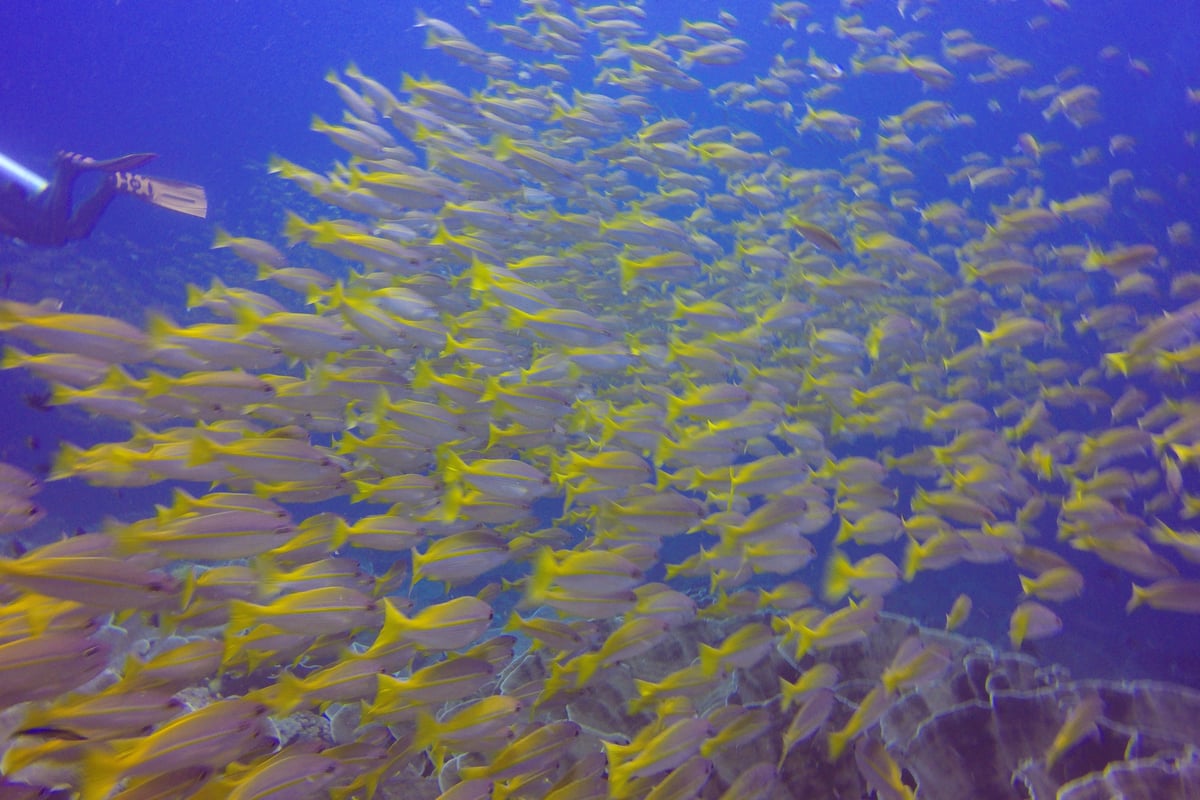
The marine biodiversity means even your shallow training dives include encounters with tropical reef fish, sea turtles, and vibrant coral formations. Learning doesn't feel like repetitive skill drills when you're surrounded by fascinating underwater life.
El Nido training advantages:
- Warm, clear water year-round
- Protected shallow bays ideal for skill practice
- Short boat rides to training sites
- Consistent calm conditions
- Abundant marine life at beginner depths
The Dive and Stay Advantage
Staying at beachfront dive accommodation streamlines your certification schedule and eliminates daily logistics. When your accommodation, training facility, and dive boat departure are in the same location, you'll spend more time learning and less time traveling.
The El Nido Dive & Stay Package combines everything needed for a successful certification trip: comfortable rooms steps from the beach, immediate access to your instructors and equipment, and the convenience of diving from your doorstep. Between training sessions, you can relax at Cloud 9 rooftop restaurant while reviewing your course materials or simply enjoying the beachfront setting.
Environmental Responsibility From Your First Dive
Beginner scuba diving training now includes environmental awareness as a core competency. Proper buoyancy prevents fin kicks from damaging coral, understanding marine life behavior helps you observe without disturbing animals, and following sustainable diving practices protects the reefs you've come to explore.
The Impact of Buoyancy on Reef Health
A single poorly controlled diver can damage decades of coral growth through accidental contact, fin kicks, or dragging equipment. The scientific community, including programs detailed in the Smithsonian Scientific Diving Safety Manual, emphasizes buoyancy control not just for safety but as an ethical obligation to protect underwater ecosystems.
Practice your buoyancy in sandy areas or over dead substrate before photographing or approaching coral formations. Even brief contact can kill coral polyps or break fragile structures that took years to form.
Responsible Marine Life Interaction
Guidelines for observing underwater life:
- Maintain distance from all marine animals
- Never chase, touch, or feed wildlife
- Avoid blocking cleaning stations or resting areas
- Don't collect shells, coral, or other organisms
- Report responsible wildlife sightings to marine conservation programs
These practices should become habit during beginner scuba diving so they're automatic throughout your diving career.
Costs and Time Investment for Beginner Scuba Diving
Understanding the financial and time commitment helps you plan your certification realistically. Beginner scuba diving courses typically require 3-4 days and range from moderate to significant investment depending on location and course format.
Typical Certification Costs
| Item | Typical Cost Range | Notes |
|---|---|---|
| Open Water Course | $350-600 USD | Includes materials, equipment, certification |
| Personal gear (mask/fins/snorkel) | $150-300 USD | Optional but recommended |
| Dive computer | $200-500 USD | Wait until after certification |
| Medical clearance | $50-150 USD | If required based on questionnaire |
| Certification card replacement | $50 USD | If lost or upgrading to eCard |
Tropical dive destinations often offer better value than domestic courses in temperate regions due to equipment rental costs, exposure suit requirements, and limited visibility that extends training time.
Time Requirements Beyond Course Days
The stated "3-4 day" Open Water course assumes you've completed knowledge development beforehand. Most agencies now offer eLearning where you complete theory and quizzes independently before arrival, reducing in-person training to confined water and open water components only.
Realistic time breakdown:
- eLearning modules: 8-12 hours (self-paced at home)
- Confined water training: 1-2 sessions (3-4 hours each)
- Open water certification dives: 2 days (4 dives total, 2 per day)
- Equipment fitting and briefings: 1-2 hours spread across training
Starting your eLearning several weeks before travel ensures you arrive prepared for water training immediately, maximizing your vacation time while maintaining quality learning.
Final Preparations Before Your First Beginner Scuba Diving Course
Success in beginner scuba diving starts before you reach the water. Simple preparations smooth your training experience and help you focus on skill development rather than logistical concerns.
What to Bring to Training
Beyond enthusiasm and openness to learning, practical items make training more comfortable. Swimwear appropriate for extended water time, reef-safe sunscreen (protecting both your skin and the marine environment), a rash guard or thin shirt for sun protection, and a reusable water bottle for hydration between dives cover most needs.
Your dive center provides technical equipment, but bring any prescription dive masks or corrective lenses you might need. Underwater vision significantly impacts comfort and learning, so address any vision correction requirements before starting training.
Mental Preparation and Realistic Expectations
Beginner scuba diving challenges you physically and mentally. Skills that seem impossible during first attempts become routine by certification completion. The British Sub-Aqua Club training guidance emphasizes that competency develops through repetition and practice, not natural talent or athletic ability.
Approach training with patience toward yourself and trust in the proven learning progression. Your instructor has guided hundreds of nervous beginners through identical concerns and challenges. The systematic skill-building approach works when you commit to the process and practice honestly.
Communication With Your Instructor
Before training begins, discuss any medical conditions, previous water anxieties, or specific concerns with your instructor. Experienced instructors adapt their teaching to individual learning styles and can provide additional practice time for challenging skills.
Never hide problems or pretend to understand instructions. Asking questions and requesting skill repetition demonstrates maturity and ensures genuine competency rather than superficial checklist completion.
Beginner scuba diving opens extraordinary opportunities to explore a world most people never experience firsthand, building skills and confidence through systematic training in controlled environments. Whether you're planning your first breath underwater through a try dive or committing to full Open Water certification, the journey from nervous beginner to capable diver follows a proven progression that thousands successfully complete each year. Ready to start your underwater adventure in the crystal-clear waters of El Nido? Palawan Diving offers comprehensive beginner courses taught by experienced instructors, combining quality training with spectacular dive sites that make learning genuinely unforgettable.