Taking your first breath underwater is a moment you'll never forget. For travelers visiting El Nido who've wondered what lies beneath the turquoise surface of Bacuit Bay, a discover scuba experience offers the perfect introduction. This isn't a full certification course, but rather a carefully supervised first dive that lets complete beginners explore vibrant coral reefs and swim alongside tropical fish under professional guidance. No previous experience is required, and you can go from beach to underwater explorer in a single morning or afternoon.
What Exactly Is Discover Scuba Diving
Discover scuba diving is a beginner program designed by PADI (Professional Association of Diving Instructors) that gives non-divers their first taste of breathing underwater. Unlike certification courses that span several days, this introduction typically takes 2-3 hours from start to finish.
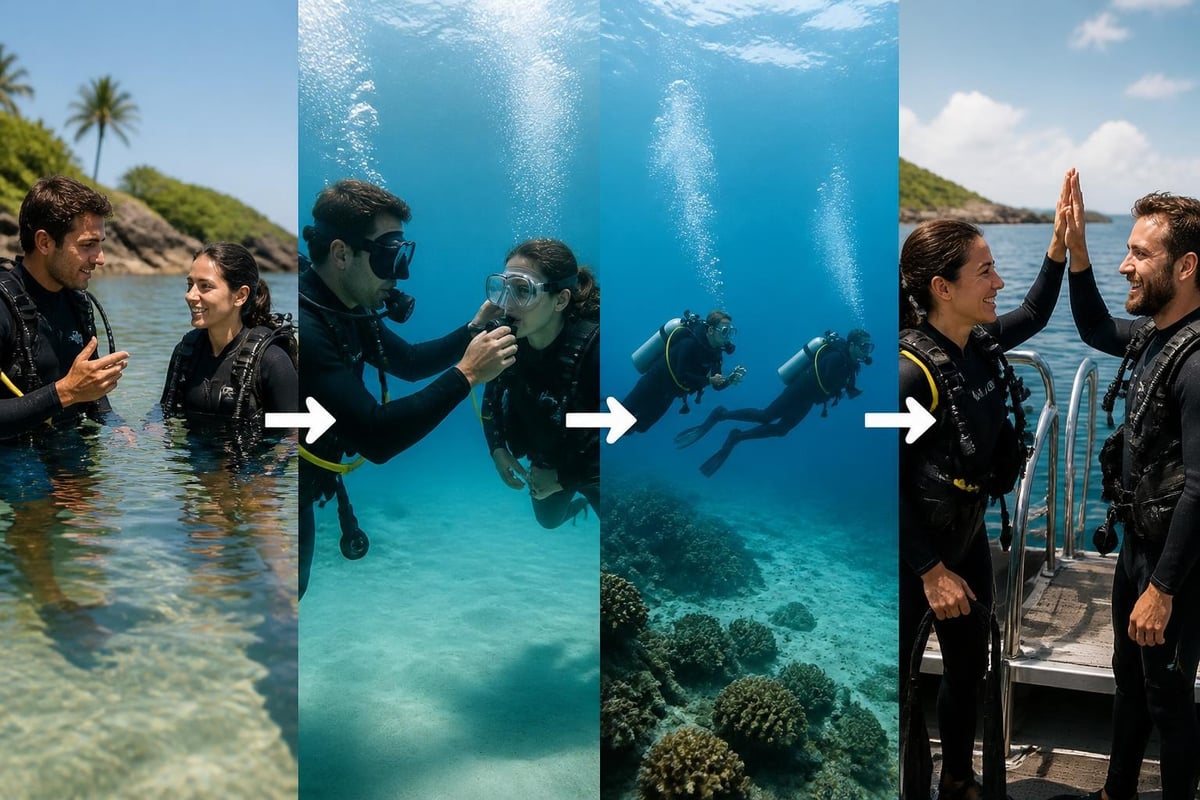
The experience follows a structured format that prioritizes safety while maximizing your time underwater. You'll begin with a brief classroom session covering essential concepts, followed by shallow-water practice in controlled conditions, and finally a guided ocean dive to a maximum depth of 12 meters.
What makes this different from snorkeling:
- You breathe continuously underwater using scuba equipment
- You descend below the surface to explore reefs up close
- You experience neutral buoyancy and weightlessness
- A professional instructor stays beside you throughout
The program serves two purposes. First, it gives curious travelers an accessible way to explore El Nido's underwater world without committing to a full course. Second, it helps prospective divers decide whether they want to pursue certification.
Who Can Try Discover Scuba
Age and health requirements are straightforward but important. Participants must be at least 10 years old, though most centers recommend 12 or older for the full ocean experience. There's no upper age limit, provided you meet basic health criteria.
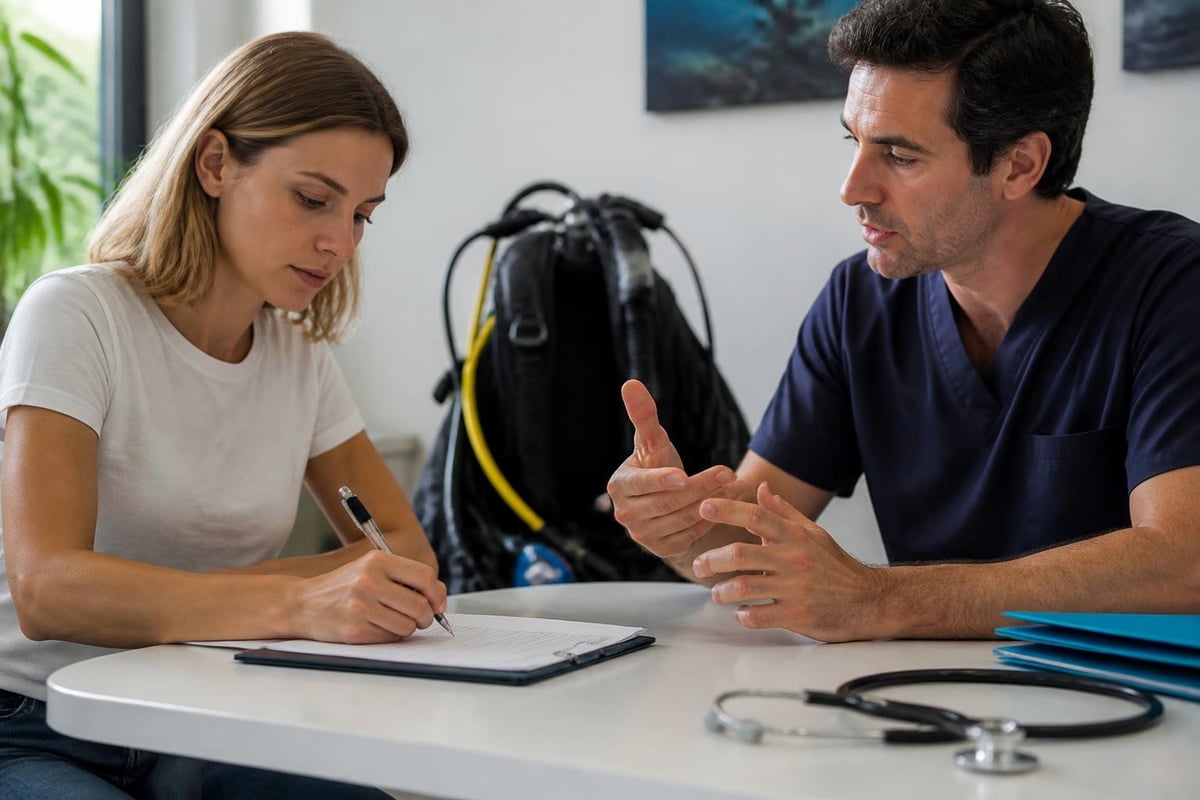
Before any discover scuba session, you'll complete a medical questionnaire. This screening tool, developed by dive-safety organizations, identifies potential risk factors. According to Divers Alert Network’s fitness-to-dive guidance, certain conditions require medical clearance before participating.
| Medical Consideration | Requirement |
|---|---|
| Recent surgery | Clearance may be needed |
| Asthma (active) | Medical approval required |
| Heart conditions | Professional evaluation necessary |
| Ear infections | Must be fully resolved |
| Pregnancy | Not permitted |
You don't need to be an Olympic swimmer, but reasonable comfort in water is essential. You'll wear a buoyancy control device that keeps you floating at the surface, and you'll practice in shallow water first. If you can swim 200 meters or float comfortably for 10 minutes, you're physically capable of discover scuba diving.
The Step-by-Step Experience
Your discover scuba session follows a proven teaching sequence that builds confidence gradually. Understanding what happens at each stage helps nervous beginners feel more prepared.
Knowledge Development and Briefing
The experience begins on dry land. Your instructor will explain how scuba equipment works, covering the regulator (the device you breathe from), buoyancy control, and basic underwater communication signals. This briefing typically lasts 20-30 minutes.
You'll learn three fundamental skills that you'll practice shortly:
- Clearing your regulator if it comes out of your mouth
- Equalizing your ears as you descend
- Basic hand signals for communicating underwater
The instructor will also explain what you'll see during your dive and review the route you'll follow. This is the time to ask questions. Every concern you have has been asked before, and experienced instructors welcome them.
Confined-Water Skills Practice
Before entering the ocean, you'll practice in shallow, calm water where you can stand up at any time. This controlled environment might be a beach shallow, a calm bay, or a pool-like area. The water is typically waist to chest deep.
Essential skills you'll master:
- Breathing normally through the regulator while submerged
- Recovering and clearing your regulator if it's displaced
- Clearing water from your mask while underwater
- Understanding how to control your buoyancy
This phase takes 30-45 minutes. Your instructor demonstrates each skill, then guides you through it step by step. You'll repeat each skill until you're comfortable. There's no time pressure, and you can surface whenever you want.
The beauty of this approach is that by the time you head to the reef, breathing underwater already feels natural. The nervous anticipation has transformed into excitement.
The Open-Water Dive
Now comes the main event. You'll board a boat (or in some locations, wade from shore) to reach the dive site. In El Nido, discover scuba dives typically happen at sheltered sites with gentle currents, clear visibility, and vibrant marine life at shallow depths.
Your instructor will help you put on your equipment and review the plan once more. Then you'll enter the water, descend slowly while equalizing your ears, and begin exploring. The maximum depth for discover scuba is 12 meters, which is plenty deep to experience colorful corals, reef fish, and the magic of neutral buoyancy.
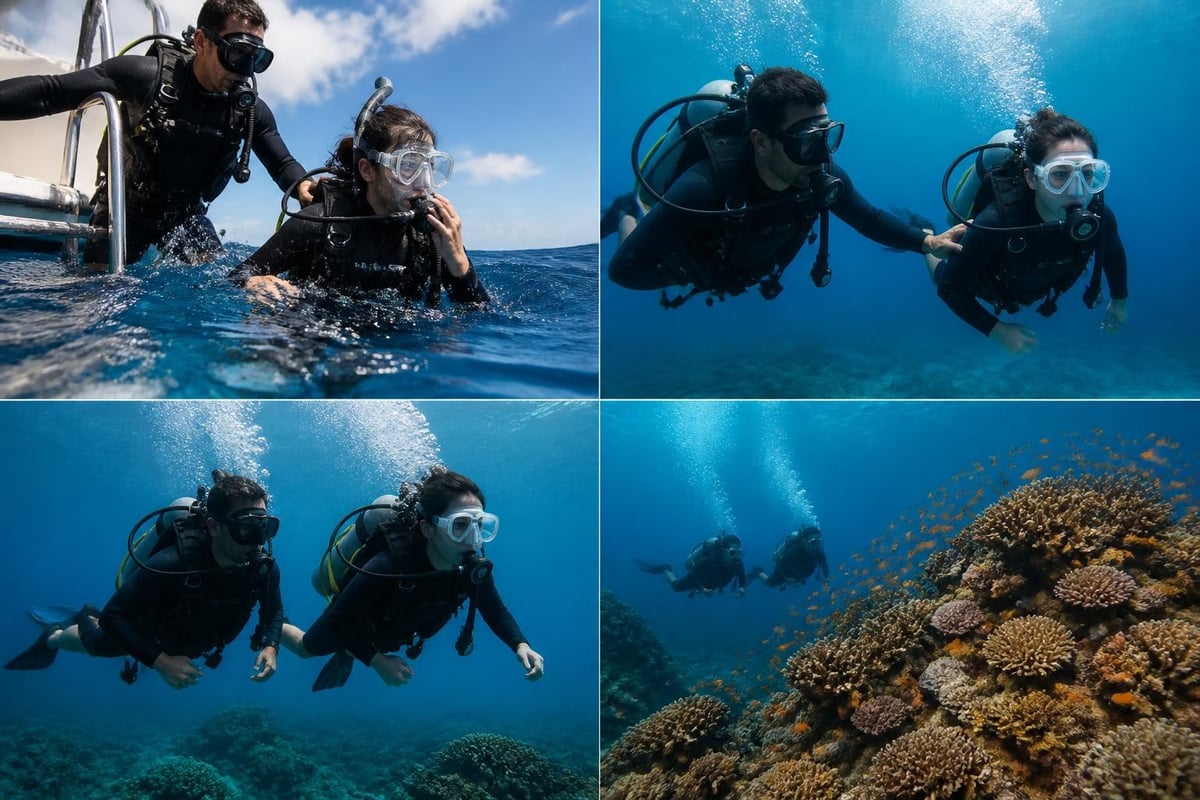
The dive itself usually lasts 20-40 minutes, depending on your air consumption and comfort level. Your instructor stays within arm's reach throughout, monitoring you constantly and managing the navigation. Your only job is to breathe normally, stay neutrally buoyant, and enjoy the experience.
Safety Considerations and Medical Screening
Safety in discover scuba diving relies on three layers: equipment standards, instructor training, and participant screening. Understanding these helps you make informed decisions and recognize professional operations.
Modern scuba equipment is remarkably reliable when properly maintained. Reputable dive centers service regulators every 12 months and inspect cylinders annually. The equipment you use has multiple redundancies. If your primary regulator develops an issue, every scuba unit includes an alternate air source.
According to a comprehensive clinical review of decompression illness, the risk of serious injury during shallow-water discover scuba experiences is extremely low when proper depth limits and supervision ratios are maintained. The 12-meter maximum depth keeps participants well within no-decompression limits.
The medical questionnaire screens for conditions that could create risk:
- Respiratory issues (asthma, collapsed lung, emphysema)
- Cardiovascular concerns (heart disease, high blood pressure)
- Neurological conditions (seizures, migraines)
- Ear, sinus, or respiratory infections
If you answer "yes" to any question, it doesn't automatically disqualify you. It means you need written approval from a physician familiar with diving medicine. DAN’s diving medical guidance provides the screening framework that most recreational dive operations follow.
Instructor Ratios and Supervision
Professional standards limit how many discover scuba participants one instructor can supervise simultaneously. For open-water portions, the typical ratio is 4:1, with even lower ratios (2:1 or 1:1) common in practice.
This close supervision isn't just about safety, though that's paramount. It also improves your experience. Your instructor can point out hidden creatures, help with buoyancy adjustments, and ensure you're relaxed and breathing normally throughout the dive.
What to Expect in El Nido Waters
El Nido offers exceptional conditions for first-time divers. Bacuit Bay's sheltered geography protects many sites from strong currents, and water temperatures hover around 27-29°C year-round, eliminating the need for thick wetsuits.
Visibility typically ranges from 10 to 25 meters depending on the season and recent weather. The clearest conditions occur during the dry season (November through May), though discover scuba diving happens year-round when conditions permit.
Typical Marine Life Encounters
Your first dive will likely include reef fish in remarkable variety. Expect to see angelfish, butterflyfish, parrotfish, and damselfish moving through the corals. Clownfish hide among anemones, while schools of fusiliers stream past in the blue water.
It's important to note that marine-life sightings vary naturally. No operation can guarantee specific encounters, but El Nido's healthy reefs support diverse ecosystems. Many discover scuba divers spot larger creatures like sea turtles or cuttlefish, though these meetings happen by chance rather than on schedule.
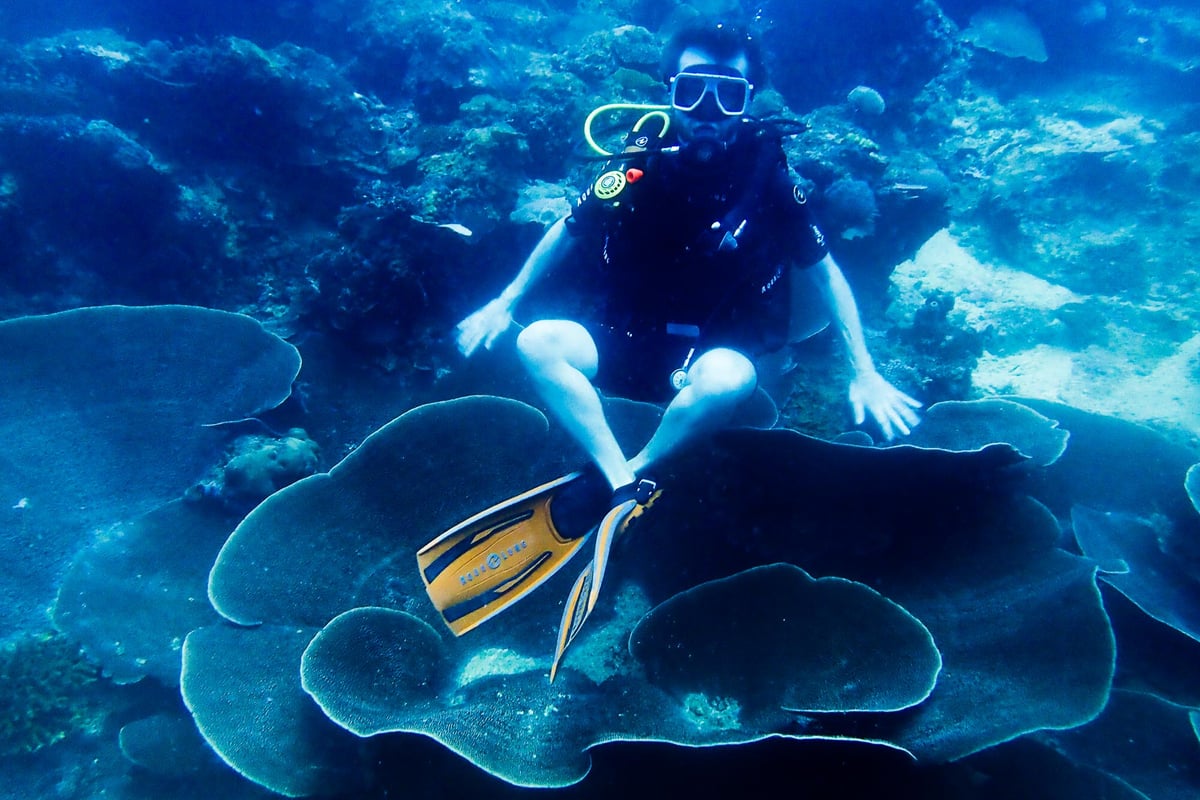
The coral itself deserves your attention. Hard corals in boulder, branching, and table formations create the reef structure, while soft corals add color and movement. Your instructor will help you observe without touching, protecting both you and these delicate organisms.
Choosing a Professional Dive Center
Not all discover scuba experiences are equal. The center you choose directly impacts your safety, comfort, and enjoyment. Several factors separate professional operations from budget providers.
Key indicators of quality:
- Small group sizes (2-4 participants per instructor)
- Well-maintained, modern equipment
- Detailed pre-dive briefings
- Instructors who speak your language fluently
- Willingness to answer questions patiently
Check whether the center is affiliated with recognized training organizations like PADI, SSI, or SDI. These affiliations require facilities to maintain standards for instructor certification, equipment, and operational procedures.
Read recent reviews, but look beyond star ratings. Pay attention to comments about instructor patience, equipment quality, and how the center handles nervous beginners. The best operations recognize that some people need more time than others and adjust accordingly.
Equipment Quality and Fit
Properly fitting equipment makes a tremendous difference in comfort. Your mask should seal without being uncomfortably tight, and your wetsuit should fit snugly without restricting breathing or movement.
Professional centers maintain equipment in multiple sizes and replace aging gear regularly. If something doesn't fit right during your briefing, speak up. Switching to different equipment takes minutes and prevents hours of discomfort underwater.
After Your Discover Scuba Experience
Many people catch the diving bug during their first underwater breath. If that happens to you, you have options for continuing your diving journey during your El Nido stay or back home.
The discover scuba experience can be credited toward PADI Open Water Diver certification. The skills you practiced and your ocean dive count toward the certification requirements, potentially reducing the course duration by half a day.
| Next Step | Duration | What You'll Learn |
|---|---|---|
| Complete Open Water | 2-3 days | Four open-water dives, comprehensive skills, independent diving to 18m |
| Continue with fun dives | Ongoing | Guided diving as a certified diver exploring different sites |
| Specialty courses | 1-2 days each | Deep diving, photography, navigation, wreck diving |
Even if you don't pursue certification immediately, the confidence you gain transfers to other water activities. Many discover scuba graduates find themselves snorkeling with new appreciation, understanding the ecosystem they're observing from the surface.
Building on Your First Experience
Certification courses differ from discover scuba in scope and depth. The PADI Open Water course involves knowledge development (online or in person), confined-water training sessions, and four open-water dives over 2-3 days. You'll learn dive planning, buddy procedures, navigation, and how to dive independently with a certified partner.
For travelers spending a week or more in El Nido, starting your diving journey here makes practical sense. You'll complete your certification in warm, clear water with excellent visibility, then have the rest of your holiday to apply your new skills. The Discover Scuba Diving program provides the perfect introduction before committing to the full course, letting you confirm your interest before investing the time.
Practical Preparation Tips
A little preparation improves your discover scuba experience significantly. These practical tips come from instructors who've guided thousands of first-time divers.
The night before:
- Get adequate sleep (tired bodies struggle with equalization)
- Avoid alcohol (dehydration affects diving performance)
- Eat a light, normal breakfast
- Stay well hydrated
Don't dive with a cold or sinus congestion. The inability to equalize pressure in your ears and sinuses creates discomfort and potential injury. If you wake up congested, postpone rather than push through. Reputable centers offer flexible rescheduling.
What to Bring
Most dive centers provide all scuba-specific equipment, but you'll need a few personal items:
- Swimsuit (worn under wetsuit)
- Towel
- Sunscreen (reef-safe formula preferred)
- Light snack and water for after the dive
- Prescription mask if you wear glasses (ask in advance)
Leave jewelry, especially dangling earrings or rings, in your accommodation. These items can get caught in equipment or be lost underwater. Waterproof cameras are welcome, though focus on experiencing your first dive rather than documenting every moment.
Recent research on physiological monitoring in diving suggests that wearable devices tracking heart rate and stress levels may eventually help instructors monitor participant comfort in real time, though this technology isn't yet standard in recreational diving.
Common Questions From First-Timers
After guiding hundreds of discover scuba sessions, certain questions come up repeatedly. Here are the answers to the most common concerns.
"What if I panic underwater?" Your instructor is trained to recognize and manage anxiety. You can surface at any moment simply by signaling. Most perceived panic stems from forgetting to breathe normally. Your instructor will remind you frequently, and the feeling passes quickly.
"How do I equalize my ears?" The technique is similar to clearing your ears on an airplane but done more frequently. You'll gently pinch your nose and blow softly. Your instructor teaches this during the briefing and will signal you to equalize every meter or two during descent.
"What if I can't breathe through my mouth?" This feels strange initially because we instinctively nose-breathe. Practice breathing through your mouth on the surface, and it becomes natural within minutes. The regulator delivers air with each breath, triggered by your inhalation.
"Will I get seasick?" If you're prone to motion sensitivity, take preventive medication an hour before boarding the boat. Many discover scuba sites in El Nido are accessible via short boat rides, minimizing exposure to rough water.
Understanding Dive Centers' Broader Context
When researching diving in Palawan more broadly, you'll discover that El Nido and other destinations offer different strengths for various experience levels. Understanding this context helps you appreciate where a discover scuba program fits within the larger diving landscape.
Physical Demands and Fitness
Discover scuba diving is less physically demanding than many people assume. You're not swimming laps or holding your breath. The equipment does most of the work, keeping you neutrally buoyant and delivering air continuously.
That said, certain situations require modest physical effort. Getting back onto a boat in full equipment involves climbing a ladder while wearing gear. Walking to shore entry points might mean crossing uneven ground. Beach entries in surf require balance and timing.
A recent review of nutritional recommendations for scuba divers notes that short recreational dives create minimal metabolic demand, far less than equivalent time spent swimming or snorkeling. The key is being comfortable in water, not being athletically conditioned.
Reasonable fitness indicators:
- Able to climb stairs without significant breathlessness
- Comfortable swimming or floating in deep water
- Capable of walking moderate distances
- Free from acute injuries or recent surgeries
If you have concerns about specific physical limitations, discuss them with the dive center in advance. Many operations have successfully guided participants with various mobility considerations by adjusting entry methods or providing additional support.
Environmental Responsibility
Your discover scuba experience introduces you to an ecosystem that needs protection. Understanding your impact and diving responsibly matters from your very first underwater breath.
The primary rule is simple: look but don't touch. Coral appears sturdy but damages easily. A fin kick that contacts a coral branch can destroy years of growth. Proper buoyancy control, which your instructor will help you maintain, keeps you floating above the reef rather than crashing into it.
Sunscreen deserves attention. Traditional formulations containing oxybenzone and octinoxate damage coral reefs even in tiny concentrations. Reef-safe alternatives using non-nano zinc oxide or titanium dioxide provide sun protection without marine toxicity. Apply sunscreen at least 30 minutes before entering water, allowing it to absorb.
Responsible diving practices taught during discover scuba:
- Maintain neutral buoyancy to avoid reef contact
- Keep fins and equipment away from corals
- Never chase or harass marine life
- Take only photos, leave only bubbles
- Report any observed damage or illegal fishing
These practices aren't just environmental talking points. They're fundamental to diving culture worldwide. Starting your diving journey with environmental awareness builds habits that protect reefs for years to come.
The WHO’s water safety guidance, while focused primarily on drowning prevention, emphasizes how proper training in water activities reduces both personal risk and environmental impact through increased awareness and skill development.
Combining Discover Scuba With Your El Nido Holiday
A discover scuba experience integrates smoothly into most El Nido itineraries. The half-day duration leaves plenty of time for island hopping, beach relaxation, or exploring the town in the afternoon or morning.
Many visitors schedule their discover scuba session early in their stay. This approach means you can then enjoy snorkeling during subsequent island tours with new appreciation for what's happening beneath you. Others prefer to try discover scuba mid-trip after acclimating to El Nido's waters through snorkeling first.
There's no flying restriction after discover scuba diving if you stay within the 12-meter depth limit and complete only one dive. However, if you're leaving Palawan within 18 hours of diving, mention this to your instructor. While the risk is minimal at discover scuba depths, extra conservatism never hurts.
Planning Your Diving Day
Morning sessions often offer the calmest conditions and best visibility, particularly during the transitional months (May-June and November-December). Afternoon sessions work well if you prefer sleeping in or if morning boat schedules are full.
After diving, avoid strenuous exercise or altitude exposure for the rest of the day. This precaution is probably excessive given the shallow depth, but it's standard diving practice. Relaxing on the beach, gentle swimming, or exploring town at sea level are all fine.
Plan for 4-5 hours from check-in to completion, including boat transit, preparation, diving, and post-dive debriefing. This buffer ensures you're not rushing to another commitment immediately afterward. The post-dive period is when the experience really sinks in, and conversations with your instructor and fellow participants add to the enjoyment.
Your first breath underwater opens a door to an entirely different world, one where you'll float weightlessly among corals and observe marine life in its natural habitat. Whether discover scuba becomes your gateway to diving certification or remains a standalone adventure, the experience offers perspective that snorkeling alone cannot provide. Ready to explore what lies beneath El Nido's turquoise surface? Submariner Diving Center provides professional discover scuba experiences with experienced instructors, small groups, and a commitment to safety that lets you focus on the wonder of your first dive.