The best diving spots in El Nido are in Bacuit Bay, where beginners can start at sheltered reefs like Nat Nat while certified divers head for walls, rock pinnacles and the Dilumacad Tunnel. Bacuit Bay has around 30 dive sites, with reported depths from 6 to 30 meters, so there is a site for a wide range of comfort levels. Which one suits you depends on your certification, your experience and what the sea is doing that day.
I'll walk you through the sites worth knowing, how conditions change through the year, and how to match a dive to your skill level.
How to Choose Among El Nido's Diving Spots
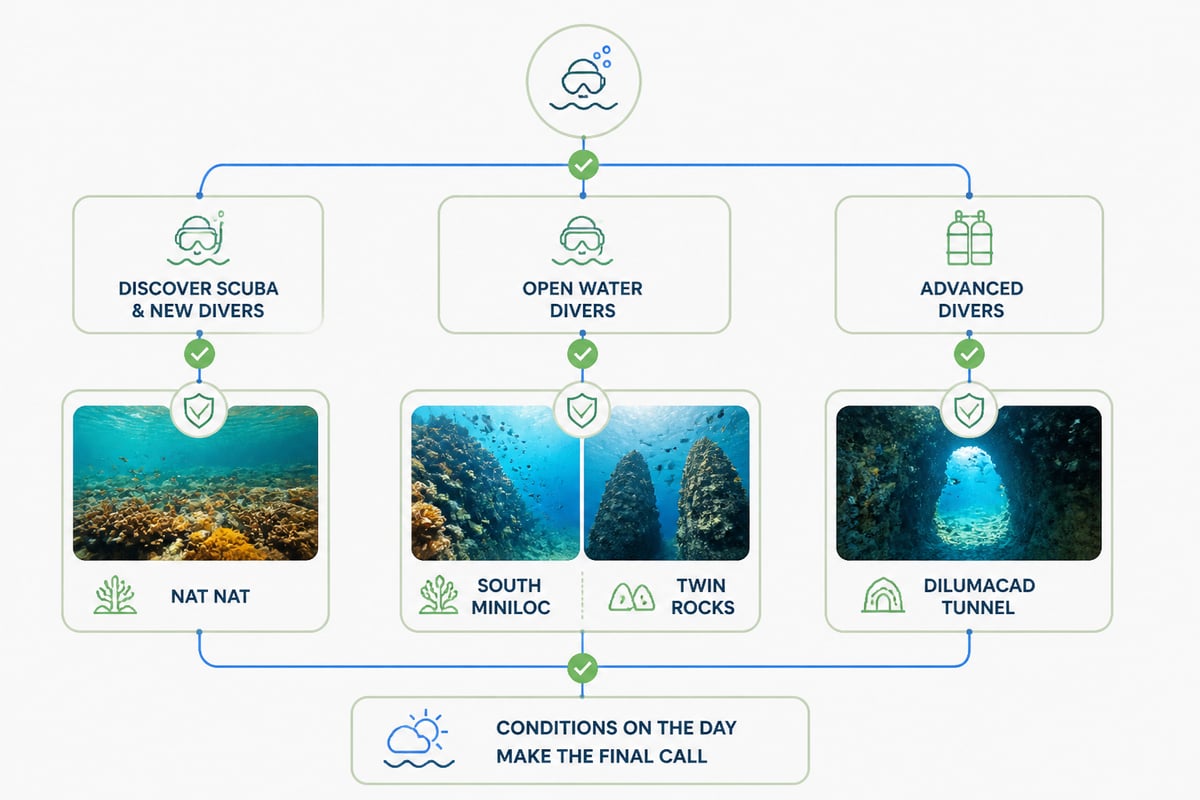
Choose by your certification first, then by what you want to see, and let current and weather make the final call on the day.
Bacuit Bay is a sheltered bay dotted with limestone islands, so there is usually a protected side to dive even when another side is rough. That is why a good dive operator does not fix the site list months in advance. Wind direction, tide and swell all shift from one day to the next.
Here is what to weigh up before you pick:
- Certification level. Discover Scuba and Open Water divers do best at shallow, protected reefs. Advanced divers can handle deeper walls and swim-throughs.
- Interests. Some divers want coral gardens and macro life. Others want drop-offs, caverns or wreck-style structure.
- Conditions. Visibility, current and surface chop decide which sites are comfortable on a given morning.
- Time in the water. Holidaymakers with a few free days can fit one or two dives around island hopping. Dedicated dive trips can stack several days.
A few pairings make the logic concrete. A brand-new diver fits Nat Nat, which is described as sheltered from currents. A newly certified Open Water diver can try Twin Rocks or South Miniloc, whose listed depth range lets a guide keep you shallow. A certified diver with solid buoyancy can aim for the Dilumacad Tunnel, a 35-meter swim-through with an entrance around 12 to 15 meters. Mixed groups, such as a certified diver and a first-timer, can share a boat and often a site like South Miniloc. If you are unsure which category you fall into, say so when you book and let the guide place you.
A directory like this list of Bacuit Bay dive sites gives terrain descriptions and depth ranges, which is useful background before you talk to your dive team.
Diving Spots for Beginners and New Divers
Nat Nat is the usual first choice for beginners, and Twin Rocks and South Miniloc are good follow-ups once you are comfortable underwater.
Nat Nat is recommended for beginners. The site is described as sheltered from currents and home to corals, anemones, turtles and seahorses. Shelter matters when you are learning, because less current means you can focus on breathing, buoyancy and equalizing instead of fighting the water.
Marine life varies by day, season and luck, so treat any species list as a possibility, not a promise. What you can count on at a sheltered site is a calmer environment in which to practice skills.
Twin Rocks
Twin Rocks is listed for all levels, with a depth of 13 to 21 meters. That mid-range depth suits newly certified divers building confidence. It is a good step up from a first reef dive without jumping straight to deeper walls.
South Miniloc
South Miniloc is listed at 5 to 35 meters and also for all levels. The wide depth range is the useful part. A guide can keep a newer diver in the shallows while a more experienced buddy explores deeper, and the whole group still shares one site.
If you are staying in El Nido for a holiday and have never dived, a Discover Scuba session is the simplest way to start. For a structured route, the PADI diving classes page explains how course options work, and this guide to the best dive spots for beginners goes deeper on first-timer sites.
Diving Spots for Certified and Advanced Divers
Certified divers looking for more challenge should aim for the Dilumacad Tunnel, deeper walls and sites where current adds some interest.
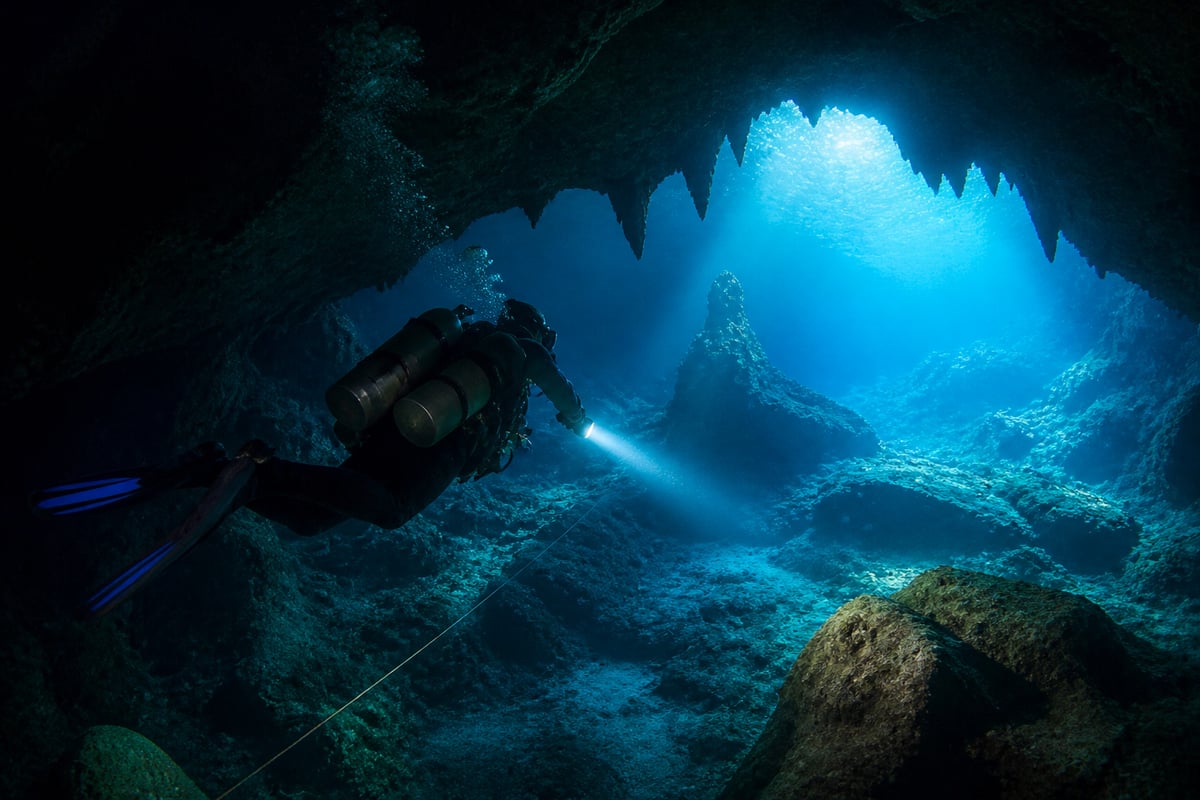
The Dilumacad Tunnel is the headline site for many experienced divers. El Nido Tourism says the tunnel entrance is about 12 meters deep, while El Nido Tours describes it as a 35-meter limestone swim-through with an entrance around 12 to 15 meters and recommends it for certified divers. A swim-through demands good buoyancy and calm awareness of your fin position, since touching the limestone or kicking up silt ruins the experience for the divers behind you.
A few habits make these sites safer and more enjoyable:
- Check your buoyancy control before you enter anything enclosed.
- Keep a steady distance from the diver ahead.
- Brief your guide on your comfort level and air consumption.
- Surface plans change with current, so listen to the briefing closely.
Walls and deeper sections of sites like South Miniloc reward divers who are comfortable at depth and track their no-decompression limits carefully. If you are not sure whether your logged experience suits a particular site, ask before you book. A good guide would rather adjust the plan than push a diver past their comfort.
For a wider regional comparison, the guides to the best scuba diving spots and best scuba diving sites in Palawan show how El Nido fits into the bigger picture.
Best Time to Dive in El Nido
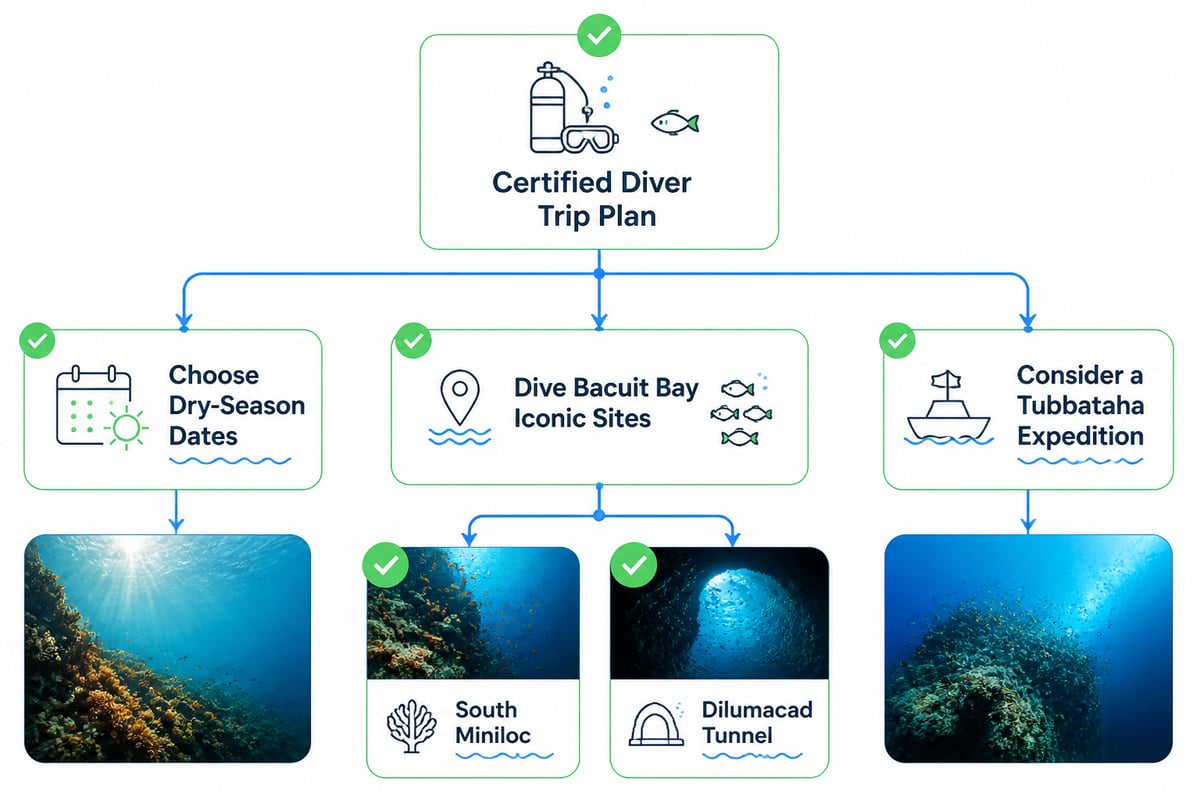
The dry season, December to May, gives the most reliable diving, with visibility commonly reported at roughly 10 to 25 meters outside the monsoon months.
El Nido Tours identifies December to May as the dry-season diving window. That lines up with calmer seas and easier boat days. Outside that window you can still dive, but surface conditions and visibility are less predictable.
| Period | What to expect |
|---|---|
| December to May | Dry-season window with the most settled seas and the best chance of good visibility |
| June to November | More weather variability, so plans are more likely to change |
These are broad patterns, not guarantees. A sunny week can still bring wind, and a stormy month can have a clear spell. That is exactly why flexible scheduling matters. If your dive boat can pick sites based on that morning's conditions, you spend more time diving and less time waiting for a forecast to improve.
Bacuit Bay's layout helps here. With around 30 sites spread around limestone islands, a guide can often swap an exposed site for a sheltered one on the other side of an island. Visibility is the other variable. Even in the dry season, a range of 10 to 25 meters means some mornings are clearer than others, so treat the top of that range as a good day, not a promise.
If you only have a few days in El Nido, plan your diving early in the stay. That leaves slack in case a day gets weathered out and you need to move a dive.
Diving Spots Beyond Bacuit Bay: Thinking About Tubbataha
Experienced divers building a dedicated Palawan trip often pair El Nido with Tubbataha Reefs, which is a separate, liveaboard-style expedition and a different kind of diving.
El Nido is a strong base for shore-based, day-boat diving, with a good spread of beginner and intermediate sites. You sleep in the same bed every night, choose your dive sites with your guide each morning and head back to dry land after the last dive. Tubbataha sits far offshore and is typically visited on a dedicated trip with its own seasonal window and logistics, so it needs its own planning rather than a spare day squeezed into an El Nido stay. If Tubbataha is on your list, read the complete guide to Tubbataha Reef diving in Palawan before you plan dates, and ask about timing and requirements when you contact the team.
Many experienced divers use El Nido as a warm-up or follow-on, building bottom time in Bacuit Bay and logging a few swim-throughs and wall dives. A few days at sites like South Miniloc and the Dilumacad Tunnel is a practical way to check your buoyancy, air consumption and comfort at depth before a longer expedition. You can also read about why Palawan is the Philippines' number one dive destination for the wider context behind a multi-stop trip.
Planning Your Dive Days With a Local Team
A local team with flexible boats and daily site selection takes most of the guesswork out of choosing where to dive in El Nido.
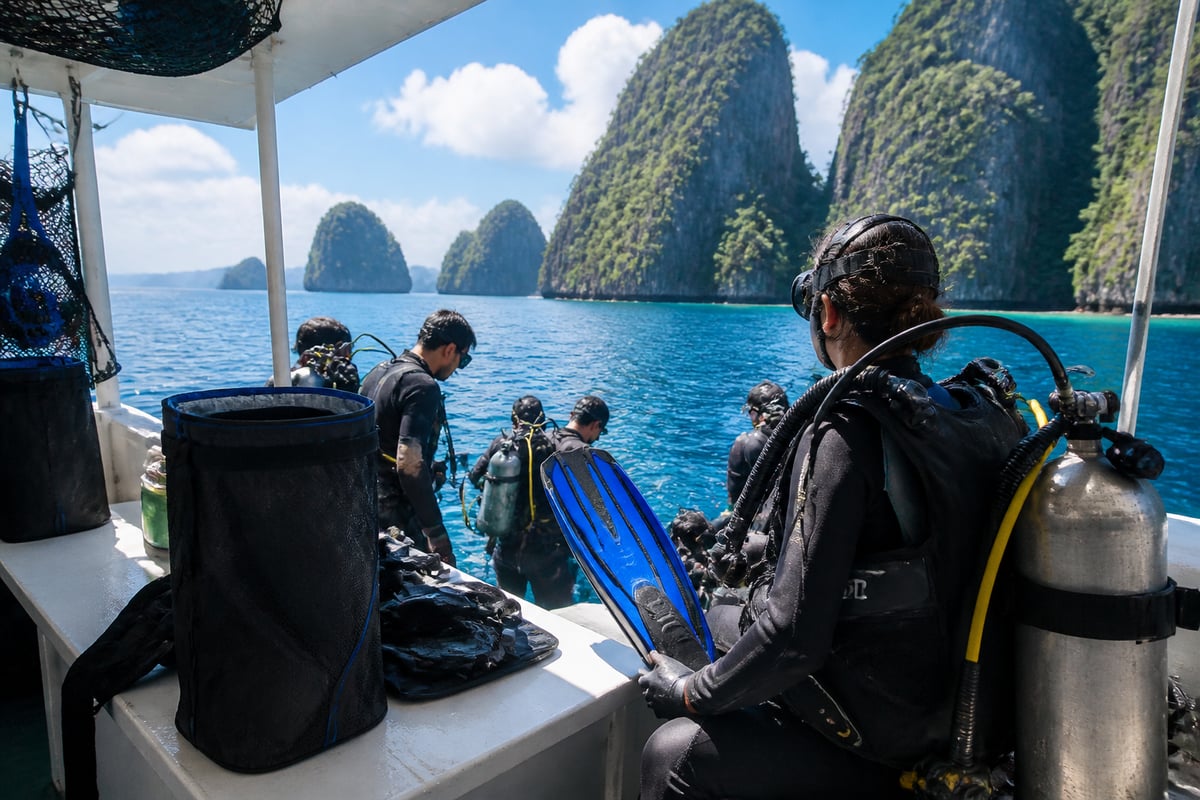
Submariner Diving Center offers PADI courses, and its professional PADI instructors bring local knowledge and modern safety equipment to every trip. Dive sites are selected by your experience level, your interests and the day's conditions, and private VIP charters are flexible, so the plan can change when the sea does.
Logistics are easier when the dive centre is close to your bed. At The Beach House, the beachfront stay puts the dive centre in the same building, so boats and equipment are close at hand and you skip an early-morning transport across El Nido. After a day on the water, the Cloud 9 rooftop restaurant and bar is a relaxed place to log your dives and compare notes.
Certified divers can look at the Fun Diving option for daily boat dives to El Nido's reefs, walls and marine life.
If you want to bundle several days together, the dive package options explain how multi-day plans can work. Prices and availability change, so confirm details on the booking pages or by contacting the team directly.
Practical Tips Before You Dive El Nido
A few simple preparations make any set of diving spots more enjoyable, whether you are a first-timer or logging your hundredth dive.
- Bring your certification card and logbook. Guides use them to match you to a suitable site.
- Tell your guide about your last dive. If it has been a long time, a shallow refresher is a smart start.
- Pack reef-friendly sun protection. Boat days are long and the sun is strong.
- Equalize early and often, especially if you are new to diving.
- Respect the reef. Keep your fins, hands and gauges off the coral and away from the limestone.
- Plan flexibly. Weather can shift a dive day, so avoid scheduling flights home straight after your last dive. Standard dive-safety guidance recommends waiting before flying after diving, so check the current recommendation with your instructor.
Ready to turn the shortlist into a plan? Pick two or three sites that match your certification and list your preferred dates inside the December to May window. Then talk to a local team about which diving spots suit your level and the conditions on the day.
Start by choosing your dates and your certification level, then check availability for Fun Diving if you are already certified. If you would rather stay close to the water, you can base yourself at The Beach House, where the dive centre is in the same building. The team at Submariner Diving Center can help you book your diving, match dive sites to your experience and plan around El Nido's daily conditions.