Equipment scuba diving requires comes down to a core kit: mask, fins, exposure suit, regulator, buoyancy control device (BCD), tank, weights and a dive computer, plus a signaling device for safety. In El Nido, most divers rent the heavy items from a dive center and bring only the personal pieces that need to fit well, such as a mask, a computer and a surface marker buoy.
This guide walks through each piece of gear, what suits El Nido's reef dives, and where to save luggage space and where to spend your money. It's written for holidaymakers who want to try diving during a stay and for certified divers planning a proper Palawan trip.
What gear does a scuba diver need?
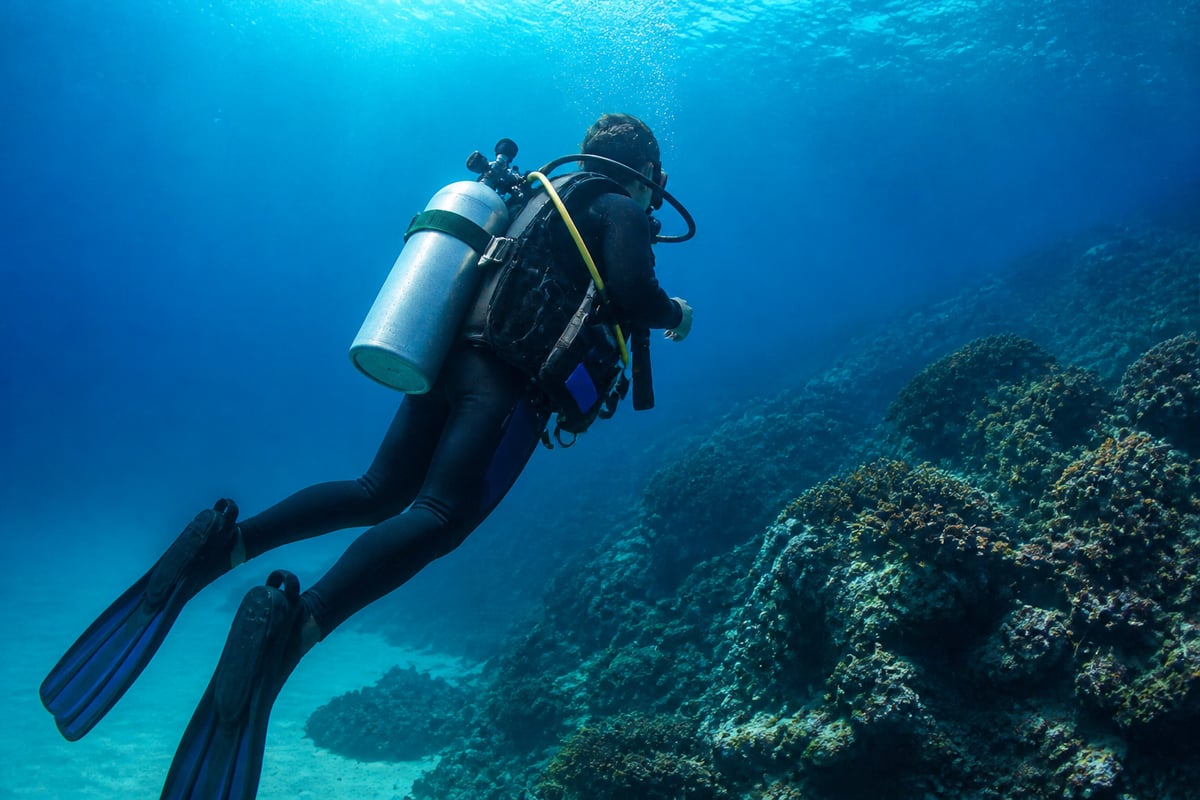
A scuba diver needs a mask, fins, an exposure suit, a regulator, a BCD, a tank, weights, a dive computer and a way to signal at the surface. Each item solves a specific problem: seeing, moving, staying warm, breathing, controlling buoyancy and being found.
DAN’s dive-travel packing checklist groups the essentials the same way: mask, regulator, BCD, exposure suit, computer, weights and surface signaling gear. Here's how that list looks for a typical El Nido day:
- Personal gear: mask, fins, snorkel (optional), exposure suit, dive computer, surface marker buoy
- Life-support gear: regulator, BCD, tank
- Ballast: weight belt or integrated weights
- Extras: reef-safe sunscreen, a hooded vest if you chill easily, a dry bag for the boat
If you are a first-timer, you don't need to buy anything. On an introductory dive, your instructor sets you up with a full kit and checks every piece before you enter the water.
Which of the basic scuba diving equipment is most important?
The regulator is the most important piece, because it delivers your air. Everything else adds comfort, control or safety, but a failed regulator ends the dive immediately.
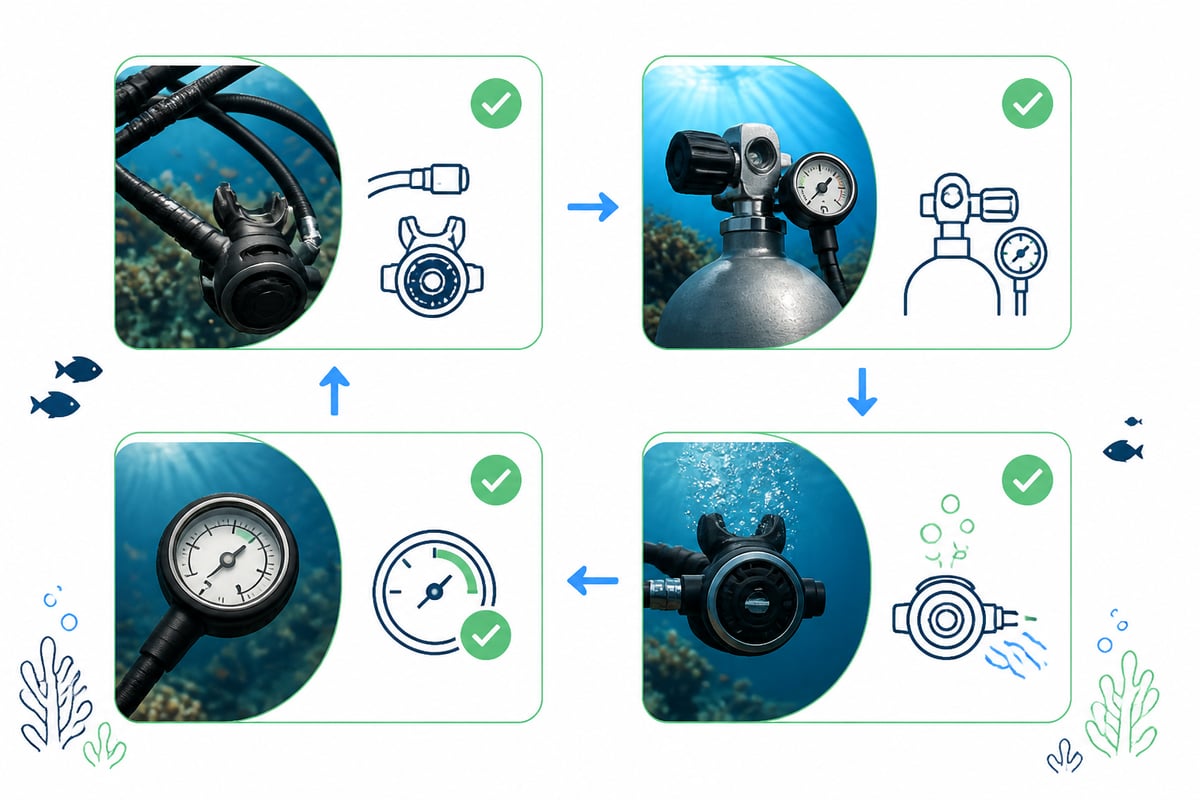
That's why maintenance matters more here than anywhere else in your kit. DAN recommends overhauling regulators annually or according to the manufacturer's guidance, and inspecting submersible pressure gauges annually. Before a trip, DAN also advises checking hoses and second stages for damage or leaks, then doing breathing and purge tests.
A practical pre-dive regulator check:
- Look over the hoses, mouthpiece and fittings for cracks, cuts or stiffness.
- Open the tank valve slowly and watch the pressure gauge settle without creeping down.
- Breathe from the regulator a few times and press the purge button.
- Confirm the gauge reads accurately and the needle moves smoothly.
Scuba Diving magazine’s regulator maintenance guide covers the same pre-dive inspection points if you want more detail on what to look for.
Mask, fins and snorkel: the pieces that need to fit you
A well-fitting mask and a comfortable pair of fins are the two items worth owning, because fit decides whether you enjoy the dive.
To test a mask, press it to your face without the strap, inhale gently through your nose and let go. If it stays in place, the seal is good. Low-volume masks sit closer to your face, clear more easily and suit most smaller faces. Tempered glass and a soft silicone skirt are standard features.
Fins come in two main styles:
| Fin type | Strength | Trade-off |
|---|---|---|
| Full-foot | Light, compact, great for warm water and travel | Needs dive booties for rocky entries |
| Open-heel | Adjustable, works with booties, suits boat and shore dives | Heavier and bulkier in a suitcase |
Warm tropical water suits full-foot fins, but if you plan any rocky entries, open-heel fins with booties protect your feet. A snorkel is optional for scuba itself but handy for surface swims and the boat ride between sites.
Wetsuit or drysuit: what to wear in El Nido
A wetsuit is the right choice here, and thickness depends on the season. The Philippine Dives El Nido guide recommends a 3 mm wetsuit for most of the year and a 5 mm suit from December through February, when it reports water temperatures of 21 to 24°C.
You will not need a drysuit in El Nido. Choose your suit by how easily you get cold:
- 3 mm full suit: the default for most months
- 5 mm suit or a hooded vest: better from December through February, or if you chill quickly on multiple dives per day
- Shorty or rash guard: fine for a single warm-day dive if you run hot
On the question of staying warm by urinating in your wetsuit: it is a common habit, but it only warms you for a moment and then the suit cools again. A properly fitted suit of the right thickness does far more for warmth, and rinsing it after the dive handles hygiene.
BCD, tank and weights: how you control your depth
Your BCD, tank and weights work together to let you hover neutrally, and getting that balance right is the foundation of good diving.
The BCD holds air that you add or release to rise, sink or hover. The tank carries your breathing gas, typically air or enriched air (nitrox), and it gets heavier or lighter as you breathe it down. Weights offset the buoyancy of your wetsuit, which is why a thicker suit needs more lead.
A few points that save frustration:
- Do a buoyancy check at the surface at the start of a trip with a new suit or a new tank type.
- Wear only as much weight as you need to sink slowly at the end of the dive with a nearly empty tank.
- Trim your weights evenly so you don't tilt head-down or feet-down.
If you are working on buoyancy skills, practicing hovering over sand at a calm site does more than any piece of gear.
Dive computer and surface marker buoy
A dive computer tracks your depth, time and no-decompression limits, and on a multilevel reef profile it is far more useful than a depth gauge and a watch. The Philippine Dives El Nido guide calls a dive computer essential for multilevel reef profiles and notes that surface marker buoys may not always be provided by operators.
That makes two items worth bringing yourself if you're a certified diver:
- A dive computer: wrist-mounted models are the most popular. Learn how yours displays ascent rate and safety stop prompts before you arrive.
- A surface marker buoy (SMB) and reel: an inflatable tube you send up at the end of a dive so the boat can see you. Practice deploying it in calm conditions before you rely on it in current.
What to bring and what to rent for El Nido
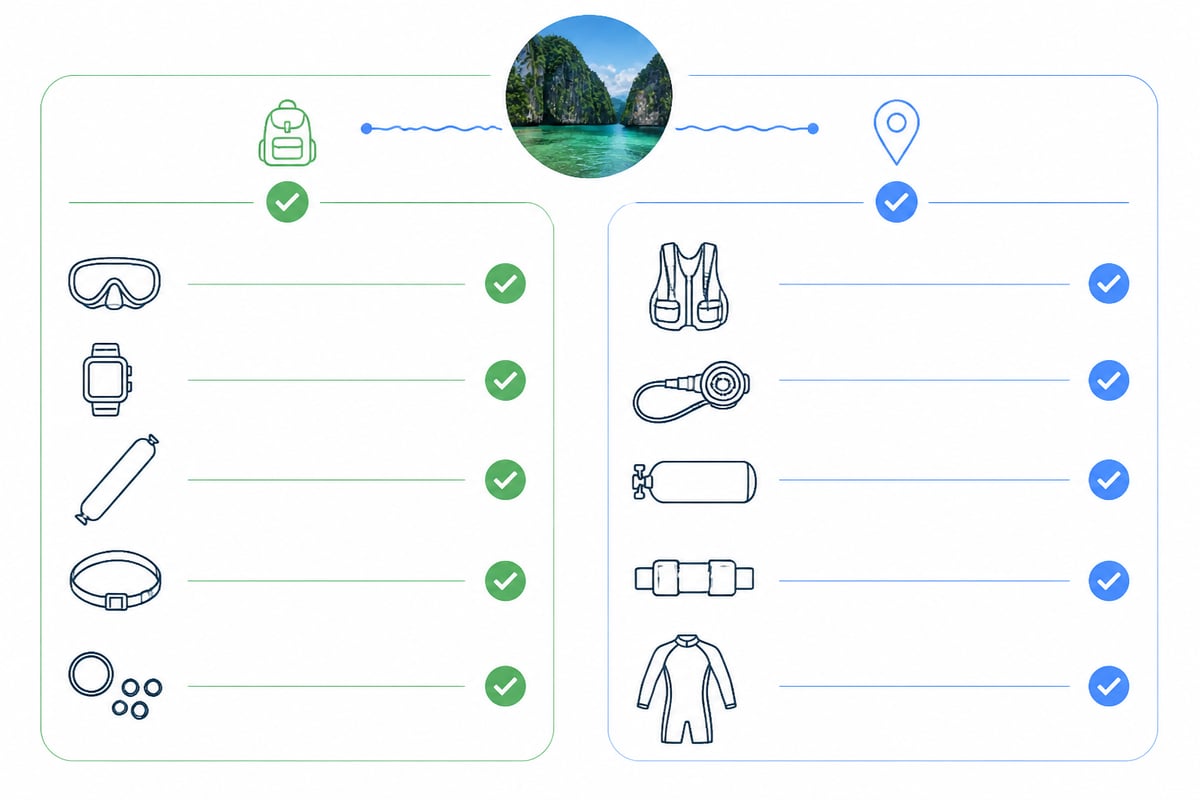
Bring small, personal items and rent the large, shared ones. The Philippine Dives El Nido guide reports that serious equipment such as regulators, BCDs, dive computers and wetsuits is not available locally to buy, and recommends bringing specialty gear and replacement parts. Planning ahead matters, because you won't find a replacement computer or a new regulator in town if something breaks.
A sensible split for certified divers:
- Bring: mask, dive computer, SMB and reel, spare mask strap, spare O-rings, a small tool kit, a dive light if you want to peek into crevices.
- Rent: BCD, regulator, tank, weights and, if you prefer to travel light, a wetsuit and fins.
- Leave home: a heavy weight belt and a bulky BCD, which add baggage weight and are easy to rent.
Whatever you rent, ask for a quick check of the regulator and BCD inflator before you leave the dock. A good operator expects that and will walk you through it.
Equipment for your first dive
If you've never dived, you don't need to buy or bring a thing. The aim of a first dive is simply to breathe underwater and look around, and your instructor handles the kit.
Discover Scuba Diving is built for exactly this situation: you try scuba for the first time with a professional instructor in El Nido's clear water, with all the equipment sorted for you.
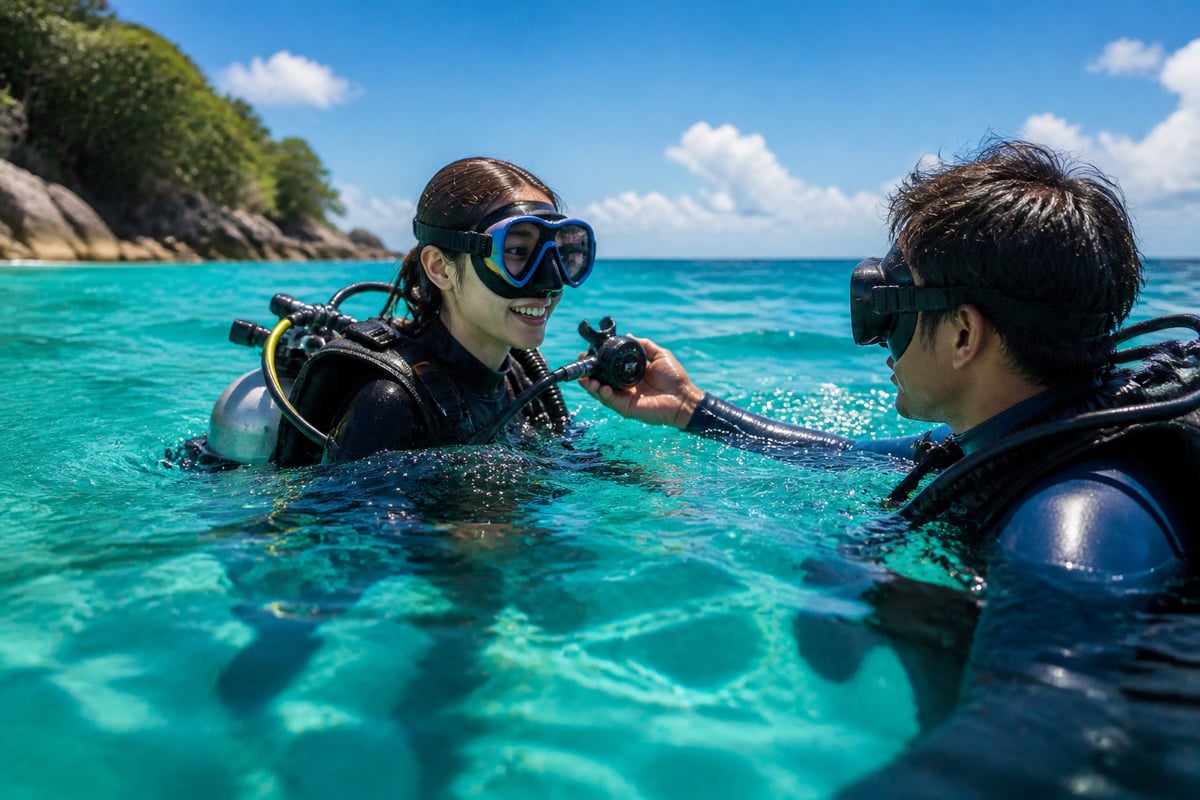
A few things help on the day:
- Wear a swimsuit under your clothes so you can change quickly.
- Bring a towel and sunscreen for the boat.
- Tell your instructor about any ear trouble, fit concerns with the mask, or comfort issues in the suit.
If you want to understand what the day looks like from start to finish, the PADI Discover Scuba Diving experience walks through what to expect.
Diving from your doorstep at The Beach House
Staying where the dive center is makes equipment logistics much easier. The Beach House is a beachfront stay with Submariner Diving Center in the same building, so boats and gear are close at hand and there's no early-morning transport across El Nido to reach the dock.
That matters for your kit in practical ways. You can rinse your mask and computer after a dive, hang your wetsuit to dry on your own terrace and collect everything the next morning without hauling it across town. After a day on the water, the Cloud 9 rooftop restaurant and bar is part of the stay if you want to unwind with a view.
For certified divers, Submariner Diving Center runs private VIP charters with dive sites chosen daily to suit weather and sea conditions, matched to your experience level and interests. The team has over 15 years of diving experience in El Nido and works with professional PADI instructors and modern safety equipment.
Planning for a Tubbataha liveaboard
If you are an experienced diver adding Tubbataha to your trip, your equipment checklist grows a little. Remote sites mean you want redundancy: a backup mask, a spare computer or at least spare batteries, and your own SMB and a signaling whistle.
Check each piece well before you travel. Service your regulator on schedule, test your BCD inflator and confirm your computer battery has life. Read the Tubbataha Reef scuba diving guide for the broader planning picture, including what the trip involves.
FAQ
Should you pee in your wetsuit to stay warm?
It gives a brief feeling of warmth that fades quickly as the suit cools again, so it isn't a reliable way to stay warm. A correctly fitted wetsuit of the right thickness, or an added hooded vest, is the better way to stay warm for the whole dive. Rinse and dry your suit after each day.
What disqualifies you from scuba diving?
Certain medical conditions, such as some heart, lung or ear problems, can make diving unsafe, and a doctor should assess them. Divers usually complete a medical questionnaire before diving, and a "yes" to certain questions means getting a doctor's sign-off before you go underwater. If you are unsure, check with a physician familiar with dive medicine before you book.
Do I need to buy my own equipment to dive in El Nido?
No. Large items like the BCD, regulator, tank and weights are normally rented, and first-time divers use a full kit supplied by the instructor. Owning a mask that fits and a dive computer you know how to read are the two purchases most worth making, and you can ask Submariner Diving Center directly about what is available for hire.
Your next step is to lay out your kit, check that your regulator, computer and mask are in working order, and decide what you will bring versus rent. Then let the team at Submariner Diving Center help you with the rest: try the Discover Scuba Diving experience if you are new, or arrange a private charter if you are certified, and Book Your Diving with a team that has dived El Nido for over 15 years.