A dive cave is an underwater cavity that divers enter with a guide, and in El Nido most visitors will experience the beginner-friendly version: a cavern or swim-through where daylight is still visible. Full cave diving, where you go beyond natural light into a sealed overhead environment, needs specialist training that goes well beyond a standard holiday course. This guide explains the difference, what safety rules apply, what gear you need and how to approach a cave dive from El Nido.
What Counts as a Dive Cave?
A dive cave is any underwater passage or chamber with a rock ceiling above you, and the type of overhead environment decides the training and risk involved.
Divers use three rough categories:
- Swim-throughs and arches: Short openings you can see through from end to end. Natural light is constant and the exit is always visible.
- Caverns: Overhead spaces within the reach of daylight. You can see the entrance behind you at all times.
- Caves: Passages that continue beyond the light zone. These require specialist cave certification, guideline reels, redundant lights and strict gas planning.
For holidaymakers, the first two categories are the realistic goal. A guided cavern or swim-through gives you the atmosphere of a cave, with dramatic light beams, rock textures and sheltered marine life, without committing to technical diving.
Why Do People Go Cave Diving?
People go cave diving because overhead environments feel completely different from open reef: quiet, shaped by light and rock. Many divers say the pull is part curiosity and part the satisfaction of precise, controlled diving.
There are practical reasons too. Cavern entrances often shelter small creatures that avoid open water, and the way light enters a chamber can make even a simple dive feel cinematic. For divers building skills, a swim-through is a manageable way to practice buoyancy, finning technique and calm, deliberate movement. If you want a deeper read on the topic, the Submariner team covers it in more detail in their piece on the underwater cave experience in Palawan.
Is It Safe to Dive 100 Feet Underwater?
Diving to 100 feet (about 30 meters) is within the range of recreational diving for properly trained divers, but it is a depth where margins get thinner and planning matters more. Open Water divers are certified to 18 meters (60 feet), and the Advanced Open Water course extends that depth limit.
At 100 feet you use air faster, reach no-decompression limits sooner and feel the effects of nitrogen more. Pair that with an overhead environment and the margin for error shrinks again. For this reason, cavern dives in El Nido are typically planned at modest depths, and a guide chooses sites that suit your certification and comfort.
Relevant points for holidaymakers:
- Dive within your certification level and your own comfort.
- Track your air, depth and time on every dive.
- Tell your guide about any doubts before the dive, not during it.
- Never enter an overhead space without a guide who knows the site.
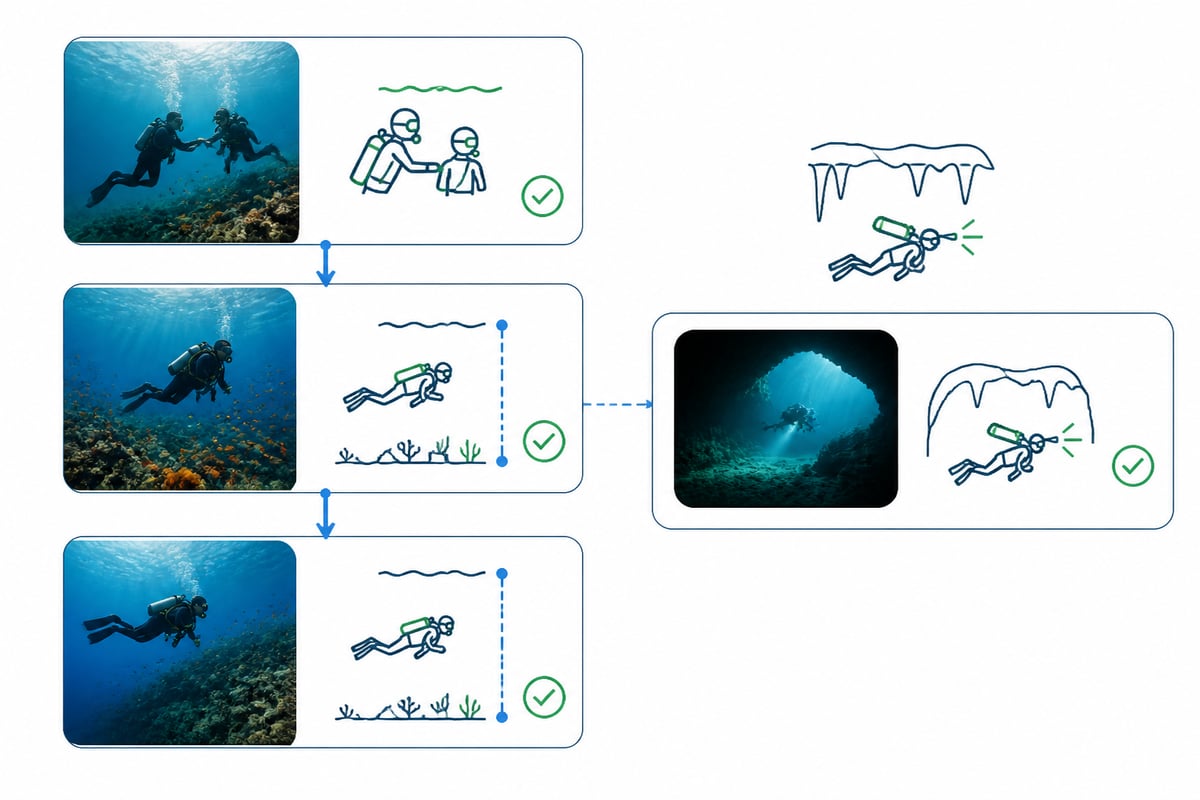
Cave Diving Safety Rules That Apply to Every Overhead Dive
The core rule of cave safety is that a direct, vertical ascent to the surface is not available, so every overhead dive is planned around staying able to exit calmly. Cave diving instructors teach the same core principles, and they are worth understanding even if you only plan a cavern visit.
The Rule of Thirds
A common cave-diving approach is to plan gas in thirds: one third for going in, one third for coming out and one third kept in reserve for emergencies. Recreational cavern dives are conservative for the same reason. You turn back early, well before your tank gets low.
Staying in the Light
In a cavern you remain within sight of daylight. If you can no longer see the entrance, you have gone further than a cavern dive allows, and that is a decision for trained cave divers only.
Buoyancy and Silt
Poor buoyancy is the fastest way to ruin a cave dive. Fins kicked too close to the floor stir up silt, which can wipe out visibility in seconds. Excellent trim, slow finning and relaxed breathing matter more than any piece of equipment.
Never Dive Alone, Never Skip the Briefing
Overhead dives are done as a team with a guide. The briefing covers entry order, hand signals, turn pressures and what to do if visibility drops. Treat it as the most important part of the dive.
The 120 Rule and Other Planning Numbers
The 120 rule is a guideline some divers use for repetitive dives: the combined depth of your two dives, added together, should not exceed 120 feet. For example, a dive to 60 feet followed by one to 60 feet fits the rule, but 80 followed by 60 does not. It is a simple rule of thumb, not a replacement for your dive computer or your guide's plan.
Always follow your dive computer and the plan your guide sets. Local conditions, tank size, your breathing rate and the site itself all shape the real limits. If you are unsure how a rule of thumb applies to you, ask your instructor before the dive.
Gear for a Cavern or Swim-Through Dive
For a guided cavern dive you need standard recreational equipment in good condition, plus a few items that matter more than usual in an overhead environment.
| Item | Why it matters in a cave or cavern |
|---|---|
| Primary dive light | Reveals color and texture inside shaded rock and helps your guide signal you |
| Backup light | Overhead spaces call for a second source in case the first fails |
| Dive computer | Tracks depth, time and no-decompression limits on every dive |
| Well-fitted BCD and weights | Good trim keeps your fins off the floor and silt out of the water |
| Cutting tool | Standard safety item for line or net entanglement |
| Properly serviced regulator | Reliable breathing gas is non-negotiable overhead |
Gear for full cave diving goes much further, typically including redundant gas systems, guideline reels and specialist configurations. That is a separate training path, and nothing in a holiday dive replaces it.
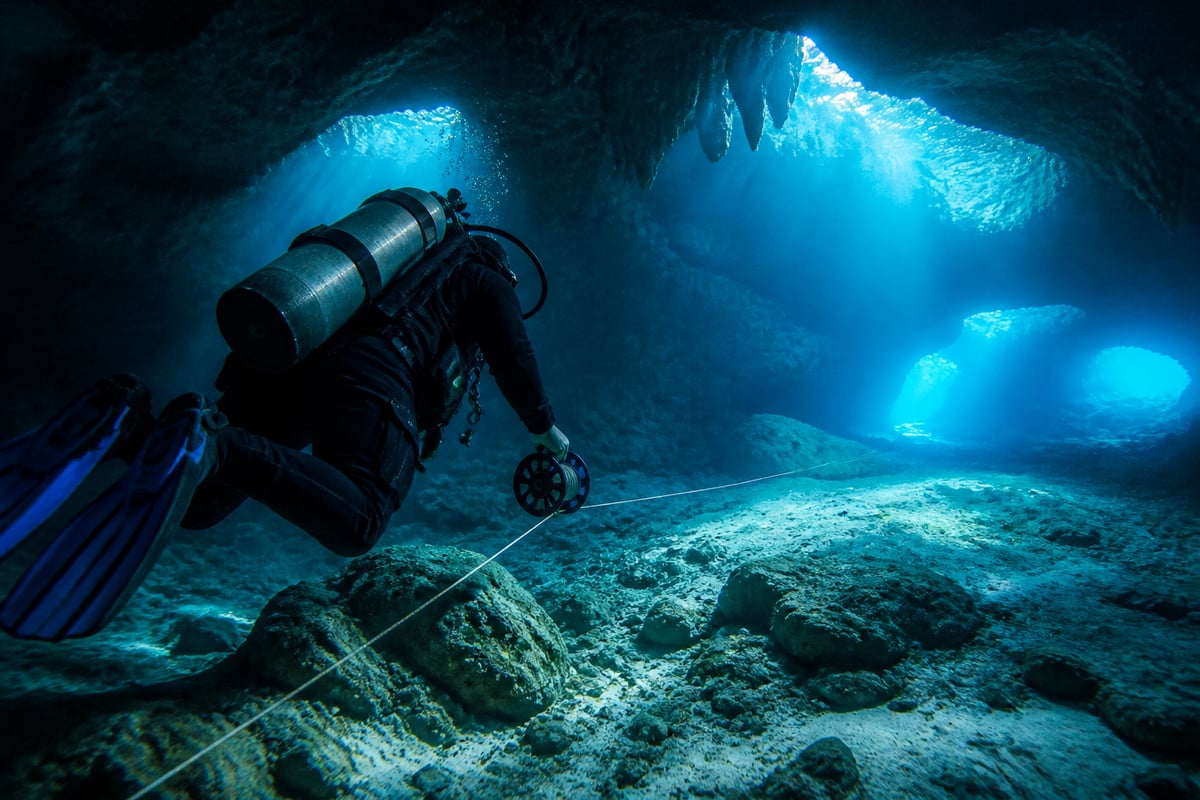
Training: From Open Water to Cave Diver
Training builds in clear steps, and each one adds skills you will use in an overhead environment. Most holidaymakers start with the basics and add certifications over time.
- Open Water Diver: Teaches core skills and certifies you to 18 meters.
- Advanced Open Water Diver: Adds deeper diving, navigation and buoyancy practice. The Advanced Open Water Diver course is a sensible bridge toward more demanding sites.
- Peak buoyancy and navigation practice: Smooth trim is the single most useful skill for any overhead dive.
- Cavern and cave specialty training: Taught by qualified cave instructors, covering guideline use, gas management and emergency procedures.
If you are new to diving and staying in El Nido, the starting point is simple. The Open Water Diver Course from Submariner Diving Center gives you certification with experienced instructors and small class sizes, which sets the foundation for everything above.
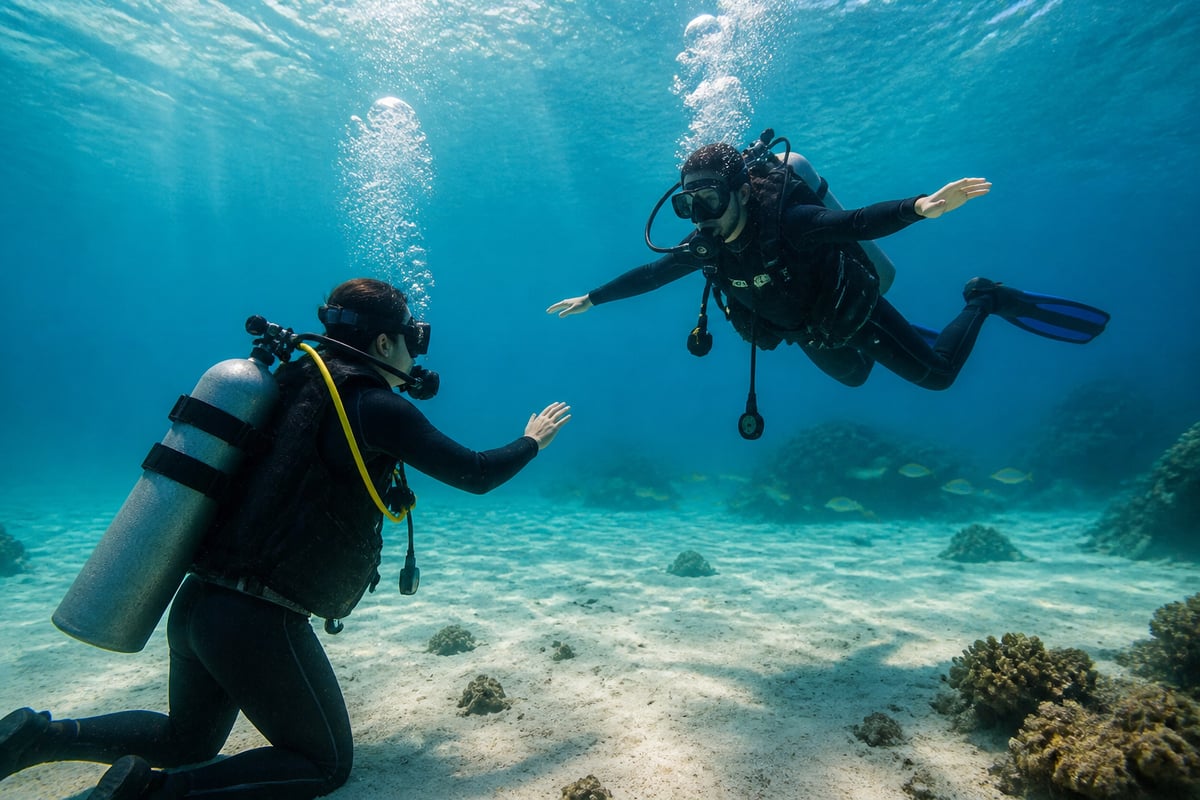
Dive Cave Options and Sites Around El Nido
El Nido is better known for its reefs, walls and lagoons than for deep cave systems, but there is overhead scenery worth knowing about. The area is a protected marine zone: the United Nations Environment Programme describes El Nido as a protected area of 45 islands and islets covering 903 square kilometers, and reports more than 447 reef-building coral species in its ecosystem.
One site often mentioned for its overhead feature is Dilumacad. According to Travel Palawan, the Dilumacad cave entrance sits at about 12 meters deep, and the tunnel is reported to extend roughly 35 meters. Treat those figures as a general description rather than a promise: conditions change, and a dive guide makes the final call on whether a site is suitable on the day.
Some points to keep in mind:
- Site choice depends on weather, current and visibility on the day.
- Marine life varies and cannot be guaranteed, so go for the experience of the place itself.
- A local guide knows which overhead features are suitable for your certification.
For a wider look at where to dive in the region, the guides to scuba dive sites and the top five dive sites in Palawan give useful context. The El Nido tourism site also covers the protected-area setting and general visitor information.
What Happens on a Guided Cave Dive Day
A guided cavern or swim-through day follows a predictable rhythm, and knowing it removes most of the nerves. Your guide checks your certification, logbook and recent diving history, then chooses a site to match.
Before the dive you get a detailed briefing: the layout of the overhead section, how deep it is, your turn pressure, hand signals and the plan if visibility drops. You enter in a set order, move slowly and keep the exit in view. Afterward there is a debrief, a good moment to ask about buoyancy and technique.
The practical side matters too. Choosing an operator that keeps boats, tanks and gear in one place cuts out rushed early starts and loose ends. With Submariner Diving Center, the dive centre sits in the same building as The Beach House, a beachfront stay, so boats and equipment are close at hand and there is no early-morning transport across El Nido. Private VIP charters are flexible, and dive sites are chosen daily to suit weather and sea conditions, as well as your experience level and interests. That flexibility is useful for overhead dives, where conditions decide what is sensible on the day. After a day on the water, Cloud 9 rooftop restaurant and bar at The Beach House makes an easy place to unwind.
Building Up to Overhead Diving
A smooth path into cavern diving rewards patience. Divers who log time on easier sites first usually find overhead dives calmer and more enjoyable.
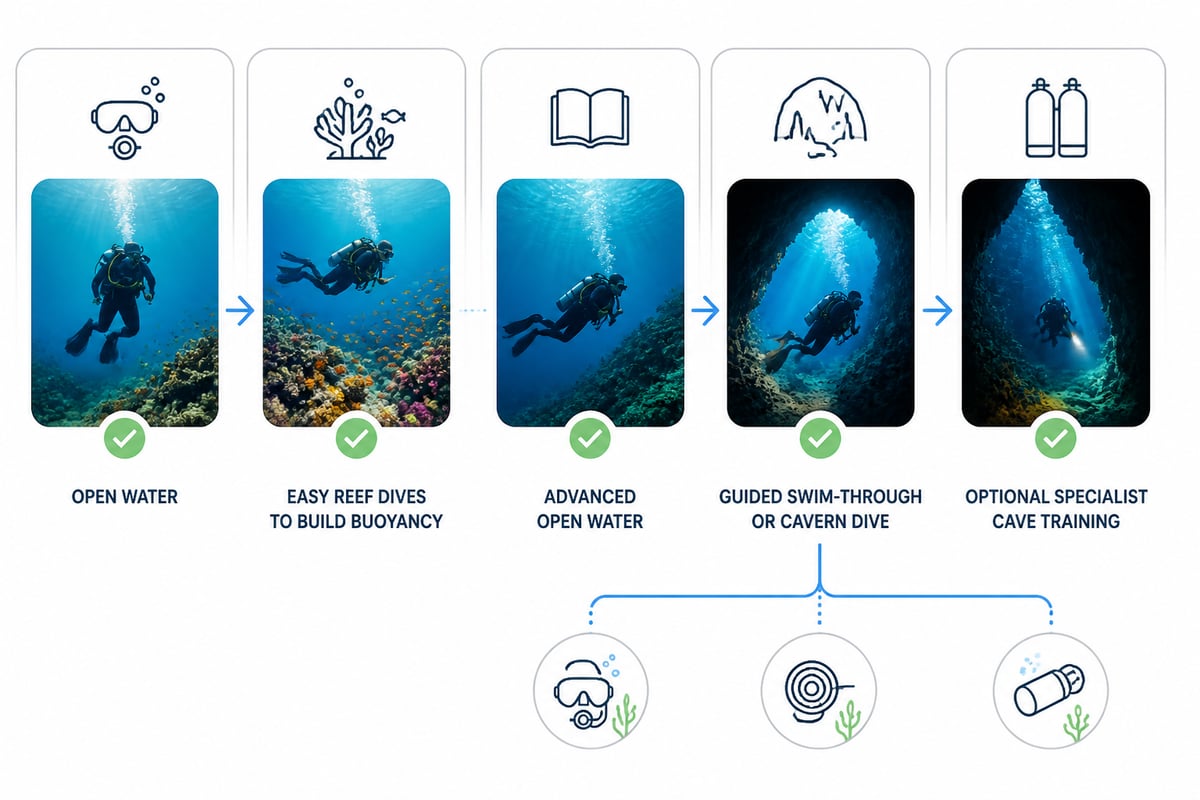
Practical ways to prepare:
- Log easy dives first. Comfort with your gear comes from repetition, and the best dive spots for beginners are a good place to start.
- Work on trim and finning. Hover motionless at a safe depth and practice slow frog kicks.
- Keep your air consumption in check. A calm, steady breathing rate gives you more bottom time and a larger safety margin.
- Be honest about your comfort. Skipping an overhead dive on a day you feel uneasy is a good decision, not a failure.
- Book a private charter if you want focus. Couples, families and small groups often prefer a personalised day where the guide can match the pace to everyone on board.
For a broader view of what a cave-focused trip can involve in the region, the cave adventure guide adds more detail.
What Is the Deepest Cave Dive Ever Made?
The deepest cave dives are technical expeditions, not holiday dives, and reliable record figures are hard to confirm without a named source. What matters for El Nido visitors is the contrast: such expeditions rely on specialist gas mixes, teams of support divers and extensive training, none of which applies to a guided cavern visit on vacation.
Your realistic goal is a safe, well-planned dive within your certification, and that can still be memorable. Rock, light and silence make even a short overhead section feel remarkable.
FAQ
Do I need a special certification for a dive cave visit?
For a guided swim-through or cavern within daylight, a standard Open Water certification is often the starting point, with your guide choosing a suitable site. Full cave diving beyond the light zone requires dedicated cave training. Ask your dive center what applies to the specific site.
Is cave diving dangerous?
Overhead environments carry added risk because you cannot ascend directly to the surface, and most incidents trace back to poor planning, missing training or diving beyond limits. Guided, conservative cavern dives within your certification manage that risk well. Following the briefing and turning back early are the biggest safety factors.
Can I dive a cave if I am a beginner?
A newly certified diver can often join a guided swim-through that is open and well lit, depending on conditions and the guide's judgment. Building buoyancy skills on easier dives first makes the experience far more comfortable. If you are not yet certified, start with a course before planning any overhead dive.
Start by checking your certification and dive history, then choose a course or dive plan that fits where you are now. If you are new to diving, the Open Water Diver Course is the natural first step before any overhead dive. The team at Submariner Diving Center has more than 15 years of diving experience in El Nido, so get in touch to book your diving and plan a day that suits your level, your group and the conditions.