The best scuba diving spots in El Nido are the reefs, walls and sheltered coves of Bacuit Bay, where around 30 dive sites sit at depths from 6 to 30 meters, so both first-timers and experienced divers have somewhere to go. Which site is right for you depends on your certification, the season and what the sea is doing that morning. This guide covers the sites worth knowing, how conditions shape the plan and what to think about if you want to stretch your trip to Tubbataha.
Why El Nido Works for Divers at Every Level
El Nido suits divers at every level because most of its sites lie inside one large bay, which keeps boat rides short and gives you options when the weather changes.
That layout has a practical payoff. If wind picks up on one side of the bay, the guide can move the group to a more sheltered site instead of cancelling the day. A mixed group, say a newly certified diver and someone with a hundred dives, can also share a boat and still get dives that suit them, because the bay offers both gentle reef and more structured sites within a short ride of each other.
The wider area sits within the El Nido-Taytay Managed Resource Protected Area, which is part of why the reefs around the limestone islands remain worth the trip.
The shallow depth range is good news in a few ways:
- Beginners can build confidence at 6 to 12 meters, where light and color are at their best.
- Certified divers get a mix of gentle reef dives, wall dives and sites with more fish traffic.
- Longer bottom times in shallower water mean you can enjoy a dive without watching your gauge nervously.
At the deeper end, the 30 meter sites give Advanced Open Water divers a reason to use that certification, while the shallower sites reward anyone who likes slow, close looks at small life on the reef. Divers returning after a long break can start at the easy end and work their way down over a few days.
If you are new to the area, our overview of good scuba diving locations in Palawan adds context on how El Nido compares with the rest of the province.
Beginner-Friendly Scuba Diving Spots in Bacuit Bay
The calmest scuba diving spots in El Nido are the sheltered sites in the bay, and Nat Nat is the classic example. Nat Nat is sheltered from currents and suitable for beginners. Marine life varies by day and season, so treat any sighting as a bonus rather than a promise.
What makes a site good for a first dive or a refresher:
- Little or no current, so you can focus on buoyancy and breathing.
- Shallow depths where the reef sits close to the surface.
- Easy entry and exit from the boat, with the guide close by.
- Plenty to look at on the reef itself, so you are not waiting for big animals to appear.
If you are staying in El Nido and have never dived, a guided introduction is the sensible way in. Our guide to the PADI Discover Scuba Diving experience explains how a first dive works, and the page on what a scuba experience involves is a good read before you book.
Reefs, Walls and Fish Life for Certified Divers
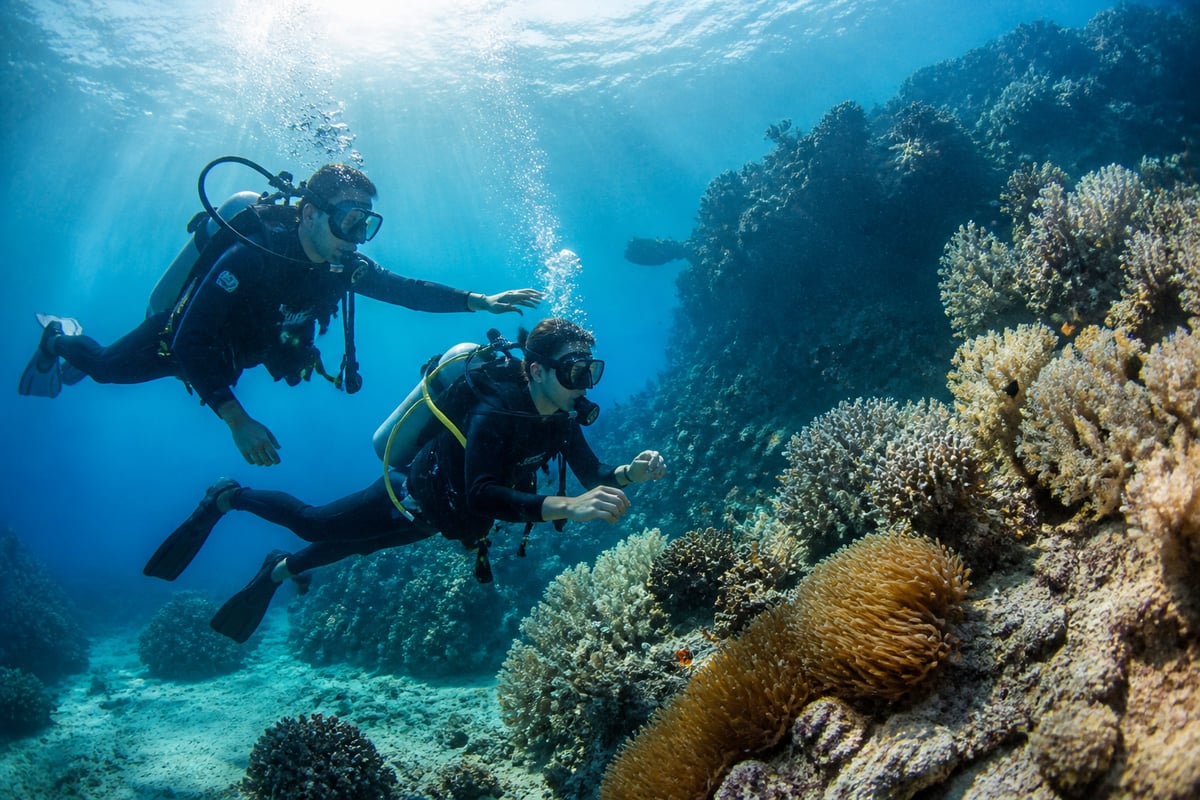
Certified divers will find the most variety at sites with structure, such as walls, slopes and reef edges where fish gather. South Miniloc is one example of a site with fish structure to explore.
A few things shape a good dive at this level:
- Current and visibility change the feel of a site from one day to the next. A site that is calm in the morning can pick up flow later.
- Depth profile matters for planning. With sites ranging from 6 to 30 meters, you can pick shallow reef dives or go deeper for walls and drop-offs.
- Your interests count. Some divers want macro life on the reef, others prefer open water and schooling fish.
When we plan dives here, we match the site to who is on the boat rather than following a fixed route. Our Fun Diving trips are daily boat dives for certified divers, with sites chosen by experience level, interests and the day's conditions.
For a wider list of what Palawan offers underwater, see our rundown of the best scuba diving sites and the guide to scuba sites.
How Weather and Season Decide Your Dive Plan
Weather decides which scuba diving spots are workable on any given day, which is why flexible planning beats a fixed itinerary in El Nido.
Wind direction and sea state change how exposed a site is. Some spots are comfortable in one set of conditions and rough in another, so the boat captain and dive guide make the call each morning. That is a feature of diving here, not a flaw.
What this means for your trip:
- Keep a day or two of slack in your schedule if diving is the point of the visit.
- Expect your guide to change the plan if conditions shift.
- Ask about conditions the evening before, not weeks ahead. Forecasts at that distance are guesses.
This is also why a private charter appeals to many divers. With a scuba charter, the day's sites are picked around your group, the conditions and your pace. We run flexible private VIP charters on exactly this basis, choosing sites daily to suit the weather and sea.
If you want a fixed schedule that holds regardless of conditions, diving in the Philippines will test your patience.
Planning a Dive Trip Based in El Nido
The easiest way to plan an El Nido dive trip is to stay near the boats, so mornings start with a short walk instead of a long transfer.
The Beach House is our beachfront accommodation, with the dive center in the same building. Dive boats and equipment are close at hand, so there is no early-morning transport across El Nido. You can dive from your doorstep, and Cloud 9, the rooftop restaurant and bar, is there for the evening log-writing session. You can read more at The Beach House.
Practical planning points:
- Length of stay: Several days gives you room for weather changes and a mix of sites.
- Dive-and-rest balance: Leave a gap between your last dive and any flight, following your training agency's guidance.
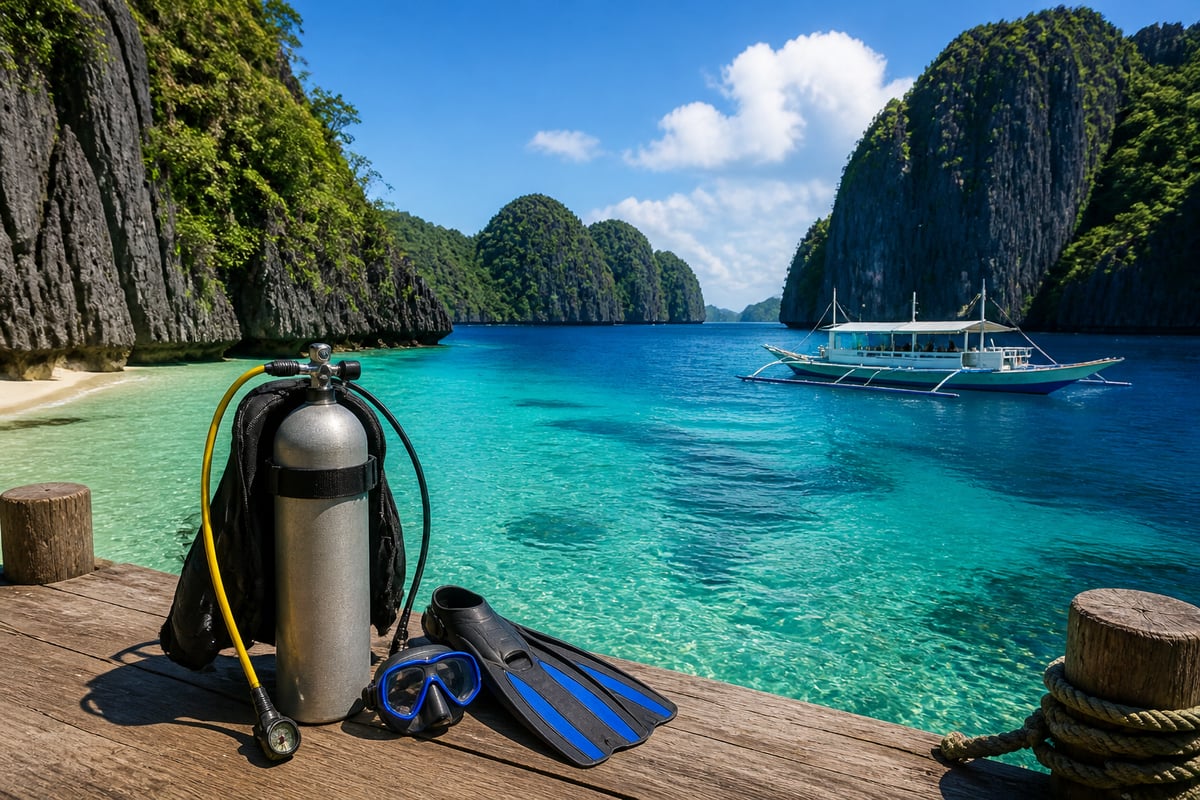
- Gear: Check what is included when you book, and bring your own mask or computer if you prefer familiar kit.
- Non-diving days: The islands are worth exploring above water too.
For help choosing where to base yourself, the guide to scuba resorts lays out what to look for.
What to Expect on a Dive Day
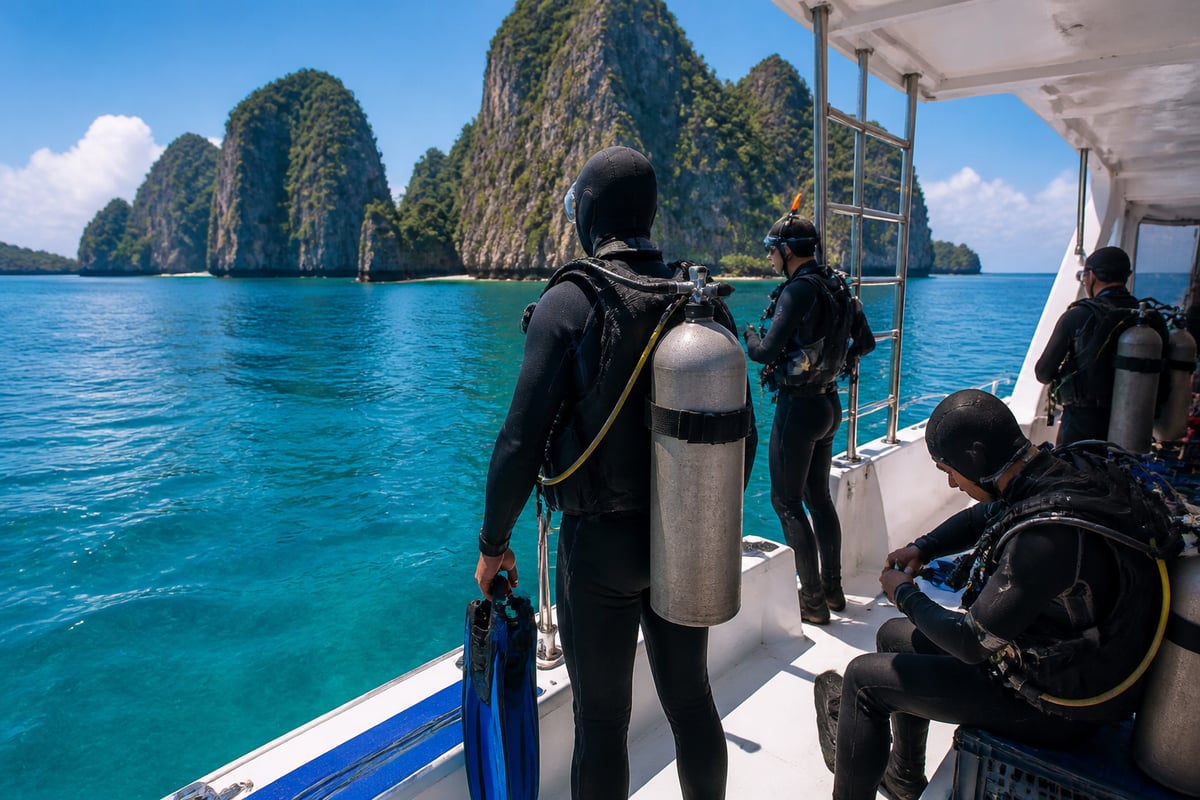
A typical dive day starts with a briefing, a short boat ride to the first site and a surface interval between dives, with your guide choosing sites to suit the group and conditions.
The morning briefing covers the planned site, the maximum depth and the signals you will use underwater. It is also where you mention anything the guide should know, such as a nervous first descent or a camera you are bringing. After the first dive, the surface interval is a time to rehydrate, snack, warm up and log what you saw. Many divers also use it to talk through how the dive felt with the guide, which makes the second dive smoother.
Our team is made up of professional PADI instructors with local knowledge and modern safety equipment, and we have over 15 years of diving experience in El Nido. Over 40,000 five-star reviews is a good indication of how many guests have dived with us.
Between dives, the limestone islands around Bacuit Bay give you plenty to look at from the deck, and the boat ride itself is short because the sites sit within one bay. Back on shore, rinse your gear, hang wet items to dry and drink water, since a day of breathing dry air from a tank dehydrates you more than you expect.
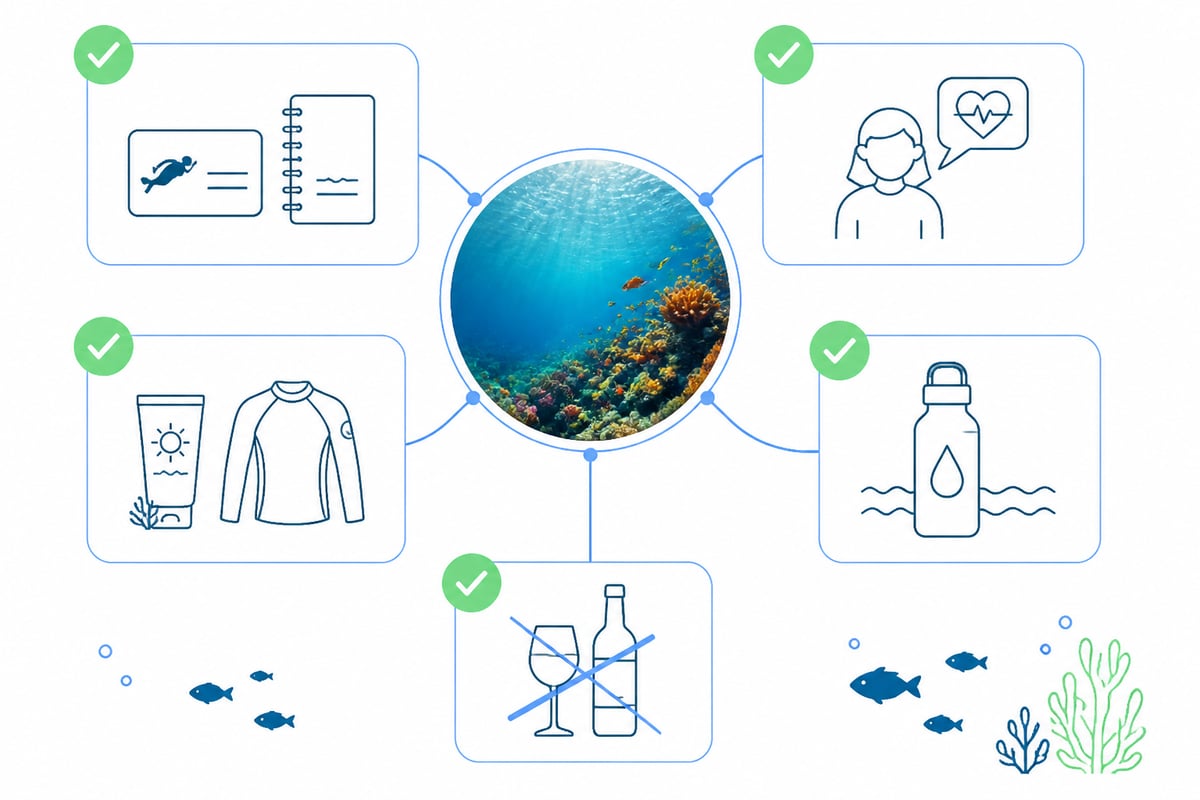
Before you go, a short checklist helps:
- Bring your certification card and logbook.
- Tell your guide about any medical issues or recent time out of the water.
- Sort out reef-safe sunscreen and a rash guard.
- Hydrate well and avoid heavy alcohol the night before.
Thinking About Tubbataha
Tubbataha is a separate trip from El Nido, and it works best as a planned follow-up for experienced divers rather than something to squeeze into a week.
It is a remote reef system reached by liveaboard, with a limited season. Because it sits far offshore, divers usually want solid logged experience before going. El Nido is a smart place to build that experience: sharpen buoyancy, get used to boat diving and clock a few dozen dives before committing to a remote trip.
Bacuit Bay is useful for this because the conditions vary. A calm morning at a sheltered site lets you fine-tune trim and air consumption. A day with more movement in the water teaches you how to hold a position, stay close to your buddy and keep an eye on your guide. Those habits matter far more on a liveaboard, where the next dive is a few minutes away and the days run back to back. Repeating three or four boat dives in a row in El Nido also shows you how your body handles a full diving schedule.
Planning notes for divers weighing it up:
- Check the liveaboard season and book well ahead, since spaces are limited.
- Make sure your certification level and recent dive count fit what the operator asks.
- Use El Nido dives as a warm-up and a skills check.
- If it has been a while since your last dive, plan a refresher day first so you arrive rusty-free.
- Carry your own mask and computer so the kit you use offshore is kit you already know.
Our guide to top scuba diving destinations and great scuba diving destinations can help you place Tubbataha alongside other options.
FAQ
Where is the cheapest place to scuba dive?
Prices depend on the region, the season and what is included, so it is hard to name a single cheapest spot. Prices vary widely across destinations, so compare what each package includes. For El Nido, check current rates through the booking page or contact us directly rather than relying on a figure from elsewhere.
Where can I find scuba gear?
Dive centers usually provide rental gear, and many divers also buy their own mask, fins and computer from dive shops or online retailers. If you are joining a dive trip, ask what is included before you pack. Having your own mask and computer is a common, comfortable compromise.
Is PADI or SSI better?
Both agencies train divers to recognized standards, and certifications are widely accepted around the world. The better choice is usually the instructor and the dive center rather than the agency name. We teach PADI courses with professional PADI instructors.
Start by deciding how many dive days you want and whether you would rather join a boat or plan a private day, then check availability through the Fun Diving booking page. If you want a beachfront base with the dive center in the same building, our team can help you plan sites, courses and stay around the conditions, so reach out and Book Your Diving with Submariner Diving Center in El Nido.