If you want to experience diving in El Nido, the short answer is that you can do it at almost any level: first-timers can try scuba with an instructor, newcomers can start a PADI course, and certified divers can book daily boat dives to reefs, walls and wrecks around the Bacuit Bay area. What changes from person to person is the type of dive, the site, and how much planning you need before getting in the water.
This guide covers what a diving experience in El Nido looks like for holidaymakers trying scuba for the first time and for certified divers planning a dedicated Palawan trip, including those weighing up Tubbataha.
What Makes El Nido a Good Place to Dive
El Nido works for diving because it sits inside a large protected area with varied marine habitat, and sheltered bays often give new divers calmer places to start. The El Nido-Taytay protected area guide reports 36,000 hectares of land and 54,000 hectares of marine waters, with 120 coral species and 1,700 documented crustacean and nudibranch species.
That variety matters in practice. Macro enthusiasts, reef divers and people who simply want to float over healthy coral all find something to like. Palawan is widely regarded as one of the Philippines' top dive regions, and if you want the wider picture, this look at why Palawan is the Philippines’ number one dive destination gives useful context.
A realistic expectation helps too. Marine life is wild, so no responsible operator can promise a specific sighting. What you can count on is a well-run dive, a briefing that explains what the site usually offers, and a guide who knows how to find the interesting small things.
Experience Diving for the First Time: Your Options
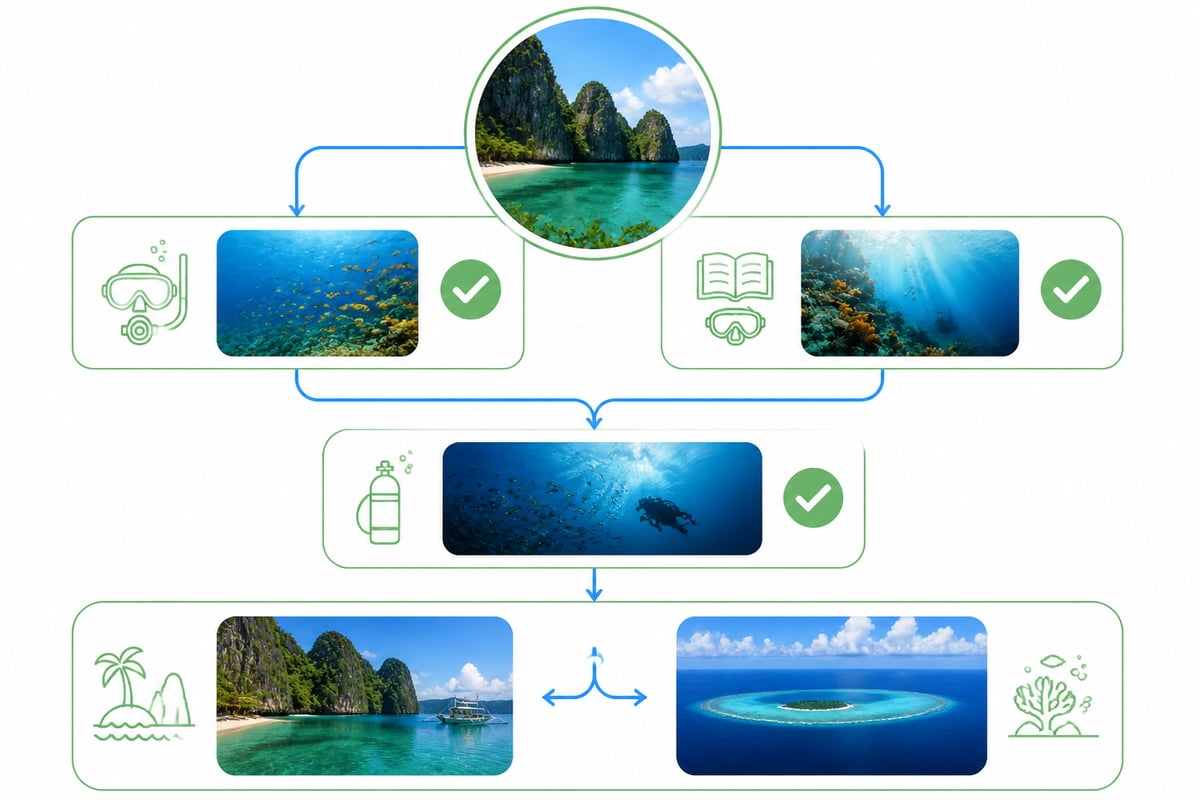
If you have never dived, you have two sensible starting points: a one-day introductory experience or a full certification course. Both put you underwater with a PADI professional, and the right choice depends on how much time you have and how far you want to take it.
A One-Day Introductory Dive
A discover scuba experience is designed for holidaymakers who want to try diving without committing to a course. You learn the basics in a short session, practice key skills in shallow water, then head out for a supervised dive. Submariner Diving Center explains how this works in its guide to the PADI Discover Scuba Diving experience, and its overview of the scuba diving experience is worth reading before you book.
Things to know before you go:
- You will not dive deep. Introductory dives stay in a shallow, controlled range.
- You will be asked to complete a medical questionnaire. Answer it honestly, and see a doctor first if anything on it applies to you.
- You do not need to be a strong swimmer, but you do need to be comfortable in the water.
- Avoid flying or heavy drinking right before and after diving. Your instructor will give you the specific timing guidance.
Starting a PADI Course
If a single dive leaves you wanting more, a certification course gives you a card that is recognized worldwide. Many holidaymakers in El Nido start a course midway through a stay and use the remaining days for their first certified dives. If this appeals, the page on how to learn diving outlines what to expect from the learning process.
What About Snorkeling?
If your goal is only to float on the surface, snorkeling is a different activity with its own set of options. Diving is the focus at Submariner, but for a quick comparison, see this overview of snorkeling in the Philippines. Scuba is better suited to people who want to be underwater, close to the reef.
Experience Diving as a Certified Diver
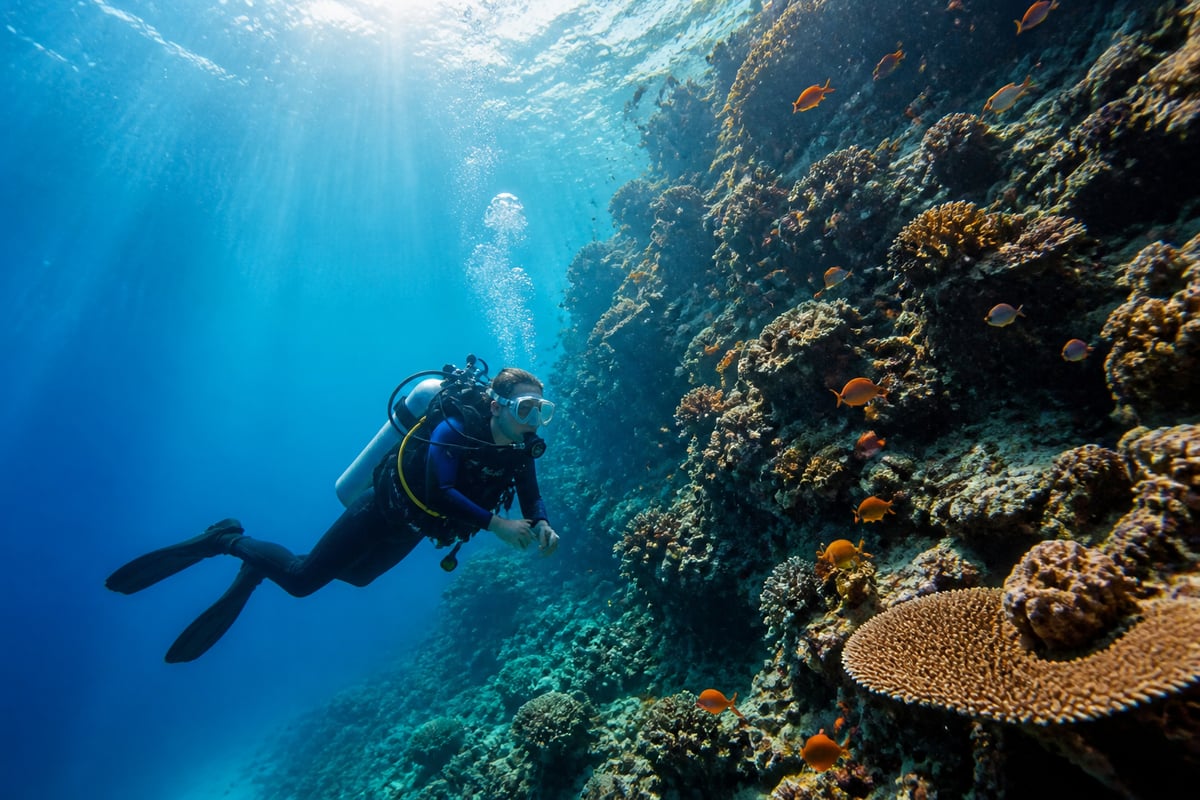
Certified divers can book daily fun dives, and the main planning question is which sites suit your logbook, comfort level and interests. El Nido offers walls, reef slopes and sheltered areas, so a mix of easy and more engaging dives is usually possible within one trip.
At Submariner Diving Center, dive sites are selected by experience level, personal interests and daily conditions, rather than from a fixed list. That means a recently certified diver and a diver with hundreds of logged dives are not pushed into the same plan. Private VIP charters are flexible, with sites chosen day by day to suit weather and sea state. If you want a seat on the boat without arranging a private charter, the Fun Diving service covers daily boat dives to El Nido's reefs, walls and marine life for certified divers.
A few practical points make a certified trip smoother:
- Bring your certification card and logbook. Dive staff will want to check your level and recent activity.
- Be honest about time out of the water. If it has been a year or more, ask about a refresher. It is a normal request, not a judgment.
- Say what you want to see. Macro, big reef scenery and photography all lead to different site choices.
- Be flexible. Weather and sea conditions decide what is safe, and a good operator changes the plan rather than forcing it.
If you are building a trip around several destinations, these guides to top scuba diving destinations and good scuba diving locations can help you compare.
Safety and Medical Planning You Should Not Skip
The most useful safety habit in El Nido is planning for the fact that emergency care is far away. A 2026 dive guide reports that the nearest hyperbaric chambers are in Cebu and Manila, and that evacuation from El Nido may take 2 to 3 hours.
That is not a reason to avoid diving. It is a reason to dive conservatively and choose a center that takes procedure seriously. Practical steps:
- Carry dive insurance that covers hyperbaric treatment and evacuation. Check the policy wording before you travel.
- Stay within your training limits and your plan. Skip pushing depth or bottom time because the conditions look easy.
- Respect surface intervals and flying rules. Build a buffer day before your flight home.
- Hydrate and rest. Dehydration and heavy nights are common, avoidable contributors to feeling poorly after a dive.
- Choose professionals. Submariner Diving Center works with PADI instructors who bring local knowledge and modern safety equipment, and has more than 15 years of diving experience in El Nido.
If you have a medical condition and are not sure whether it affects diving, ask a doctor familiar with dive medicine before you book. Do not leave that question for the dock.
Choosing When to Go and How to Beat the Crowds
The best time for a diving experience in El Nido depends on weather, sea conditions and how busy the town is. El Nido recorded 642,385 overnight tourist arrivals in 2025, a count that covers check-ins at accredited accommodations and excludes same-day visitors. Palawan News explains what the provincial figures include and leave out, which is helpful if you are comparing busy and quiet periods.
Rather than chasing a single perfect month, plan with flexibility:
- Book a few spare days if you are on a dedicated dive trip, so weather does not wipe out your plans.
- Ask the dive center about current conditions a few days before arrival.
- Expect that sites will change from day to day. That is normal in the Bacuit Bay area, and it is why operators who choose sites daily tend to give a better day of diving than those who commit to a fixed schedule.
Submariner Diving Center is not the right fit if you need a fixed itinerary that ignores weather and conditions. Its approach is to adjust.
Where to Stay: Diving from Your Doorstep
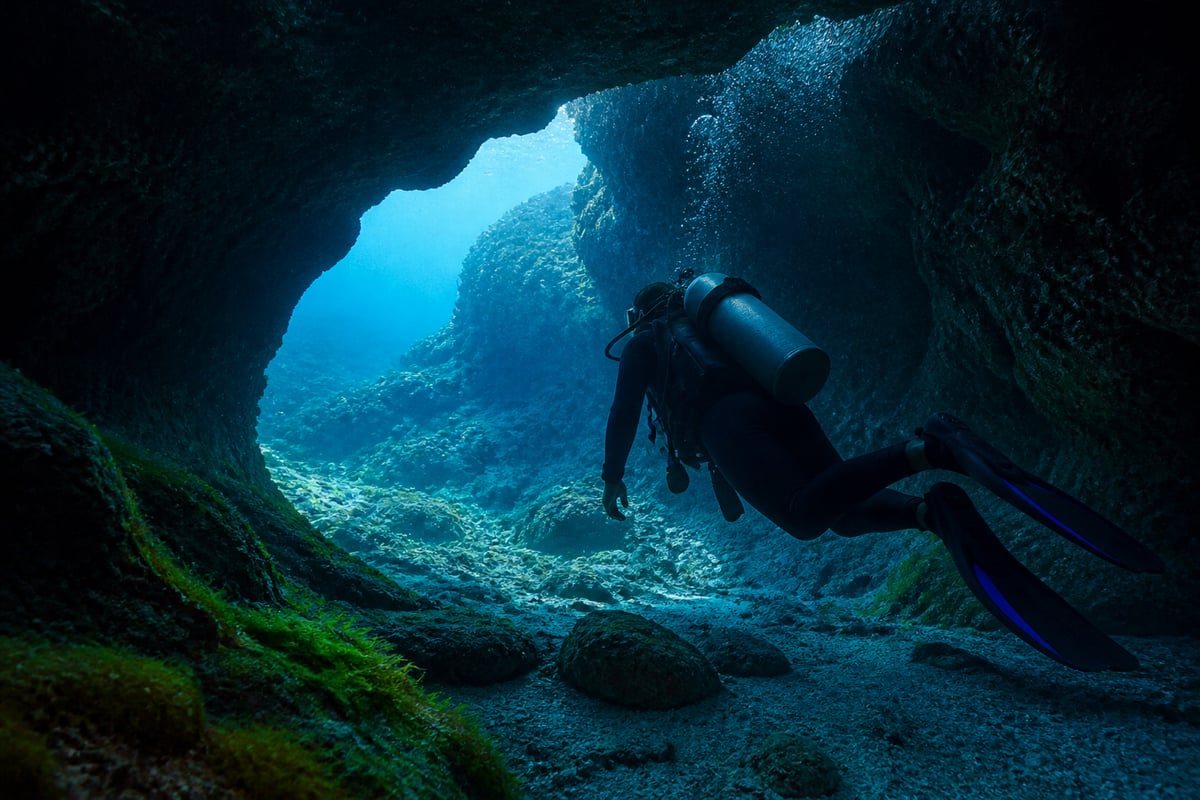
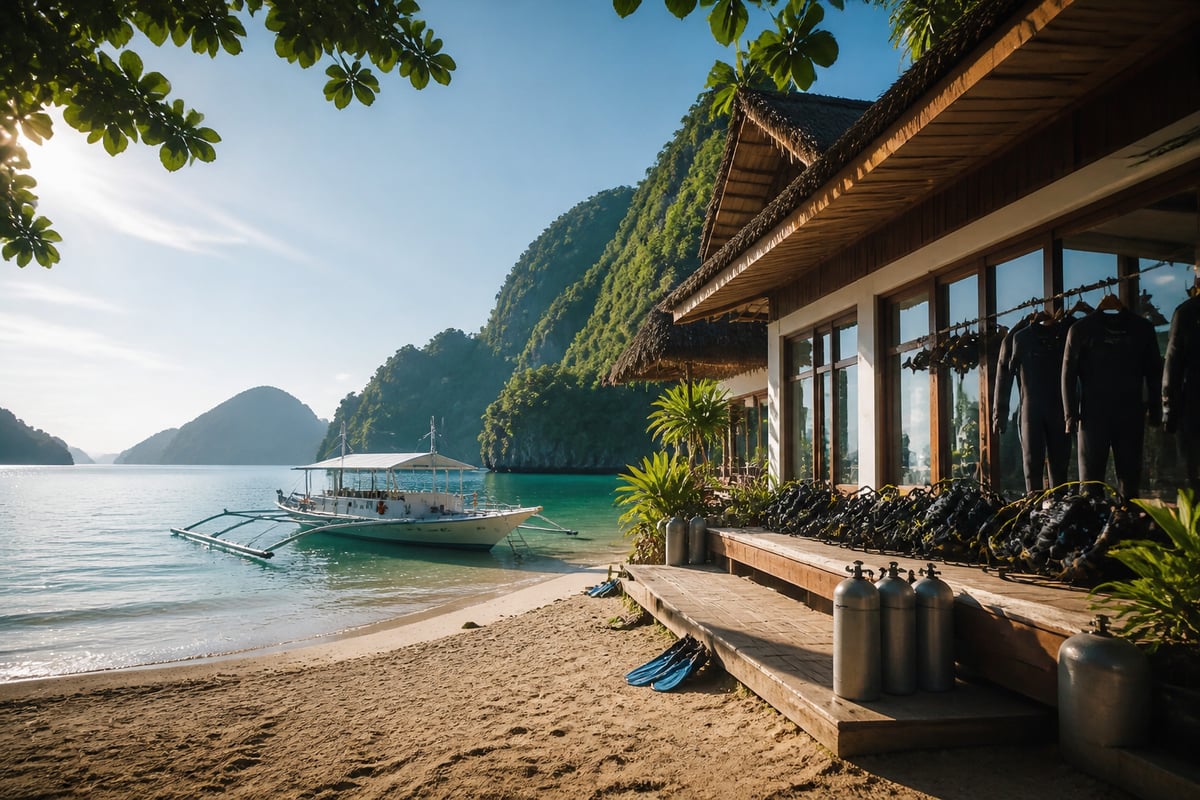
Staying close to the dive center removes the logistics that eat into a diving holiday. The Beach House is beachfront accommodation with the dive center in the same building, so boats and equipment are close at hand and there is no early-morning transport across El Nido.
For divers, that matters more than it sounds. Early starts are easier when you can walk downstairs, and rinsing gear, resting between dives and ending the day by the water all become simple. A practical routine looks like this: eat breakfast, walk to the dive center for your briefing, board the boat, then return to your room between dives to shower, hydrate and rest. Camera and equipment batteries can charge in your room overnight, and wet gear has somewhere close to dry instead of traveling in a bag.
The setup also helps non-diving companions, who can stay on the beach while you are out on the boat. After the last dive, the Cloud 9 rooftop restaurant and bar is part of the beachfront stay, which suits a relaxed evening and an easy early night before the next day's dives. You can find the accommodation at The Beach House.
Planning a Dedicated Palawan Trip and Thinking About Tubbataha
Certified divers building a Palawan itinerary often ask whether El Nido can be a standalone destination or should be one part of a longer trip. El Nido can fill a week of varied diving on its own, and it also works as a base before or after a bigger expedition.
Tubbataha is a remote reef reached by liveaboard, and it attracts experienced divers who want a very different kind of trip. If it is on your list, treat El Nido as preparation: logging dives, checking your gear and building comfort with current and depth in a setting where support is close. Tell your dive team what your longer-term plans are so they can pick sites that build the skills you will want.
For more destination planning, these pages on scuba diving locations and beautiful scuba diving are good places to continue.
Packing and Preparation Checklist
A small amount of preparation makes any experience diving trip more comfortable. Start with the paperwork, since it is the hardest thing to replace on a remote island:
- Certification card, logbook and travel insurance details
- Reef-safe sun protection and a rash vest or light wetsuit layer
- Your own mask if you have one that fits well
- Any prescription medication, plus a note of dosage and timing
- A reusable water bottle and snacks for between dives
- A flexible mindset about weather and site changes
Photograph your card, logbook pages and insurance policy and keep the copies on your phone. Because the nearest hyperbaric chambers are in Cebu and Manila, make sure your policy wording names hyperbaric treatment and evacuation, and save the insurer's emergency number somewhere you can reach without data. Pack medication in your carry-on, not your checked bag, in case luggage is delayed on the way to Palawan.
A rash vest earns its space because it covers your back and arms from sun on the boat ride and adds a little warmth on a longer day. Choose a mask you have already tried on at home, since a poor seal is the most common reason a dive feels annoying.
If you are renting gear, say so when you book and confirm sizes on arrival. For specifics about equipment, schedules or pricing, check the booking pages or contact the team directly rather than assuming.
Your next step is simple: decide whether you want to try scuba, start a course or book certified dives, then send the team your dates and experience level. Submariner Diving Center can match you with the right dive plan, and if you are ready for certified boat dives you can reserve Fun Diving directly. When you are ready to arrange your trip, Book Your Diving with the El Nido team and tell them what you hope to see underwater.