An open water adventure in El Nido means diving the sheltered waters of Bacuit Bay, either by earning your PADI Open Water Diver certification from scratch or by exploring the bay's reefs and wrecks with a certificate you already hold. Bacuit Bay has around 30 dive sites, with reported depths from 6 to 30 meters, so there is a site to fit most experience levels. This guide covers how to choose your path, which kinds of sites suit which divers, what conditions to expect, and how to plan a day that works with the weather.
What an Open Water Adventure in El Nido Actually Involves
An open water adventure in El Nido is a day (or several days) of scuba diving in the natural sea around Bacuit Bay, as opposed to a pool or confined-water session. You travel by boat to a dive site, gear up, and descend with a professional guide or instructor.
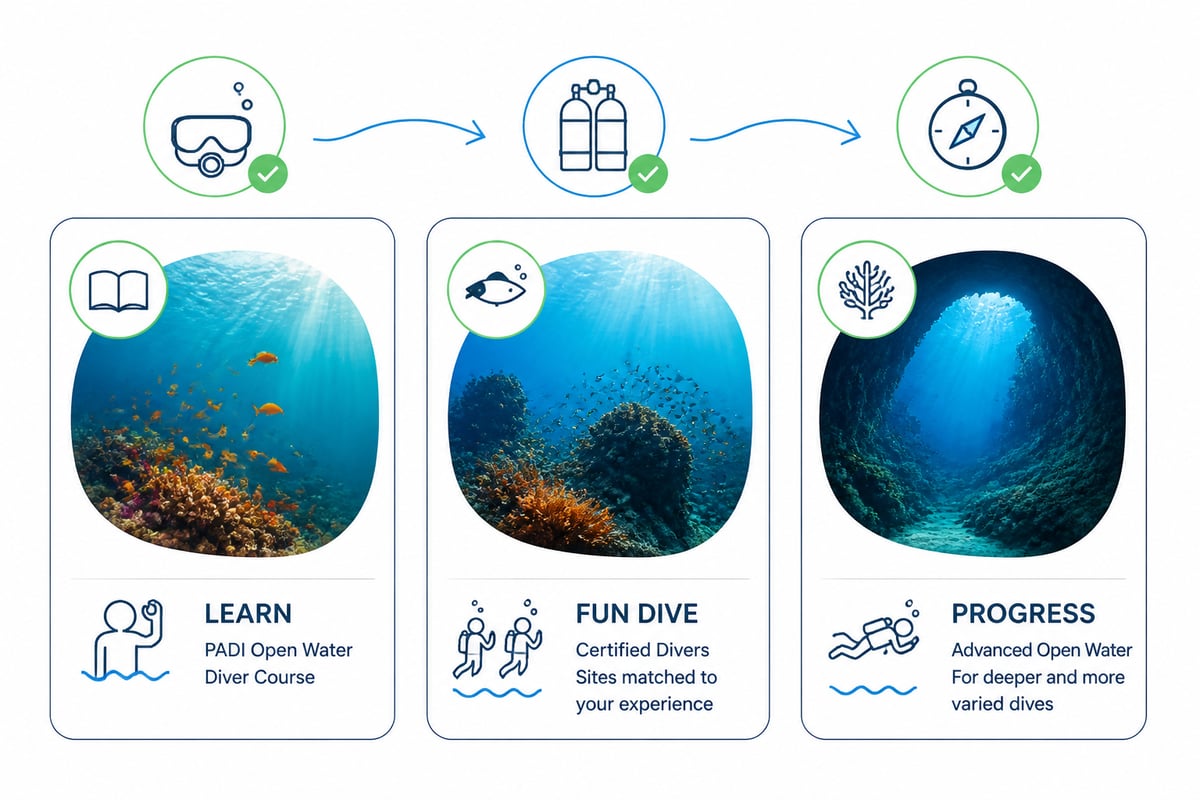
In practice, there are three common ways to do it:
- Learn to dive. Complete the PADI Open Water Diver course, which combines theory, confined-water skills and open water dives.
- Fun dive. If you're already certified, join a guided dive at sites matched to your logged experience.
- Keep progressing. Add the next certification level to reach deeper sites and build navigation skills.
Palawan sits in the Philippines' western edge, and El Nido's limestone cliffs and island chains shape much of the diving. The bay's geography matters for divers, because islands break up swell and current, giving instructors more choice about where to take a group on any given day.
One more local detail: the wider El Nido-Taytay Managed Resource Protected Area protects the surrounding waters. That protected status is part of why the area is worth treating gently. Good buoyancy, no touching and no collecting are the baseline here.
Learning to Dive: The PADI Open Water Course
The PADI Open Water Diver course is the entry-level certification that lets you dive with a buddy to the depth limits of your training, and it is a realistic goal during a holiday in El Nido. The course has three parts: knowledge development (theory, often started online before you travel), confined-water skills practice in shallow, calm water, and open water dives where you demonstrate those skills at sea.
If you want the full breakdown of how the training is structured, the guide to open water diving courses walks through what each stage involves. For a wider look at what beginners can expect on the water, the beginner’s guide to diving in El Nido is a good companion read.
What to Prepare Before You Arrive
A few practical steps make the course smoother:
- Start the theory early. Completing the knowledge portion before you travel frees up more of your holiday for time in the water.
- Be honest on the medical questionnaire. Certain conditions need a doctor's sign-off before you can dive. Sort this out at home, not on the morning of your first session.
- Allow buffer days. Weather can shift a schedule, and rushing a student is never a good idea. A flexible plan beats a tight one.
- Plan your flight home. Divers should leave a gap between their last dive and flying. Your instructor can confirm the guideline that applies to you.
Nerves are normal in the first session, and good instructors expect them. Breathing underwater feels unnatural for the first few minutes, then it settles. Tell your instructor how you feel, and they will pace things accordingly.
Choosing Dive Sites by Experience Level
The best dive site on any given day is the one that fits your skills and the day's conditions, which is why local guides choose sites daily instead of fixing a list in advance. Bacuit Bay offers a useful spread.
Beginners and returning divers are often taken to sheltered sites. Nat Nat is described as beginner-friendly and sheltered from currents, with reported marine life that includes corals, anemones, turtles and seahorses. Reports are not promises, so treat any sighting as a bonus rather than something to expect.
At the other end of the scale, the Tunnel near Dilumacad Island is reported at 12 meters deep and 40 meters long and is recommended for experienced divers. Swim-throughs like this call for solid buoyancy control and calm, deliberate finning, because kicked-up sediment or a careless fin can damage the passage and cut visibility for everyone behind you.
| Diver profile | What to look for in a site | Typical priorities |
|---|---|---|
| Newly certified or rusty | Shallow, sheltered, low current | Comfort, buoyancy practice |
| Intermediate | Moderate depth, mixed terrain | Navigation, reef variety |
| Experienced | Swim-throughs, deeper profiles | Technique, careful finning |
Depths on this table are guidelines for planning conversations, not rules. Your guide will make the final call based on your logbook and what the sea is doing that morning.
Conditions, Seasons and Weather Flexibility
El Nido diving depends on weather, and a good operator treats that as a planning factor, not an inconvenience. Wind direction, swell and visibility change from day to day, and the bay's many islands mean there is almost always a more protected option when one side is rough.
This is the part of an open water adventure that is easy to underestimate when you book: the best dive site is chosen on the morning, not months ahead. If you are the kind of traveler who needs a fixed, non-negotiable schedule regardless of the sea, diving may frustrate you. If you can stay flexible, you will usually find a good site for your level.
A few habits help:
- Build one or two spare days into your itinerary rather than packing every day with activities.
- Ask your dive team which sites are protected in the current wind pattern.
- Keep your expectations about marine life open. Turtles, rays, nudibranchs and reef fish are all possible, but no one can promise a specific animal on a specific day.
Private Charters and Personalized Days
For couples, families and small groups, a private charter changes the shape of the day. Instead of fitting around a shared boat schedule, the group sets the pace and the guide picks sites that match everyone's experience and interests. Submariner Diving Center runs flexible private VIP charters where dive sites are chosen daily to suit weather and sea conditions, with professional PADI instructors who bring local knowledge and modern safety equipment to the boat. The team has over 15 years of diving experience in El Nido, and a mixed-ability group can be accommodated on the same trip with sites picked to suit everyone.
Leveling Up: From Open Water to Advanced
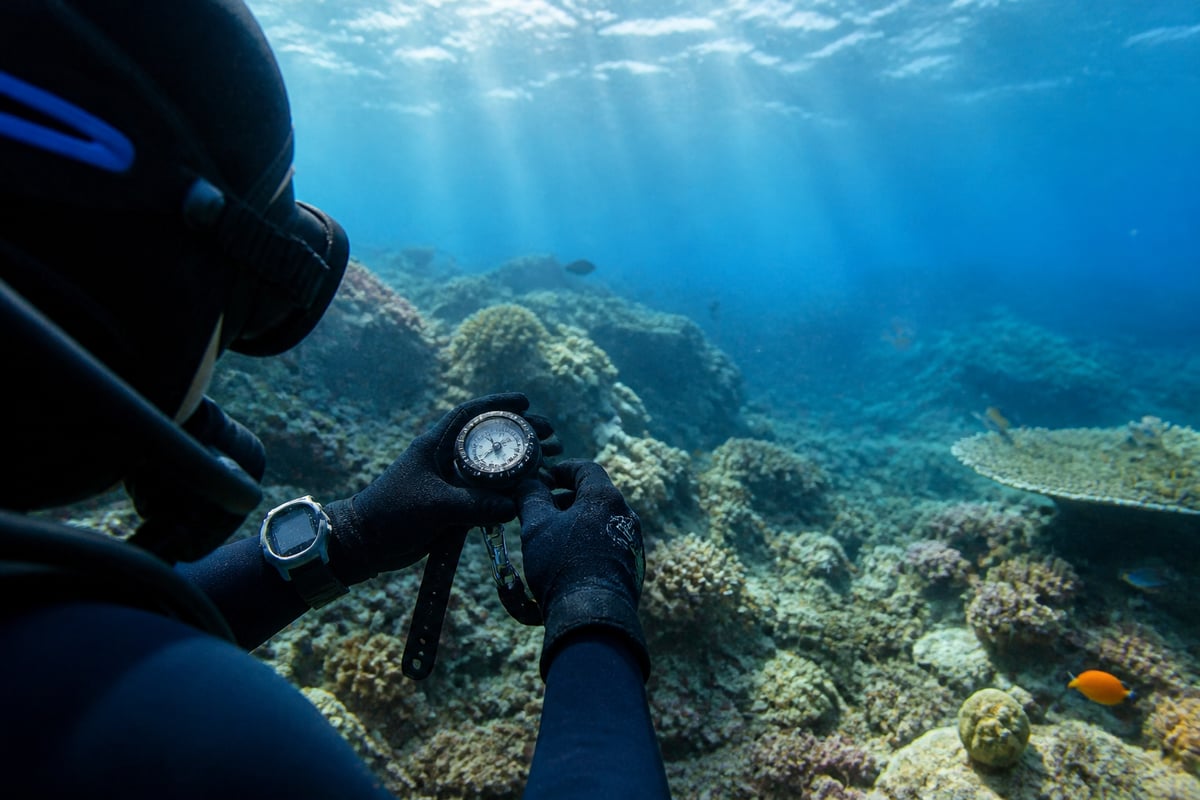
Once you have your first certification, the Advanced Open Water Diver course is the natural next step, and it is more approachable than the name suggests. It is built around adventure dives that include deep diving and underwater navigation, plus specialty dives, so you try new skills with an instructor beside you. Much of it is guided practice rather than classroom study, and it opens up deeper sites and more confident planning.
The Advanced Open Water Course at Submariner Diving Center covers adventure dives around El Nido, and it suits divers who want to build experience in a place where the sites vary so much from one to the next. It also pairs well with a longer stay, since the dives can be spread across several days.
If you are weighing whether to progress, the overview of the Advanced Open Diver pathway explains what changes in your certification and what new sites it unlocks.
For Experienced Divers: Making Palawan a Dive Trip
Certified divers planning a dedicated Palawan trip can use El Nido as a base for varied bay diving, and some also consider Tubbataha as a separate expedition. Tubbataha is a distinct, remote destination with its own logistics, so it is best planned as its own project rather than squeezed into a week of bay diving.
For bay diving, think in terms of variety. Over several days you can mix reef dives, swim-throughs, and different island groups, with the dive team adjusting each day's plan to conditions. If you also want to compare regions, the write-up on Coron Palawan diving shows how another corner of the province differs.
Experienced divers should bring:
- Certification card and logbook, plus any proof of recent diving if you've had a long break
- Your own mask and computer if you prefer familiar gear
- Reef-safe sun protection, since the surface interval under a tropical sun adds up
- A willingness to dive conservatively, which keeps both you and the reef in good shape
Where to Stay and How the Day Flows
Staying close to the dive center removes one of the most tiring parts of a dive holiday: the early-morning transfer. The Beach House is a beachfront stay with Submariner Diving Center in the same building, so the boats and equipment are close at hand and there is no scramble across El Nido before breakfast. You can dive from your doorstep, and after a day on the water, the Cloud 9 rooftop restaurant and bar is a relaxed place to log your dives and plan the next one.
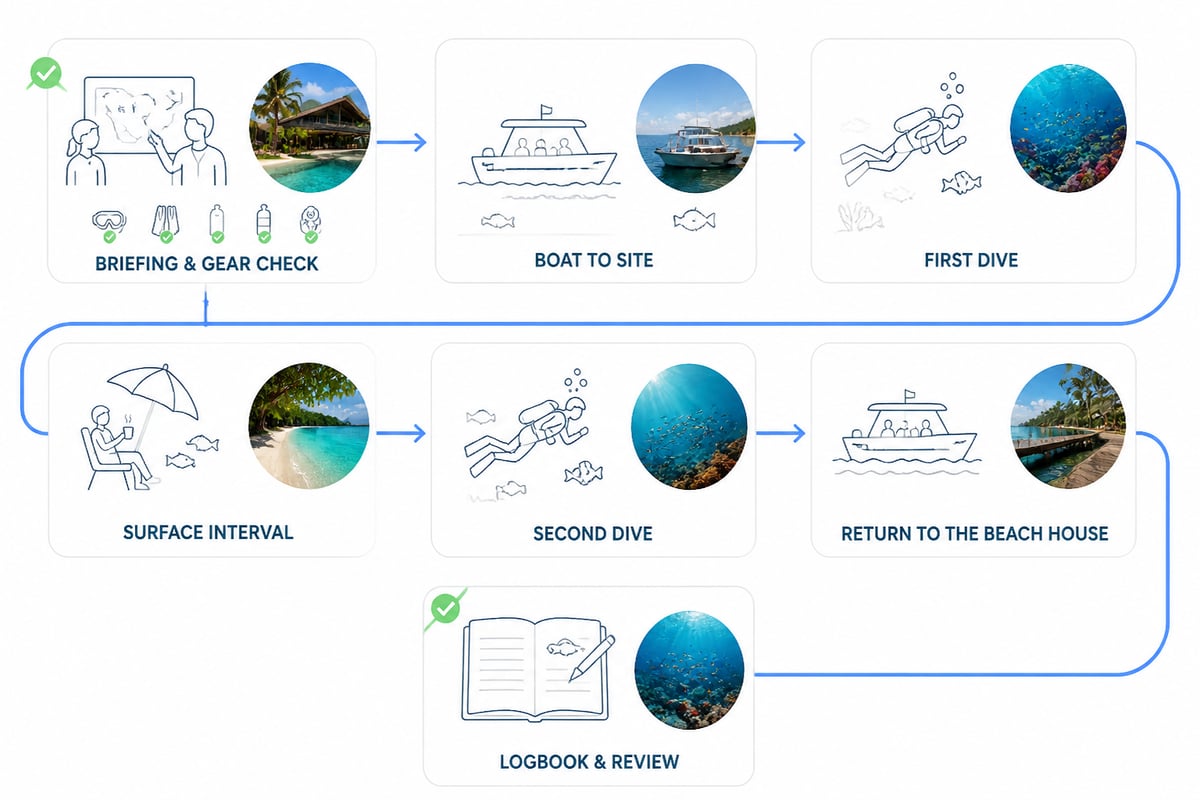
A typical dive-day rhythm looks like this:
- Briefing and gear check near your accommodation
- Boat ride to the day's chosen site
- First dive, then a surface interval with snacks and water
- Second dive at a different site or depth
- Return, rinse gear, log your dives
If some members of your group would rather stay near the surface, a snorkeling option exists, though diving is the focus here. For non-diving companions looking for a gentler day, the overview of snorkeling in the Philippines can help you plan something separate while you dive.
Safety and Reef Etiquette
Safe diving in El Nido comes down to a handful of habits that you control. Dive within your training, check your gear before every descent, stay with your buddy and guide, and ascend slowly. Modern safety equipment on the boat matters, but your own discipline matters more.
Reef etiquette is just as important in a protected area:
- Keep fins, hands and gauges clear of coral
- Maintain neutral buoyancy so you hover rather than drag
- Never chase, touch or feed marine life
- Take nothing from the sea and leave nothing behind
Practicing buoyancy at the start of a trip pays off for the rest of it. Many divers find their second and third days noticeably smoother than their first, so don't judge yourself on day one.
Booking Tips for an Open Water Adventure in El Nido
Booking well means matching the product to your goal and leaving room for the weather. Before you commit, work through this checklist:
- Be clear on your goal. Learning, fun diving or progressing all call for different bookings.
- Share your real experience. Your guide can only choose the right sites if they know your logbook and your comfort level.
- Ask about flexibility. Sites chosen daily to suit conditions is a good sign, not a drawback.
- Plan the stay together with the diving. Accommodation next to the dive center saves time you would otherwise spend in transit.
Your next step is to decide whether you want to learn, fun dive or progress, and then pick a few flexible days around that goal. If you'd like help shaping the plan, from your first certification to the Advanced Open Water Course and a private charter chosen around the day's conditions, the team at Submariner Diving Center can help you book your diving with beachfront convenience at The Beach House.