So you've completed your open water certification and tasted the magic of breathing underwater. You've explored coral gardens, hovered weightlessly above sandy bottoms, and watched tropical fish dart between reef formations. Now you're ready for the next chapter. Becoming an advanced open water diver opens up a whole new dimension of diving experiences, from deeper wrecks to night dives, from precision navigation to drift diving along walls. In El Nido's crystal-clear waters, advancing your certification means accessing some of Palawan's most spectacular dive sites that require additional training and confidence.
What Makes an Advanced Open Water Diver Different
The gap between basic certification and advanced status isn't about extreme depth or technical gear. It's about expanding your comfort zone and building competence across different diving environments.
Core Skill Development
An advanced open water diver demonstrates proficiency beyond the foundational skills learned in entry-level courses. According to PADI’s Advanced Open Water Diver Instructor Guide, the course focuses on practical application rather than classroom theory.
Key areas of development include:
- Deep diving techniques – managing nitrogen narcosis, understanding pressure effects at depth, and planning bottom times for dives between 18-30 meters
- Underwater navigation – natural navigation using reef features, compass work, search patterns, and distance estimation
- Buoyancy refinement – hovering motionless, peak performance control, and efficient air consumption
- Specialty exposure – sampling different dive types to discover what excites you most
The training builds on your existing foundation. You won't repeat basic mask clearing or regulator recovery exercises you mastered during your beginners guide to diving in El Nido Palawan certification.
The Five Adventure Dives
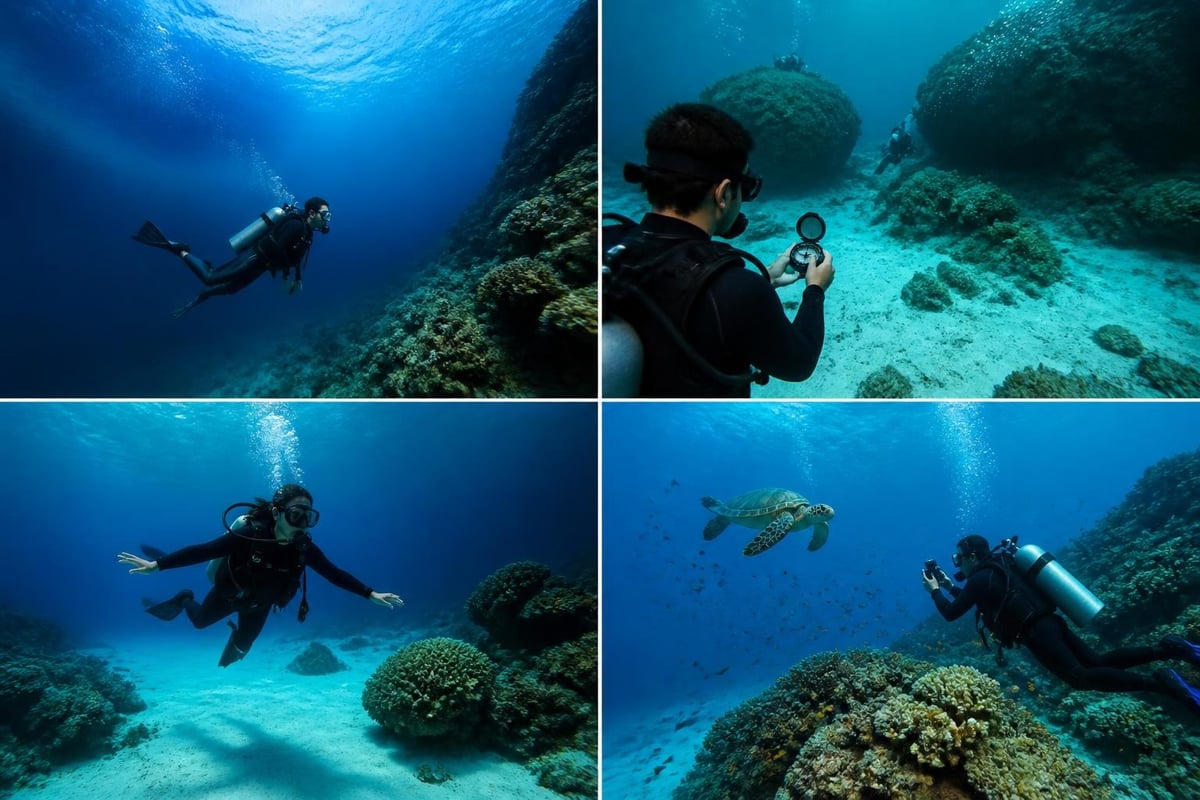
Unlike the structured pool sessions and confined water training of your first certification, the advanced course emphasizes real-world diving. You'll complete five adventure dives, two of which are mandatory: deep and navigation. The remaining three let you choose from options like wreck diving, drift diving, night diving, fish identification, or peak performance buoyancy.
| Adventure Dive | Skills Practiced | Typical Depth | Why It Matters |
|---|---|---|---|
| Deep Dive | Narcosis awareness, safety stops, color loss | 18-30m | Access deeper sites, wrecks, walls |
| Navigation | Compass heading, natural navigation | 5-18m | Find your way back, explore confidently |
| Wreck | Entry/exit procedures, penetration limits | Varies | Explore underwater history safely |
| Night | Light use, buddy communication, disorientation management | 5-18m | Experience nocturnal marine life |
| Drift | Current awareness, group positioning | Varies | Enjoy effortless wall diving |
Each adventure dive is a taster. If you love wreck diving during your advanced course, you might pursue a full wreck diving specialty later.
Why El Nido Is Perfect for Advanced Training
El Nido offers ideal conditions for building your skills as an advanced open water diver. Water temperatures hover between 26-29°C year-round, visibility regularly exceeds 15 meters, and the diversity of dive sites means you can complete different adventure dives in varied environments.
Depth Progression in Protected Waters
The sheltered bays around El Nido provide calm conditions for your first deep dive. Sites like South Miniloc drop gradually from shallow coral gardens to deeper walls, letting you descend at a comfortable pace while your instructor monitors your response to increased depth.
You'll notice colors shift as you pass 20 meters. Reds disappear first, then oranges. Your instructor will show you how a simple torch brings the color spectrum back to life. This controlled exposure helps you understand depth effects without the stress of strong currents or poor visibility.
Natural Navigation Landmarks
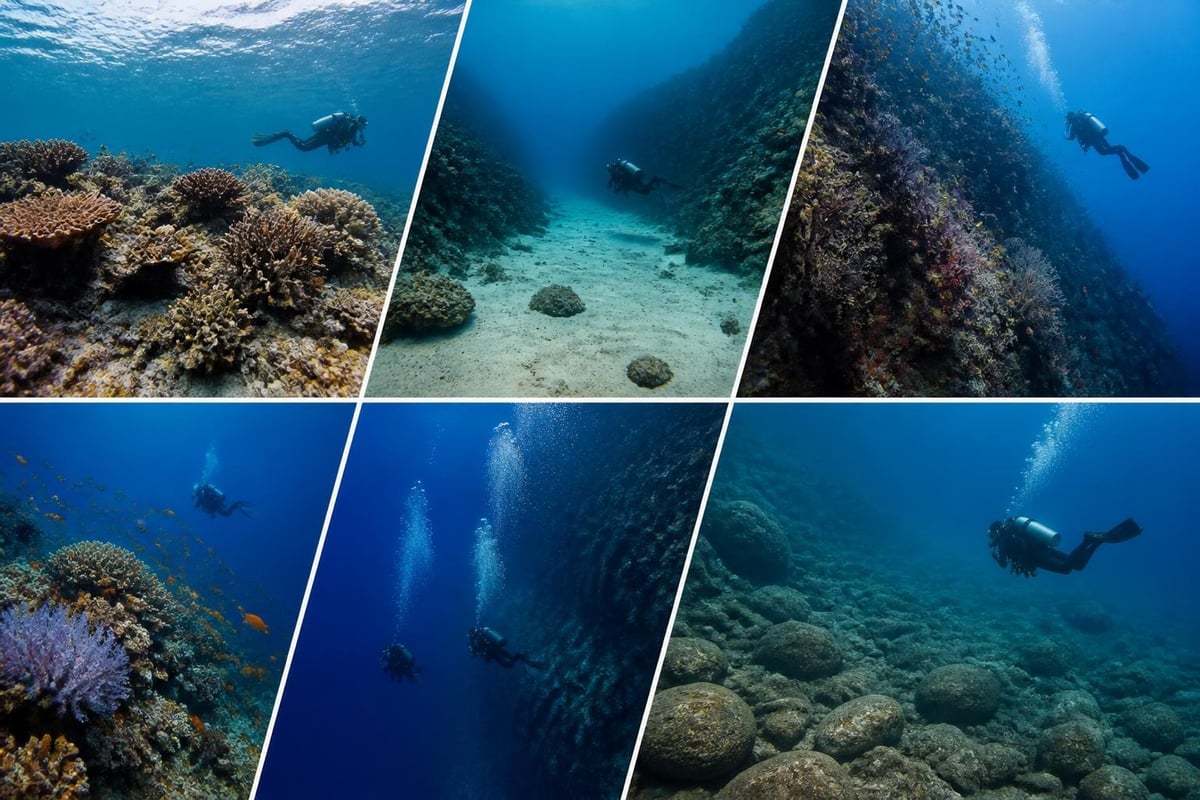
El Nido's reefs are rich with natural navigation references. Distinct coral formations, sand channels, rock outcrops, and consistent current patterns give you plenty of landmarks to practice without relying solely on your compass.
Practical navigation features around El Nido:
- Sandy channels between reef sections orient you north-south
- Sloping walls provide depth references
- Distinctive coral formations serve as waypoints
- Prevailing currents flow predictably along many sites
Diverse Adventure Dive Options
The variety of sites around El Nido and northern Palawan means your five adventure dives can each feel completely different. Morning drift dives along current-swept walls, afternoon wreck explorations, dusk descents as the reef transforms for night.
The Advanced Open Water Course at Submariner Diving Center takes advantage of this diversity, matching your adventure dives to current conditions and your interests while ensuring each dive builds progressively on the last.
Building Experience Beyond Certification
The advanced open water diver certification isn't an endpoint. It's a gateway to confident, versatile diving and the foundation for further specialization.
The 20-Dive Milestone
Most divers notice a significant jump in comfort and confidence around their 20th logged dive. Your buoyancy becomes intuitive rather than deliberate. Air consumption improves. You start noticing smaller creatures and subtle behaviors instead of just focusing on your gauges and position.
The advanced course often provides dives 10-15 for newer divers. Those five additional dives, combined with your open water training dives and first few fun diving experiences, push you toward that critical comfort threshold.
Real-World Risk Awareness
DAN’s diving incident summaries reveal that many diving accidents involve certified divers who exceeded their training or experience level. An advanced open water diver understands their limits more clearly precisely because the training exposes them to new challenges in controlled settings.
Critical awareness areas developed:
- Depth management – recognizing narcosis symptoms, monitoring computer warnings, planning conservative profiles
- Air consumption – calculating rock-bottom pressure, planning reserve gas for ascents
- Environmental assessment – reading current, evaluating visibility, recognizing changing conditions
- Equipment familiarity – managing lights, reels, surface markers, backup instruments
This awareness doesn't come from reading a manual. It develops through supervised exposure to the actual conditions you'll face as you explore top dive sites in Palawan.
When Advanced Becomes Essential
Some of the Philippines' most celebrated dive sites require advanced certification. Deep wrecks sitting at 25-30 meters, wall dives where the reef face drops beyond recreational limits, sites with mandatory current diving-these aren't accessible to open water divers.
In El Nido specifically, certain sites reveal their full beauty only when you can comfortably navigate at depth. Shallow sections might show healthy hard corals and reef fish, but the walls dropping into deeper water host larger pelagics, dense soft coral coverage, and dramatic topography.
Practical Considerations for Your Advanced Course
Timing your advanced training strategically makes the learning more effective and enjoyable.
Season and Conditions
El Nido's dry season (November through May) offers the calmest seas and best visibility, ideal conditions when you're focused on learning new skills rather than managing environmental challenges. That said, advanced training during the wet season (June through October) can actually benefit divers who want exposure to slightly more challenging conditions under professional supervision.
Seasonal training considerations:
| Season | Advantages | Considerations |
|---|---|---|
| Dry (Nov-May) | Calm seas, 20m+ visibility, comfortable learning | Peak season crowds at popular sites |
| Wet (Jun-Oct) | Fewer divers, realistic conditions, plankton blooms attracting pelagics | Occasional surface chop, slightly reduced visibility |
Your instructor will adapt the training to current conditions, potentially changing dive sites or adventure dive sequences based on weather.
Course Duration and Scheduling
Most advanced open water courses take 2-3 days, though this varies based on how many dives you complete per day and whether you're combining the course with general diving. The structure differs significantly from your open water course-there's less classroom time and more actual diving.
A typical schedule might look like:
- Day 1: Knowledge review, deep dive, wreck dive
- Day 2: Navigation dive, peak performance buoyancy dive
- Day 3: Night dive (or alternative fifth adventure dive)
Some divers spread the course across a longer trip, completing one or two adventure dives between recreational diving days. This approach can reduce the intensity while maximizing your overall dive count.
Prerequisites and Preparation
You need current open water certification (or equivalent) from a recognized agency. Most operators, including Submariner Diving Center, recommend you've logged at least 10-15 dives since your initial certification, though this isn't a strict requirement.
Helpful preparation:
- Review your open water skills-mask clearing, regulator recovery, controlled ascents
- Ensure your equipment fits properly and is serviced
- Be honest about your comfort level and any concerns
- Refresh your understanding of dive tables and computer use
If you're returning to diving after a break, consider a refresher course before your advanced training.
Advanced Skills in Action
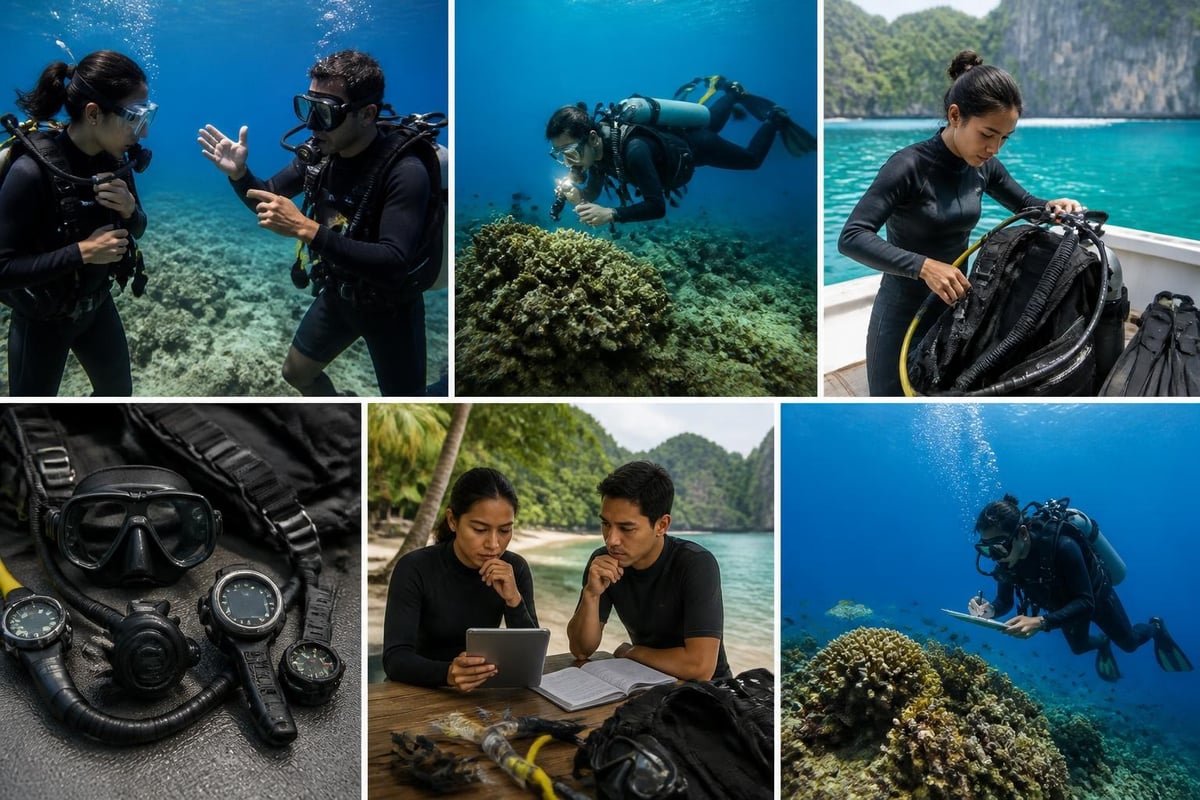
Understanding how advanced training translates to real diving experiences helps clarify why these skills matter beyond simply earning another certification card.
Deep Diving Confidence
Your first deep dive during the course happens with an instructor managing every detail-descent rate, equalization checks, bottom time, safety stop. By your 30th or 40th dive, you're planning and executing deep dives independently, understanding the physics and physiology that NOAA’s diving standards emphasize for safe operations.
That confidence means when you're diving a wall in Coron and spot something interesting at 28 meters, you can make an informed decision about whether to descend, how long you can stay, and what your ascent plan should be.
Navigation Mastery
The navigation dive during your advanced course teaches compass use and natural navigation. Initially, this feels academic-carefully following headings, counting fin kicks, sketching mental maps.
Within 20-30 dives post-certification, navigation becomes intuitive. You automatically note the sun angle, current direction, and landmark positions when you descend. At the end of a drift dive, you surface knowing approximately where the boat should be. Exploring a new site, you confidently venture away from the group knowing you can find your way back.
Specialty Dive Preparation
Each adventure dive during your advanced course is essentially an introduction to a potential specialty. That wreck dive might spark fascination with underwater archaeology, leading to a full wreck diving specialty. The peak performance buoyancy dive might reveal you love the challenge of precise control, opening paths toward technical diving or underwater photography.
According to research available through DAN’s current studies, divers who pursue specialties and continue education have statistically lower incident rates than those who stop learning after basic certification.
Beyond Advanced: Where the Path Leads
Becoming an advanced open water diver isn't the end of your diving education-it's often just the beginning of a deeper relationship with the underwater world.
Specialty Certifications
After your advanced certification, you might pursue:
- Rescue Diver – learning to prevent and manage diving emergencies
- Enriched Air (Nitrox) – extending bottom times with higher oxygen mixes
- Wreck Diving – proper penetration techniques and wreck-specific skills
- Deep Diving – extending your depth range to 40 meters
- Drift Diving – advanced current diving techniques
- Night Diving – full specialty in nocturnal diving
Each specialty deepens your competence in specific environments or situations. The Nitrox course and Nitrox diving training, for example, is particularly popular among divers who want longer bottom times on El Nido's stunning reefs.
The Technical Diving Boundary
NOAA’s technical diving overview explains the boundary between recreational and technical diving. As an advanced open water diver, you're still firmly in recreational territory-no decompression diving, no overhead environments, no mixed gases beyond nitrox.
Some divers eventually cross into technical diving with proper training. But many find the advanced recreational level offers a lifetime of exploration without the additional complexity, cost, and risk that technical diving entails.
Dive Leadership Paths
Advanced certification, combined with rescue diver training and sufficient experience, opens the path to professional diving roles. Divemaster, instructor, and specialty instructor certifications require advanced open water status as a foundation.
Even divers who don't pursue professional certifications benefit from leadership training. Understanding how to lead dive planning, brief other divers, and model good practices enhances your value as a dive buddy and your enjoyment of group diving.
Making Advanced Training Count
The difference between a beneficial advanced course and a box-ticking exercise comes down to how you approach the training.
Choosing the Right Environment
Where you complete your advanced training matters. A rushed course in a quarry with poor visibility teaches different lessons than a carefully paced program in clear tropical waters with professional instruction.
El Nido offers the latter. The combination of excellent conditions, diverse sites, small group sizes, and experienced instructors means your advanced training builds genuine competence rather than just checking certification requirements. When you're planning your scuba diving experience, prioritizing quality training over just collecting cards pays long-term dividends in safety and enjoyment.
Instructor Quality and Ratio
The best advanced courses maintain low student-to-instructor ratios. One-on-one or two-students-per-instructor allows genuine skill development and personalized attention. Your instructor can identify specific areas needing improvement and tailor the adventure dive sequence to challenge your weak points.
Ask potential operators about their instructor credentials, teaching experience, and typical class sizes. Experienced instructors adapt the course to your learning style and comfort level while maintaining proper standards.
Post-Certification Practice
The five dives during your advanced course introduce skills. Mastery requires practice. Plan to log 10-15 additional dives relatively soon after certification, consciously practicing the skills you learned.
Effective post-course practice:
- Set a personal goal each dive-improve navigation, perfect buoyancy at a specific depth, practice deploying a surface marker
- Dive with more experienced divers and observe their techniques
- Gradually increase challenge-deeper sites, moderate current, lower visibility
- Review your computer data after each dive to understand your actual bottom times and ascent rates
Diving El Nido as an Advanced Diver
Your advanced certification transforms how you experience El Nido's underwater world.
Accessing New Sites
Several of El Nido's most impressive sites require or strongly recommend advanced certification. The deeper sections of certain walls, sites with consistent current, and areas where depth changes rapidly benefit from the additional training and experience advanced status represents.
You'll notice operators more readily accept advanced divers for sites they restrict from open water divers. This isn't arbitrary gatekeeping-it's based on understanding which environments require which skill sets, reinforced by incident surveillance data showing experience-appropriate site selection reduces accident rates.
Enhanced Marine Life Encounters
Many pelagic species-larger fish that swim in open water rather than sticking to reefs-patrol deeper water. Your comfort at 25-30 meters opens opportunities for encounters open water divers might miss. While we never guarantee specific marine life sightings, advanced divers statistically spend more time in zones where these species commonly appear.
Group Diving Flexibility
When diving with mixed groups, advanced certification gives you options. If the group splits based on certification level, you can join the more experienced divers exploring deeper or more challenging sections of a site. If a site has multiple depth zones, you can maximize your dive by accessing the full depth range.
This flexibility is particularly valuable when you're diving El Nido across multiple days. Rather than being limited to the same shallow sites repeatedly, you can explore the full spectrum of what the area offers.
Investment and Value
Advanced training requires time and money. Understanding what you're paying for helps assess the value.
Typical Costs
Advanced open water courses in the Philippines typically run 15,000-25,000 PHP depending on location, operator, and what's included. Higher prices sometimes reflect smaller class sizes, better equipment, more experienced instructors, or inclusion of extras like nitrox fills or dive computer use.
Cost usually covers:
- Instruction and supervision for five adventure dives
- Dive site access and boat transportation
- Rental equipment (if needed)
- Digital certification processing
- Training materials (digital manuals)
Some operators charge separately for equipment rental or certification fees. Clarify what's included before enrolling.
Comparing Options
While price matters, it shouldn't be the sole factor when choosing where to complete your advanced training. Consider:
| Factor | Why It Matters | Questions to Ask |
|---|---|---|
| Instructor experience | Better teaching, adaptive approaches | How many advanced students has your instructor certified? |
| Student ratio | More personal attention, better skill development | What's your maximum student-to-instructor ratio? |
| Site quality | Practical learning in good conditions | Which sites do you use for each adventure dive? |
| Equipment condition | Safety and learning ease | How old is your rental equipment? What brands? |
| Flexibility | Accommodating your learning pace | Can we extend the course if I need extra practice? |
The cheapest course isn't always the best value if it means rushed instruction or poor conditions.
Long-Term Return
The certification card itself has minimal ongoing cost-unlike equipment or trip expenses. But the value compounds over your diving life.
An advanced open water diver certification typically costs 5-10% of what many divers spend on equipment. Yet it multiplies the value of that equipment by enabling you to use it across far more dive sites and conditions. Over 50-100 dives post-certification, the per-dive cost of your training becomes negligible while the benefits continue.
The step from open water to advanced open water diver represents meaningful growth in your capability and confidence underwater. In El Nido's exceptional conditions, advancing your certification opens access to deeper walls, more diverse sites, and richer diving experiences across Palawan's world-class dive destinations. Whether you're ready to take your next step or planning a comprehensive dive holiday that combines beachfront comfort with professional instruction, Submariner diving offers PADI courses, private charters, and dive packages designed to support your progression from beginner to accomplished advanced diver.