Choosing the right scuba diving location can make the difference between an average dive trip and an unforgettable underwater adventure. Whether you're planning your first dive or your hundredth, the spot you pick shapes every moment beneath the surface. The world's oceans offer thousands of dive sites, from shallow coral gardens perfect for beginners to challenging deep walls that test experienced divers. Understanding what makes a great scuba diving location and how to match it to your skills, interests and travel style helps you invest your time and budget wisely. This guide walks you through the practical factors that matter most when selecting where to dive.
What Makes a Great Scuba Diving Location
Not all dive sites are created equal. The best scuba diving location for you depends on several interconnected factors that shape your experience underwater.
Marine biodiversity stands at the top of most divers' priority lists. Sites with healthy coral reefs, regular pelagic visitors and diverse macro life offer more to see and photograph. Protected marine areas often maintain richer ecosystems because fishing restrictions allow populations to recover and thrive.
Water conditions directly affect your comfort and safety. Visibility, current strength, water temperature and wave action vary dramatically between locations and seasons. Some sites offer calm, clear conditions year-round, while others experience seasonal weather patterns that create brief optimal diving windows.
Accessibility and infrastructure matter more than many divers initially realize. A world-class reef means little if it requires a six-hour boat ride in rough seas or lacks proper dive operators with maintained equipment. The IUCN’s guidance on protected areas helps you understand how conservation status affects access rules and site management.
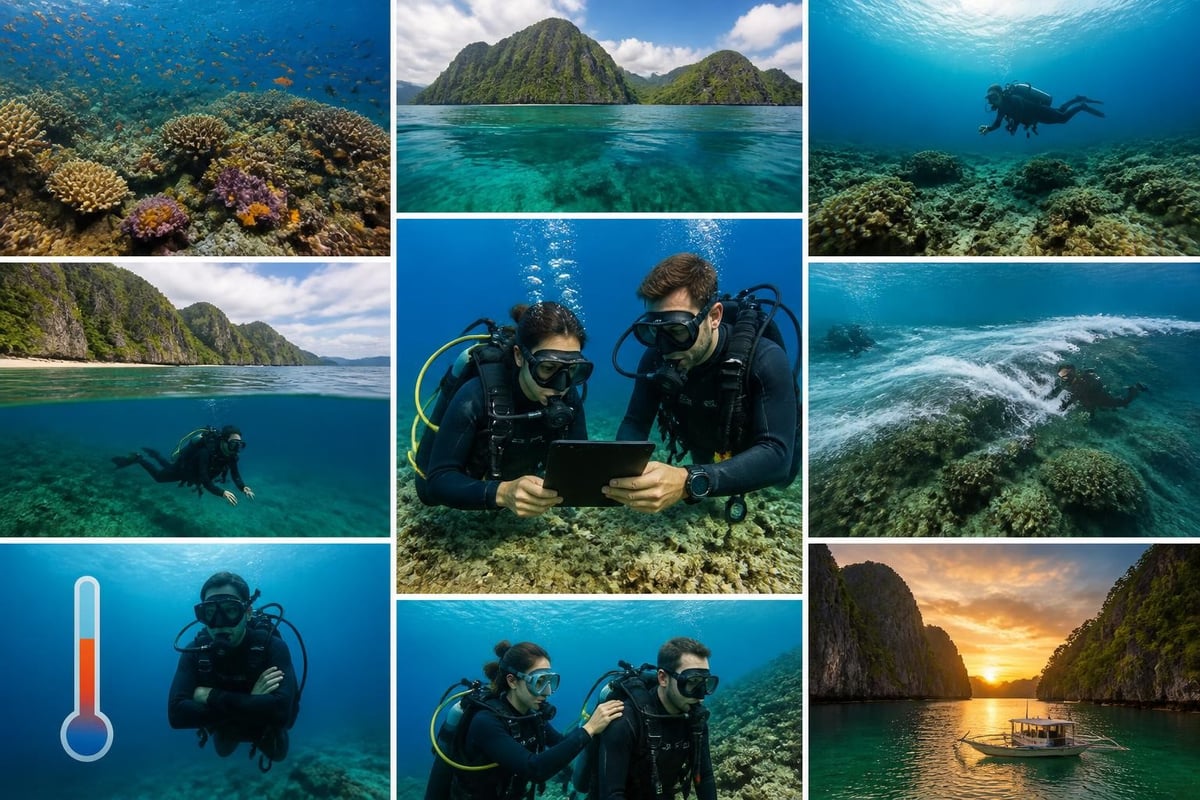
Environmental Health and Resilience
Climate change now plays a significant role in scuba diving location selection. Recent research published in Nature shows unprecedented ocean heat impacts on major reef systems, while a Scientific Reports study reveals which coral communities show greater resilience to warming waters.
When researching destinations, look for:
- Active conservation programs that monitor and protect reefs
- Coral refugia in deeper or current-swept areas that resist bleaching
- Diverse ecosystem structures that indicate healthy, balanced marine communities
- Local management practices that limit anchor damage and regulate visitor numbers
Sites with stronger environmental protections and active restoration efforts offer better long-term diving prospects. Palawan stands out as the Philippines’ top dive destination precisely because of robust marine protection and relatively low development pressure.
Matching Dive Sites to Your Certification Level
Your certification level determines which scuba diving location options are safe and appropriate for your training.
Open Water Divers
Maximum depth: 18 meters (60 feet)
Open Water certification opens the door to most recreational dive sites worldwide. You can explore shallow reefs, wall tops, sandy bottoms and many wreck sites that sit in recreational depths.
Ideal locations for Open Water divers feature:
- Gentle to moderate currents
- Good visibility (10+ meters)
- Gradual depth profiles
- Easy boat or shore access
- Clear navigation references
Many divers complete their Open Water certification in El Nido because the training environment naturally extends into spectacular diving at appropriate depths.
Advanced and Specialty Certified Divers
Maximum depth: 30-40 meters depending on certification
Advanced training expands your scuba diving location choices significantly. You gain access to deeper wrecks, dramatic wall dives, drift sites with stronger currents and environments requiring better navigation skills.
| Certification Level | Depth Limit | Typical Sites | Special Considerations |
|---|---|---|---|
| Open Water | 18m (60ft) | Shallow reefs, lagoons | No decompression diving |
| Advanced Open Water | 30m (100ft) | Deep walls, larger wrecks | Requires deep specialty or AOW |
| Deep Specialty | 40m (130ft) | Technical wrecks, pinnacles | Nitrogen narcosis awareness |
| Technical/Trimix | 60m+ (200ft+) | Advanced wrecks, caves | Specialized equipment required |
Choosing locations that match your certification keeps you safe and ensures operators will accept your booking without additional training requirements.
Seasonal Considerations for Dive Planning
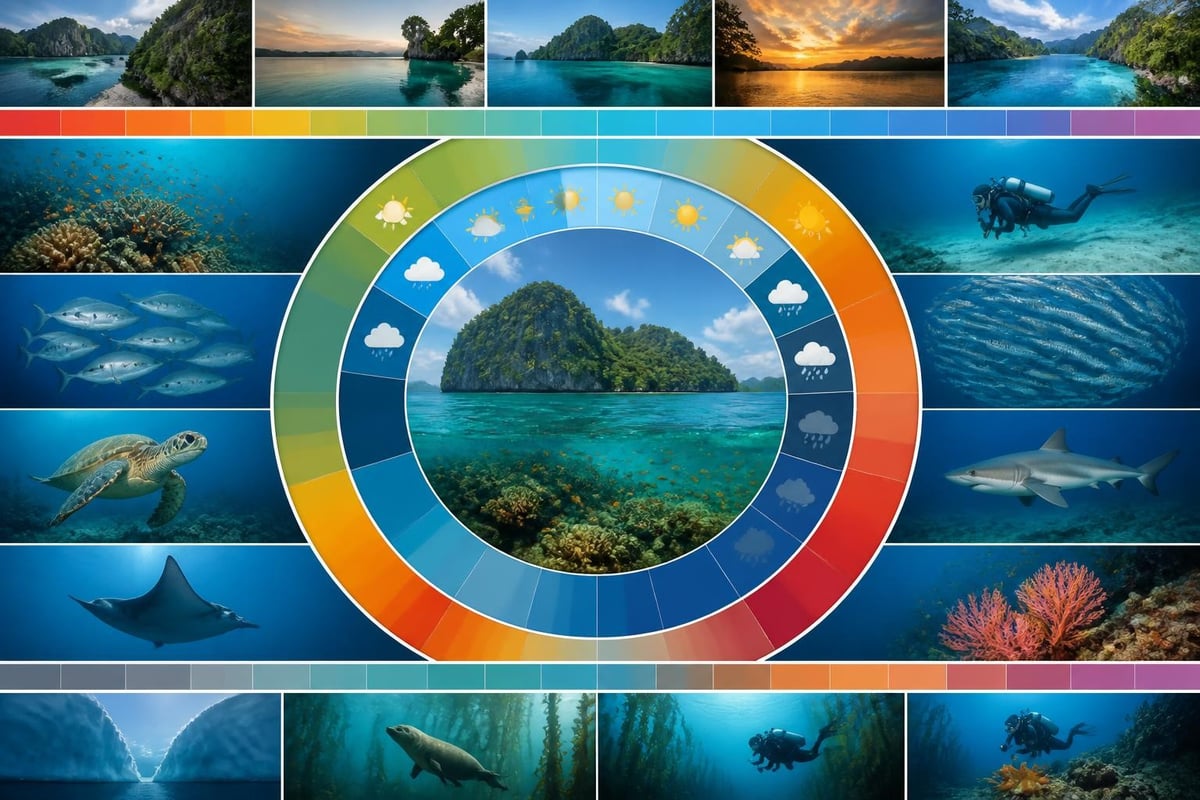
Seasonality affects every scuba diving location differently. Understanding regional weather patterns helps you plan trips during optimal conditions.
Tropical Seasons
Most tropical dive destinations experience two distinct seasons:
Dry season advantages:
- Calmer seas and easier boat access
- Better visibility (often 20-40 meters)
- More consistent weather for multi-day trips
- Warmer water temperatures
Wet season trade-offs:
- Lower prices and fewer crowds
- Possible seasonal marine life (whale sharks, mantas)
- Variable visibility due to runoff
- Higher cancellation risk from storms
El Nido's dry season runs November through May, offering the most reliable conditions. PADI Travel’s destination guides provide detailed seasonal breakdowns for hundreds of locations worldwide.
Temperate and Cold-Water Diving
Cold-water destinations follow different patterns. Spring and summer often bring plankton blooms that reduce visibility but attract larger marine life. Autumn and winter offer clearer water but require thicker exposure protection.
Research your chosen scuba diving location's specific seasonal patterns before booking. A site that's spectacular in April might be undiveable in December, or vice versa.
Types of Dive Environments
Different underwater landscapes create distinct diving experiences. Understanding environment types helps you choose a scuba diving location that matches your interests.
Coral Reef Systems
Coral reefs support the highest marine biodiversity of any ocean environment. Healthy reefs offer:
- Vibrant hard and soft coral formations
- Hundreds of fish species in single dives
- Excellent macro photography subjects
- Multiple depth zones to explore
The top dive sites in Palawan showcase pristine reef ecosystems with exceptional coral coverage and fish populations. Reef diving suits all certification levels when you select appropriate depth zones.
Wall Diving
Vertical walls create dramatic underwater landscapes where shallow tops drop into deep blue water. Wall dives often feature:
- Abundant gorgonians and barrel sponges
- Pelagic fish cruising the drop-off
- Excellent visibility
- Opportunities for multi-level profiles
Safety note: Wall diving requires good buoyancy control and depth awareness to avoid accidentally exceeding your certification limits.
Wreck Diving
Artificial reefs created by sunken ships attract concentrated marine life and offer historical interest. Wreck sites range from shallow, intact vessels perfect for penetration training to deep, deteriorated structures for external exploration only.
Check whether your target scuba diving location's wrecks permit penetration at your certification level, and never enter overhead environments without proper training.
Drift Diving
Strong currents create drift dive opportunities where you glide effortlessly over reefs while the boat follows your bubbles. Drift sites often host:
- Large schools of pelagic fish
- Sharks and rays in the current
- Spectacular coral formations adapted to high flow
- Unique navigation challenges
Drift diving requires specific briefing and experience. Choose operators experienced in current-swept sites.
Safety and Infrastructure Assessment
A gorgeous scuba diving location means nothing if local operators lack proper safety standards or equipment maintenance. DAN’s incident reporting data reveals that operator professionalism and equipment quality significantly impact diver safety outcomes.
Evaluating Dive Operators
Before booking, research operators through multiple sources:
- Certification agency affiliation (PADI, SSI, NAUI recognized centers)
- Online reviews from recent divers
- Equipment quality and maintenance programs
- Staff-to-diver ratios (smaller groups mean better supervision)
- Emergency protocols including oxygen availability and evacuation plans
Ask specific questions about boat specifications, dive briefing procedures and guide experience. Professional operators welcome detailed safety questions.
Medical and Evacuation Infrastructure
Remote scuba diving location options may offer pristine reefs but limited emergency response capabilities. Consider:
- Distance to the nearest recompression chamber
- Quality of local medical facilities
- Communication reliability (phone/radio coverage)
- Helicopter evacuation availability
- Your dive insurance coverage for the region
NOAA’s dive resources provide excellent safety planning information, particularly for U.S.-based dive sites within National Marine Sanctuaries.
Regional Diving Hubs Worth Considering
Certain regions have established themselves as exceptional scuba diving location clusters, offering multiple world-class sites within easy reach.
Southeast Asian Dive Triangle
The Philippines, Indonesia and Malaysia form the Coral Triangle's heart, containing the planet's highest marine biodiversity. This region offers:
- Year-round tropical diving
- Affordable diving costs
- Excellent infrastructure
- Multiple sites per destination
Palawan specifically provides remarkable diversity, from gentle house reefs to advanced wall dives and seasonal pelagic encounters, all supported by professional dive operations.
Caribbean and Central America
National Geographic’s Caribbean diving guide highlights accessible destinations with clear water, abundant marine life and easy travel from North America. The region excels in:
- Short flight times from the U.S.
- English-speaking operators
- Established tourism infrastructure
- Wreck diving opportunities
South Pacific Islands
Lonely Planet’s South Pacific dive coverage showcases remote atolls and pristine reefs with exceptional visibility and limited crowds. Trade-offs include higher costs and longer travel times.
Combining Diving with Travel Experience
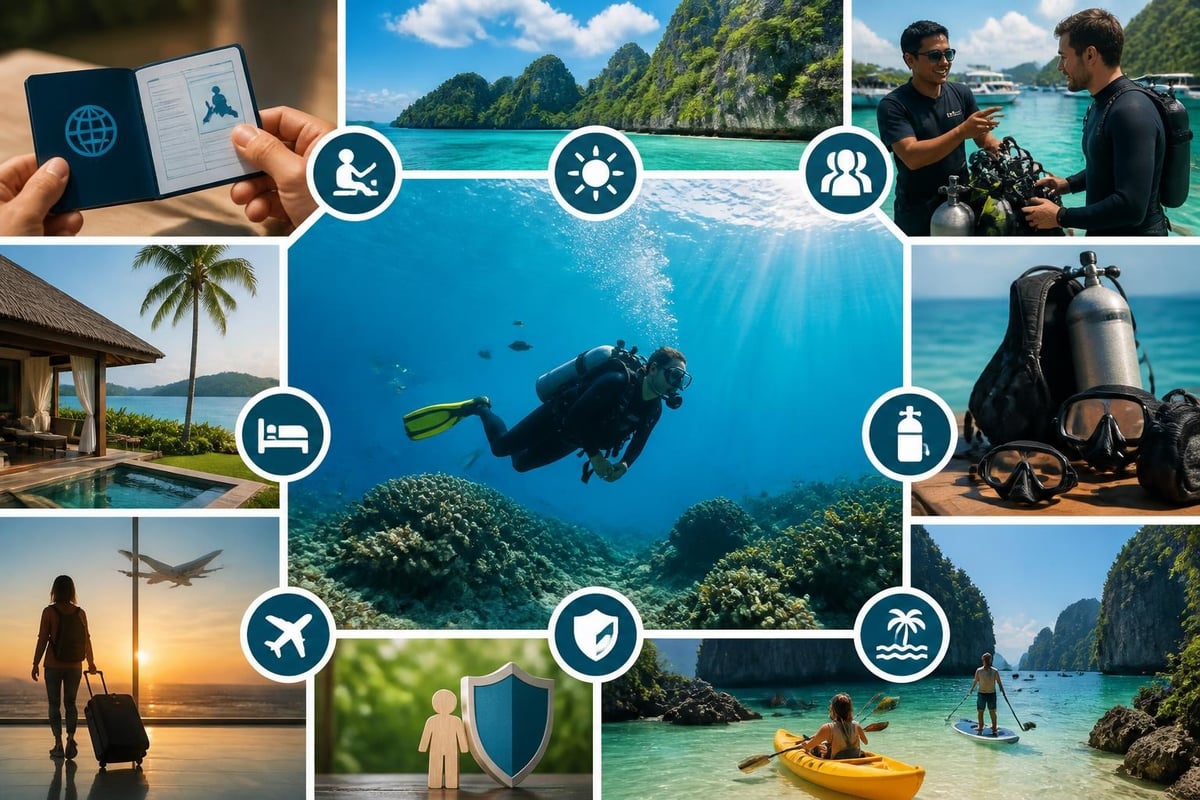
Your ideal scuba diving location often extends beyond underwater attractions to include topside experiences that round out your trip.
Dive and Stay Integration
The most convenient dive holidays combine quality accommodation with immediate dive access. When you stay at a beachfront property that houses the dive center, you eliminate transport time between hotel and boat, enjoy better equipment storage and can structure your dive days more flexibly.
The El Nido Dive & Stay Package demonstrates this integrated approach perfectly. Guests at The Beach House step from their room directly onto the beachfront where the dive boat departs, creating seamless dive logistics while enjoying sunset views from Cloud 9 rooftop restaurant between dives.
Beyond the Reef
Consider what else interests you beyond diving:
- Cultural experiences in local communities
- Adventure activities like kayaking or hiking
- Wildlife encounters on land
- Photography opportunities above water
- Dining and nightlife options
Destinations that balance excellent diving with compelling land-based activities create more well-rounded trips, especially for mixed groups where not everyone dives.
Budget Planning for Different Destinations
Diving costs vary dramatically between scuba diving location options. Understanding the cost structure helps you plan realistic budgets.
Cost Components
| Expense Category | Budget Range | Mid-Range | High-End |
|---|---|---|---|
| Daily boat dives (2 tanks) | $40-60 | $80-120 | $150-250 |
| Accommodation (per night) | $15-30 | $50-100 | $150-500+ |
| Equipment rental (full set/day) | $20-30 | $35-50 | $60-80 |
| Meals (per day) | $10-20 | $30-50 | $80-150 |
| Certification courses | $300-400 | $450-550 | $600-800+ |
Southeast Asian destinations generally offer the best value, with Caribbean locations mid-range and remote Pacific atolls at premium pricing.
Hidden Costs to Consider
- Marine park fees ($5-25 per dive)
- Equipment servicing for owned gear
- Nitrox fills if you're certified
- Underwater photography rentals or services
- Tips for crew and guides
- Dive insurance premiums
Budget an additional 20-30% beyond basic dive and accommodation costs to cover these extras comfortably.
Research and Booking Strategies
Thorough research before booking your scuba diving location saves money and prevents disappointments.
Information Gathering
Start research 4-6 months before your target travel dates:
- Read recent trip reports on diving forums and social media
- Watch video footage from the specific sites you're considering
- Contact operators directly with specific questions about conditions
- Check weather history for your planned travel month
- Verify certification requirements for advanced sites
Booking Timing
Best booking windows:
- 6-8 weeks ahead for high-season travel to popular destinations
- 2-4 weeks ahead for shoulder-season trips
- Last-minute (1-2 weeks) often works in low season but risks limited availability
Direct booking with dive operators often provides better value than third-party platforms, plus you establish communication with the team you'll dive with.
Questions to Ask Operators
Don't hesitate to ask detailed questions:
- What's the typical visibility this time of year?
- How many divers maximum per guide?
- What's your boat's age and engine backup?
- Do you provide nitrox? What's the upcharge?
- What marine life is commonly spotted at each site?
- What's your cancellation policy for weather?
Professional operators appreciate informed questions and provide detailed, honest answers.
Specialized Diving Interests
Some divers prioritize specific underwater experiences when selecting a scuba diving location.
Macro Photography
Muck diving sites and coral-rich reefs with high critter density attract macro enthusiasts. Look for:
- Sites known for nudibranchs, frogfish and seahorses
- Operators who understand photography needs (slow pace, patience)
- Good natural light in shallow depths
- Consistent visibility for reliable shooting conditions
Pelagic Encounters
Shark dives, manta cleaning stations and whale shark aggregations draw divers seeking large marine life. These experiences often require:
- Seasonal timing that matches animal migrations
- Advanced certification for some shark sites
- Strong currents (particularly cleaning stations)
- Flexibility since wildlife doesn't follow schedules
Remember that responsible operators never guarantee wildlife sightings, as ethical diving never involves feeding or harassing animals.
Technical and Cave Diving
Advanced divers seeking overhead environments or deep wrecks need scuba diving location options with:
- Established technical diving infrastructure
- Helium availability for trimix fills
- Experienced technical guides
- Proper safety equipment and protocols
Never attempt technical dives without appropriate training, equipment and support, regardless of how experienced you are in recreational depths.
Making Your Final Decision
After researching options, narrow your choice by prioritizing your top three requirements. Most divers value some combination of:
- Marine life diversity and health
- Comfortable conditions (temperature, visibility, currents)
- Operator professionalism and safety
- Convenient logistics (travel time, accommodation quality)
- Value for money
- Topside attractions for non-diving time
Rank these factors for your specific trip, then evaluate shortlisted locations against your priorities. The scuba diving location that scores highest across your personal criteria becomes your best choice, even if diving magazines rank another destination higher overall.
Remember that no destination excels at everything. A remote atoll might offer pristine reefs but limited nightlife. A popular tourist destination might provide excellent infrastructure but larger crowds underwater. Define what matters most to you, then choose accordingly.
The ultimate test of a great scuba diving location isn't whether it appears on "world's best" lists, but whether it matches your skills, interests, budget and travel style while providing safe, memorable diving in healthy marine environments.
Choosing the right scuba diving location transforms a standard dive trip into an unforgettable underwater adventure that matches your skills, interests and budget. By considering factors from certification requirements to seasonal timing, environmental health to operator quality, you'll select destinations that deliver exceptional experiences both below and above the surface. Whether you're seeking vibrant coral reefs, dramatic walls or pelagic encounters, Submariner Diving offers world-class diving in El Nido's crystal-clear waters with professional instruction, private charters and convenient dive-and-stay packages that put you in the water where Palawan's spectacular marine life thrives.