Planning a scuba diving holiday used to mean juggling separate bookings for flights, hotels, boat trips, dive courses, and equipment rental. Today, scuba packages streamline the entire process by bundling multiple services into single, convenient offerings. Whether you're earning your first certification in El Nido's crystal-clear waters or planning a week of exploration across Palawan's spectacular reefs, understanding how dive packages work will help you make smarter booking decisions and get the best value for your underwater adventure.
What Scuba Packages Actually Include
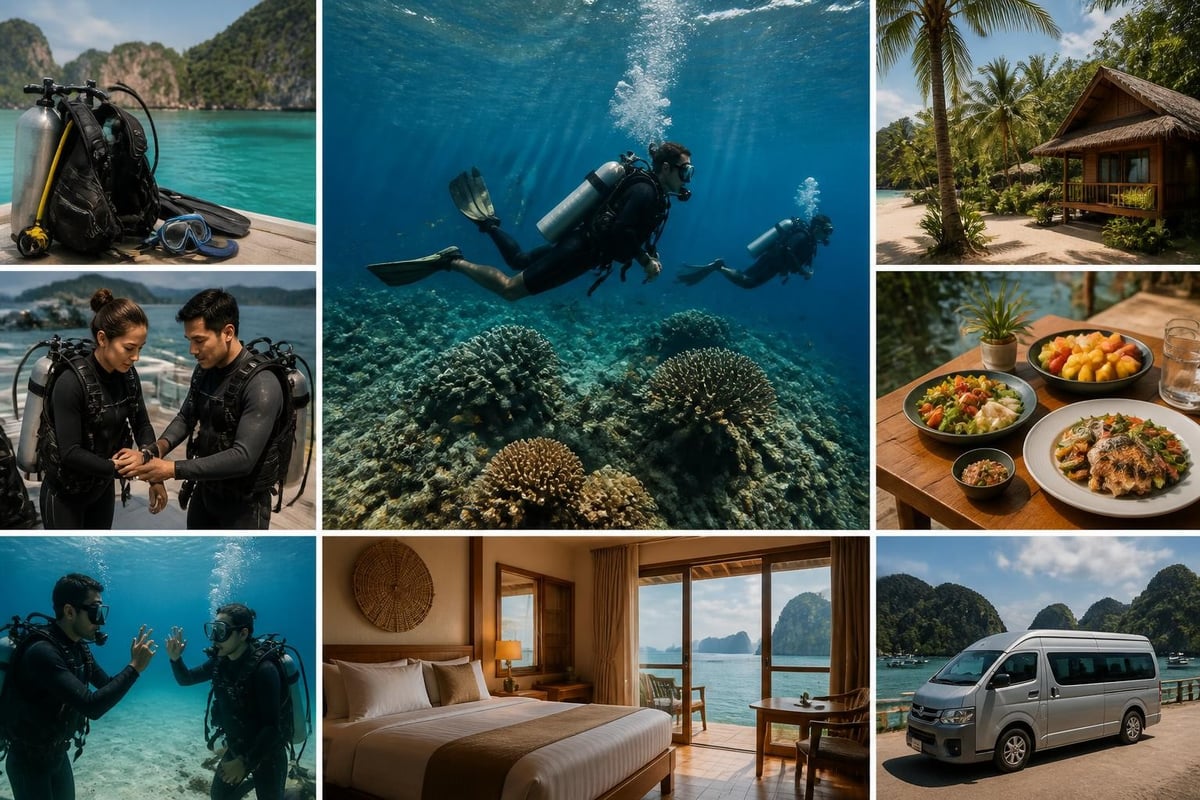
Modern scuba packages vary tremendously in scope and structure. The most basic packages might bundle just a few boat dives with equipment rental, while comprehensive offerings combine accommodation, meals, training, airport transfers, and daily diving into all-inclusive experiences.
Core components typically include:
- Boat dives (usually 2-4 per day depending on package length)
- Dive equipment rental (BCD, regulator, wetsuit, fins, mask)
- Tank fills and weights
- Dive guide services
- Marine park fees and permits
Extended packages often add:
- Beachfront or resort accommodation
- Breakfast, lunch, or full-board meals
- Airport or pier transfers
- PADI certification courses
- Nitrox fills for qualified divers
- Surface interval refreshments
The key difference between budget and premium scuba packages isn't always what's included. It's the quality of boats, the diver-to-guide ratio, the condition of equipment, and crucially, the flexibility to customize your itinerary. Research from the Frontiers in Psychology journal on bundled vacation packages shows that transparency about what's included significantly impacts traveler satisfaction and decision-making.
Certification Packages vs. Fun Dive Packages
Understanding the distinction between these two package types is essential for first-time buyers.
Certification packages bundle instruction, pool sessions, theory materials, and open-water dives required to earn PADI, SSI, or other agency credentials. These typically run 3-4 days for Open Water certification and include all training materials, instructor time, and certification fees. The Open Water Diver Course remains the most popular entry point, combining classroom theory with confined-water practice before progressing to open-water certification dives.
Fun dive packages cater to already-certified divers looking to explore new sites. These focus purely on boat trips, guiding, and equipment, without instructional components. Package sizes range from single-day two-tank dives to week-long liveaboard adventures.
| Package Type | Duration | Typical Inclusions | Best For |
|---|---|---|---|
| Discovery/Intro | Half-day | 1 dive, instruction, equipment | First-timers testing the waters |
| Open Water Certification | 3-4 days | Theory, pool, 4 OW dives, materials | New divers seeking certification |
| Fun Dive Day Package | 1 day | 2-3 boat dives, guide, equipment | Certified divers on short visits |
| Multi-day Fun Dive | 3-7 days | Daily boat dives, equipment | Certified divers on dive holidays |
| Stay & Dive | 3-7+ days | Accommodation, meals, daily dives | Travelers wanting all-in-one convenience |
Pricing Structure and What Affects Cost
Scuba packages in popular destinations like El Nido, Palawan typically range from budget-friendly day trips to luxury liveaboard expeditions. Understanding the pricing factors helps you identify genuine value versus inflated costs.
Major cost drivers include:
- Boat type and group size – Private charters cost significantly more than shared boats but offer schedule flexibility and personalized guiding
- Accommodation standard – Beachfront resorts versus backpacker hostels can swing package prices by 200-300%
- Equipment quality – Well-maintained gear from recognized brands costs more to provide than budget alternatives
- Diver-to-guide ratio – Smaller groups mean higher per-person costs but better safety and personalized attention
- Season and demand – Peak season (November through May in Palawan) commands premium pricing
Transparent operators will itemize exactly what your package includes and excludes. Watch for hidden costs like marine park fees, equipment upgrades, or compulsory insurance that aren't mentioned in advertised rates.
The IUCN’s guidance on regenerative blue economy practices emphasizes that sustainable operators investing in environmental protection, staff training, and community benefit will naturally price higher than those cutting corners. These investments protect the reefs you came to see.
Comparing Package Value in El Nido
El Nido offers exceptional package value compared to many Asian dive destinations. Crystal-clear visibility, vibrant hard and soft corals, and incredible biodiversity sit just minutes from shore, minimizing boat-time costs.
When evaluating local packages, consider:
- Maximum group size per guide (smaller is better for safety and experience)
- Condition and age of dive equipment available
- Boat comfort and safety equipment (oxygen, radio, first aid)
- Dive site variety included in multi-day packages
- Flexibility to adjust schedules for weather or personal preference
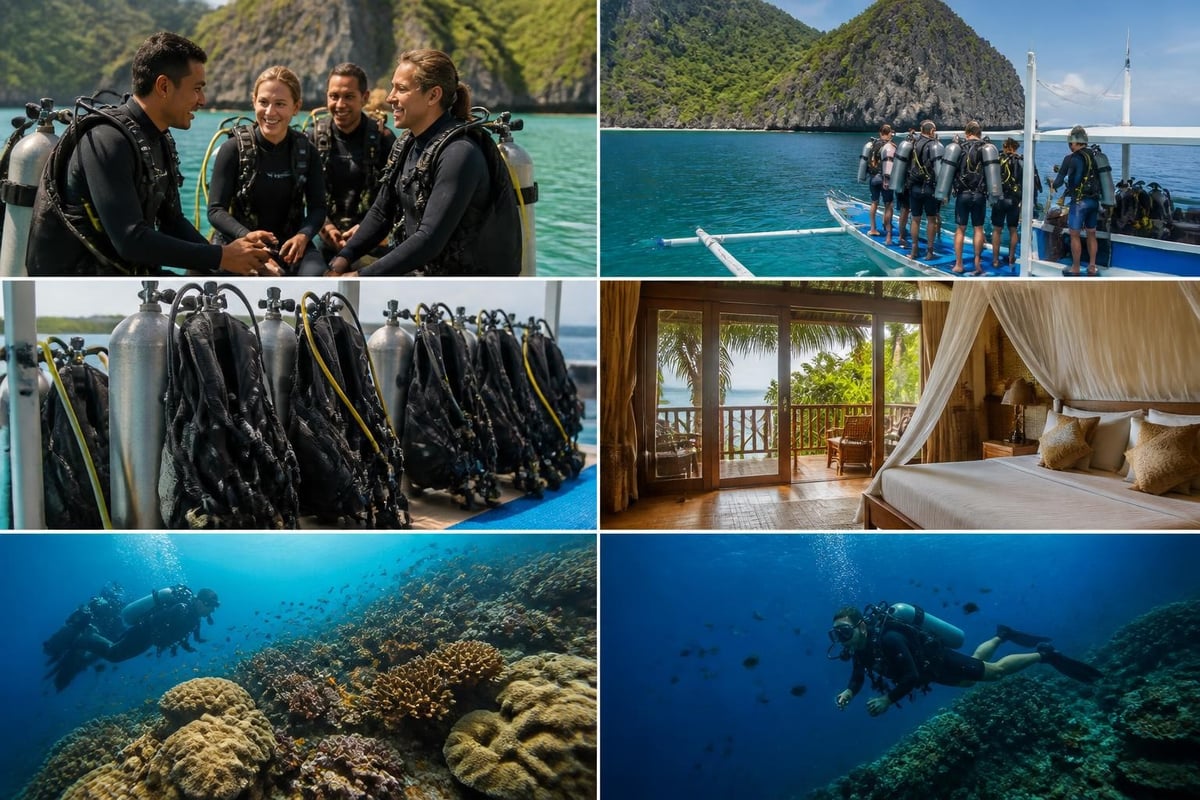
The El Nido Dive & Stay Package exemplifies comprehensive value by combining beachfront accommodation at The Beach House with daily diving from Submariner Diving Center. Guests dive directly from their doorstep, eliminating transfers while enjoying Cloud 9 rooftop restaurant between dives.
Matching Packages to Experience Level
The right package depends entirely on your certification status, experience level, and comfort underwater. Mismatched packages lead to frustration, boredom, or worse, safety concerns.
For Complete Beginners
If you've never breathed underwater, start with discovery programs before committing to full certification packages. The Discover Scuba Diving program lets you experience breathing underwater in shallow, controlled conditions with an instructor. This half-day introduction helps you determine if scuba suits you before investing in multi-day certification.
Once committed, beginner packages should emphasize:
- Small class sizes (maximum 4 students per instructor)
- Calm, protected dive sites for open-water training
- Plenty of time to master each skill without rushing
- Patient, experienced instructors who teach in your language
- Modern, well-fitting equipment sized appropriately
For Newly Certified Divers
Fresh Open Water divers (fewer than 20 logged dives) benefit from packages emphasizing confidence-building rather than challenging dive sites. Look for offerings that include:
- Shallow to moderate depth profiles (12-18 meters)
- Minimal current exposure
- Easy navigation and bottom composition
- Attentive guides who check air consumption frequently
- Refresher course options if you've been out of the water for a while
El Nido's protected bays and lagoons provide ideal environments for building post-certification experience before progressing to more exposed sites.
For Advanced and Technical Divers
Experienced divers need packages that deliver challenge, variety, and access to premium sites. Key factors include:
- Deep dive options beyond recreational limits
- Drift diving on current-swept walls and channels
- Wreck penetration where available
- Nitrox availability for extended bottom time
- Private charter options for customized itineraries
- Advanced training like Advanced Open Water courses to expand capabilities
| Experience Level | Recommended Package Features | Sites to Prioritize |
|---|---|---|
| 0-10 dives | Shallow sites, patient guides, skills review | Protected bays, easy reefs |
| 10-50 dives | Moderate depths, some current, varied topography | Walls, channels, diverse marine life |
| 50+ dives | Deep options, drift diving, complex navigation | Exposed sites, cleaning stations, pelagic zones |
| Technical/Cave | Specialized equipment, overhead environments | Wrecks, caves, technical-only sites |
Seasonal Considerations for Scuba Packages
Dive conditions, marine life, and package availability shift dramatically throughout the year in Palawan. Understanding seasonal patterns helps you book the optimal package timing.
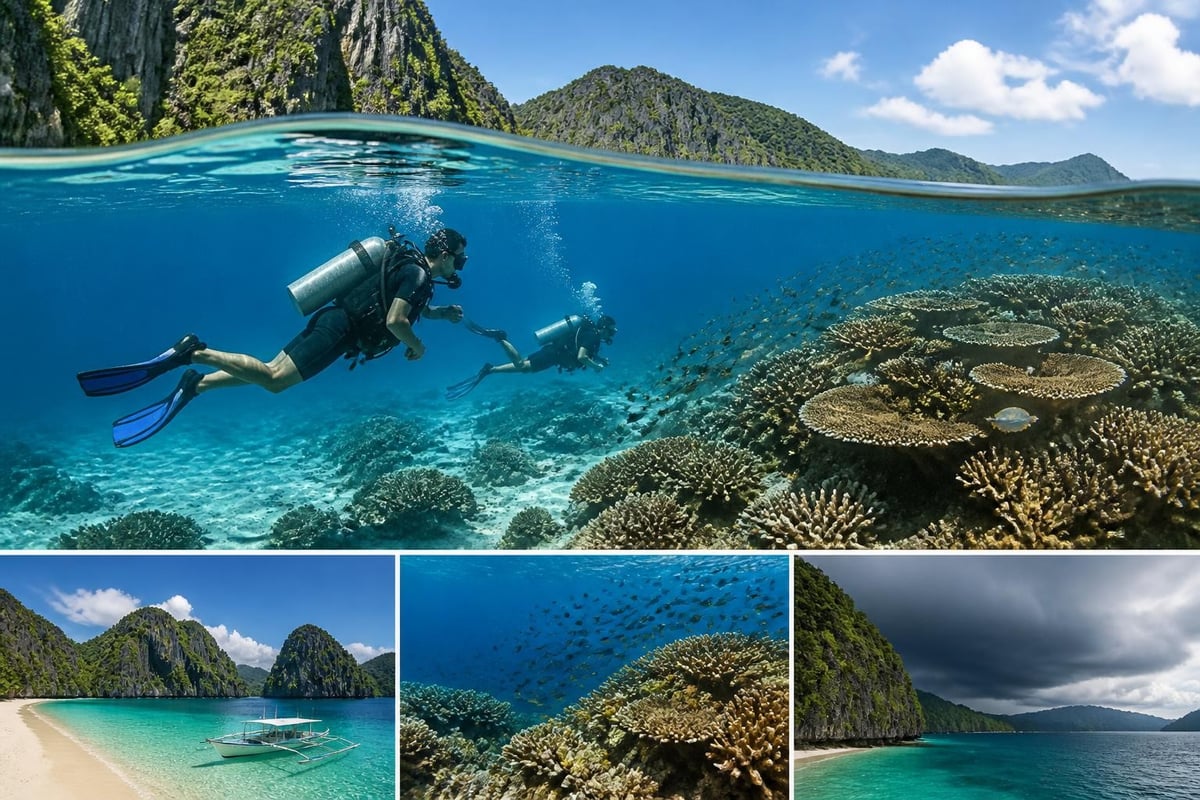
November through May represents peak diving season. Northeast monsoons bring calm seas, exceptional visibility (often 20-30 meters), and reliable weather. Package availability expands, operators run full schedules, and marine life congregates around cleaning stations and feeding areas.
June through October sees increased rainfall and occasional stronger winds. While diving continues year-round, visibility may drop to 10-15 meters, and some exposed sites become inaccessible. Package rates often decrease 15-25% during these months, making it an excellent value period for flexible travelers.
The Blue Tourism Initiative’s analysis of sustainable dive tourism notes that spreading demand across shoulder seasons reduces pressure on popular sites and supports year-round employment for dive staff. Consider booking June or October for uncrowded diving and reduced environmental impact.
Marine Life Seasonality
While El Nido's resident species appear year-round, certain visitors follow seasonal patterns:
- Sea turtles nest and feed throughout the year with peak activity November-March
- Manta rays appear more frequently during plankton blooms in June-August
- Whale sharks occasionally pass through during plankton-rich months, though sightings remain uncommon
- Schooling fish aggregate in larger numbers during colder water months (December-February)
No responsible operator guarantees specific marine life encounters. Packages promising whale sharks or mantas should raise red flags unless they're clearly describing seasonal probabilities, not certainties.
Safety Standards and Operator Credentials
The dive industry lacks consistent global regulation, making operator credentials crucial when evaluating scuba packages. Price should never trump safety considerations.
Essential safety markers include:
- PADI 5-Star or SSI Dive Resort status indicating training standards compliance
- DAN (Divers Alert Network) membership showing commitment to diver safety and emergency protocols
- Emergency oxygen on all boats with trained staff who can administer it
- VHF radio and emergency communication systems on every dive vessel
- First aid kits meeting international standards
- Detailed dive briefings covering site layout, hazards, and emergency procedures
The NOAA Diving Standards & Safety Manual provides comprehensive safety protocols that professional operators should follow. While written for scientific diving, its principles apply universally to recreational operations.
Medical Screening and Insurance
Quality scuba packages include proper medical screening before diving begins. Operators should require:
- Completed medical questionnaires for all participants
- Physician clearance for those with relevant medical history
- Proof of dive insurance or opportunity to purchase coverage
- Contact information for emergency situations
DAN’s health screening guidance emphasizes that conditions like asthma, diabetes, heart conditions, and certain medications require medical clearance before diving. Operators who skip this screening put both you and themselves at risk.
Booking Strategy and Package Customization
Smart booking starts 3-6 months before your intended travel dates, especially for peak season (December-April in El Nido). This timeline offers maximum package availability, better accommodation options, and sometimes early-booking discounts.
What to Clarify Before Booking
Before committing to any scuba package, confirm these details in writing:
- Exact dive sites or site categories you'll access
- Maximum group sizes per guide
- Equipment included and upgrade costs
- Cancellation and rescheduling policies, especially weather-related cancellations
- Minimum/maximum participant requirements for package to run
- Certification or experience prerequisites required
- What happens if you're uncomfortable or unable to complete dives
The UN World Tourism Organization’s 2025 outlook shows dive tourism rebounding strongly post-pandemic, with increased demand for flexible, customizable packages over rigid group tours. Progressive operators now offer modular approaches where you select accommodation, dive days, and training components separately.
Red Flags to Avoid
Certain package characteristics should prompt serious scrutiny or outright avoidance:
- Prices significantly below local market rates (often indicating poor equipment, large groups, or inexperienced staff)
- Guaranteed marine life sightings like whale sharks or mantas
- Unwillingness to provide detailed itineraries or equipment specifications
- No mention of safety equipment or emergency protocols
- Pressure to book immediately without time to research
- Operators without verifiable reviews or online presence
- Training offered by uncertified or unlicensed instructors
Equipment Quality in Package Offerings
Equipment condition dramatically affects both safety and enjoyment. When scuba packages include gear rental, investigate what you'll actually be diving with.
High-quality package equipment features:
- Regular servicing records for regulators and BCDs
- Modern, well-maintained wetsuits without tears or compression damage
- Properly sized tanks in current hydrostatic test dates
- Masks, fins, and snorkels in good condition with options for different sizes
- Dive computers rather than analog depth gauges and timers
- Equipment from recognized brands like Scubapro, Mares, or Aqualung
Budget packages often provide functional but worn equipment. While this won't necessarily compromise safety, it can reduce comfort and confidence underwater. Consider paying more for premium equipment if you're a nervous diver or have specific fit requirements.
Some packages allow you to bring personal equipment and receive a small discount. If you dive regularly, traveling with your own regulator, mask, and computer often proves worthwhile despite checked bag fees.
Multi-Destination Package Options
Palawan's extensive coastline offers opportunities to combine multiple diving areas in single packages. These multi-destination offerings provide incredible variety but require careful logistics planning.
Popular combinations include:
- El Nido + Coron: Contrasting environments with El Nido's reefs and Coron's world-class wreck diving
- El Nido + Port Barton: Pairing El Nido's dramatic topography with Port Barton's laid-back, uncrowded sites
- El Nido + Tubbataha Reefs: Combining accessible El Nido diving with liveaboard expeditions to UNESCO-protected Tubbataha (seasonal, March-June only)
Multi-destination packages require realistic time allocation. Rushing between locations reduces dive time and increases stress. Budget at least 2-3 days per destination for worthwhile exploration.
Transfer logistics between diving areas need careful coordination. Verify whether packages include private transfers or rely on public ferries and vans. The journey from El Nido to Coron, for example, involves several hours of travel regardless of method.
Environmental Responsibility in Package Selection
Choosing environmentally responsible scuba packages protects the reefs you've come to explore and supports sustainable tourism development. The NOAA Diving Program’s safety protocols extend beyond diver safety to environmental protection standards that quality operators follow.
Sustainable package features to prioritize:
- Moorings at popular sites rather than anchor damage
- Briefings emphasizing proper buoyancy and no-touch policies
- Small group sizes reducing site impact
- Operators participating in reef monitoring or restoration
- Waste management and reef-safe sunscreen policies
- Support for marine protected areas through proper fee payment
- Staff trained in environmental awareness and conservation
Some operators now offer reef restoration activities as package add-ons, allowing you to participate in coral propagation or marine debris removal. These experiences connect you more deeply to reef conservation while contributing to ecosystem recovery.
El Nido's limestone karst topography and coral ecosystems face pressure from rapid tourism growth. Selecting operators committed to sustainable practices helps preserve these resources for future divers while supporting local conservation efforts.
Group vs. Private Package Considerations
The choice between joining scheduled group packages or booking private options significantly impacts your diving experience and budget.
Advantages of Group Packages
Cost efficiency represents the primary group package benefit. Sharing boat costs, guide time, and logistics across 6-12 divers reduces per-person expenses by 30-50% compared to private options.
Social experience appeals to solo travelers or those who enjoy meeting fellow divers. Group dynamics can enhance the adventure, especially when participants share similar experience levels and interests.
Scheduled reliability means group trips run on fixed timetables regardless of weather (within safety limits). This predictability helps when coordinating with flights or other activities.
Private Package Benefits
Private diving charters deliver customization impossible in group settings. Benefits include:
- Flexible daily schedules adapting to your preferences and energy levels
- Personalized dive site selection based on your experience and interests
- Dedicated guide attention for skills development or photography support
- Ability to extend or shorten dives based on air consumption and comfort
- Privacy for couples, families, or close friend groups
Private packages cost significantly more but offer exceptional value for special occasions, nervous divers needing extra support, or experienced divers seeking specific sites or conditions.
| Factor | Group Package | Private Package |
|---|---|---|
| Cost per person | Lower | Higher |
| Schedule flexibility | Fixed | Fully flexible |
| Dive site selection | Predetermined | Customizable |
| Social experience | High | Low (your group only) |
| Guide attention | Shared | Dedicated |
| Skill level matching | Variable | Tailored |
Add-Ons and Package Upgrades
Base scuba packages often allow upgrades and additions that enhance your experience without requiring completely custom arrangements.
Common package enhancements include:
- Nitrox fills for extended bottom time and reduced nitrogen loading
- Underwater photography services with professional photographers or camera rentals
- Specialty training like peak performance buoyancy, underwater navigation, or wreck diving
- Extended boat trips to more distant, pristine dive sites
- Accommodation upgrades to ocean-view rooms or premium lodging
- Meal plan additions when accommodation includes only breakfast
- Airport transfers via private vehicle rather than shared shuttles
Calculate whether add-on pricing represents fair value. Sometimes bundling everything at booking saves money; other times, paying for services separately as you go proves more economical.
Be strategic about specialty training additions. Completing courses like Advanced Open Water during your package can unlock access to deeper, more interesting dive sites otherwise restricted by certification level. This investment transforms your immediate experience while providing lasting credential benefits.
Making Final Package Decisions
With countless scuba packages available across price points and configurations, systematic evaluation prevents poor choices and ensures your diving investment delivers maximum value.
Create a simple comparison matrix for your top package contenders:
- List must-have features (accommodation standard, dive days, sites, training)
- Note nice-to-have additions (meals, transfers, equipment quality)
- Confirm safety credentials and operator reputation
- Calculate total all-in costs including extras and hidden fees
- Read recent reviews from divers with similar experience levels
- Verify cancellation policies and deposit requirements
- Contact operators with specific questions before booking
Trust your instincts when something feels off. Legitimate operators welcome detailed questions and provide transparent, complete answers. Evasiveness or pressure tactics indicate problems you don't want to discover mid-package.
Consider that the cheapest package rarely delivers the best experience. Mid-range options often provide the sweet spot of professional service, quality equipment, and reasonable pricing. Premium packages suit divers valuing luxury, privacy, or specific requirements that justify higher costs.
Your diving vacation represents significant time and money investment. Choosing thoughtfully planned scuba packages from reputable operators ensures those resources deliver unforgettable underwater experiences rather than frustrations and disappointments.
Selecting the right scuba package shapes your entire underwater adventure, from training quality and equipment condition to dive site access and overall value. By understanding what packages include, how to evaluate operators, and which options match your experience level, you can make confident booking decisions that deliver exceptional diving experiences. Whether you're earning your first certification or exploring Palawan's spectacular reefs as an experienced diver, Palawan Diving offers comprehensive packages combining world-class dive sites with professional instruction, quality equipment, and personalized service. Start planning your El Nido diving adventure today and discover why these crystal-clear waters create lifelong diving memories.