The waters around El Nido offer some of the most pristine marine environments in Southeast Asia, accessible to everyone from complete beginners to experienced underwater explorers. Whether you're drawn to the ease of surface swimming or the immersive experience of breathing underwater, understanding the fundamental differences between snorkeling and diving will help you choose the right way to discover Palawan's incredible reefs, walls, and marine life. Both activities open doors to the same spectacular underwater realm, but they do so in distinctly different ways, each with unique advantages, requirements, and considerations.
Understanding the Fundamental Differences
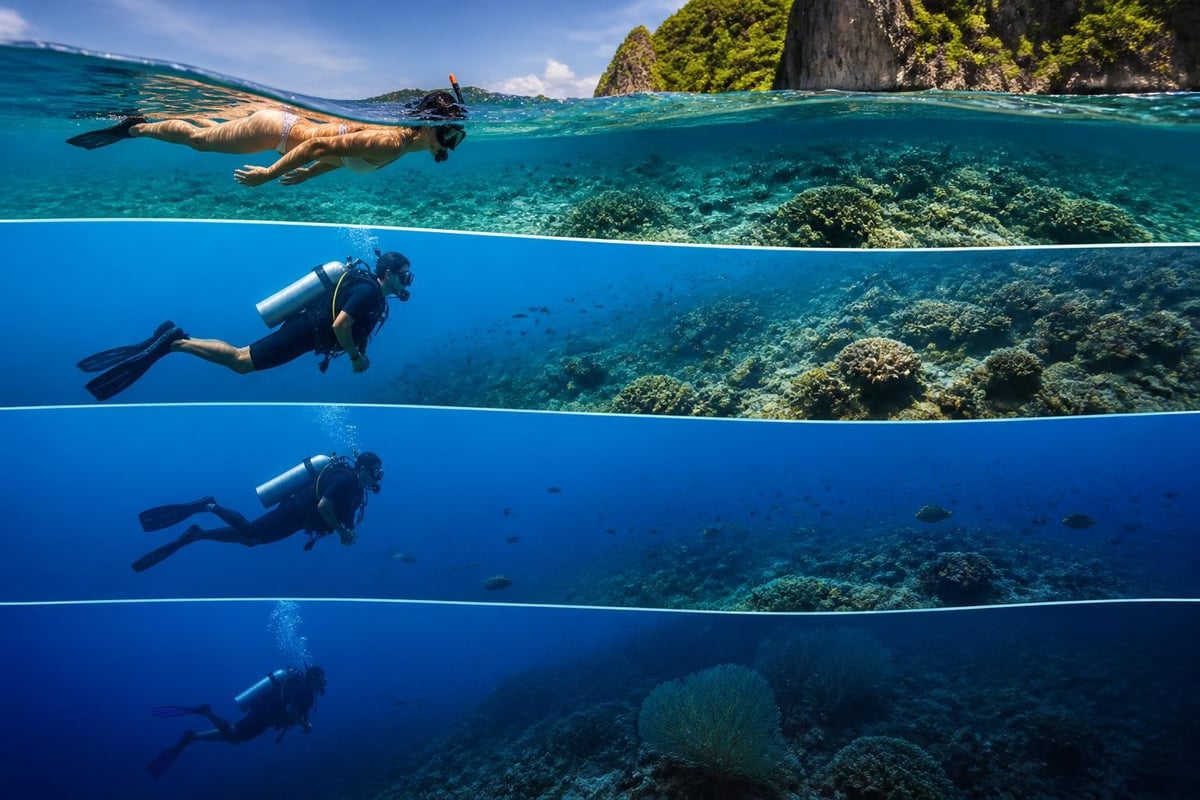
Snorkeling keeps you at the surface, using a mask, snorkel tube, and fins to observe the underwater world from above. You breathe normally through the snorkel while floating face-down, occasionally diving beneath the surface for brief periods by holding your breath.
Scuba diving, on the other hand, transforms you into a temporary underwater resident. With compressed air tanks strapped to your back and a regulator in your mouth, you can descend to depths of 18 meters (as a beginner) or much deeper with advanced training, spending 45 minutes or more exploring the reef at eye level with the marine life.
Equipment and Complexity
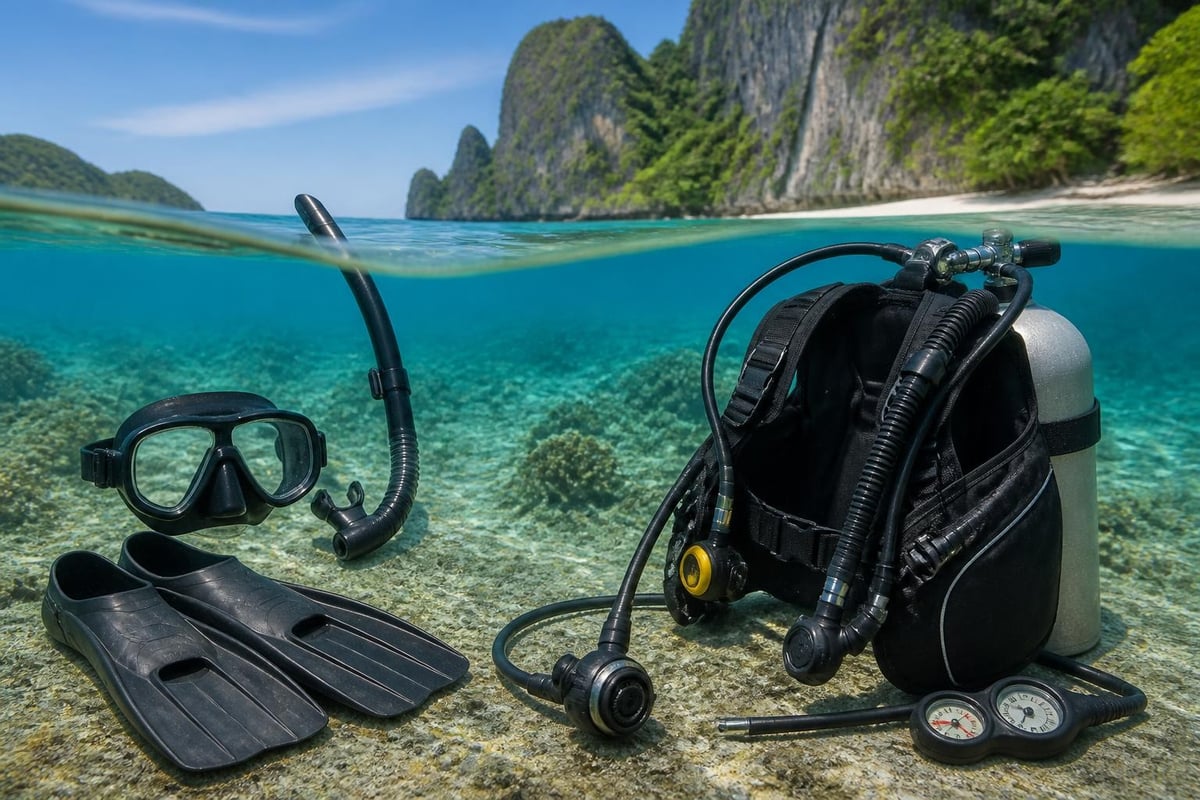
The equipment requirements differ dramatically between these two activities:
Snorkeling gear:
- Mask and snorkel tube
- Fins (optional but recommended)
- Flotation vest (for safety and comfort)
- No certification required
Scuba diving equipment:
- Mask, fins, and wetsuit
- Buoyancy control device (BCD)
- Regulator and alternate air source
- Pressure gauge and depth computer
- Weights and weight belt
- Certification required for independent diving
This complexity isn't meant to intimidate but rather ensures your safety underwater. The training process teaches you how each piece of equipment functions and how to handle potential issues calmly and effectively.
Accessibility and Training Requirements
One of the most significant differences between snorkeling and diving lies in how quickly you can start. Snorkeling requires minimal instruction. After a five-minute briefing on how to clear your snorkel and adjust your mask, most people are ready to explore. If you can swim and are comfortable in the water, you can snorkel.
Scuba diving demands proper training. A Discover Scuba Diving experience introduces complete beginners to breathing underwater in a controlled setting, allowing you to try diving before committing to full certification. This introductory program typically includes a brief theory session, shallow-water skills practice, and a guided dive to around 12 meters, all completed in a single day.
For those ready to become certified, the PADI Open Water course involves:
- Knowledge development (online or classroom)
- Confined water training (pool or calm bay)
- Four open water training dives
- Written exam and practical assessment
- Certification valid worldwide for life
The time investment ranges from three to four days, but the doors it opens are extraordinary.
Age and Physical Considerations
| Activity | Minimum Age | Fitness Level | Medical Clearance |
|---|---|---|---|
| Snorkeling | 5-6 years (with supervision) | Basic swimming ability | Generally not required |
| Scuba Diving | 10 years (junior certification) | Moderate fitness | Medical questionnaire required; doctor clearance if health conditions present |
The CDC provides comprehensive guidance on health screening for diving, covering conditions from asthma to heart disease that may require medical evaluation before training.
What You'll Actually Experience Underwater
The perspective difference between snorkeling and diving fundamentally changes what you encounter. Snorkeling offers a bird's-eye view of the reef, perfect for surveying large areas quickly and watching schools of fish move across shallow coral gardens.
Diving places you inside the ecosystem. You hover at the same level as sea turtles, drift alongside reef sharks, and peer into crevices where moray eels hide. The sensation of weightlessness, combined with the amplified sounds of the underwater world transmitted through water, creates an almost meditative experience.
Depth and Bottom Time
Snorkeling sessions can last as long as your energy holds, limited only by sun exposure, water temperature, and stamina. You're never far from the surface and can rest or board the boat whenever needed.
Diving sessions follow specific time and depth limits based on your certification level and the dive plan:
- Open Water divers: Maximum 18 meters depth
- Advanced divers: Up to 30 meters
- Bottom time: Typically 35-50 minutes per dive, determined by air consumption and nitrogen absorption
These limitations exist for safety, preventing decompression sickness and ensuring you surface with adequate air reserves. Understanding dive safety protocols through proper training is essential for every certified diver.
Marine Life Encounters in El Nido
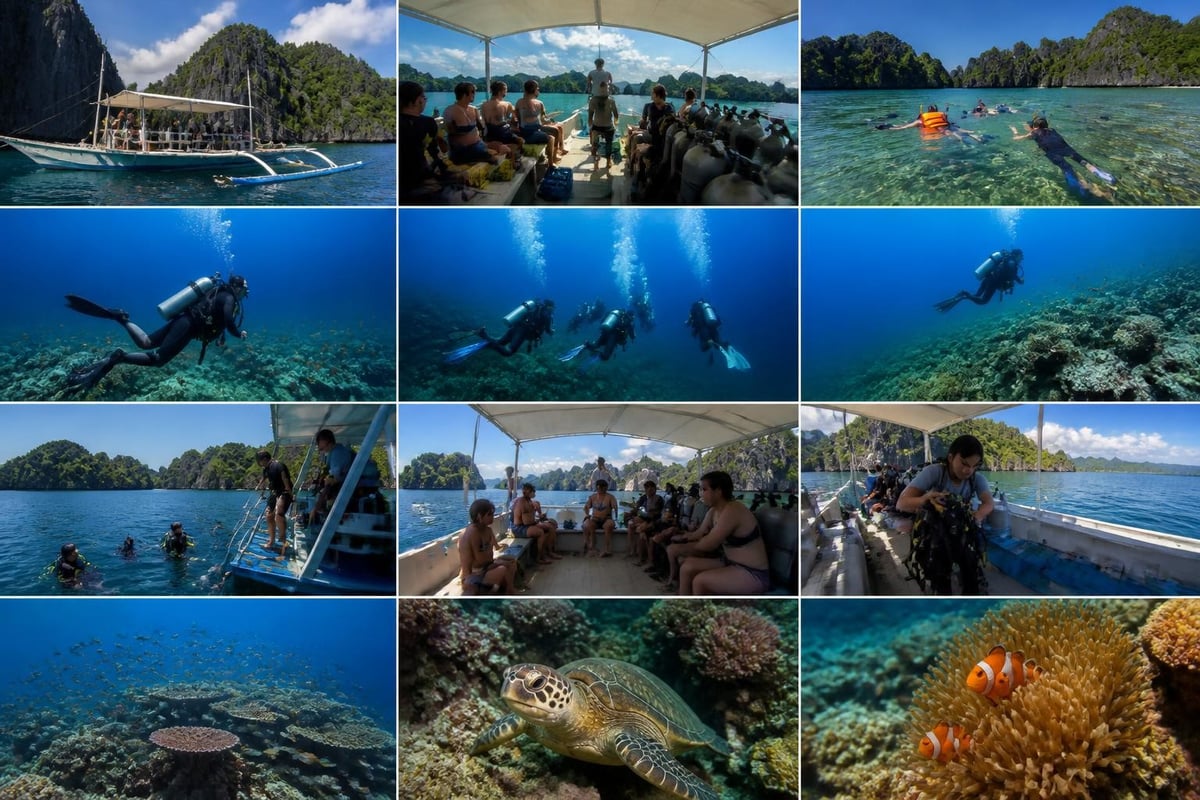
The rich waters around El Nido support an incredible diversity of species, and both snorkeling and diving provide opportunities to observe them, albeit in different ways.
Surface snorkeling reveals:
- Vibrant hard and soft corals in shallow gardens
- Schools of fusiliers, parrotfish, and angelfish
- Occasional sea turtles surfacing to breathe
- Juvenile fish sheltering in near-shore areas
- Eagle rays gliding through channels
Scuba diving accesses:
- Larger pelagic species at depth (tuna, barracuda, jacks)
- Reef sharks resting under ledges
- Turtles feeding on seagrass and sponges below 10 meters
- Nudibranchs, pygmy seahorses, and macro life on walls
- Deepwater gorgonian fans and barrel sponges
El Nido's geography creates unique diving opportunities. Steep walls drop from 5 meters to beyond 30 meters, allowing divers to explore dramatic underwater topography that snorkelers can only glimpse from above.
Seasonal Considerations
Both activities remain excellent year-round in El Nido, though conditions vary:
| Season | Water Temp | Visibility | Best For |
|---|---|---|---|
| November-May (Dry) | 27-29°C | 15-30m | Both activities; calmest seas |
| June-October (Wet) | 26-28°C | 10-20m | Still excellent; occasional afternoon showers |
The protected bays around El Nido offer calm conditions even during windier months, ensuring consistent opportunities for both snorkeling and diving throughout the year. For more information on optimal timing, visit Palawan Diving.
Safety Considerations and Risks
Every water activity carries inherent risks, but understanding them allows you to mitigate danger through proper preparation and responsible behavior.
Snorkeling Safety Essentials
Surface swimming presents specific hazards:
- Exhaustion and cramping from extended swimming
- Sunburn on exposed back and legs
- Dehydration in tropical heat
- Boat traffic in busy areas
- Strong currents carrying you offshore
Wearing a flotation vest eliminates much of the physical strain and provides a critical safety margin. Never snorkel alone, always inform someone of your plans, and stay within designated swimming areas when possible.
Diving Safety Protocols
Scuba diving's risks are more technical but manageable through training and adherence to established safety practices. The most common issues include:
- Decompression sickness (from ascending too quickly)
- Nitrogen narcosis (at depths beyond recreational limits)
- Equipment malfunctions (prevented by proper maintenance)
- Running out of air (avoided through gas monitoring)
- Barotrauma (equalization issues affecting ears and sinuses)
Proper certification teaches you to prevent, recognize, and respond to each of these situations. The NOAA guidance on safe diving practices emphasizes not only personal safety but also protecting marine environments through responsible buoyancy control and reef etiquette.
Environmental Impact and Responsible Practices
The difference between snorkeling and diving extends to how we interact with fragile reef ecosystems. Both activities can harm marine life if practiced carelessly, but awareness and technique minimize your impact.
Common mistakes that damage reefs:
- Standing on or touching coral
- Kicking coral with fins
- Chasing or harassing marine life
- Feeding fish (alters natural behavior)
- Collecting shells or marine organisms
Snorkelers sometimes underestimate their impact because they remain at the surface, but dragging fins across shallow coral tables or standing to adjust equipment can destroy decades of coral growth. Maintaining horizontal body position and constant awareness of your surroundings prevents accidental contact.
Divers have an advantage in control but face the challenge of managing buoyancy precisely. Poor buoyancy leads to crashing into reefs, stirring up sediment that smothers coral polyps, and disturbing resting marine life. Coral reef conservation efforts depend partly on millions of snorkelers and divers practicing low-impact techniques.
Best Practices for Both Activities
- Maintain neutral buoyancy (divers) or horizontal swimming position (snorkelers)
- Keep fins and hands away from all marine life
- Take only photos, leave only bubbles
- Use reef-safe sunscreen (no oxybenzone or octinoxate)
- Follow guide instructions and designated routes
- Report injured marine life or damaged coral to local authorities
Cost and Value Comparison
Budget considerations influence many travelers' decisions between snorkeling and diving. The financial commitment differs substantially, both for initial experiences and ongoing participation.
Typical snorkeling costs in El Nido:
- Equipment rental: ₱200-400 per day
- Island-hopping tours with snorkeling: ₱1,200-1,800
- Private boat snorkeling trips: ₱6,000-10,000 (for groups)
Scuba diving investment:
- Discover Scuba Diving (try dive): ₱4,500-6,000
- Open Water certification course: ₱18,000-24,000
- Single fun dive (certified): ₱2,000-2,500
- Two-dive package: ₱3,500-4,500
- Advanced certification: ₱15,000-20,000
While diving requires higher upfront investment, certification opens access to dive sites worldwide for life. The per-dive cost decreases significantly once certified, and the experiences available to divers expand dramatically compared to snorkeling.
Combining Both Activities for Maximum Enjoyment
The choice between snorkeling and diving isn't binary. Many dive trips incorporate both activities, allowing non-diving companions to participate and giving certified divers surface intervals to explore shallow areas.
An ideal El Nido itinerary might include:
- Morning two-tank dive to walls and deeper sites
- Surface interval snorkeling over shallow coral gardens
- Afternoon dive or additional snorkeling depending on preference
- Sunset snorkel in calm lagoons
This approach maximizes water time while respecting dive safety protocols that require surface intervals between dives. Families with mixed experience levels particularly benefit from combined trips, keeping everyone together while accommodating different comfort levels and certifications.
Making Your Choice: Which Is Right for You?
Your decision between snorkeling and diving depends on several personal factors beyond just interest in marine life.
Choose snorkeling if you:
- Want immediate access without training time
- Prefer staying near the surface and boat
- Travel with young children or non-swimming family members
- Have medical conditions that prevent diving
- Enjoy covering large areas and frequent surface views
Choose scuba diving if you:
- Want immersive, eye-level marine encounters
- Have time for proper training (3-4 days minimum)
- Seek access to deeper sites and walls
- Don't mind equipment complexity and protocols
- Want skills that translate to diving worldwide
Try both if you:
- Have a week or more in El Nido
- Want maximum underwater variety
- Travel with mixed-ability groups
- Enjoy different perspectives on the same environment
For visitors unsure about committing to full certification, a Discover Scuba experience offers the perfect middle ground, providing a genuine diving experience with professional supervision and minimal time investment.
The flexibility of El Nido's dive operators means you can often decide day-by-day, particularly during extended stays when you might complete certification mid-trip and transition from snorkeling to diving.
Long-Term Progression and Skill Development
Both activities offer pathways for growth and increased expertise, though diving's progression is more formalized through certification levels.
Snorkeling Advancement
While no formal certifications exist, experienced snorkelers develop valuable skills:
- Extended breath-hold diving (freediving techniques)
- Efficient swimming reducing energy expenditure
- Marine life identification abilities
- Photography and videography at surface level
- Navigation using landmarks and currents
Some snorkelers eventually pursue freediving certification, which teaches breath-holding techniques allowing descents to 10-20 meters on a single breath, a discipline entirely distinct from scuba.
Diving Certification Path
The structured progression through diving certifications builds both skill and access:
- Open Water Diver (foundation, 18m depth limit)
- Advanced Open Water (navigation, deep diving, 30m limit)
- Specialty certifications (nitrox, wreck, night, photography)
- Rescue Diver (emergency response skills)
- Divemaster/Instructor (professional level)
Each level expands what you can do and where you can go. Nitrox certification, for example, allows longer bottom times through enriched-air breathing gas, particularly valuable when making multiple dives per day.
Health Benefits and Physical Demands
Both snorkeling and diving provide excellent exercise while minimizing joint stress through water's buoyancy, but the physical demands differ in intensity and type.
Snorkeling fitness benefits:
- Cardiovascular workout from sustained swimming
- Core engagement maintaining horizontal position
- Leg strengthening through fin propulsion
- Low-impact exercise suitable for most fitness levels
Diving physical aspects:
- Moderate cardiovascular demand (relaxed breathing is essential)
- Core stability for buoyancy control
- Upper body strength carrying equipment (before water entry)
- Enhanced breathing awareness and capacity
Neither activity requires elite fitness, but comfort in water and basic swimming ability are non-negotiable prerequisites. The WHO’s recreational water safety guidance provides comprehensive information on health considerations for both activities.
Global Perspective: Why El Nido Stands Out
While this guide focuses on El Nido, understanding how these activities compare globally provides context for why Palawan's waters offer exceptional value for both snorkeling and diving.
El Nido's advantages include:
- Accessibility: World-class sites within 15-45 minutes by boat
- Diversity: Walls, gardens, channels, and caves in compact area
- Visibility: Typically 15-25 meters, occasionally exceeding 30 meters
- Variety: Suitable sites for every experience level
- Conservation: Protected marine areas maintaining ecosystem health
- Infrastructure: Professional operators with modern equipment and safety standards
Conservation challenges facing coral reefs globally make protected areas like those around El Nido increasingly valuable. Choosing destinations with strong environmental management ensures future generations inherit healthy reefs worth exploring.
Practical Tips for Your First Experience
Whether you choose snorkeling or diving for your first El Nido underwater adventure, these practical considerations will improve your experience.
Before You Book
- Disclose medical conditions honestly (operators prioritize safety over sales)
- Ask about group sizes (smaller groups mean more personalized attention)
- Verify equipment condition (well-maintained gear prevents issues)
- Understand cancellation policies (weather can affect trips)
- Check what's included (food, drinks, park fees, equipment)
Day-Of Preparation
For snorkeling trips:
- Apply reef-safe sunscreen 30 minutes before departure
- Bring towel, dry clothes, and waterproof bag for electronics
- Stay hydrated but moderate liquid intake (limited bathroom access on boats)
- Wear rash guard or light wetsuit for sun protection
For diving trips:
- Get adequate sleep the night before
- Eat light breakfast (diving on empty or full stomach both problematic)
- Avoid alcohol for 24 hours prior
- Bring certification card and logbook
- Communicate honestly about experience level and concerns
During Your Experience
The most common mistake beginners make, whether snorkeling or diving, is rushing. Take time to adjust equipment properly, listen carefully to briefings, and don't hesitate to ask questions or request assistance.
For those new to breathing underwater, the initial sensation can feel unnatural. This passes within minutes as your body adapts. Focus on slow, deep breaths and maintaining calm. Your guide will stay close, watching for signs of discomfort and ready to assist.
The El Nido Advantage for Learning
El Nido's combination of protected waters, professional instruction, and convenient infrastructure creates an ideal learning environment for both snorkeling and diving.
The calm bays provide perfect conditions for first-time divers, with sandy bottoms at 5-8 meters allowing comfortable skill practice before moving to more challenging environments. Snorkelers benefit from the same protection, with gentle currents and abundant shallow coral accessible steps from the beach.
Small group sizes mean instructors can tailor teaching pace to individual students rather than rushing to accommodate the slowest learner. This personalized approach builds confidence faster and creates safer, more competent divers.
Whether you choose the simplicity of snorkeling or commit to scuba certification, El Nido's underwater realm offers transformative experiences that connect you with one of Earth's most vital and beautiful ecosystems. Palawan Diving provides expert guidance for both activities, with experienced instructors, modern equipment, and a deep commitment to safety and environmental stewardship. Start planning your underwater adventure today and discover why travelers return to these waters year after year.