Open diving represents the culmination of every diver's initial training journey and the beginning of a lifetime of underwater exploration. Whether you're working toward your first certification or returning to diving after time away, understanding what open diving truly means, how it differs from confined water training, and what's required to dive safely in open water environments is essential. In destinations like El Nido, Palawan, where crystal-clear waters and spectacular reefs create ideal conditions for both training and exploration, open diving becomes an accessible and rewarding experience for divers at every level.
What Is Open Diving?
Open diving refers to scuba diving conducted in natural, unrestricted water environments rather than confined spaces like swimming pools or shallow training areas. This encompasses everything from certification dives in protected bays to advanced exploration of walls, wrecks, and deep reefs.
The term "open diving" most commonly appears in the context of certification training. The PADI Open Water Diver course, for example, prepares students specifically for open diving by teaching skills in confined water before applying them in real ocean conditions. But open diving extends far beyond initial certification.
Open Water vs. Confined Water
Understanding the distinction between confined and open water diving is fundamental to diver training and safety:
Confined Water Characteristics:
- Controlled depth (typically pool or shallow beach area)
- Predictable conditions with no currents or waves
- Clear visibility maintained consistently
- Immediate surface access from any point
- Instructor can stand and provide hands-on assistance
Open Water Characteristics:
- Variable depth and topography
- Natural currents, surge, and wave action
- Visibility affected by weather, season, and location
- Possible overhead environments or obstacles
- Buoyancy control becomes critical for safety
The NOAA Diving Standards & Safety Manual provides comprehensive guidance on the distinctions between training environments and operational open-water diving for scientific purposes.
Open Water Diver Certification: Your Gateway to Open Diving
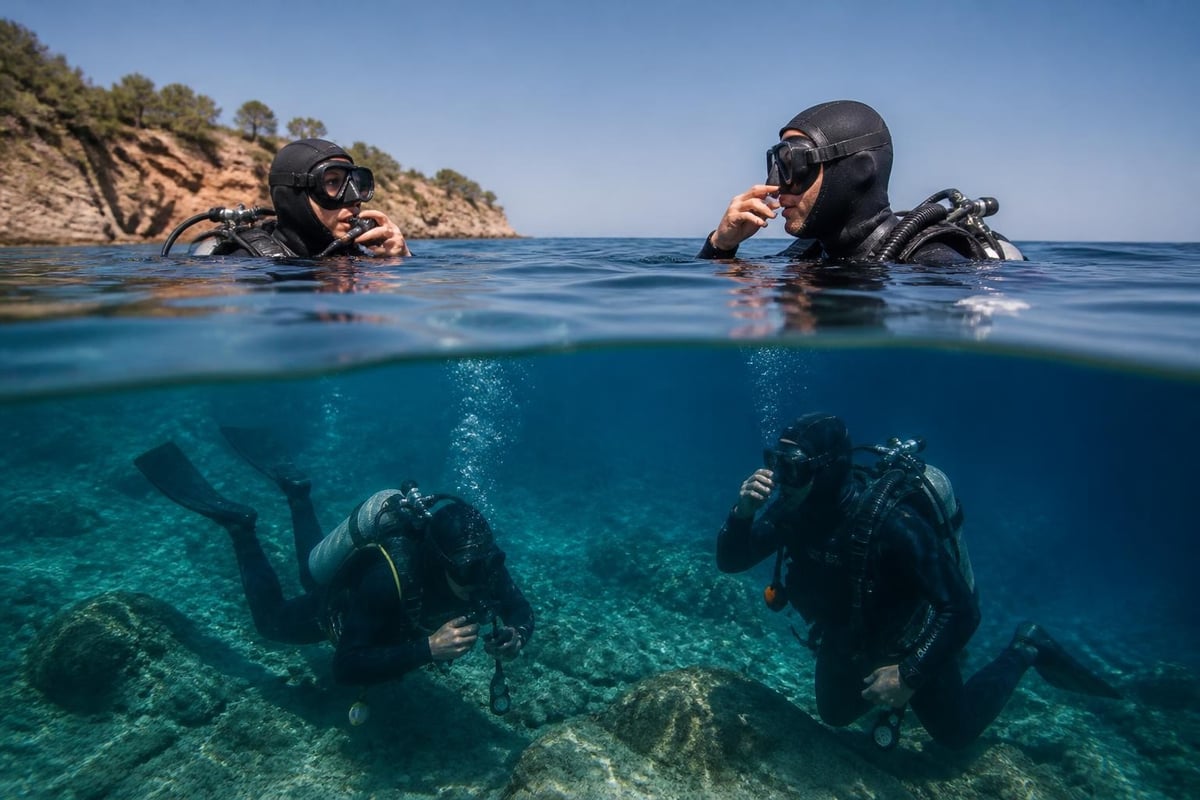
The Open Water Diver certification remains the most recognized entry-level qualification worldwide, specifically designed to prepare divers for open diving conditions. This certification process combines knowledge development, confined water skill practice, and open water training dives.
Course Structure and Requirements
| Component | What It Includes | Time Required |
|---|---|---|
| Knowledge Development | Theory, physics, physiology, equipment, environment | 5-8 hours (self-study + instructor review) |
| Confined Water Dives | 5 pool sessions building fundamental skills | 2-3 days |
| Open Water Dives | 4 certification dives applying skills in natural environment | 2 days |
During the open water portion of certification, students practice the same skills learned in confined water but now must manage real-world variables. Buoyancy control becomes more challenging with deeper water and changing environments. Navigation requires attention to natural features and compass use. Buddy awareness takes on new importance when visibility changes or currents create separation.
The Open Water Diver Course in El Nido allows students to complete their certification dives in protected bay environments where calm conditions, excellent visibility, and abundant marine life create an ideal learning environment. The transition from confined to open diving feels natural when conditions support gradual skill development.
What You'll Learn for Safe Open Diving
Open water certification prepares divers with specific competencies:
- Pre-dive planning and buddy checks adapted to dive site conditions
- Descent and ascent procedures including controlled descent rates and safety stops
- Buoyancy management using breath control and BCD inflation in varying depths
- Underwater navigation using natural references and compass headings
- Emergency procedures including alternate air source use and controlled emergency swimming ascents
- Environmental awareness specific to open water diving locations
These skills form the foundation for all future open diving activities, from casual reef exploration to technical diving specialties.
Open Diving Environments and What to Expect
Open diving takes place across diverse environments, each presenting unique characteristics, challenges, and attractions. Understanding these environments helps divers choose appropriate sites and prepare adequately.
Protected Bays and Shallow Reefs
Ideal for newly certified divers and training, protected bays offer gentler introduction to open diving:
- Depths typically 5-18 meters
- Minimal current and wave action
- Good visibility year-round
- Rich marine life on accessible reefs
- Easy entry and exit points
El Nido's Bacuit Bay provides excellent examples of protected open diving environments where calm surface conditions and clear water allow divers to focus on skill development and marine-life observation rather than environmental challenges.
Walls and Drop-Offs
Wall diving represents a dramatic open diving environment where reefs descend vertically into deep water:
Benefits:
- Spectacular topography and coral formations
- Pelagic fish encounters
- Multi-level dive planning opportunities
Considerations:
- Excellent buoyancy control essential
- Depth monitoring crucial to avoid exceeding limits
- Potential for down-currents along wall faces
Currents and Drift Diving
Some of the world's most productive open diving sites feature strong currents that bring nutrients and attract marine life. Drift diving skills become essential in these environments.
Safety Protocols for Open Diving
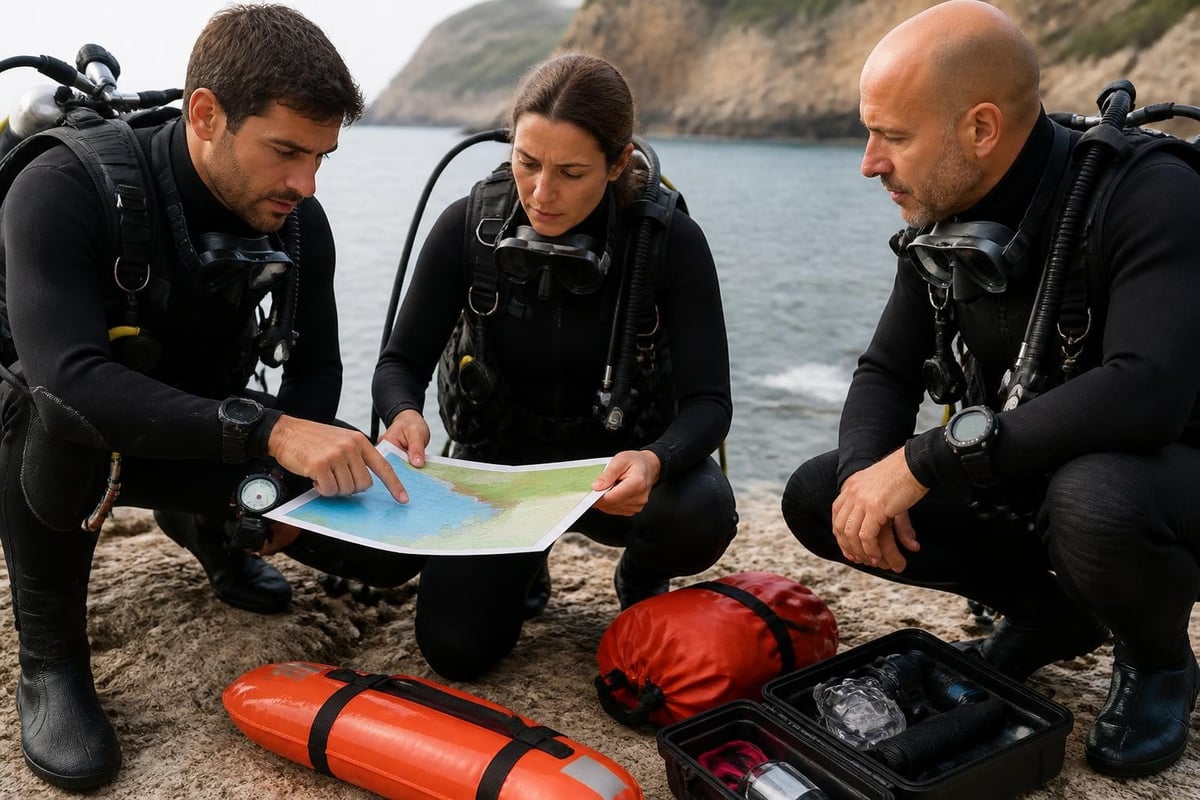
Open diving safety extends beyond individual skills to include comprehensive planning, buddy procedures, and emergency preparedness. The American Academy of Underwater Sciences Scientific Diving Standards outline rigorous safety protocols applicable to all open-water diving operations.
Pre-Dive Planning Essentials
Thorough planning prevents most open diving incidents:
- Site assessment: Depth, currents, entry/exit points, hazards
- Weather and sea state: Surface conditions, wind, visibility forecast
- Dive profile: Maximum depth, planned bottom time, safety stops
- Emergency protocols: Nearest chamber, emergency contacts, evacuation procedures
- Equipment preparation: Functionality checks, redundancy systems, surface markers
The British Sub-Aqua Club’s Risk Assessment Guidelines provide practical frameworks for evaluating open-water dive sites before entering the water.
Buddy System in Open Water
The buddy system takes on heightened importance during open diving where environmental factors can separate teams or create emergencies:
- Pre-dive buddy check ensures both divers' equipment functions correctly
- Proximity maintenance keeps buddies within visual and immediate-response distance
- Regular communication through hand signals confirms status and air supply
- Separation procedures establish clear protocols for reuniting if separated
- Emergency assistance practiced and ready for immediate deployment
Emergency Response and Evacuation
Open diving often occurs in locations distant from medical facilities. Having clear emergency protocols is non-negotiable. Divers Alert Network (DAN) provides emergency management resources, insurance, and 24/7 hotline support for diving incidents worldwide.
Essential Emergency Resources:
- DAN or equivalent diving emergency insurance
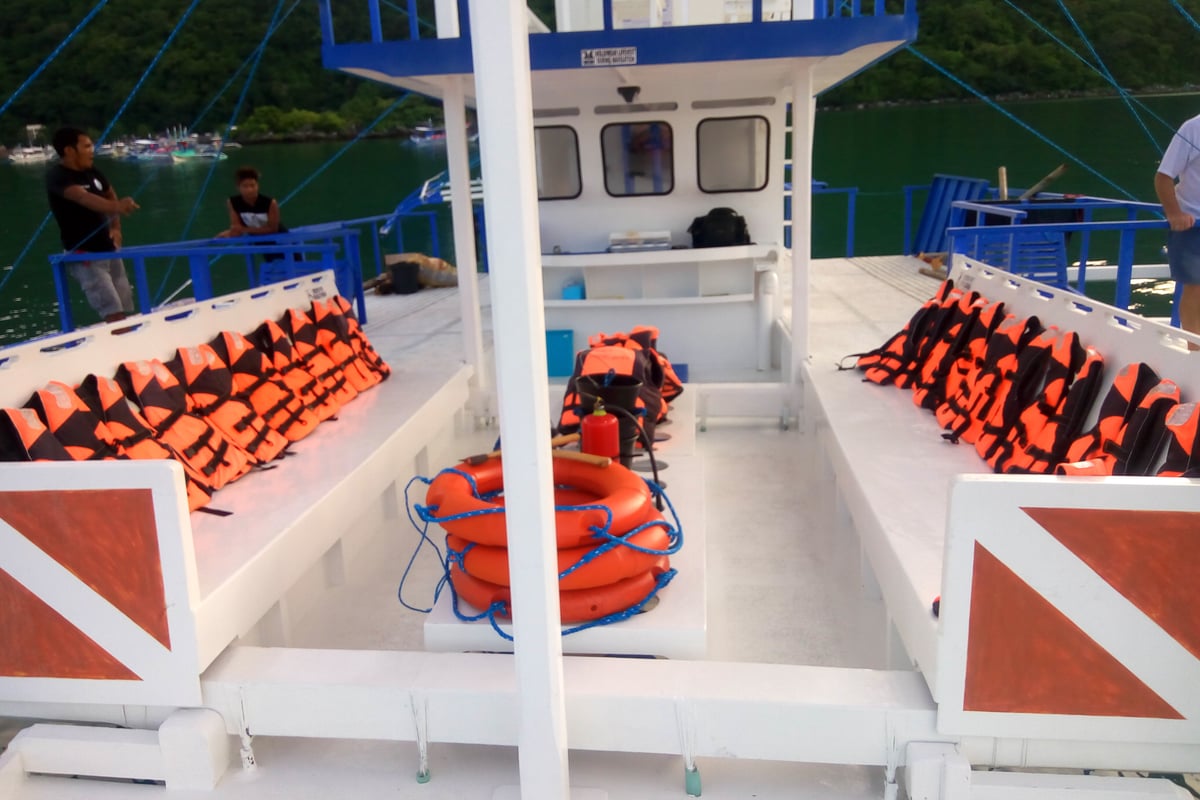
- Emergency oxygen equipment on dive boats
- First aid kit with dive-specific supplies
- Communication equipment (VHF radio, mobile phone in waterproof case)
- Documented emergency action plan with contacts and evacuation routes
Open Diving Specialties and Advanced Training
Once certified for open diving, divers can pursue specialty training that expands their capabilities and opens access to more challenging environments.
Deep Diving Specialty
Deep diving training prepares divers for open diving beyond 18 meters (the recommended limit for Open Water Divers) to depths of 30-40 meters:
| Depth Range | Considerations | Training Focus |
|---|---|---|
| 18-30m | Increased nitrogen absorption, reduced light | Dive planning, narcosis awareness, safety stops |
| 30-40m | Nitrogen narcosis effects, no-decompression limits shorten | Conservative profiles, emergency procedures, equipment redundancy |
Navigation Specialty
While basic navigation is covered in open water certification, the navigation specialty develops precision skills for open diving:
- Natural navigation using reef features, sand ripples, sun position
- Compass navigation for multi-leg courses and return to boat
- Distance estimation and kick-cycle counting
- Search patterns for object location or buddy finding
Drift Diving Specialty
Learning to read and use currents safely transforms challenging open diving conditions into effortless, spectacular experiences. Drift diving training covers current assessment, negative entries, reef-hook use, and surface pickup procedures.
Open Diving in El Nido: Ideal Conditions for All Levels
El Nido's geography creates naturally protected open diving environments suited to certification training, skill development, and advanced exploration. The limestone karst formations shelter Bacuit Bay from prevailing winds and swells, maintaining calm surface conditions and excellent underwater visibility.
What Makes El Nido Exceptional for Open Diving
Water Conditions:
- Visibility regularly 15-30 meters
- Water temperature 26-29°C year-round
- Calm protected bays for training
- Minimal current in many sites
- Diverse depth ranges from 5-40+ meters
Marine Environment:
- Healthy coral reefs with high biodiversity
- Reef fish, turtles, rays, and occasional pelagics
- Varied topography including walls, slopes, and coral gardens
- Numerous sites within 15-45 minutes by boat
Infrastructure:
- Professional dive centers with small group sizes
- Well-maintained equipment and modern boats
- Experienced instructors and divemasters
- Beachfront access and convenient departure times
For divers combining open diving with accommodation, staying at beachfront locations allows easy access to morning departures and eliminates transport logistics between hotels and dive centers.
Seasonal Considerations for Open Diving
While El Nido offers year-round open diving, seasonal variations affect conditions:
November to May (Dry Season):
- Calmest seas and most consistent conditions
- Peak visibility
- Best weather for multi-day diving trips
- Higher tourist numbers
June to October (Wet Season):
- Occasional afternoon rain (rarely affects morning diving)
- Generally excellent conditions with fewer crowds
- Water temperature remains warm
- Some sites may be inaccessible during storms
Freediving and Open Diving: Different Approaches to Open Water
While "open diving" typically refers to scuba diving in open water, the freediving community also uses this terminology. Freedivers distinguish between pool training (static and dynamic apnea) and open water depth disciplines.
Freediving Safety in Open Water
Open water freediving introduces specific risks not present in pool training. The AIDA International Competition Rules establish safety protocols including mandatory safety divers, surface support, and emergency procedures.
Shallow water blackout represents a serious concern during breath-hold diving. This medical review from the National Center for Biotechnology Information explains the physiological mechanisms and prevention strategies for hypoxic blackout during freediving.
Key Freediving Safety Protocols:
- Never freedive alone in open water
- Trained safety diver for every freediver
- Surface interval between dives
- Conservative depth progression
- Recognition of hypoxia warning signs
Continuing Your Open Diving Journey
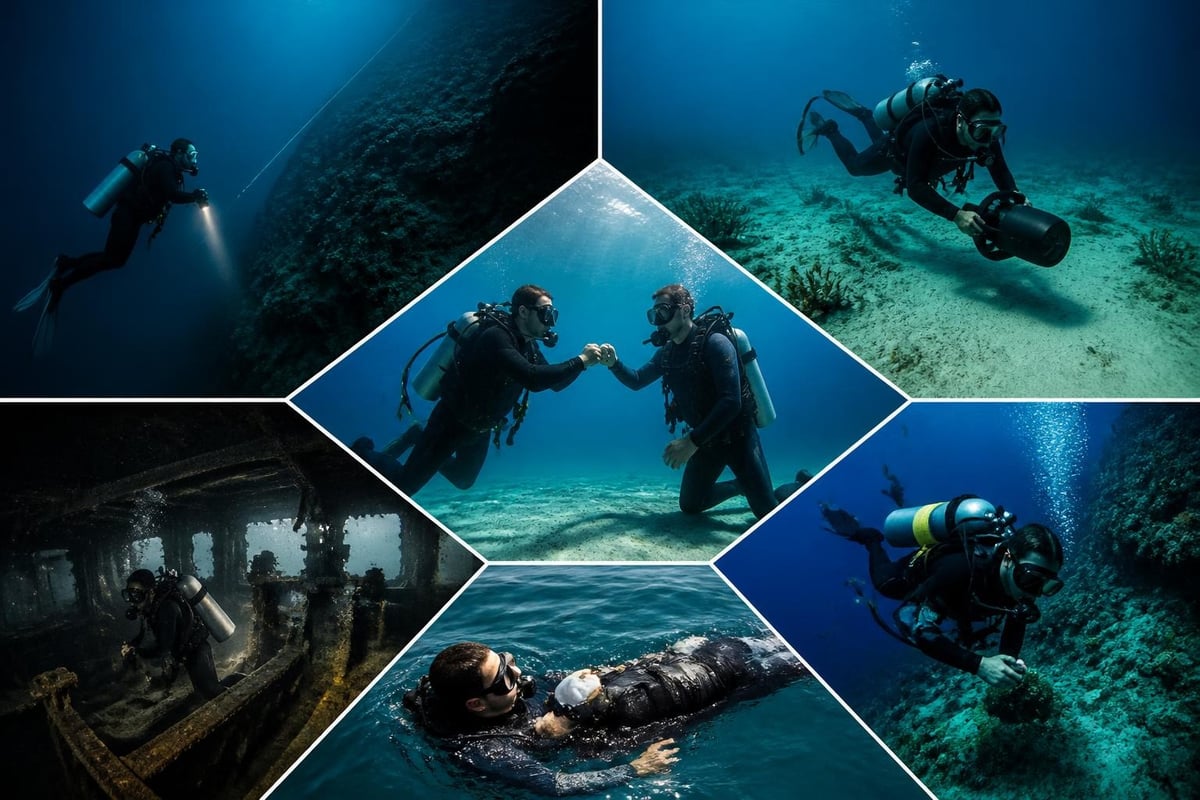
Open diving certification opens doors to a lifetime of underwater exploration, but it's just the beginning. Most new divers benefit from continuing their education and gaining experience across varied conditions.
Building Experience Safely
After certification, prioritize experience-building in conditions similar to your training before attempting more challenging open diving:
First 10 Dives:
- Stay in protected environments
- Dive with experienced buddies or guides
- Practice fundamental skills regularly
- Gradually increase depth within certification limits
- Log dives and review experiences
Next 15 Dives:
- Begin exploring varied topography (walls, slopes)
- Practice navigation on actual dive sites
- Experience mild currents with guide support
- Refine buoyancy and air consumption
- Consider equipment upgrades based on experience
Building to 50+ Dives:
- Pursue specialty certifications
- Explore different dive environments
- Consider advanced or rescue training
- Develop dive planning skills
- Begin mentoring newer divers
Advanced Certifications and Beyond
The Advanced Open Water Diver course specifically addresses the transition from basic to more challenging open diving. Through five adventure dives including deep diving and underwater navigation, this course builds confidence and competence in varied conditions.
Rescue Diver training represents a significant step in diver development, teaching emergency recognition, response, and management. This certification transforms divers from dependent participants to skilled team members capable of assisting others during open diving emergencies.
Technical diving certifications extend open diving capabilities to decompression diving, wreck penetration, and extreme depths, but require significant experience and training investment.
Common Challenges in Open Diving and How to Overcome Them
Even experienced divers face challenges specific to open diving environments. Recognizing and preparing for these situations improves safety and enjoyment.
Dealing with Currents
Unexpected currents represent one of the most common open diving challenges:
Prevention:
- Research site conditions before diving
- Observe surface water movement during approach
- Begin dive into current when possible
- Carry surface marker buoy for drift situations
Management:
- Use reef structure for shelter when needed
- Swim at angle to current rather than directly against it
- Signal buddy and surface together if current exceeds comfort level
- Deploy SMB and drift with current if unable to return to boat
Visibility Changes
Open diving visibility can change during a dive due to surge, other divers, or environmental factors:
Adaptation Strategies:
- Maintain closer buddy proximity in reduced visibility
- Use compass and natural navigation together
- Ascend slightly to find clearer water layer
- End dive conservatively if visibility severely compromised
Equalization Difficulties
Deeper open diving requires more frequent equalization as pressure increases:
- Start equalizing immediately upon descent
- Equalize every meter during the first 10 meters
- Ascend slightly if unable to equalize
- Never force equalization or continue descent with ear pain
- Consider equalization techniques beyond Valsalva (Frenzel, Toynbee)
Equipment Considerations for Open Diving
While basic scuba equipment remains standard across diving environments, open diving often benefits from additional equipment and configuration choices.
Essential Open Water Equipment
| Equipment | Purpose | Considerations |
|---|---|---|
| Surface Marker Buoy (SMB) | Surface signaling, drift diving | Bright color, minimum 1.2m length, reflective strips |
| Dive Computer | Depth, time, no-decompression limit tracking | Conservative algorithm for open diving, backup timing device |
| Compass | Underwater navigation | Quality liquid-filled model, integrated with console or wrist mount |
| Cutting Tool | Entanglement emergency | Dive knife or line cutter, accessible location |
| Whistle | Surface signaling | Attached to BCD inflator hose |
| Torch/Light | Cave inspection, night diving, signaling | Appropriate lumens for conditions and use |
Open Water Equipment Configuration
Open diving often occurs in deeper water where proper weighting and streamlined configuration matter more than in shallow pools:
Weight Distribution:
- Achieve neutral buoyancy at safety stop depth with 50 bar remaining
- Distribute weight for horizontal trim
- Consider integrated weight systems for easier ditching
Streamlining:
- Secure all hoses and accessories
- Eliminate dangling equipment
- Position alternate air source in triangle zone
- Use appropriate size BCD for body type
Making the Most of Your Open Diving Adventures
Open diving delivers the experiences that draw people to scuba diving: exploring reefs, encountering marine life, and discovering underwater landscapes. Maximizing these experiences comes from preparation, appropriate site selection, and continuing skill development.
Choosing dive operators and locations that match your experience level ensures safety while building confidence. In destinations like El Nido, professional operations provide small group sizes, experienced guides familiar with local conditions, and well-maintained equipment that supports enjoyable open diving experiences. You'll find comprehensive information about diving in this region at Palawan Diving.
Documenting your open diving experiences through logging, photography, or simply mental note-taking helps recognize progress and identify areas for improvement. Each dive provides learning opportunities, from buoyancy refinement to navigation practice to marine-life identification.
Open diving transforms theoretical knowledge into practical skill and opens access to the underwater world's most spectacular environments. Whether you're beginning your certification journey or expanding your capabilities through advanced training, understanding the fundamentals of safe, responsible open diving ensures every descent becomes an opportunity for discovery and growth. Submariner Diving Center provides comprehensive training from beginner through advanced levels in El Nido's pristine waters, with professional instructors, small class sizes, and conditions ideal for developing confident, capable open water divers ready to explore Palawan's spectacular marine environment.