Travel diving opens up a world of underwater exploration that goes far beyond your local dive sites. Whether you're planning your first dive vacation to a tropical destination or you're a seasoned diver building an annual rotation of dive trips, understanding how to plan, prepare, and execute successful dive travel makes the difference between a good holiday and an unforgettable adventure. The logistics of traveling with dive gear, coordinating flights with dive schedules, selecting the right destinations, and ensuring you're medically prepared all require careful consideration. This guide covers everything you need to know to become a confident dive traveler.
Understanding What Makes Travel Diving Different
Travel diving differs fundamentally from local recreational diving. You're navigating unfamiliar environments, different marine ecosystems, varying water conditions, and often stricter logistical constraints.
Key Challenges Dive Travelers Face
When you dive locally, you know the sites, the operators, and the conditions. Travel diving removes these familiar reference points. You'll encounter different visibility ranges, temperature variations, currents you haven't experienced before, and marine life you've only read about.
Common travel diving considerations include:
- Coordinating dive schedules with flight times and no-fly periods
- Transporting or renting dive equipment internationally
- Adapting to new boat procedures and dive briefing styles
- Managing certification requirements across different operators
- Dealing with equipment failures far from home
- Navigating language barriers with dive staff
The Divers Alert Network provides comprehensive travel know-how specifically designed to help divers plan safer, more successful dive vacations.
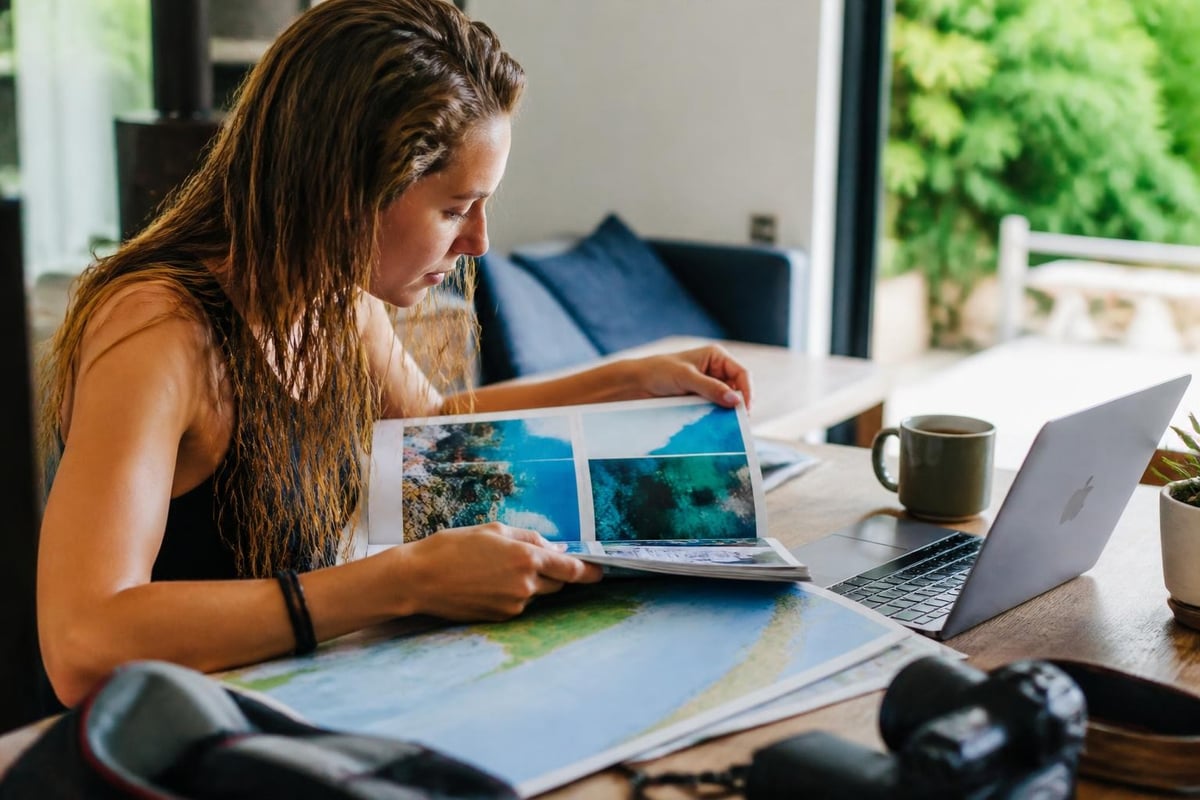
Medical Fitness and Travel Diving
Your fitness to dive becomes particularly important when traveling. Being far from your regular physician, in countries with different medical systems, and potentially hours from a hyperbaric chamber means prevention takes priority.
Before any significant dive trip, schedule a dive medical examination. This is especially critical if you've had any health changes since your last dive, if you're returning to diving after a break, or if you're planning more challenging dives than usual.
The FAA’s fitness guidance and DAN’s diving medical guidance provide authoritative resources for assessing your readiness for dive travel.
Choosing Your Travel Diving Destination
Not all dive destinations suit all divers. Your experience level, interests, budget, and travel style should guide your choice.
| Destination Type | Best For | Typical Conditions | Experience Level |
|---|---|---|---|
| Tropical coral reefs | Marine biodiversity, photography | Warm, clear, calm | All levels |
| Wall diving | Dramatic topography, pelagics | Variable currents | Intermediate+ |
| Wreck diving | History, penetration | Variable visibility | Advanced |
| Muck diving | Macro photography, rare species | Limited visibility | All levels |
| Liveaboard expeditions | Remote sites, volume diving | Varies widely | Intermediate+ |
Matching Destinations to Your Experience
Beginners benefit from destinations offering calm conditions, excellent visibility, and shallow reefs. El Nido in Palawan exemplifies this perfectly, with protected bays, gradual reef slopes, and consistently clear water that builds confidence while delivering spectacular marine encounters.
Experienced divers might seek stronger currents, deeper profiles, or more challenging conditions. However, even advanced divers appreciate destinations that offer variety-morning dives on easy reefs, afternoon wall dives, and the option to push their limits on advanced sites when conditions permit.
Seasonal Considerations
Research your destination's diving seasons carefully. Some locations offer year-round diving with minimal variation. Others have distinct wet and dry seasons that dramatically affect visibility, sea conditions, and marine life activity.
Key seasonal factors:
- Monsoon patterns and their impact on sea state
- Water temperature fluctuations throughout the year
- Marine life migrations and breeding seasons
- Tourist high seasons and corresponding crowd levels
- Weather windows for reaching remote dive sites
Travel diving in the Philippines, particularly Palawan, benefits from a relatively extended dry season from November through May, offering consistently excellent conditions for the majority of the year.
Planning Your Travel Diving Logistics
Successful dive travel requires coordinating multiple moving parts. Start planning at least three to six months ahead for popular destinations during peak season.
Flight and Diving Schedule Coordination
The relationship between flying and diving requires careful attention. The general rule-wait at least 18 hours after your last dive before flying-applies to most recreational dive profiles. For multiple days of diving or deeper dives, extending this to 24 hours provides additional safety margin.
Understanding decompression illness helps you make informed decisions about dive scheduling around flights.
Optimal dive trip structure:
- Arrive at destination (rest day)
- Begin diving day two through day before departure
- Final day reserved for surface activities
- Depart with adequate surface interval
This structure also accounts for travel fatigue, allows time to adjust to new environments, and provides buffer for weather-related schedule changes.
Equipment: Bring or Rent?
This decision depends on several factors. Bringing your own equipment ensures familiarity and proper fit but adds weight, baggage fees, and potential damage or loss during transit.
Most established dive centers maintain well-serviced rental equipment. In destinations like El Nido, quality dive operators provide regularly inspected gear that meets international safety standards.
| Bring Your Own | Rent Locally |
|---|---|
| Perfect fit guaranteed | No baggage weight/fees |
| Familiar equipment | No damage/loss risk |
| Personal comfort items | Equipment serviced locally |
| Full equipment control | Try different gear configurations |
Items worth bringing regardless: your mask (fit is critical), dive computer (programmed to your preferences), and exposure suit if you have specific thermal needs.
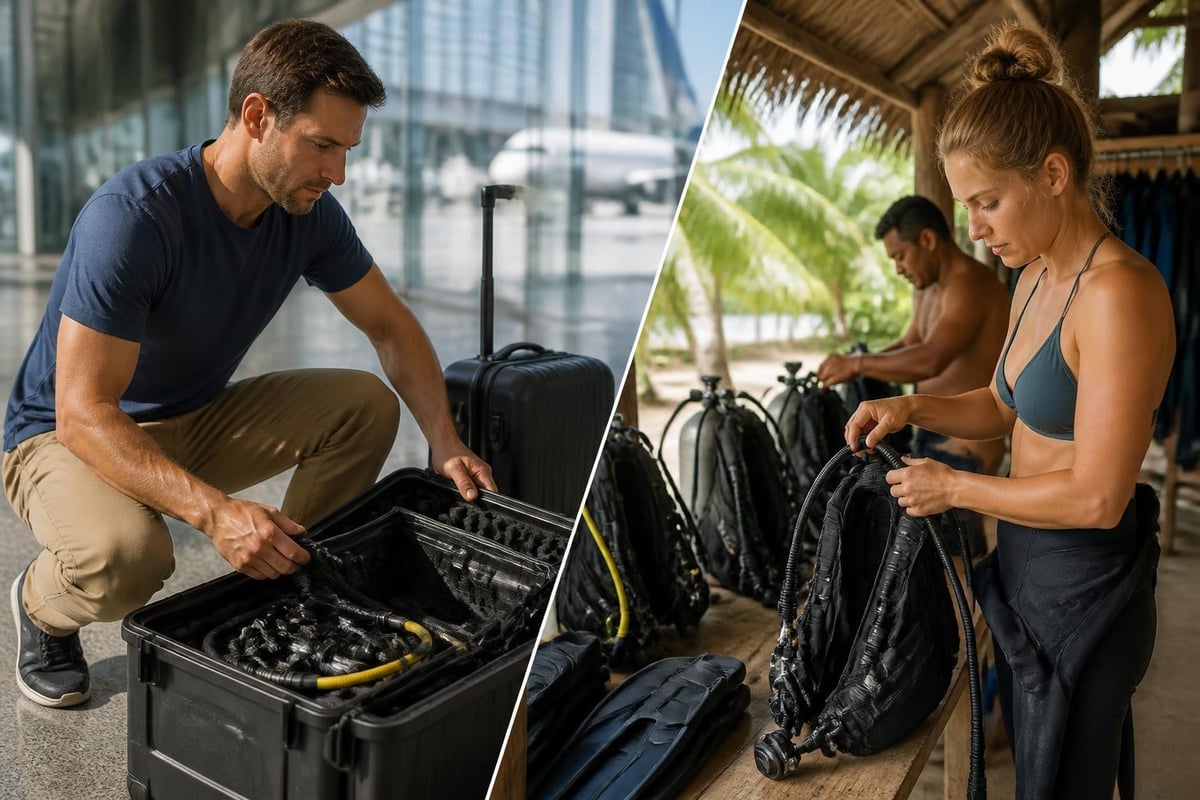
For travelers seeking the ultimate convenience, staying at beachfront dive accommodation eliminates many logistical headaches entirely. The Beach House in El Nido offers exactly this advantage-you stay where you dive, with the boat departing directly from the beachfront, your equipment stored on-site, and everything from accommodation to diving managed in one seamless location.
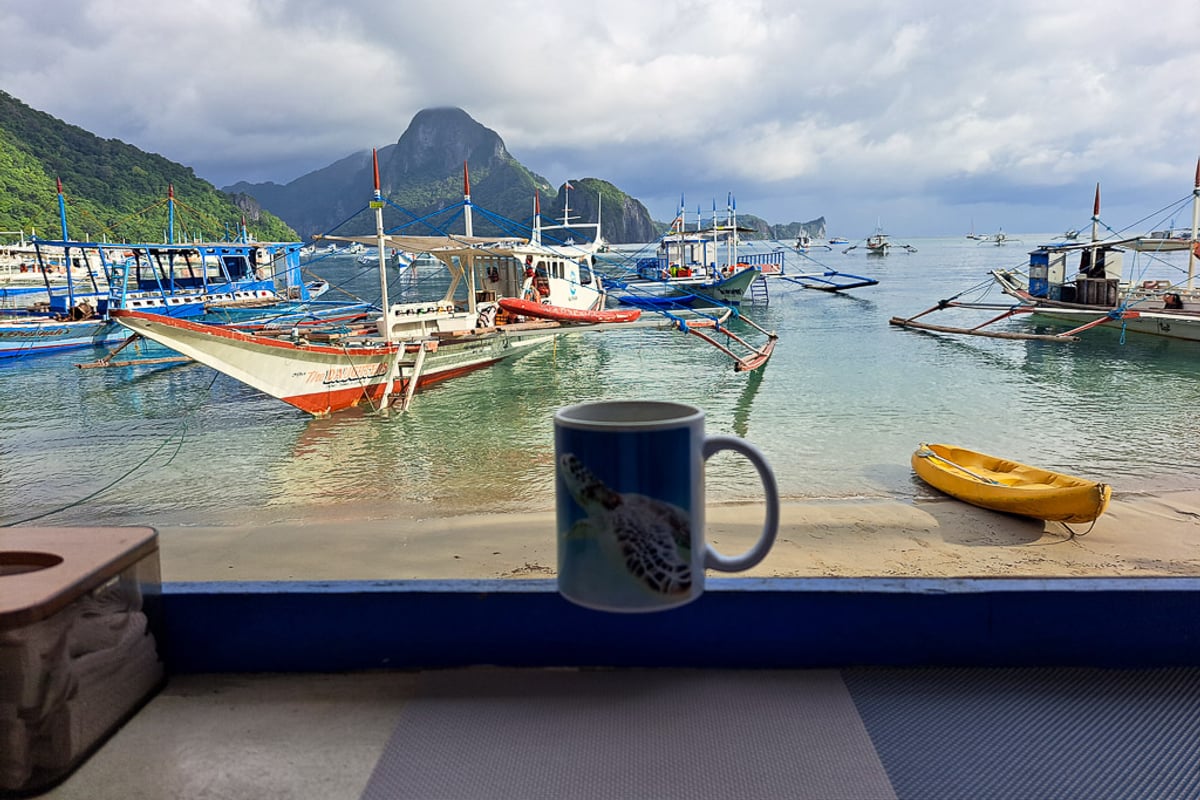
Transporting Dive Equipment Safely
If you decide to travel with gear, pack strategically. Hard-shell luggage protects regulators and dive computers. Distribute weight across checked and carry-on bags to avoid overweight fees.
Never pack dive computers or regulators in checked baggage if you can avoid it. These critical items belong in carry-on bags where you maintain control and can prevent pressure or temperature extremes that might affect calibration.
The FAA’s PackSafe guidance clarifies regulations around transporting dive-related equipment, particularly regarding compressed gas cylinders (which must be completely empty and unsealed for transport).
Selecting Dive Operators During Travel
Not all dive operators maintain the same standards. Research before you arrive prevents disappointment and potential safety concerns.
Evaluating Dive Center Quality
Essential evaluation criteria:
- Current safety certifications and insurance
- Instructor and guide certification levels
- Equipment age and maintenance records
- Boat safety equipment and seaworthiness
- Diver-to-guide ratios
- Emergency oxygen and first aid availability
- Communication systems for marine emergencies
Request to see certification cards for dive professionals. Reputable operators display certifications prominently and welcome questions about safety procedures.
Reading Beyond Reviews
Online reviews provide valuable insight but require critical reading. Look for patterns rather than isolated incidents. Recent reviews matter more than those from several years ago, as ownership and standards can change.
Red flags in reviews:
- Repeated mentions of equipment failures
- Multiple reports of unsafe practices
- Inconsistent dive briefings or planning
- Pressure to dive beyond comfort levels
- Poor emergency response descriptions
Conversely, consistent praise for professionalism, safety culture, and guide knowledge indicates operators worth considering.
Small Groups vs. Cattle Boats
Group size significantly impacts dive quality. Smaller groups allow more personalized attention, easier communication underwater, less environmental impact, and greater flexibility with dive plans.
Large groups often mean waiting-waiting to gear up, waiting to enter water, waiting for the slowest diver, waiting to surface. While they may offer lower prices, the experience quality often suffers proportionally.
Maximizing Your Travel Diving Experience
Once you've arrived and started diving, several strategies enhance your trip.
Respecting Local Diving Practices
Different regions have different diving cultures and practices. Some locations emphasize strict group diving with no separation permitted. Others allow more independence once you've demonstrated competence.
Adapting to local practices:
- Follow briefing instructions even if they seem excessive
- Respect marine park rules even if unstaffed
- Adapt to local entry and exit procedures
- Accept conservative dive planning in unfamiliar areas
- Communicate clearly about your experience level
Managing Dive Schedules and Fatigue
Travel diving often tempts divers to pack in maximum bottom time. Multiple dives daily across several consecutive days accumulates nitrogen loading and physical fatigue.
Listen to your body. Taking a rest day mid-trip isn't weakness-it's smart diving. Use surface days for exploring above water, processing underwater photos, or simply recovering.
Signs you need a rest day:
- Unusual fatigue despite adequate sleep
- Difficulty concentrating during briefings
- Increased air consumption rates
- Minor equalization difficulties
- General lack of enthusiasm
Building Relationships with Dive Guides
Your dive guide possesses intimate knowledge of local sites, marine life behavior, and current conditions. Developing rapport creates better diving.
Ask questions during surface intervals. Show genuine interest in their knowledge. Dive guides who feel respected often share favorite spots, point out harder-to-spot marine life, and provide richer experiences.
Environmental Responsibility in Travel Diving
Travel diving brings responsibility. The sustainable practices recommended in dive tourism research help preserve the environments we visit.
Minimizing Your Environmental Impact
Practical steps every travel diver should take:
- Maintain neutral buoyancy at all times
- Never touch, harass, or feed marine life
- Avoid kneeling or standing on reefs
- Secure all equipment to prevent dragging
- Participate in reef cleanups when offered
- Choose reef-safe sunscreen formulations
- Limit underwater photography disruption
Supporting Sustainable Operators
Select dive operators committed to environmental protection. Look for participation in reef conservation programs, proper waste management, mooring buoy use instead of anchoring, and education programs for guests.
Many Philippine dive centers actively support marine conservation. Choosing operators who contribute to reef protection and community programs ensures your diving dollars support long-term ocean health.
Continuous Learning as a Travel Diver
Each destination offers learning opportunities. Consider specialty courses during travel diving trips. Nitrox certification extends bottom time on repetitive dives and reduces nitrogen loading across multi-day dive trips-particularly valuable during dive vacations when you're maximizing water time.
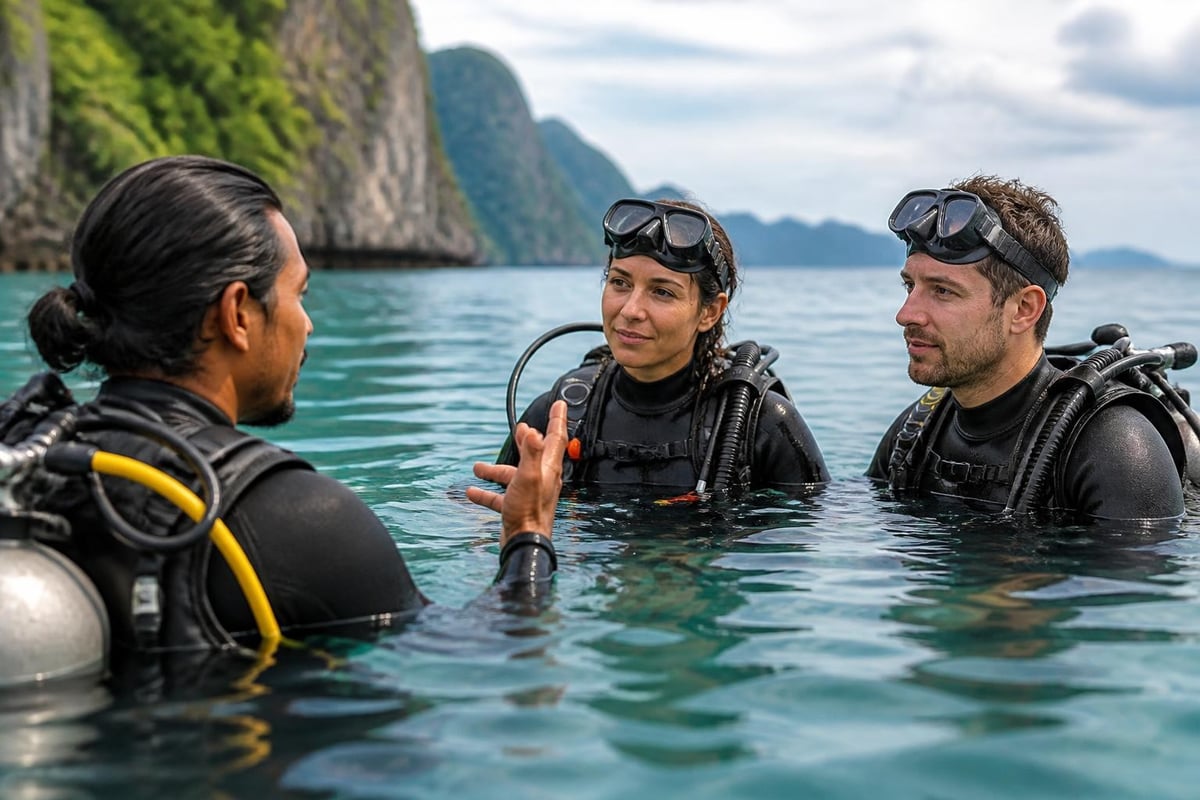
Photography courses, navigation training, or deep diving specialties gain relevance when practiced in spectacular travel diving environments rather than quarries or training pools.
Managing Common Travel Diving Challenges
Even well-planned trips encounter obstacles. Preparation helps you handle them smoothly.
Equipment Failures Away from Home
Equipment fails at the worst moments. Carry spare essentials: mask strap, fin straps, O-rings, and basic tools.
Establish relationships with your dive operator immediately. Reputable centers stock spare parts and can often repair or replace failed equipment quickly.
For critical failures beyond local repair, quality operators offer appropriate rental replacements. This is another advantage of staying at full-service dive facilities where equipment inventory supports resident guests.
Weather-Related Schedule Changes
Tropical weather changes rapidly. Schedule flexibility prevents disappointment. Build extra days into your trip if possible. This buffer accommodates weather delays while still achieving your diving goals.
When conditions prevent diving, operators familiar with their region suggest alternative activities. Around El Nido, weather-dependent dive cancellations open opportunities for island hopping, kayaking through lagoons, or exploring inland attractions.
Health Issues During Dive Travel
Minor health problems can end dive trips prematurely. Prevention strategies include staying hydrated, using appropriate sun protection, maintaining regular sleep patterns despite excitement, and avoiding overexertion.
Equalization difficulties often emerge during travel diving. If you struggle to clear your ears, stop diving immediately. Forcing equalization risks injury that could ground you for the remainder of your trip-or longer.
Cultural Sensitivity
You're a guest in someone else's home. Respect local customs, dress codes away from dive boats, and social norms. Learn basic phrases in the local language. Even fumbling attempts at greetings and thanks demonstrate respect and improve interactions.
Advanced Travel Diving Considerations
Experienced travel divers eventually seek more challenging adventures.
Liveaboard Diving Expeditions
Liveaboards access remote dive sites impossible to reach from shore-based operations. They also deliver high dive volume-three to four dives daily across week-long trips.
Liveaboard considerations:
- Confined living spaces for extended periods
- Limited communication with shore
- Intense dive schedules requiring strong fitness
- Potential seasickness on passage days
- Higher costs but often better value per dive
Research liveaboards thoroughly. Boat age, cabin configuration, safety equipment, and crew experience vary dramatically across operators.
Technical and Expedition Diving
Moving beyond recreational limits requires additional training, equipment, and planning. Technical travel diving involves different risk profiles and demands meticulous preparation.
Never attempt technical dives in unfamiliar environments without proper training, equipment redundancy, and experienced local guides who know emergency protocols and recompression facility locations.
Building a Dive Travel Portfolio
Serious travel divers often build systematic destination portfolios-targeting specific regions, marine ecosystems, or experience types over time.
This approach allows deeper engagement with diving rather than superficial tourism. Returning to regions across different seasons provides perspective on environmental changes and marine life patterns.
Making Travel Diving a Regular Practice
Transforming travel diving from occasional adventure to regular practice requires commitment and planning.
Budgeting for Dive Travel
Dive trips represent significant investment. Smart budgeting makes them sustainable over time.
Cost categories to plan for:
- Flights and ground transportation
- Accommodation (dive resorts vs. separate lodging)
- Diving packages and equipment rental
- Meals and incidental expenses
- Travel insurance including dive coverage
- Equipment maintenance and replacement
- Certification courses and continuing education
All-inclusive dive packages often provide better value than piecing together components separately, particularly for week-long trips.
Maintaining Skills Between Trips
Regular diving maintains skills and confidence. If significant time passes between dive trips, consider refresher programs before traveling. Arriving rusty limits your experience and potentially creates safety concerns.
Even experienced divers benefit from skills reviews after extended surface intervals. A single refresher day reestablishes muscle memory, confirms equipment function, and rebuilds confidence before committing to full dive schedules.
Documenting Your Travel Diving
Maintaining detailed dive logs enriches your diving journey. Beyond basic depth and time data, record marine life encountered, conditions, site characteristics, and personal observations.
Photography provides powerful documentation, but balance picture-taking with experiencing dives fully. Some of your most memorable moments happen when you're watching rather than photographing.
Creating Your Travel Diving Plan
Ready to start your travel diving journey? Begin with realistic goals and systematic planning.
Your first travel diving trip checklist:
- Select a destination matching your certification and experience
- Research dive operators thoroughly using multiple sources
- Book flights allowing adequate pre-dive rest and post-dive surface intervals
- Arrange accommodation convenient to diving operations
- Confirm certification requirements and bring appropriate cards
- Schedule dive medical if warranted by health changes
- Verify travel insurance includes dive coverage
- Pack essential personal equipment and plan rental needs
- Research non-diving activities for surface intervals and weather days
- Review basic dive theory and skills before departure
Start with destinations known for excellent conditions and strong diving infrastructure. Palawan delivers exactly this combination-consistent conditions, exceptional marine biodiversity, and professional dive operations with international safety standards.
Whether you're planning your first dive vacation or your fiftieth, the fundamentals remain constant: careful planning, appropriate preparation, respect for the marine environment, and commitment to safe diving practices throughout your journey. For more guidance on dive travel in the Philippines and beyond, visit Palawan Diving for comprehensive information on planning successful dive trips.
Travel diving transforms recreational diving from local hobby into global adventure, opening access to the world's most spectacular marine environments while building skills and experience across diverse conditions. With proper planning, appropriate preparation, and commitment to safe practices, dive travel becomes a sustainable, enriching part of your diving journey. Submariner Diving Center specializes in creating exceptional dive travel experiences in El Nido, offering everything from daily boat dives to comprehensive dive-and-stay packages that eliminate logistical complexity and maximize your time underwater in Palawan's pristine waters.