PADI Discover Scuba Diving is a supervised introduction to breathing underwater, with no certification needed and no prior experience required. You learn a few core skills in shallow water, then dive a reef with a professional instructor at your side. In El Nido, it's one of the easiest ways to see what the bays and reefs look like from below the surface.
This guide walks through how the experience works, what you'll actually do, who can join, and how to get the most out of it on a holiday here.
What PADI Discover Scuba Diving Actually Is
PADI Discover Scuba Diving is an introductory experience, not a certification course. You don't earn a diver card at the end, and you don't take an exam. You get a guided taste of diving under the close watch of a PADI professional. If you want to go further, our guide to the PADI Open Water Diver course explains the full certification path from start to finish.
That distinction matters. PADI’s own overview of Discover Scuba Diving explains how it differs from the full Open Water Diver program, and this beginner’s guide to trying scuba covers the same line between a short experience and certification. In short, the experience lets you dive with an instructor, while certification lets you dive independently with a buddy.
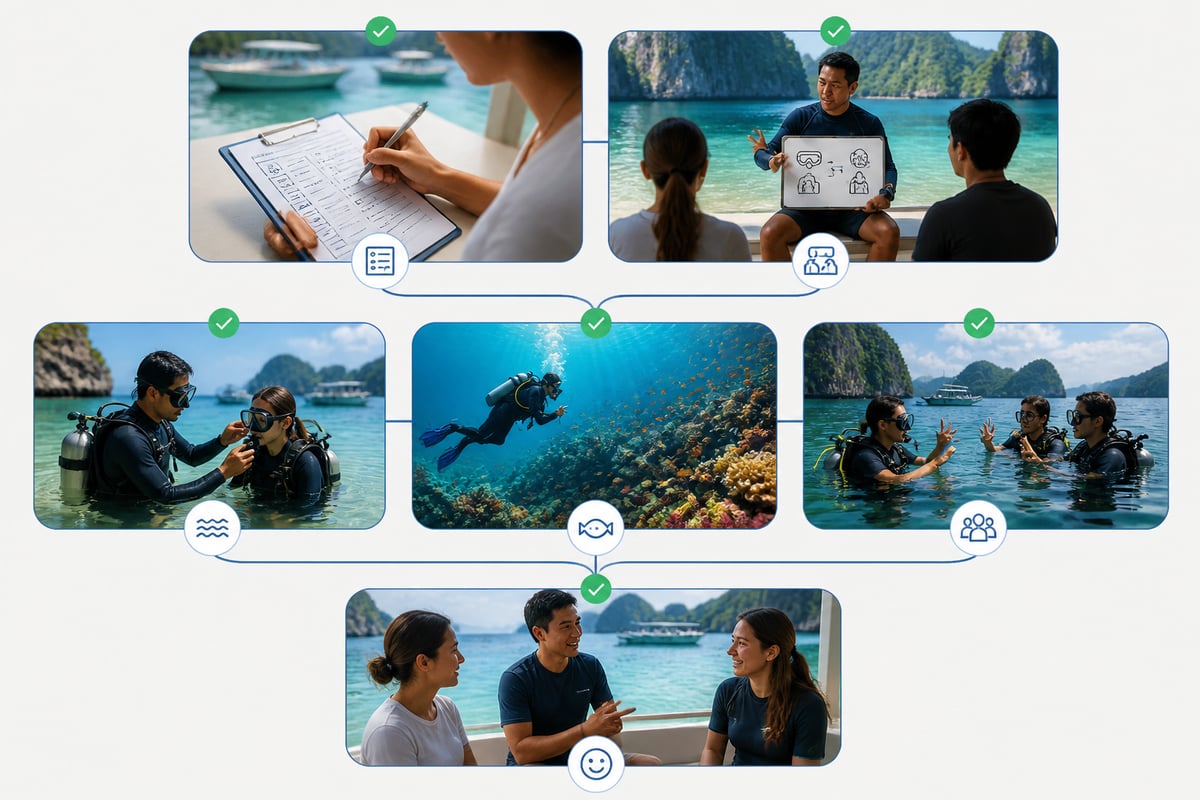
The format has three parts:
- Knowledge: a short briefing on the equipment, hand signals and basic safety.
- Skills practice: confined-water or shallow-water practice with your instructor.
- Open-water dive: a guided dive on a reef, kept at a shallow, comfortable depth.
If you want a closer look at how the program is structured, our post on the PADI Discover Scuba Diving experience breaks it down further.
Who Can Try It and What the Limits Are
Most healthy people can try a Discover Scuba Diving session, including those who aren't strong swimmers, though you'll need basic water comfort. There is a minimum age, and a short medical questionnaire comes first.
Here is what typically applies:
- Age: PADI sets a minimum age for the experience. PADI’s restrictions page lists the age minimum and the depth limits that apply after an introductory dive.
- Medical questionnaire: you'll fill out a health form before anything starts. If you answer yes to certain conditions, you may need a doctor's sign-off before you can dive.
- Water comfort: you don't need to be an athlete, but you should feel at ease in the water.
- Flying afterward: divers are advised to leave a gap between their last dive and a flight. Ask your instructor how long to wait based on your plans.
Because you're diving under supervision, depth stays shallow and the instructor stays within reach throughout. That is why beginners can join without prior training.
How the Day Unfolds in El Nido
A Discover Scuba Diving day in El Nido follows a steady rhythm: briefing, skills, then the boat. The details shift with weather and sea conditions, which is normal in Palawan and part of why a good operator stays flexible.
The briefing
Your instructor starts on land. You'll cover how scuba gear works, how to equalize the pressure in your ears, how to clear water from your mask, and the handful of hand signals you'll use underwater. This part is relaxed and conversational. Ask as many questions as you like.
Skills in shallow water
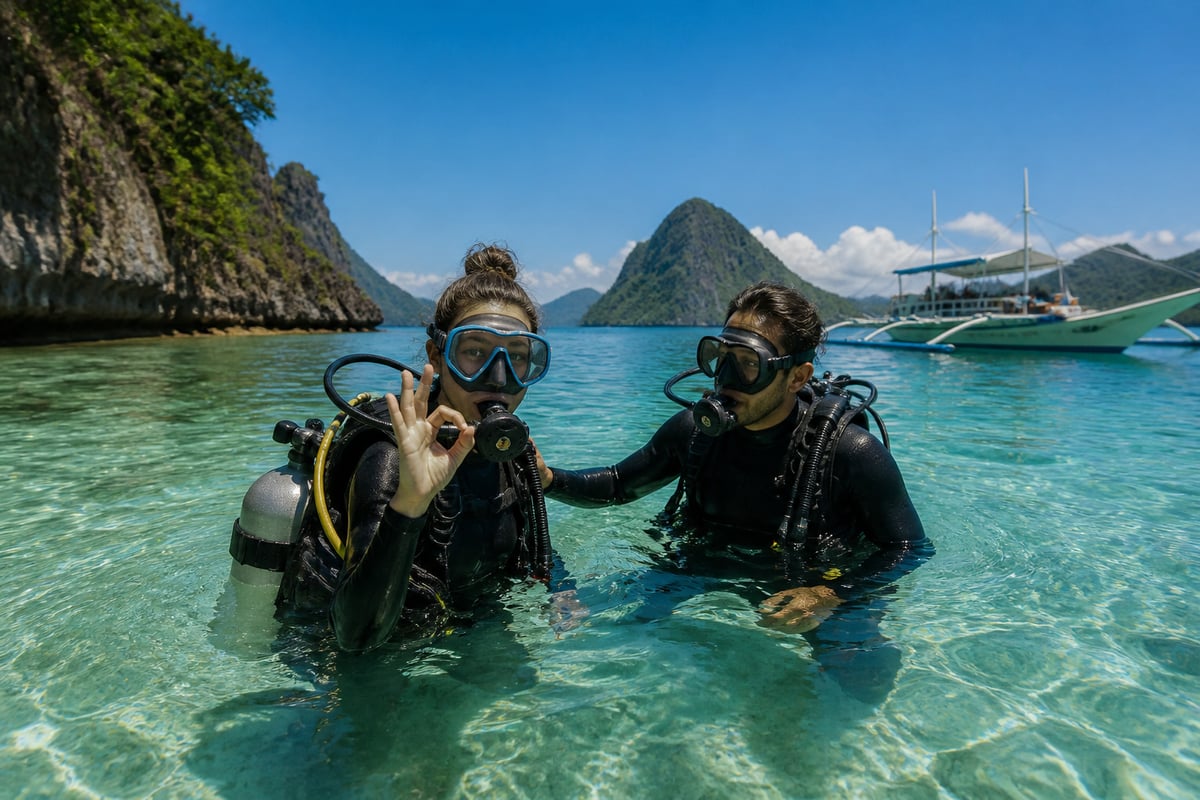
Next comes practice where you can stand or kneel. You'll breathe from the regulator, get used to the feel of buoyancy, and rehearse a few simple skills. Most people find the first few breaths strange, since your brain says don't, and then it clicks. Take your time here. There's no rush and no score.
The ocean dive
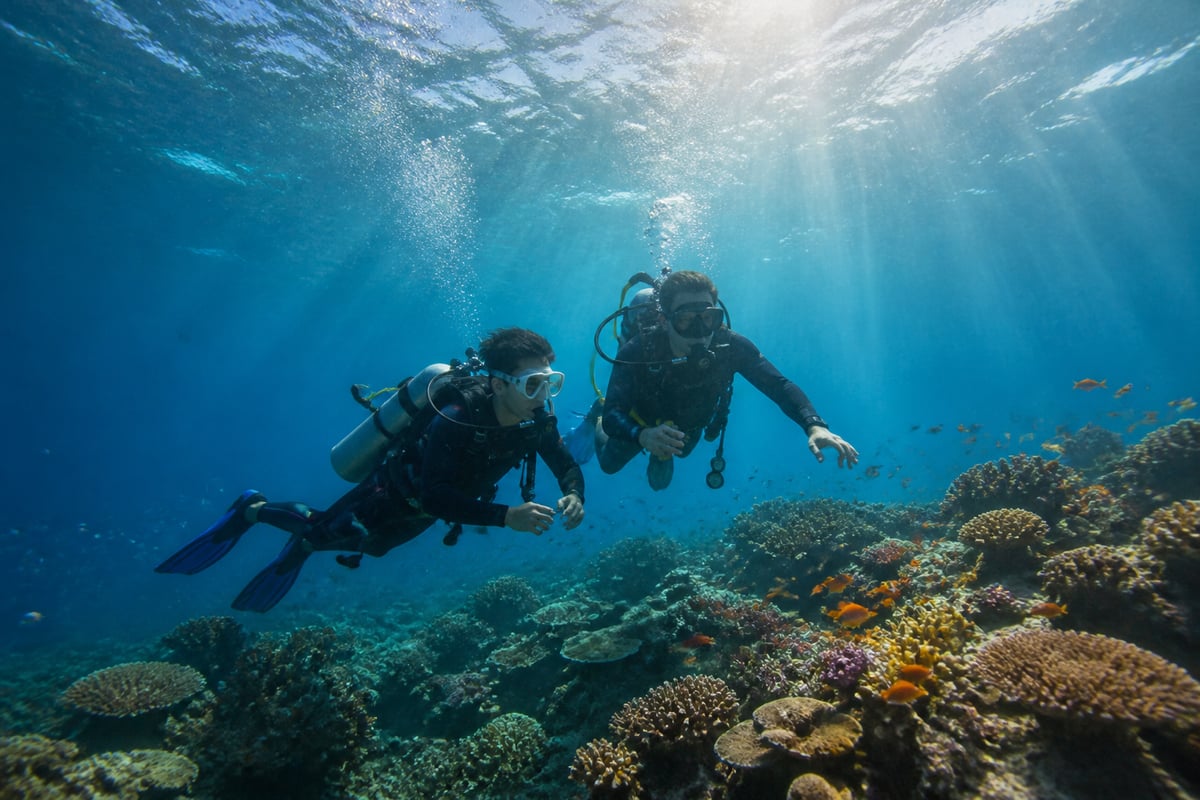
Once you're comfortable, you head to a reef with your instructor. You glide along at a gentle pace, and the instructor handles navigation and keeps you at a safe depth. All you need to do is breathe slowly and look around. What you see depends on the day and the site, and no operator can promise a particular animal. El Nido's reefs are known for healthy coral and plenty of reef fish, which is a rewarding first look even without a headline sighting.
Why El Nido Suits a First Dive
El Nido is a good place to learn because the conditions can be forgiving and the scenery is easy to love. Limestone cliffs rise from the water, and the shallow reefs below them give beginners plenty to look at without going deep.
Weather and sea state decide which sites work on a given day. A center with local knowledge will pick the calmest, most comfortable spot rather than stick to a fixed plan. At Submariner Diving Center, dive sites are chosen daily to suit experience level, interests and conditions, and the team has more than 15 years of diving in El Nido behind that call.
For a wider sense of what the region offers beyond a first dive, our overview of good scuba diving locations is a useful companion read. For a closer look at which sites suit each level, see our guide to where to dive for fun in El Nido.
What to Bring and What to Expect to Feel
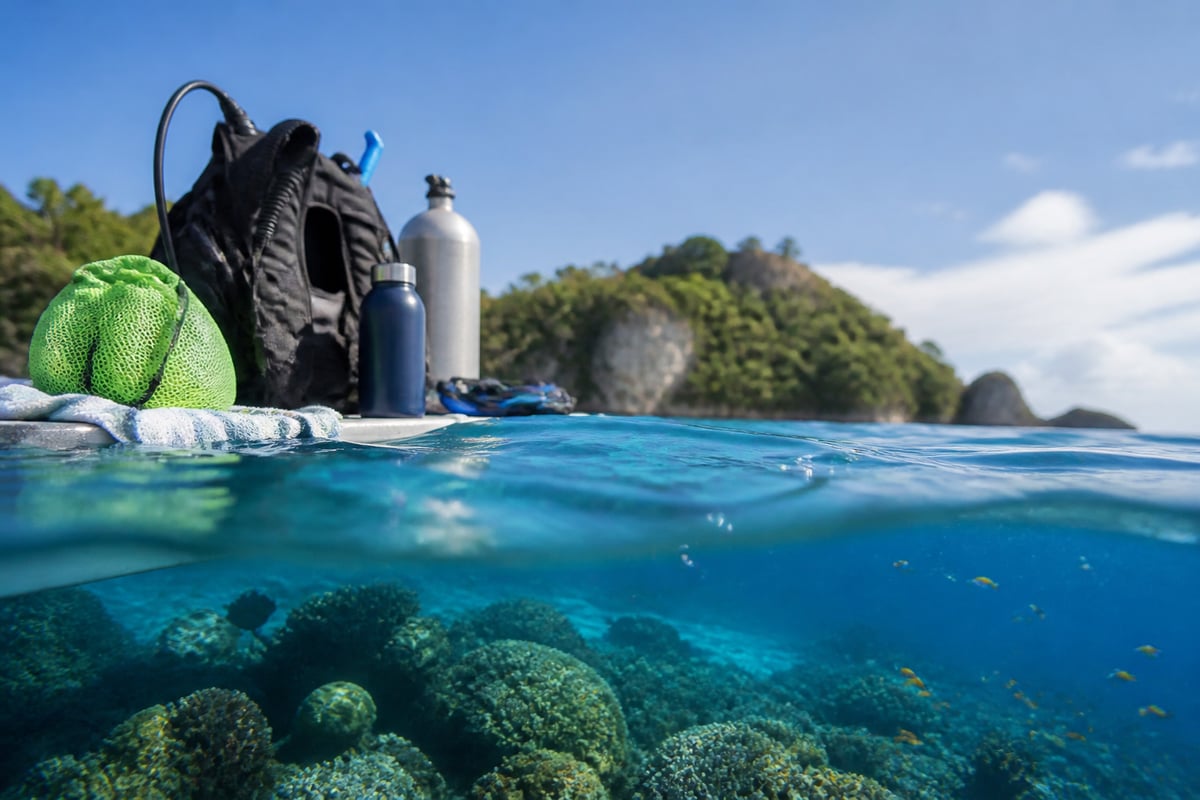
Bring very little, because the dive center supplies the scuba equipment. Pack for a day on the water and a bit of salt and sun.
Pack list:
- Swimwear and a towel
- Reef-safe sunscreen
- A light cover-up or rash guard
- A dry change of clothes
- Water and a snack
- Any prescribed medication, plus your completed medical form if a doctor's note was needed
Wear what you'd wear to the beach, and skip the heavy perfume or lotion that can leave a film on your mask.
As for what you'll feel, expect a few small surprises. Your ears may need gentle equalizing as you descend, which your instructor will teach you. Your breathing will sound loud at first, then fade into the background. Many first-timers are surprised by how calm it feels once buoyancy settles. If anything feels off, you signal your instructor and the dive adjusts. You are never on your own.
Seasickness, Nerves and Other Common Worries
Most first-dive worries are manageable with a little preparation. The usual ones are nerves, ear discomfort, mask fogging and seasickness on the boat.
- Nerves: normal and expected. Tell your instructor how you feel, because they'll slow things down if needed.
- Ear pressure: equalize early and often, and ascend a little if it hurts. Never push through pain.
- Foggy mask: your instructor shows you a simple fix before the dive.
- Seasickness: if you're prone to it, eat lightly beforehand, stay in fresh air on the boat and mention it to the crew.
Good instructors treat these as routine. Part of their job is to keep a nervous diver relaxed enough to enjoy the dive.
Staying Close to the Water Makes It Easier
Where you stay shapes how smooth the day feels. Many El Nido dive operators run boats from a beach across town, which can mean an early transfer before the briefing even starts.
Submariner Diving Center is located in El Nido, so the boats and equipment are close at hand. You can dive from your doorstep without an early-morning ride across town. After the dive, you can settle in with a meal while the day's dive is still fresh in your mind. For holidaymakers who want a simple, low-stress first dive, that setup removes a lot of logistics.
Booking Your First Dive With Submariner
If you want to try diving during a holiday, booking a guided introduction is the simplest route. Our Discover Scuba Diving experience is designed for first-timers, with a professional PADI instructor, modern safety equipment and the calm water El Nido is known for.
Private VIP charters are flexible, so the plan can adapt to weather and sea conditions on the day. The team has over 15 years of diving experience in El Nido and over 40,000 five-star reviews, which says a lot about how first-timers feel afterward. If you're also curious about the broader range of diving experiences available, our guide to scuba diving experiences in Palawan gives a good overview.
From a Try Dive to Certification
Many people finish a first dive and want more, and the introductory experience is a genuine head start. PADI describes several reasons to move from Discover Scuba Diving to the Open Water Diver course, including diving to greater depths and diving without an instructor.
Depending on the dive center and the course, part of what you did on your first day can count toward the next level. Ask your instructor whether your experience carries credit and how it fits into your schedule. The details depend on the course and the instructor, so confirm them directly rather than assume.
If you're leaning that way, our guide to PADI Open Water diving explains what the full certification involves and how long it takes. Keep in mind that certification takes more days than a single introduction, so if you're only in town briefly, a Discover Scuba Diving day may be the realistic choice, with certification saved for a longer trip.
Questions Beginners Ask Before Booking
Do I need to know how to swim well?
You should be comfortable in the water, but you don't need to be a strong swimmer. Mention your comfort level when you book.
Will I see turtles, sharks or other big animals?
No one can guarantee a particular sighting. Reefs offer fish, coral and other marine life, and what appears depends on the day and the site.
How deep will I go?
Depth stays shallow and is set by the instructor, within limits that PADI applies to introductory experiences.
Can I try it if I wear glasses?
Often yes, with a prescription mask or contact lenses. Raise it when you book so the team can prepare.
What if the weather is bad?
Conditions can change plans. Flexible scheduling and daily site selection help, and the team will tell you what's possible.
Getting the Most From Your First Dive
A few habits make a first dive better. They cost nothing and they work.
- Breathe slowly and continuously. Never hold your breath underwater. Long, calm breaths also help your buoyancy.
- Equalize early. Clear your ears before you feel pressure, not after.
- Look up and around. Beginners tend to stare at their gauges. Reefs reward a wider view.
- Move slowly. Gentle fin kicks use less air and disturb less coral.
- Keep your hands to yourself. Touching coral damages it, and some marine life can sting.
Done well, a first dive leaves you tired in a good way and keen to see more. If you're weighing El Nido against other places, our roundup of top scuba diving destinations shows how the Philippines and beyond compare.
Your next step is to pick the date in your El Nido stay that looks calmest on the forecast, then ask about availability for an introductory dive. If you'd like to see the experience first, read about our Discover Scuba Diving option, then reach out to Submariner Diving Center so our PADI instructors can plan your first dive for the day and conditions that suit you best, and Book Your Diving with a team that knows El Nido's reefs well.