The best scuba diving sites combine clear water, healthy reefs and varied marine life, and the top picks include Raja Ampat, the Red Sea, the Great Barrier Reef, the Galápagos and the Philippines' own Tubbataha and El Nido. Which one is right for you depends on your certification level, your budget and the season you can travel. This guide compares the major destinations, then looks closely at Palawan, where you can dive from beginner level to remote liveaboard expeditions.
What Makes a Dive Site Truly Great?
A great dive site delivers on four things: visibility, marine biodiversity, the right conditions for your experience level, and good operators who read the water well.
Visibility lets you enjoy walls, swim-throughs and big-picture reef scenery. Biodiversity is what keeps you looking closely on every dive, from nudibranchs on the rock to schools of fish in the blue. Conditions matter more than most people expect, because a site that thrills an advanced diver can be stressful for someone with 10 logged dives.
Local knowledge is the quiet factor. The same site can be superb one day and murky the next, and operators who choose sites daily based on tide, swell and wind will give you a better dive than a fixed itinerary.
If you are weighing a destination against your own experience, DAN’s travel planning guidance explains how to assess conditions, match them to your level and plan for emergencies before you commit.
The Best Scuba Diving Sites Around the World
The world's top dive destinations each have a specialty, so the right choice depends on what you want to see.
In Scuba Diving magazine's 2025 Readers Choice survey, Indonesia ranked first overall among Pacific, Indian and Mediterranean destinations, with respondents rating places they had visited in the previous two years. The same survey placed the Galápagos Islands among its top overall destinations in that group, and ranked the Cayman Islands first for wall diving.
Here is a quick comparison of the headline destinations:
| Destination | Known for | Best suited to |
|---|---|---|
| Raja Ampat, Indonesia | Extreme reef biodiversity | Intermediate to advanced |
| Tubbataha Reefs, Philippines | Pristine reef, sharks, remote liveaboard | Experienced divers |
| Red Sea, Egypt | Wrecks, walls, warm clear water | All levels |
| Great Barrier Reef, Australia | Huge reef system, easy access | All levels |
| Galápagos, Ecuador | Large pelagics, cold currents | Advanced |
| Cayman Islands | Wall diving | All levels |
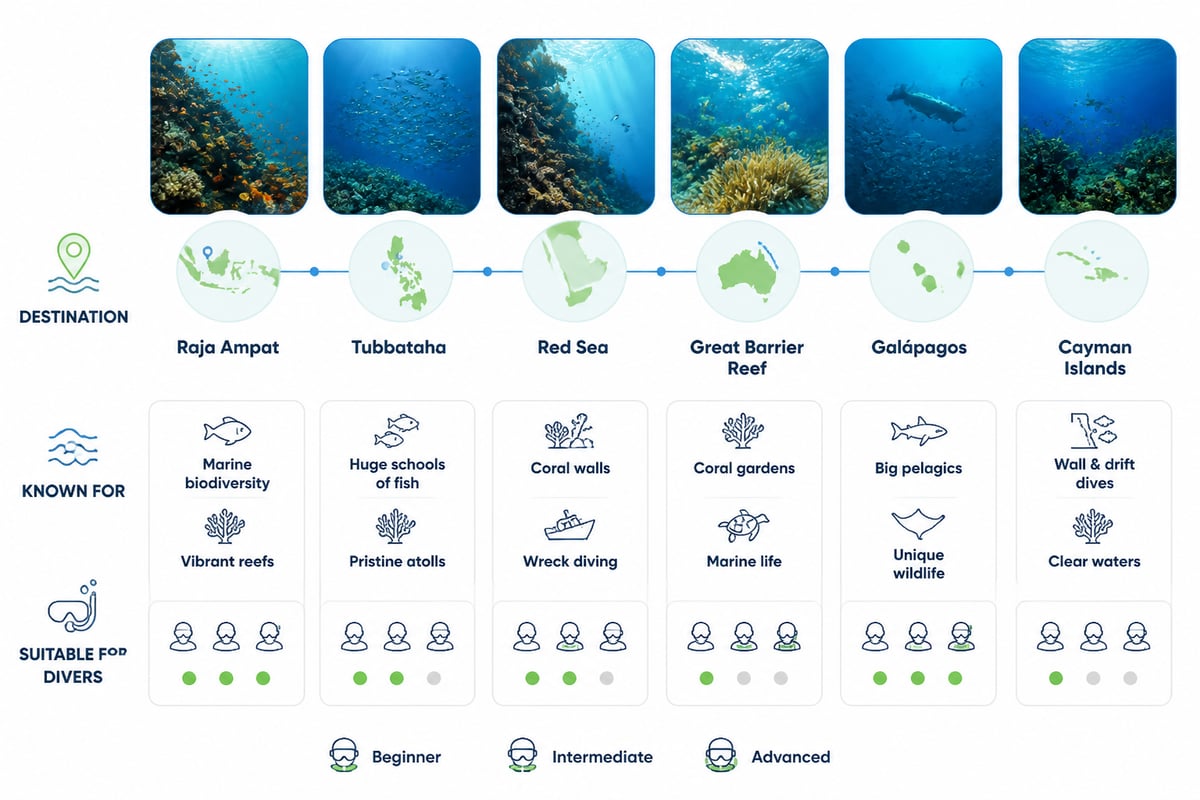
No single destination wins on every count. Raja Ampat rewards divers who want biodiversity and are happy to travel far. The Galápagos is for experienced divers who accept cooler water and strong currents in exchange for large animals. The Red Sea suits almost anyone, while Cayman is the wall-diving benchmark.
Why the Philippines Belongs on Every Dive Shortlist
The Philippines packs wall dives, wrecks, macro life and open-water encounters into one country, and Palawan is its standout province for divers. That range means a group with mixed interests can stay in one place: one person hunts for small critters on the rock, another wants a drop-off, and a third wants a wreck, all within a single trip.
Within the Philippines, three distinct experiences stand out:
- Tubbataha Reefs Natural Park: A remote reef system reached by liveaboard, aimed at experienced divers.
- Coron: Known for wreck diving.
- El Nido: Limestone karst scenery above water and varied reefs, walls and marine life below, with day-boat access to many sites.
Each suits a different diver, so decide what you want most before choosing a base. Wreck enthusiasts will look toward Coron, while those who want a flexible land base with day boats and a mix of reef and wall will find El Nido easier to plan around. If you are comparing Philippine options in more detail, this guide to the best scuba diving in the Philippines breaks down the main regions and what each suits.
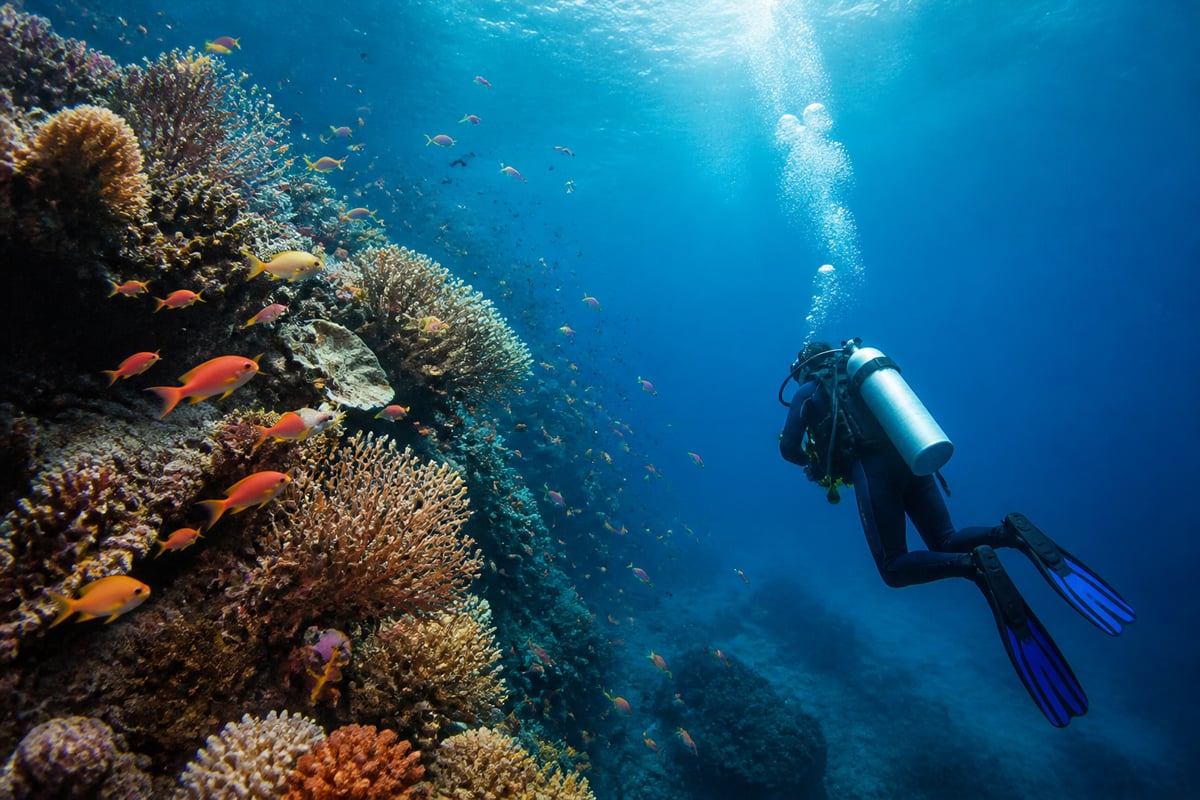
El Nido: Best Scuba Diving Sites for Holidaymakers and Certified Divers
El Nido is one of the best places in Palawan to dive from a base on land, because day boats reach reefs, walls and drop-offs without the commitment of a liveaboard.
The scenery sets it apart. Limestone cliffs rise straight from the sea, and the underwater topography follows the same dramatic shape, with walls, boulders and reef slopes. Conditions change with the season, tide and wind, which is why good local judgment matters.
Choosing Sites by Experience and Conditions
In El Nido, the right site is the one that fits your skills and the day's sea state, not a fixed list. A beginner on a Discover Scuba Dive needs calm, sheltered water. A certified diver with 50 dives may want a wall with more depth and current. A well-run operator chooses accordingly each morning.
For more on how site choice works across the region, the overview of dive sites in Palawan is a useful companion.
Diving With Submariner Diving Center
Submariner Diving Center has more than 15 years of diving experience in El Nido, with professional PADI instructors and local knowledge. Dive sites are selected by experience level, interests and daily conditions, and private charters are flexible, so the plan adapts to the weather and sea rather than the other way around. The center has also earned many five-star reviews from guests.
Certified divers can book Fun Diving, daily boat dives to El Nido's reefs, walls and marine life.
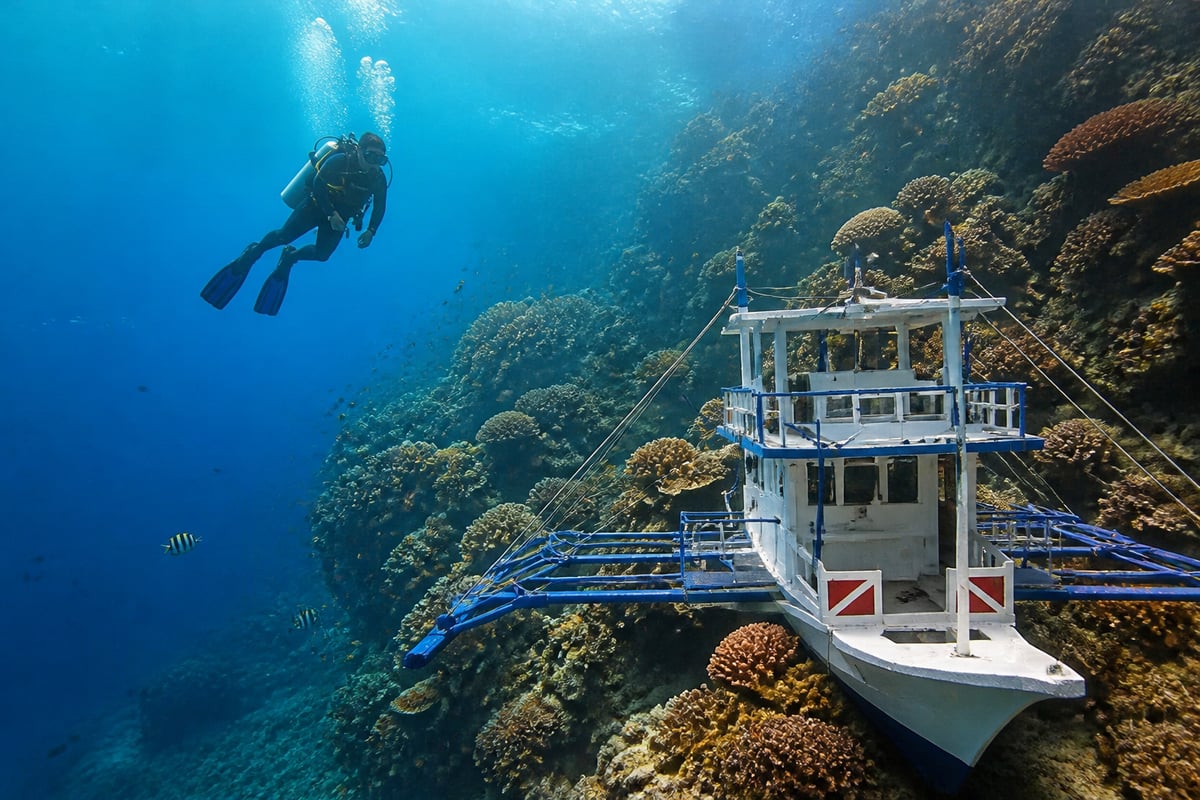
Because conditions drive the schedule, expect the itinerary to be set around the weather and sea state on the day. Marine-life sightings can never be guaranteed anywhere in the world, so treat any list of animals as possibilities rather than promises.
Learning to Dive: Courses and Beginner-Friendly Sites
Beginners can start diving in El Nido with a supervised introductory experience or a full PADI course, and the best beginner sites are calm, shallow and sheltered. Sheltered water matters because it lets you focus on the basics, breathing slowly, clearing your mask and controlling your buoyancy, without fighting swell or current.
Holidaymakers often assume they need weeks of training. They do not. A first-timer can try a Discover Scuba Dive with a PADI professional, which is a supervised introduction with an instructor beside you the whole time, and anyone who wants a certification can work through a course in a few days of their trip. If you are unsure which path suits you, start with the introductory dive: it shows you whether you enjoy breathing underwater before you commit to a course. Ask your operator about current course options through their contact page, since schedules and requirements are set by the dive center. If you plan to fly soon after, remember the surface interval guidance covered later in this article.
A few practical tips for first-time divers:
- Tell your instructor about any medical conditions or recent illness before you dive.
- Equalize early and often on descent, before you feel pressure.
- Keep breathing continuously and never hold your breath.
- Stay close to your instructor and signal if anything feels wrong.
Planning Your Dive Trip: Seasons, Safety and Flying
The best time to dive depends on local wind and sea patterns, so check seasonal conditions for your specific destination and be flexible with your itinerary.
In El Nido, conditions shift through the year, and a flexible operator can move to a more sheltered site when the sea picks up. This is a good reason to avoid booking a rigid, fixed-site plan and to choose a center that decides daily.
Flying After Diving
Do not fly too soon after your last dive. Divers Alert Network suggests a minimum preflight surface interval of 12 hours after a single no-decompression dive, 18 hours after multiple dives in a day or multiple days of diving, and longer than 18 hours after dives requiring decompression stops. Build a buffer day into your itinerary before your flight home from Palawan.
Where to Stay for Easy Diving
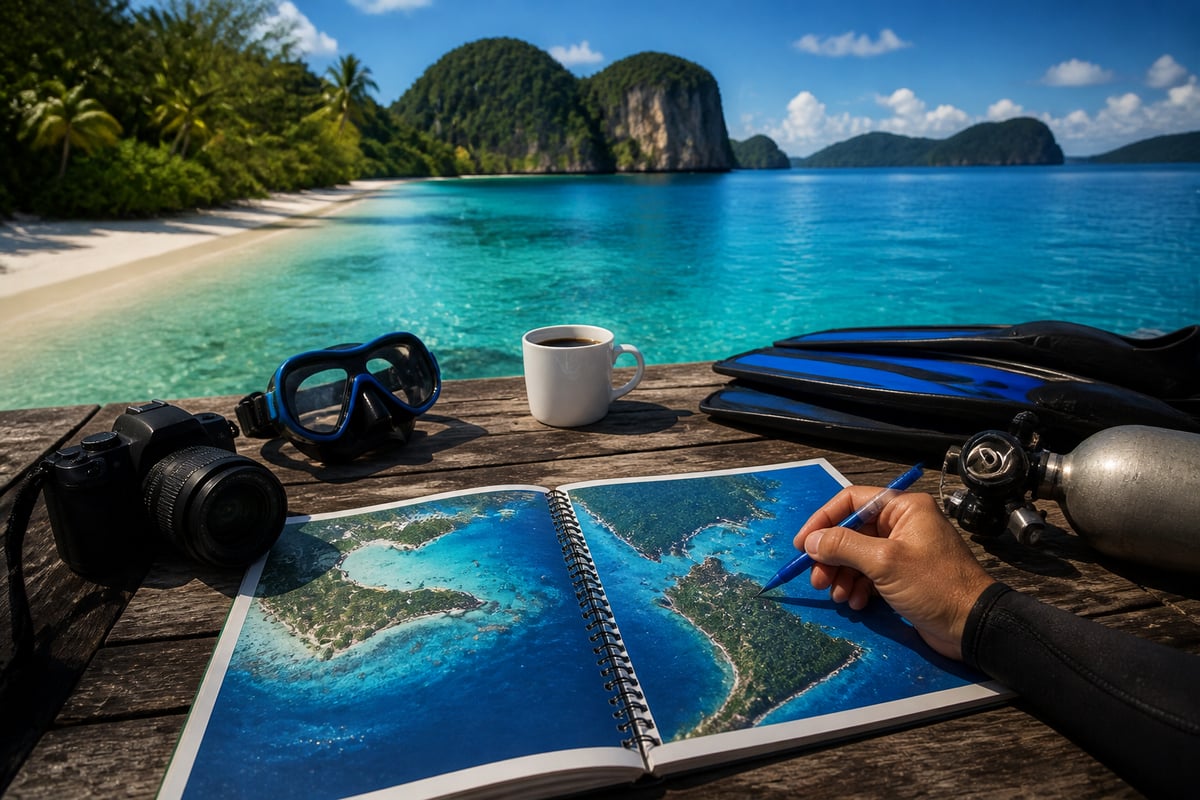
Staying close to the boat removes a lot of hassle. At The Beach House, guests stay beachfront with the Submariner Diving Center dive center in the same building, so dive boats and equipment are close at hand and there is no early-morning transport across El Nido. After a day on the water, the Cloud 9 rooftop restaurant and bar is part of the beachfront stay experience.
Pairing Your Dive Trip With Other Palawan Activities
Not every day of a Palawan holiday has to be underwater, and mixing activities helps you balance surface intervals and rest. A rest day between dive days gives your body time to off-gas, and it protects your ears, which tend to complain after several days of repeated equalizing.
Island hopping, kayaking and hiking all pair well with diving, and the same reef systems that attract divers also draw snorkelers. A relaxed island-hopping day among the limestone karst is a good way to see the scenery you pass beneath on dive days, and kayaking gives you a quiet look at the cliffs and lagoons from the surface. If you are traveling with a partner who prefers to stay on the surface, read up on the best snorkeling sites so everyone has a good day out. Keep the last day before your flight free of anything strenuous or deep. For divers planning a broader itinerary, this overview of Palawan’s best scuba diving spots is a helpful reference.
A Note on Tubbataha for Experienced Divers
Tubbataha is a remote reef reached by liveaboard, and it is generally aimed at experienced divers who are comfortable with current and deeper dives. Because it sits far from the mainland, there is no quick exit if a diver is struggling, so the expedition assumes you can manage your own air, buoyancy and ascent rate without hand-holding.
Many certified divers visiting El Nido are also considering Tubbataha as a dedicated trip. Spending a few days diving El Nido first is a sensible way to refresh your skills, check your gear and get comfortable with local conditions before committing to a liveaboard. If it has been a year or more since your last dive, a couple of day-boat outings will show you whether your weighting is right, whether your mask clears cleanly and whether your air consumption is where you remember it. Build your logbook, brush up on buoyancy and make sure your certification level matches what the expedition requires. Check the liveaboard's stated requirements before you book, and plan a buffer day before your flight home, since DAN suggests longer than 18 hours after dives requiring decompression stops.
Your next step is to pick your dates, check how many dive days fit before your flight home, and decide whether you want a day boat from a beachfront base or a longer expedition. If El Nido is on your list, you can stay at The Beach House with the dive center under the same roof, and Fun Diving trips run daily for certified divers who want to explore the reefs and walls. For help choosing sites, courses or a private charter, Book Your Diving with the Submariner Diving Center team and let them plan around your experience and the conditions.