The best scuba diving is the kind that matches your certification, your comfort in the water and the marine life you hope to see, and the Philippines has a strong claim to all three. Palawan in particular offers easy reef dives for beginners, drift and wall dives for intermediate divers, and the remote Tubbataha Reefs for experienced divers who want a serious trip.
This guide walks through how to choose a dive destination for your level, which regions are worth the flight, and how to plan a dive holiday around El Nido.
How to Choose the Best Scuba Diving for Your Level
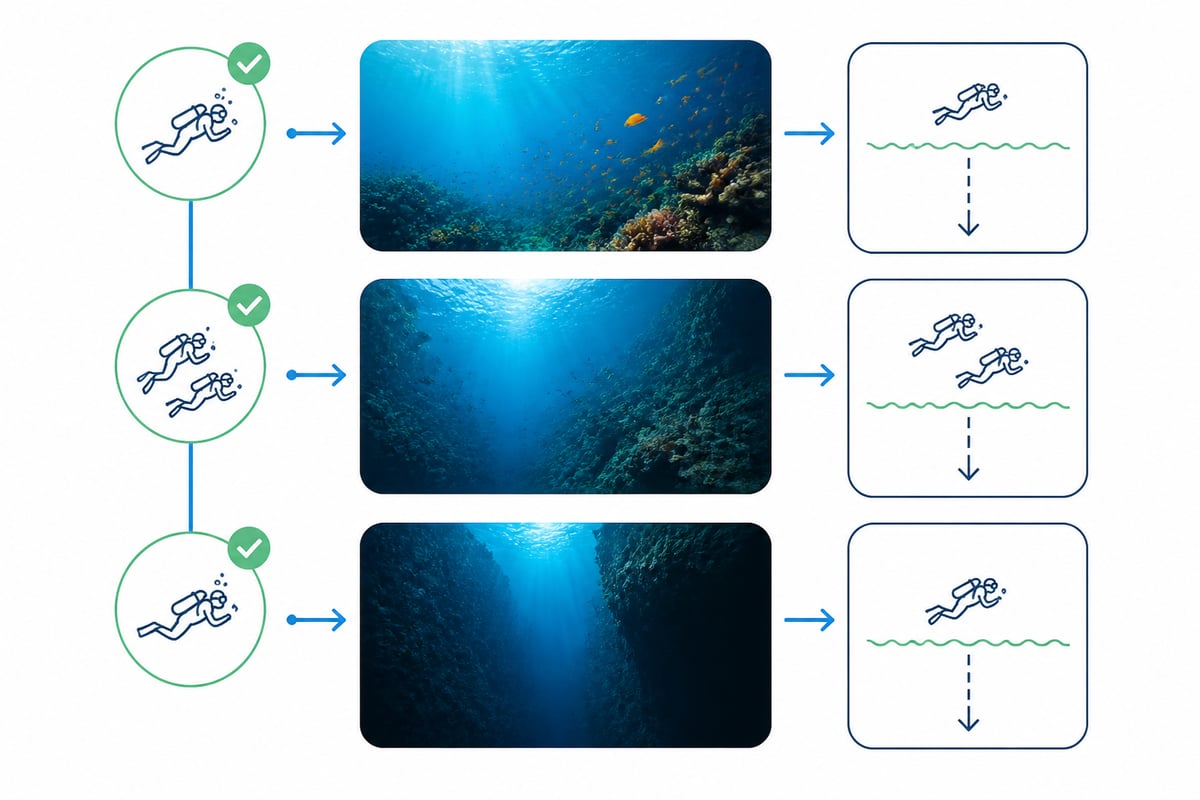
Your certification level decides which dives are open to you, so start there before you pick a destination.
PADI's depth guidance lists maximum training depths of 18 m (60 ft) for Open Water, 30 m (100 ft) for Advanced Open Water, and 40 m (130 ft) for the Deep Diver specialty, according to PADI’s guide to how deep divers can go. PADI also describes 40 m (130 ft) as the recreational limit for divers with the necessary training and experience, and notes that beginners generally stay shallower than about 18 m, per its Scuba Certification FAQs.
Here is how that translates into practical choices:
- Not yet certified: Look for a destination with calm, shallow, protected sites where you can do a Discover Scuba Diving experience or complete your Open Water course.
- Open Water certified: Choose reef slopes, shallow walls and wrecks that sit within 18 m.
- Advanced Open Water: Add deeper walls, stronger currents and wreck penetrations that stay within your training.
- Experienced divers: Consider remote, current-swept sites and liveaboard trips where conditions demand good buoyancy and air management.
Age matters too. PADI says Open Water certification requires a minimum age of 15, while Junior Open Water is available from age 10 with depth and supervision restrictions, as outlined on PADI’s diving restrictions page.
Top Scuba Diving Regions Worth the Flight
A handful of regions come up again and again in conversations among divers, each famous for something different. Treat this as a map of what each place does best rather than a ranking.
- Raja Ampat, Indonesia: Known among divers for its coral diversity and busy reef fish life.
- Komodo, Indonesia: Famous for strong currents, drift dives and big-animal potential.
- Sipadan, Malaysia: A classic for walls and drop-offs, with permit limits that require advance planning.
- Galapagos, Ecuador: Prized for its endemic species and open-ocean encounters, usually suited to experienced divers.
- Red Sea, Egypt: Easy to combine with wreck diving and warm-weather trips.
- Palawan, Philippines: A mix of reefs, wrecks, walls and a world-class marine park, all reachable within one province.
What sets Palawan apart is range. In one region you can learn to dive, spend a week on easy reef dives, explore wrecks near Coron, and then head to Tubbataha on a liveaboard. If you want to compare more options across the country, our guide to the best scuba diving in the Philippines covers the major destinations.
Which Island Is Best for Scuba Diving?
There is no single best island for scuba diving, because the answer depends on what you want to see and how experienced you are.
For beginners and holidaymakers, an island with sheltered bays and a nearby dive centre makes the first few dives far more comfortable. For certified divers chasing variety, an area with many sites within a short boat ride gives you more choice when the weather shifts. For serious divers, remote marine parks offer the most dramatic diving, though they require more planning and a bigger budget.
Palawan sits well across all three. The main island offers El Nido and the Bacuit Archipelago in the north and Coron's wrecks to the northeast, while the Sulu Sea holds Tubbataha for those ready for a dedicated trip. For a wider look at where divers go, see our overview of top scuba diving destinations.
The Best Scuba Diving in El Nido, Palawan
El Nido is one of the best bases in the Philippines for a mixed-level dive holiday, thanks to the limestone islands and reefs scattered around Bacuit Bay and beyond.
What makes it work for visiting divers:
- Variety within reach: Reefs, walls, small wrecks and rock formations sit within a short boat ride of town.
- Sites for every level: Calmer spots suit beginners and refreshers, while deeper or more exposed sites suit advanced divers.
- Flexible planning: Because conditions change with wind and sea state, the dive plan is best chosen day by day rather than fixed far in advance.
That last point matters. Reputable operators in El Nido pick sites on the morning based on weather, current and the group's experience. If you want certainty about a specific site, ask your operator what is realistic for the season. Nobody can guarantee a particular animal or a particular site, so go in with an open mind and you will usually be rewarded with something memorable.
For a closer look at specific sites, our guides to the best scuba diving spots and the best dive places in the area go into more detail.
Diving From Your Doorstep at The Beach House
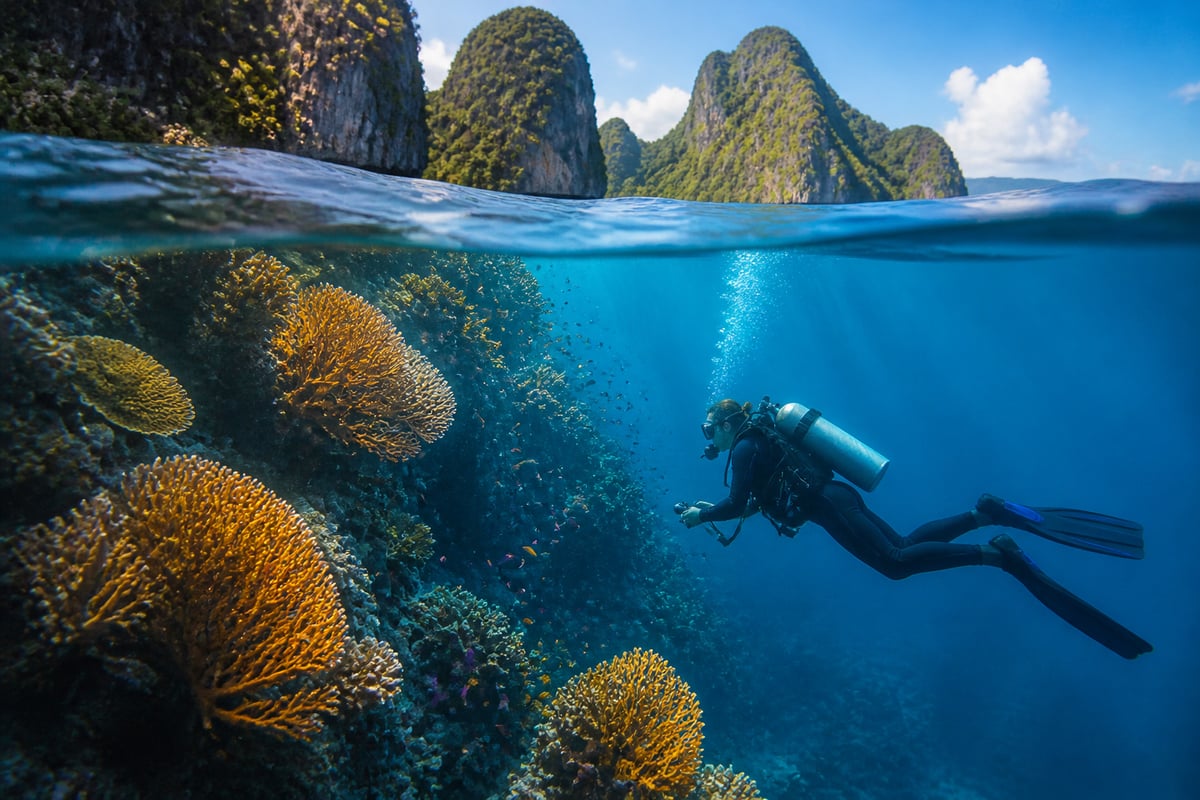
The easiest dive holiday setup is a stay where the dive centre is in the same building as your room, and in El Nido that is exactly what The Beach House offers.
Submariner Diving Center operates from The Beach House, a beachfront property, so boats and equipment are close at hand. There is no early-morning transport across El Nido to reach the dive shop, which makes a real difference when you are doing two or three dives a day. Between dives, you can walk to the rooftop Cloud 9 restaurant and bar for food and a drink with a view of the bay.
For holidaymakers, this means you can try a first dive without turning the whole day into logistics. For certified divers, it means more time on the water and less time in transit.
Fun Diving for Certified Divers in El Nido
If you already hold a certification, daily boat dives are the simplest way to see the reefs and walls around El Nido.
Submariner Diving Center runs Fun Diving, with daily boat dives to El Nido's reefs, walls and marine life for certified divers. Sites are selected by experience level, interests and the day's conditions, so divers with very different logbooks are not put on the same plan by default. The team has over 15 years of diving experience in El Nido and professional PADI instructors with local knowledge and modern safety equipment.
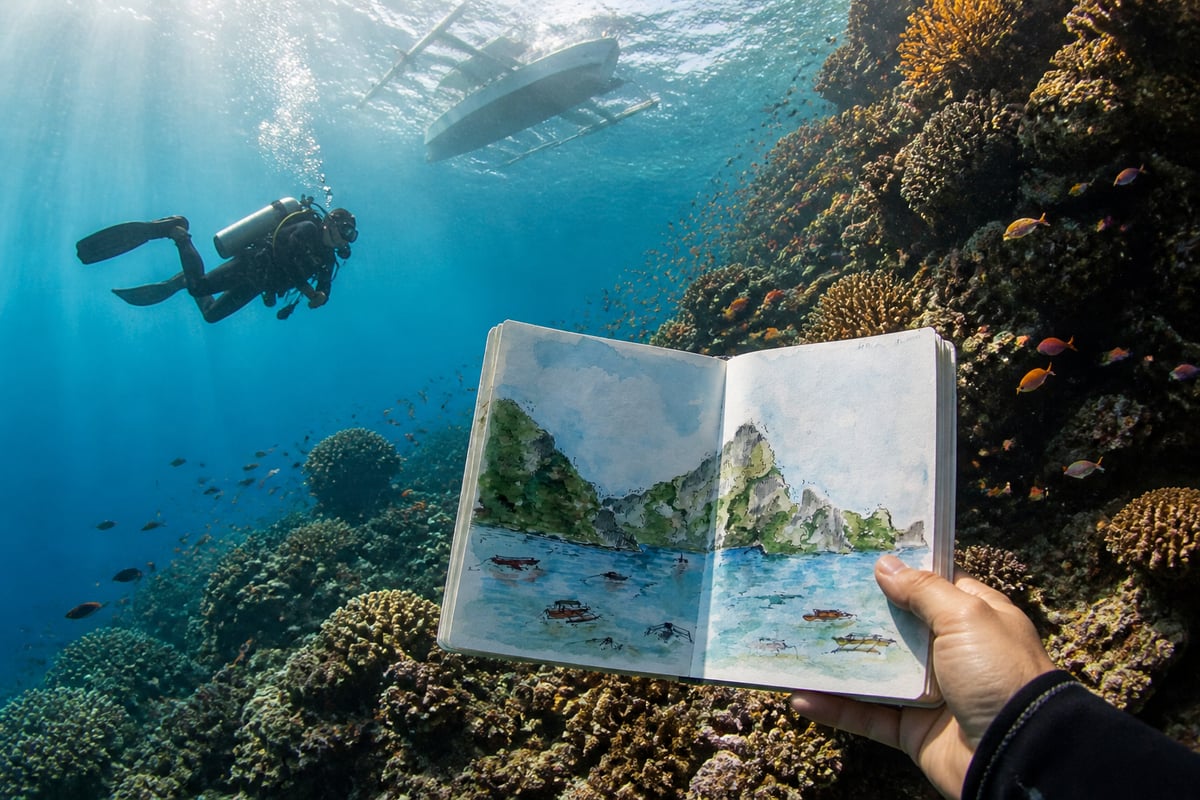
For travelers who want more flexibility, private VIP charters let you shape the day around your group, with dive sites chosen daily to suit weather and sea conditions. If you are weighing options, our guide to scuba diving charters explains how private trips work in general.
Is Scuba Diving Healthy?
Scuba diving is generally considered a low-impact activity that many people enjoy safely, but it does require basic fitness and a medical check for certain conditions.
Divers breathe compressed air under pressure, so conditions affecting the lungs, heart, ears or sinuses can matter. Reputable dive centres ask you to complete a medical questionnaire before any course or dive, and some answers may mean you need a doctor's sign-off first. If you have asthma, heart issues, recent surgery or you are unsure, speak to your doctor before booking.
Swimming ability matters as well. For the Junior Open Water course, PADI requires participants to swim 200 m/yards without aids, or 300 m/yards with mask, fins and snorkel, and to float or tread water for 10 minutes, as listed on its diving restrictions page. Adult courses have comparable water-skills checks.
Basic habits keep the sport healthy: stay hydrated, avoid alcohol before diving, rest between dives, and never fly too soon after your last dive. Your instructor will give you the exact surface-interval and no-fly guidance for your plan.
What Is the 120 Rule in Scuba Diving?
The 120 rule is a quick planning guideline some divers use to keep dive depth and time within comfortable limits, though it is not a substitute for a dive computer or your training.
The idea is that your depth in feet plus your bottom time in minutes should not exceed 120. In practice, a dive to 60 feet would be planned for about 60 minutes, while a dive to 80 feet would be around 40 minutes. It is a rough sanity check, and dive tables or a computer will give you more precise limits.
Always follow your dive computer, your guide's briefing and the limits set by your certification. If you are unsure how a rule applies to your dive, ask your instructor before you get in the water.
What Are the Big 5 in Diving?
The big 5 in diving is a loose, informal list of large marine animals that many divers hope to see, and the exact line-up varies from one diver to the next.
Divers often mention sharks, rays, turtles, large fish and sometimes whales or dolphins when they talk about big-animal encounters. There is no official PADI list, so treat it as a conversation starter rather than a checklist. Sightings depend on season, site, luck and conditions, and no operator can promise a specific animal on a specific day.
Planning a Dedicated Palawan Dive Trip
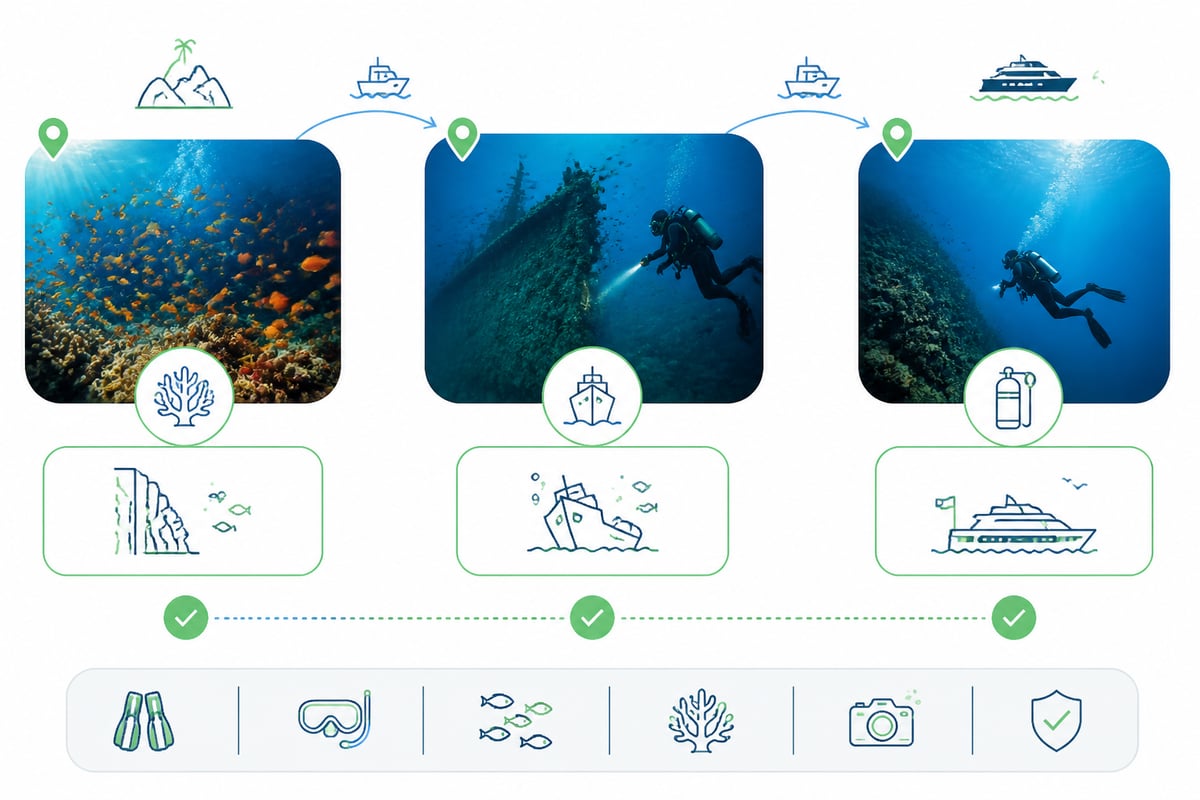
A dedicated Palawan trip works best when you combine bases, and the combination depends on how many days you have and what you want to dive.
- El Nido (3 to 5 days): Reefs, walls and varied sites with easy logistics, especially if you stay at the dive centre.
- Coron (2 to 4 days): Known for its wreck diving.
- Tubbataha (liveaboard, several days): A remote marine park reached by liveaboard, best for experienced divers.
Tubbataha has a limited season and strict access rules, so book early and confirm dates with your liveaboard operator.
Tips for Getting the Most From Your Dives
A few habits make any dive trip smoother, wherever you go.
- Dive in the morning when you can: Seas are often calmer and you have the rest of the day to recover.
- Be honest about your experience: Tell the guide how many dives you have logged and how recently. Good operators choose sites accordingly.
- Take a refresher if it has been a while: A short refresher dive after a long break is a sensible way to rebuild confidence.
- Work on your buoyancy: Good buoyancy protects the reef, saves air and improves your photos.
- Stay flexible: Weather and sea conditions shape the dive plan, so a good trip leaves room for changes.
FAQ
When is the best time to go scuba diving in El Nido?
Dry season is generally when diving conditions are most comfortable in El Nido, with calmer seas and better surface conditions. Diving is possible outside those months, but wind and swell can change which sites are suitable. Ask your dive operator what to expect for your travel dates.
Do I need to be certified to try scuba diving in El Nido?
No. If you are not certified, you can usually try a supervised introductory experience or start an Open Water course with a PADI instructor. You will need to complete a medical questionnaire and meet the water skills requirements for the program you choose.
Can I dive in El Nido if I only have a few logged dives?
Yes, many sites suit newer divers, and a good operator will choose sites that match your experience. Be honest about your logged dives and how recently you dived so the plan fits your comfort level.
Start by deciding your dates and your certification level, then message a dive team that can match sites to your experience. At Submariner Diving Center, you can choose between daily Fun Diving trips, PADI courses and private charters, all run from the same beachfront building as The Beach House, so your dive holiday stays simple. Contact the team to Book Your Diving and plan your days on the water in El Nido.