The cheapest scuba diving destinations are generally places in Southeast Asia, where Koh Tao in Thailand and parts of the Philippines pair low day rates with good reefs. Your real cost depends less on the headline price of a dive and more on how you travel, what you rent, how many dives you book together and which season you pick.
I work as a diving guide in El Nido, so this is written from a Palawan point of view. I'll cover what drives costs, give you real price ranges from Thailand as a benchmark, and show where Palawan fits for holidaymakers and certified divers planning a dedicated trip.
What Makes a Dive Destination Cheap?
A dive destination is cheap when the total trip cost stays low, not just the price of one dive. Flights, rooms, food, boat fees, gear rental and park or conservation fees all add up, and a destination with a low dive price can still be expensive once you tally them.
These are the factors that move the total the most:
- Local cost of living. Meals, rooms and transport in Southeast Asia cost far less than in the Caribbean or the Red Sea resorts.
- Dive day structure. Destinations with short boat rides and shore access mean less fuel and less time, which keeps day rates down.
- Package bundling. Booking several days of diving together usually brings the per-dive price down. Check with the dive center directly, since discounts vary.
- Season. Shoulder months often mean fewer crowds and sometimes softer pricing on rooms.
- Gear ownership. Renting a full set every day adds up over a week. Owning a mask and computer, and renting the rest, often works out cheaper.
Cheap Scuba Diving Destinations in Southeast Asia
The most budget-friendly diving in the world sits in Southeast Asia, with Thailand and the Philippines leading the pack. Thailand publishes clear price ranges, so it makes a useful benchmark.
According to Dive One Club, a two-dive local trip on Koh Tao runs about 1,500 to 2,500 THB ($45 to $70) for the 2024 to 2025 season. The same guide lists a Phuket two-dive Racha trip at 2,500 to 4,000 THB ($70 to $115), which shows how much island choice matters even within one country.
Here is how the two compare on the figures that guide gives:
| Item (2024–2025 season) | Koh Tao | Phuket |
|---|---|---|
| Two-dive local trip | 1,500–2,500 THB ($45–70) | 2,500–4,000 THB ($70–115) |
| Open Water certification | 8,500–12,000 THB ($250–350) | Not listed in the sources used here |
Koh Tao is described in that guide as cheaper than Phuket for certification and diving. The guide also estimates a one-week Koh Tao itinerary with an Open Water course, four fun dives, a Sail Rock trip and insurance at about 18,200 THB ($520).
The Philippines sits in the same budget bracket, and Palawan offers something Koh Tao can't: limestone karst, lagoons and deep blue water in one region. If you want to see how the island stacks up against other big names, the overview of Palawan scuba diving in the Philippines is a good place to start.
Where Is the Cheapest Place in the World to Scuba Dive?
There is no single cheapest place, but Koh Tao in Thailand is consistently among the lowest-cost spots for both diving and certification. Based on the published 2024 to 2025 ranges above, a two-dive day there costs noticeably less than a comparable Phuket day.
Prices shift by year, season and operator, so treat any figure as a starting point and confirm with the dive center before you book. Cheapest on paper also doesn't mean best for you. A destination with a cheap day rate but a long, expensive journey to reach it may cost more overall than a closer, slightly pricier one.
For certified divers weighing several options, these roundups of great scuba diving destinations and top scuba diving destinations help you compare regions before you commit to flights.
How Much Is a Full Set of Scuba Diving Gear?
A full set of scuba gear to buy new can cost a considerable amount, depending on the brand, the regulator and whether you include a dive computer and wetsuit. Renting is usually much cheaper for a short trip.
Dive One Club lists full-set equipment rental on Koh Tao at 500 to 800 THB ($15 to $23) per day for the 2024 to 2025 season. For a one-week trip, rental often costs less than buying, so most holiday divers rent.
A sensible middle path for budget divers:
- Buy your own mask and snorkel. A well-fitting mask is the single biggest comfort upgrade, and it's inexpensive.
- Consider a dive computer if you dive often. It's the item most worth owning for safety and logging.
- Rent the regulator, BCD and tanks locally, where the dive center services them.
- Check the fit before you leave the shop. The CDC advises divers to make sure scuba gear is properly fitted and maintained.
Budget Diving in Palawan and El Nido
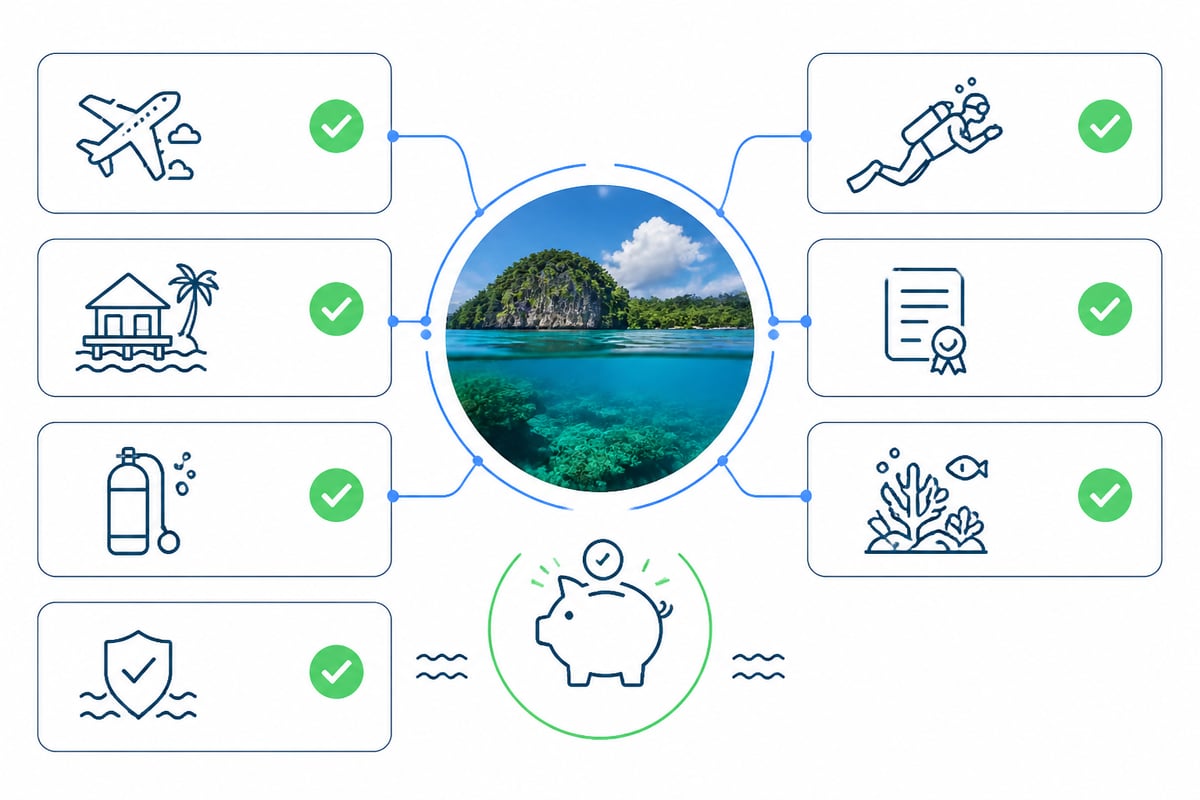
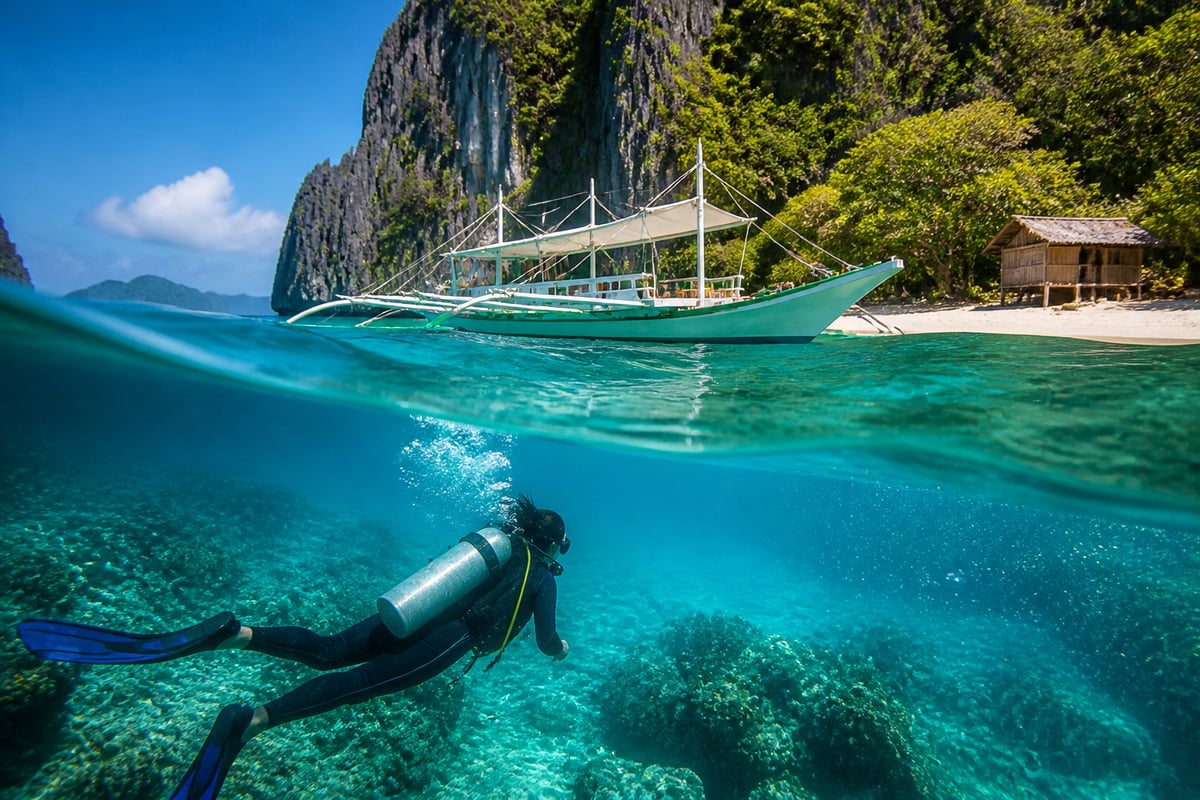
Palawan is a strong value choice because a single trip combines reef, wall and open-water diving with low local costs for food, rooms and transport. El Nido works especially well for holidaymakers who want to add a few dives to a beach stay without a dedicated dive-trip budget.
A few ways to keep an El Nido dive holiday affordable:
- Stay where you dive. At The Beach House, our beachfront accommodation, the dive center is in the same building. That means no early-morning transport across town and no extra transfer fees. Guests can also wind down at the Cloud 9 rooftop restaurant and bar afterwards.
- Dive with a small group or split a private charter. Flexible private VIP charters let you choose the day's sites based on weather and sea conditions, and sharing the cost with friends or family brings the per-person price down.
- Let the center pick the sites. At Submariner Diving Center we select sites by your experience level, interests and the day's conditions, so you aren't paying for a long run to a site that's blown out.
- Ask about dive packages. Multi-day bookings are often better value than paying dive by dive. Check the dive packages and booking hub for current options rather than relying on a quoted price in an article.
We've been diving El Nido for over 15 years, and with professional PADI instructors and a large base of five-star reviews behind us, we know which choices actually save money and which only look cheap. If you're comparing local options, the guide to scuba diving in El Nido covers what a typical dive day looks like.
Is It Cheaper to Get Certified at Home or on Holiday?
For most travelers, getting certified abroad is the cheaper route, especially when you can combine it with a vacation you were taking anyway. Koh Tao's Open Water price of 8,500 to 12,000 THB ($250 to $350) is a good example of how affordable certification can be in Southeast Asia.
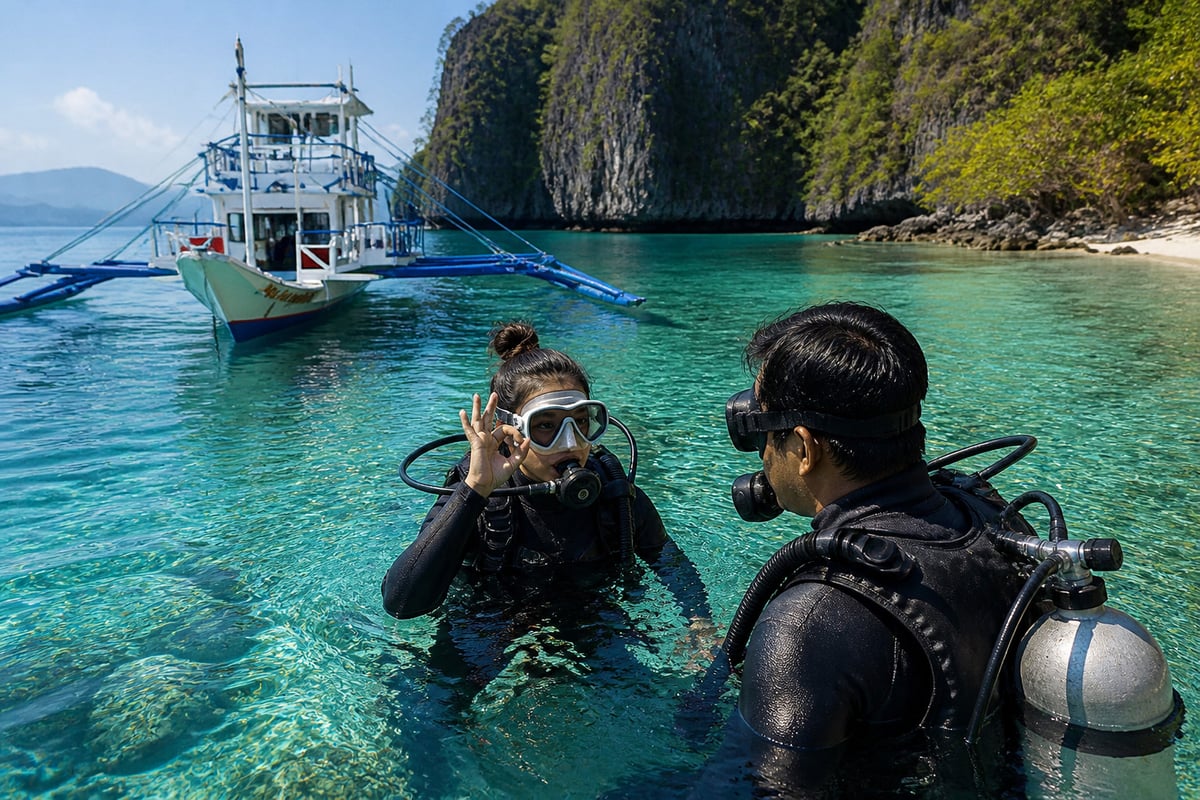
If you're staying in El Nido and have never dived, you have two sensible starting points. A one-day experience is the lowest commitment, and the PADI Discover Scuba Diving program lets you try it with an instructor beside you. If you know you'll want to keep diving, getting your full certification on the same trip saves you repeating a course later.
Our Open Water Diver Course is built for exactly this, with experienced instructors and small class sizes, so you can learn properly without it dominating your whole holiday.
Where to Dive in January
January is a good month to dive in the Philippines, including Palawan, because it falls in the drier part of the year when sea conditions are generally calmer. Conditions still change from day to day, and no one can promise a specific visibility or marine-life sighting.
That's why flexible scheduling matters. Dive sites in El Nido are chosen daily to suit weather and sea state, so your day on the water follows what's actually working rather than a fixed plan. If you need a fixed schedule regardless of conditions, diving is not the right activity to lock in advance. Build a spare day into your itinerary instead.
For other months and regions, best scuba diving spots is a handy starting list.
Tubbataha for Experienced Divers on a Budget
Tubbataha Reefs is not a cheap day trip, but experienced divers often fold it into a Palawan trip because the diving is exceptional. It's reached by liveaboard during a limited season, so plan and budget for it separately from your El Nido days.
A practical way to manage cost is to spend your first days diving El Nido's more accessible sites, which also lets you shake off rust before a more demanding trip.
Cheap Diving Without Cutting Corners on Safety
Saving money should never mean saving on safety, and a few unglamorous choices protect you far better than a cheaper day rate would. The CDC advises travelers to research local water conditions, currents and rules, and to follow local instructors' and officials' guidance before diving.
Here's what I'd never trade away for a lower price:
- A reputable operator with qualified instructors and well-maintained equipment. Hong Kong's travel health service also stresses choosing reputable operators and checking your equipment, plus diving with a buddy.
- Surface intervals and flying rules. Don't schedule a flight too soon after your last dive. DAN’s trip-planning guidance includes suggested minimum intervals before flying.
- Travel insurance that covers diving. It's a small cost compared with an emergency abroad.
- The willingness to cancel a dive when conditions look wrong.
FAQ
What is the deepest one can scuba dive?
Recreational divers using standard air are generally limited to about 40 meters (130 feet), and many certifications set shallower limits. Beyond that, technical training and special gas mixes are needed, and your instructor or dive center will set the limit that fits your certification.
How can I make my dive trip cheaper without lowering quality?
Book several dive days together, bring your own mask and computer, split private charters with friends, and stay close to the dive center to avoid transfers. Traveling in a shoulder season can also lower room rates in some places.
Do I need to be certified to dive on a budget trip?
No. Beginners can try a guided introductory dive with an instructor, and many holidaymakers then decide whether to continue to full certification. This keeps your first step affordable while you find out if you enjoy it.
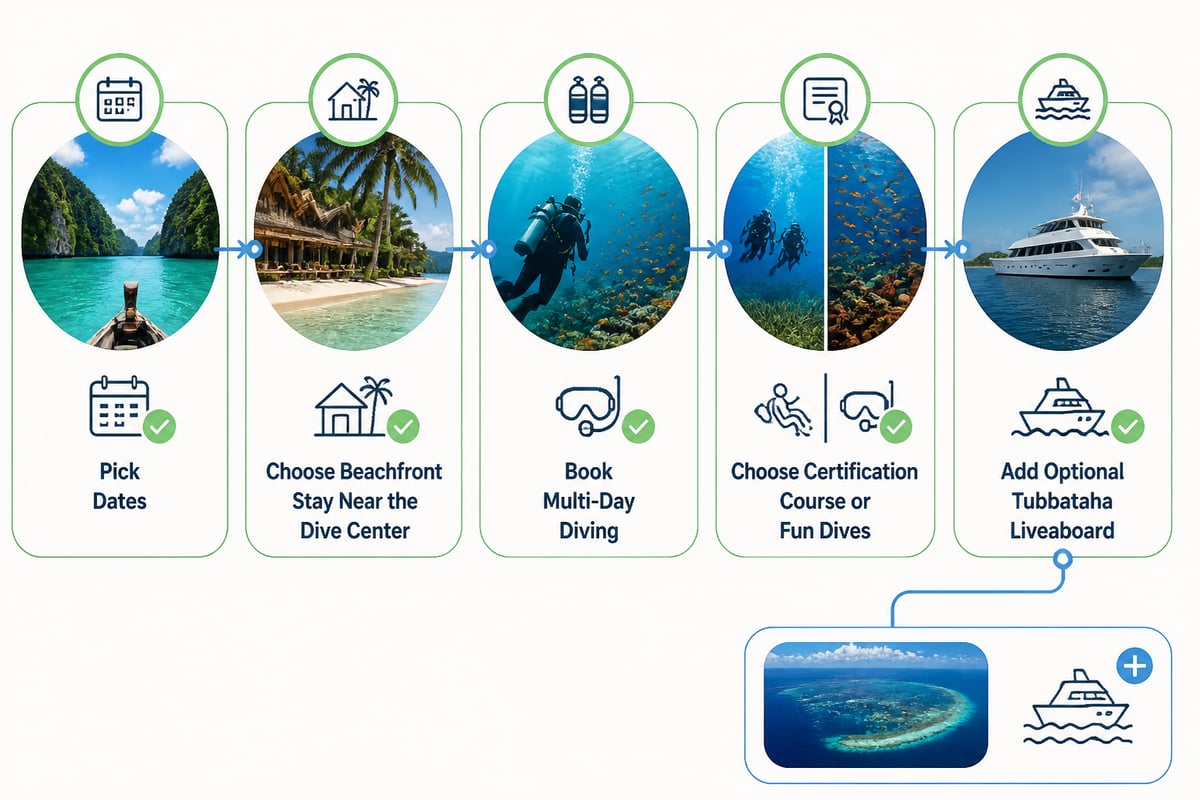
Start by deciding how many dive days you want and whether you'll try a first dive or complete a certification, then match your dates to a beachfront stay close to the water. At Submariner Diving Center, our PADI instructors can plan the days around your experience and the day's conditions, and if you're new to diving you can begin with the Open Water Diver Course. When your dates are ready, reach out and Book Your Diving with the team who've been exploring El Nido's reefs for over 15 years.