Choosing your next underwater adventure from the best scuba diving destinations around the world can feel overwhelming. With thousands of dive sites spanning every ocean, each offering unique marine ecosystems, dramatic topography, and distinct seasonal windows, the decision requires more than just picking a pretty postcard. Whether you're chasing whale sharks in crystal-clear tropical waters, exploring historic wrecks in temperate seas, or drifting along walls teeming with pelagic action, understanding what makes a destination truly exceptional will transform your dive travel experience from good to unforgettable.
What Defines the Best Scuba Diving Destinations
Not all dive destinations are created equal, and the "best" spot depends entirely on your priorities as a diver. Some locations excel at macro photography opportunities, while others deliver heart-pounding drift dives with schools of hammerheads overhead.
Key Factors That Matter Most
When evaluating the best scuba diving destinations, several core elements separate world-class sites from mediocre ones:
- Marine biodiversity: Healthy reef systems with abundant fish life, corals, and unique species
- Visibility: Clear water that allows you to fully appreciate the underwater landscape
- Accessibility: Reasonable travel logistics, reliable dive operators, and quality infrastructure
- Safety standards: Professional dive centers, well-maintained equipment, and adherence to international safety protocols
- Seasonal considerations: Understanding when conditions peak for your target species or diving style
Water temperature also plays a crucial role in planning. Tropical destinations typically range from 26-30°C year-round, while temperate waters may require drysuits and offer completely different marine encounters.
The condition of coral reefs has become increasingly important for conscious divers who want to support healthy ecosystems. Many of the best scuba diving destinations now actively participate in reef restoration and conservation programs, giving divers the chance to witness positive environmental stewardship firsthand.
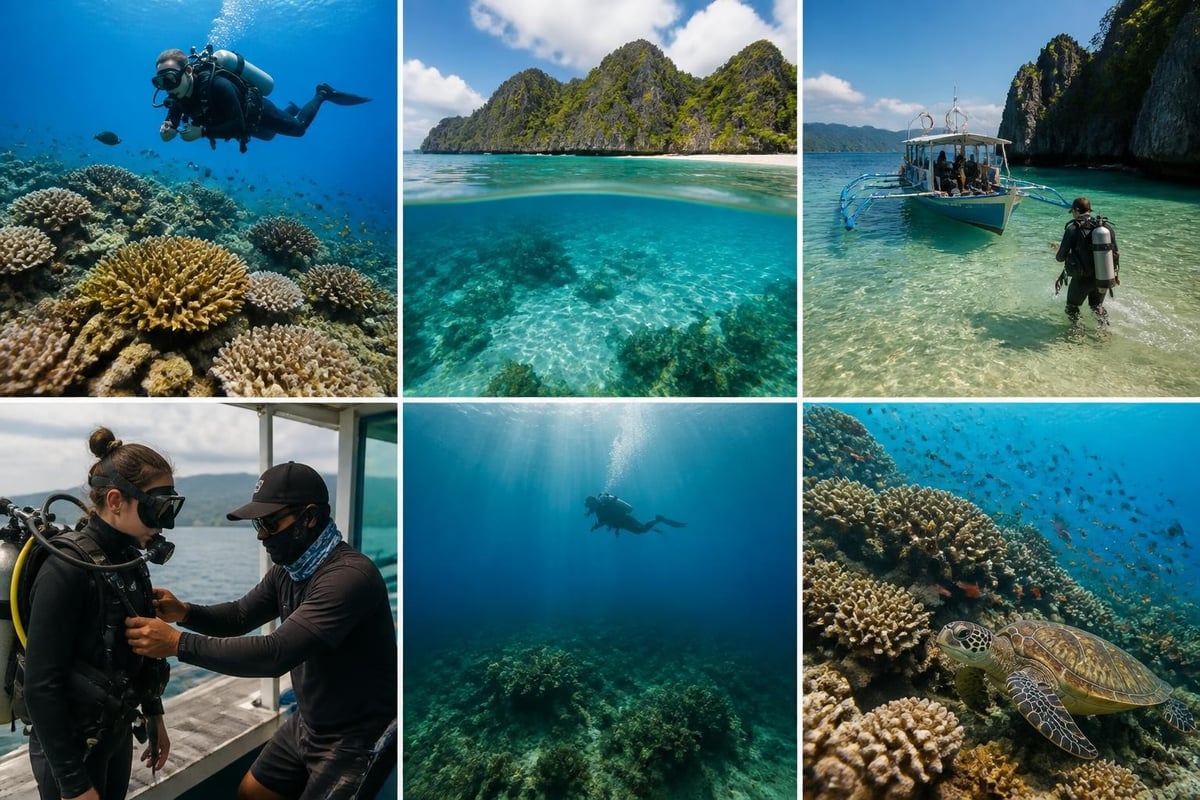
Top Tropical Diving Destinations for Coral Reef Enthusiasts
Tropical waters host the planet's most vibrant coral reef ecosystems, and several destinations consistently rank among the best scuba diving destinations for reef diversity and color.
The Coral Triangle: Philippines and Indonesia
The Coral Triangle represents the global epicenter of marine biodiversity. The Philippines alone contains over 7,600 islands, many surrounded by pristine reefs that host more species per square meter than nearly anywhere else on Earth.
El Nido in Palawan stands out as one of the best scuba diving destinations in the Philippines, combining dramatic limestone karst topography with healthy hard coral gardens, reef walls, and seasonal encounters with manta rays and whale sharks. The region's protected marine parks maintain thriving ecosystems with visibility often exceeding 20 meters.
| Coral Triangle Highlights | Best Season | Signature Marine Life |
|---|---|---|
| El Nido, Palawan | November – May | Turtles, reef sharks, mantis shrimp, nudibranchs |
| Raja Ampat, Indonesia | October – April | Manta rays, wobbegongs, pygmy seahorses |
| Komodo, Indonesia | April – November | Manta rays, reef sharks, trevally schools |
Indonesia's Raja Ampat archipelago regularly appears on every list of the best scuba diving destinations for good reason. With more than 1,500 species of reef fish recorded in its waters, the density of marine life creates an almost overwhelming sensory experience for divers.
Caribbean Classics: Bonaire and Cozumel
The Caribbean offers some of the most accessible tropical diving for North American and European travelers. Bonaire’s shore diving culture makes it unique among the best scuba diving destinations, allowing divers complete freedom to explore dozens of sites at their own pace.
Cozumel's drift dives deliver exhilarating rides along vertical walls decorated with sponges, sea fans, and frequent turtle sightings. The current-swept reefs stay remarkably healthy due to constant nutrient flow, and the island's established dive infrastructure makes trip planning straightforward.
Epic Pelagic Encounters at Remote Dive Destinations
For divers who prioritize big animal encounters over coral gardens, certain destinations consistently deliver world-class pelagic action. These locations require more planning and often higher budgets, but the payoff can be extraordinary.
Cocos Island, Costa Rica
Cocos Island sits 340 miles off Costa Rica's Pacific coast, accessible only by liveaboard. This isolation protects one of the ocean's great pelagic gathering spots, where hammerhead sharks school in the hundreds, whale sharks cruise through blue water, and massive tuna hunt in coordinated packs.
The site appears on virtually every compilation of best global dive experiences for good reason. Advanced certification is essential, as dives typically involve strong currents and deep profiles.
Socorro (Revillagigedo) Islands, Mexico
Socorro delivers a completely different pelagic experience centered on giant Pacific manta rays with wingspans exceeding six meters. These curious creatures actively interact with divers, often spending entire dives in close proximity.
Between November and May, humpback whales migrate through the area, and their songs echo through the water column during nearly every dive. Dolphin pods, silky sharks, and schooling hammerheads round out the cast of characters.
- Liveaboard required (7-10 day trips)
- Advanced certification recommended
- Best conditions: November through May
- Water temperature: 22-27°C
Galápagos Islands, Ecuador
The Galápagos offers encounters found nowhere else on Earth. Marine iguanas dive to graze on algae, Galápagos sea lions playfully interact with divers, and schools of scalloped hammerheads gather at cleaning stations.
Darwin's Arch (until its collapse in 2021, now Darwin's Pillars) remains one of the best scuba diving destinations for whale shark encounters during the June to November season. The cold, nutrient-rich currents create challenging conditions but support an astonishing biomass of marine life.
Wreck Diving Destinations for History Enthusiasts
Historic shipwrecks transform the best scuba diving destinations into underwater museums where marine life and human history intersect. These sites offer unique photography opportunities and a different type of underwater exploration.
Truk Lagoon, Micronesia
Truk (Chuuk) Lagoon contains the world's greatest concentration of diveable WWII wrecks. During Operation Hailstone in February 1944, American forces sank over 60 Japanese ships and aircraft in this protected lagoon, creating an underwater memorial that has evolved into artificial reef habitat over eight decades.
Cargo holds still contain wartime supplies: ammunition, sake bottles, medical supplies, and even motorcycles. Soft corals now blanket the superstructures, and the wrecks shelter dense populations of reef fish.
Red Sea Wrecks: Egypt and Sudan
The Red Sea hosts exceptional wreck diving alongside world-class coral reefs. The SS Thistlegorm, a British armed freighter sunk by German bombers in 1941, ranks among the best scuba diving destinations for wreck enthusiasts worldwide.
Sudan's coast offers even more remote wreck experiences, including the Umbria, an Italian ship scuttled in 1940 with its cargo of ammunition, vehicles, and wine bottles intact.
Muck Diving and Macro Photography Havens
The best scuba diving destinations aren't always colorful coral reefs. Muck diving sites feature sandy or silty bottoms that host extraordinary macro subjects and bizarre critters found nowhere else.
Lembeh Strait, Indonesia
Lembeh Strait pioneered muck diving and remains the undisputed champion. The volcanic sand slopes between Lembeh Island and mainland Sulawesi host an astonishing variety of unusual species:
- Mimic octopus performing fish and lionfish impersonations
- Flamboyant cuttlefish with psychedelic color displays
- Hairy frogfish in every imaginable color variation
- Multiple pygmy seahorse species
- Blue-ring octopus hunting at dusk
Photographers travel from around the world specifically for Lembeh's macro opportunities. Most resorts cater to photographers with camera rooms, editing stations, and guides trained to spot even the most cryptic critters.
Anilao, Philippines
Just two hours south of Manila, Anilao offers convenient access to excellent muck diving combined with healthy coral reefs. The area pioneered underwater photography in the Philippines and maintains that tradition with numerous photo-friendly dive resorts.
Seasonal highlights include thresher sharks at nearby Malapascua and whale shark encounters in Donsol, making Anilao an excellent base for exploring multiple dive styles in one trip.
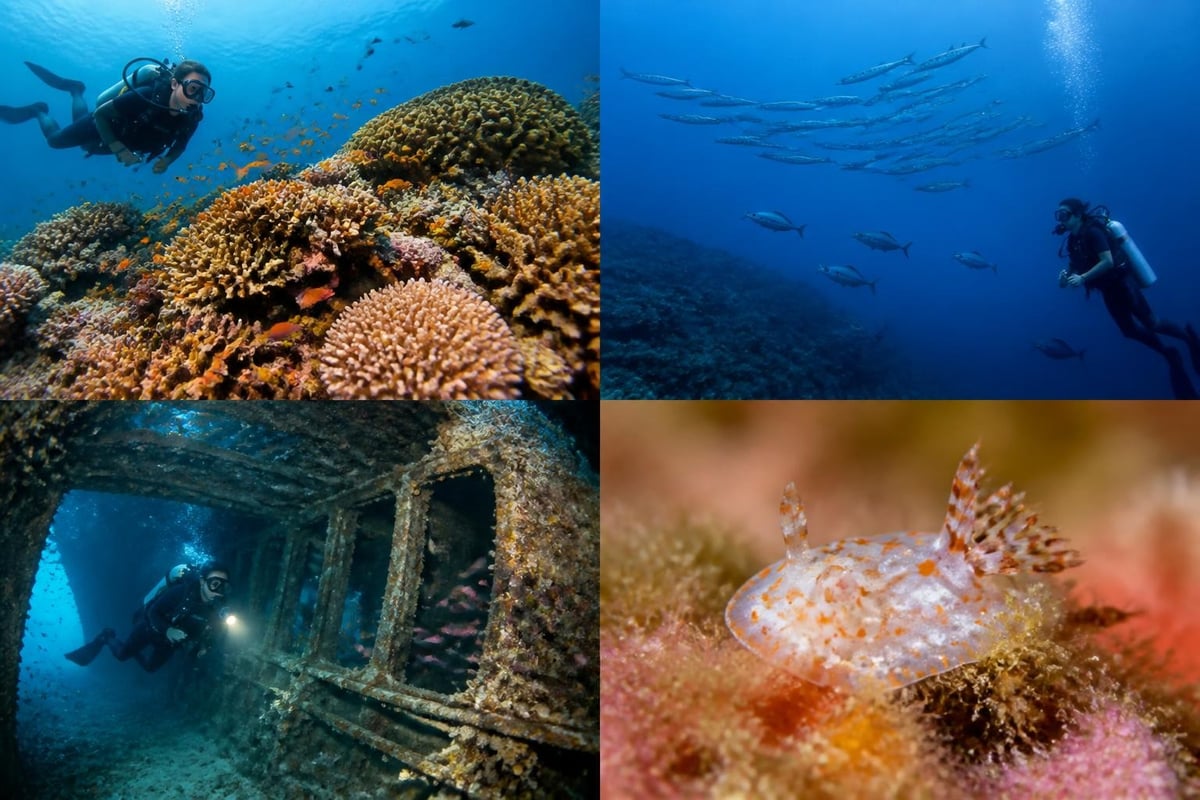
Temperate Water Diving Destinations Worth the Chill
Cold-water diving opens access to marine ecosystems impossible in tropical seas. The best scuba diving destinations in temperate zones reward those willing to don thicker exposure protection with unique encounters and often superior visibility.
Kelp Forests of California
Giant kelp forests along California's coast create three-dimensional underwater landscapes unlike anything in tropical waters. Kelp fronds soar 30 meters from the seafloor to the surface, swaying in the surge while sea lions weave through the stalks and garibaldi guard their territories.
Visibility frequently exceeds 20 meters during calm periods, and the dense marine life includes harbor seals, sevengill sharks, and colorful invertebrates covering every rocky surface.
British Columbia, Canada
British Columbia's cold, nutrient-rich waters support exceptional marine biodiversity. Pacific octopus, the world's largest octopus species, prowl the rocky reefs alongside wolf eels, lingcod, and vast aggregations of rockfish.
The region's numerous shipwrecks add historical interest, while seasonal encounters with sixgill sharks and sea lions keep dive logs interesting year-round.
Essential Planning Considerations for International Dive Travel
Choosing among the best scuba diving destinations requires more than just picking appealing marine life. Practical logistics significantly impact your experience and deserve careful attention during the planning phase.
Health and Safety Preparation
Divers Alert Network provides comprehensive medical guidance for international dive travel. Beyond standard travel insurance, dive-specific coverage becomes essential when visiting remote destinations where hyperbaric chambers may be hours away by boat or plane.
Pre-trip medical evaluation makes sense for divers with any health conditions or those returning to diving after an extended break. Many of the best scuba diving destinations involve multiple daily dives at varying depths, placing greater physical demands than typical recreational diving.
Certification and Experience Requirements
Different destinations suit different experience levels. While some of the best scuba diving destinations welcome newly certified divers with shallow reef dives in calm conditions, others demand advanced skills:
| Experience Level | Suitable Destinations | Typical Conditions |
|---|---|---|
| Open Water (beginner) | Bonaire, Cozumel, El Nido | Shore dives, shallow reefs, mild current |
| Advanced | Cocos Island, Galápagos | Strong current, deep dives, rough seas |
| Technical | Truk Lagoon deep wrecks | Penetration, decompression required |
If your skills feel rusty after time away from diving, a refresher before tackling demanding sites ensures both safety and enjoyment.
Seasonal Timing and Weather Windows
Nearly every destination has optimal and off-peak seasons driven by weather patterns, marine life migrations, and visibility cycles. Booking during shoulder seasons can offer significant cost savings, though you may sacrifice ideal conditions.
Whale shark seasons, manta ray aggregations, and sardine runs occur on predictable schedules. Research seasonal patterns for your target destination and marine life to maximize encounter probability.
Why El Nido Ranks Among the Best Scuba Diving Destinations
While discussing the best scuba diving destinations globally, El Nido in Palawan deserves particular attention for combining accessible diving with exceptional marine diversity in one of Southeast Asia's most stunning natural settings.
The limestone karst formations that make El Nido famous above water extend below the surface, creating dramatic walls, swim-throughs, and pinnacles colonized by healthy hard corals. Protected marine parks maintain thriving ecosystems where turtles, blacktip reef sharks, and schools of jacks are regular sightings rather than rare events.
Visibility typically ranges from 15-25 meters during the dry season (November through May), and water temperatures hold steady at 27-29°C year-round, requiring only a 3mm wetsuit or less. The combination of comfortable conditions, vibrant reefs, and diverse marine life makes El Nido accessible to newly certified divers while still offering enough variety to keep experienced divers engaged for a week or more.
For divers seeking convenience alongside quality diving, combining accommodation with dive access streamlines the entire experience. The Beach House puts you beachfront in the heart of El Nido, where you can dive from your doorstep with the dive boat departing directly from the beach. Having accommodation, diving, and dining in one location eliminates the logistics that can complicate dive holidays, letting you focus entirely on the underwater experiences.
The region's diversity extends beyond coral reefs. Seasonal pelagic encounters include manta rays at cleaning stations and whale sharks passing through between March and June. Macro enthusiasts find plenty of nudibranchs, mantis shrimp, and octopus on night dives, while underwater photographers appreciate the consistent conditions and varied subjects.
Combining Multiple Destinations for Ultimate Dive Trips
Advanced dive travelers often combine several destinations in one extended trip, especially when visiting regions like the Coral Triangle or Caribbean where multiple world-class sites sit relatively close together.
Island-Hopping Strategies
The Philippines makes multi-destination dive trips particularly practical. Internal flights connect major diving hubs, allowing you to experience El Nido's reefs, Tubbataha's liveaboard adventure, and Malapascua's thresher sharks in a single two-week trip.
Indonesia offers similar opportunities, with Komodo, Bali, and Raja Ampat each providing distinct diving experiences. Budget extra days between destinations to account for potential flight delays and to avoid diving close to flights.
Liveaboard Versus Land-Based Diving
Liveaboards access the best scuba diving destinations that lie beyond day-boat range, offering 4-5 dives daily and access to pristine sites that see minimal diving pressure. The tradeoff comes in cost, limited ability to explore above-water attractions, and spending 7-14 days on a boat with the same group.
Land-based diving provides more flexibility, easier family accommodation for non-diving partners, and the chance to experience local culture and cuisine between dives. Most of the best scuba diving destinations offer both options, so the choice depends on your priorities and travel style.
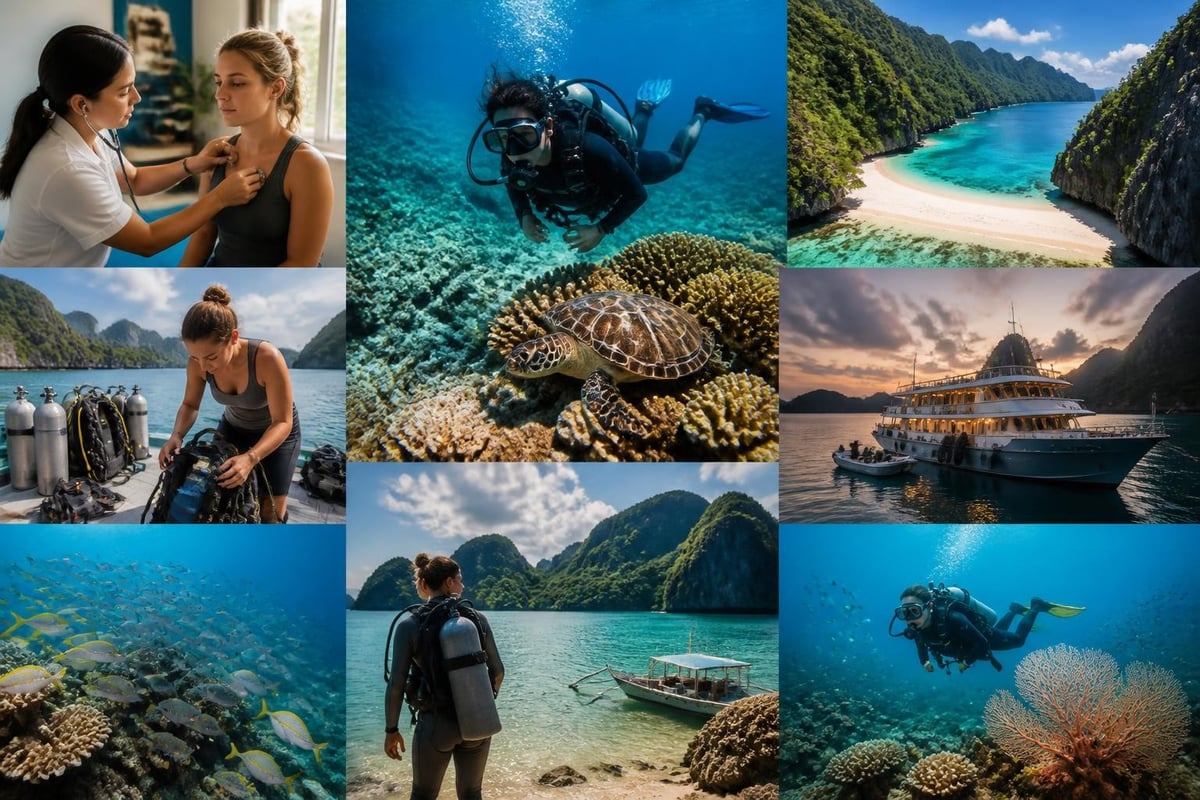
Supporting Sustainable Diving Tourism
The future health of the best scuba diving destinations depends on environmentally responsible practices from both operators and divers. Choosing dive centers committed to conservation and practicing low-impact diving techniques helps preserve these underwater ecosystems.
Recognizing Responsible Dive Operators
Look for dive centers that demonstrate environmental commitment through concrete actions rather than just marketing language:
- Mooring buoys instead of anchor damage
- Small group sizes to minimize reef impact
- Active participation in reef cleanups and monitoring
- Proper waste management and recycling programs
- Education programs about local marine ecosystems
Many of the best scuba diving destinations now implement marine park fees that directly fund conservation efforts. These fees represent investments in preserving the sites you're visiting rather than unwanted expenses.
Practicing Low-Impact Diving
Individual diver behavior significantly impacts reef health. Perfect buoyancy control prevents accidental contact with corals and reduces sediment stirring that can smother reef organisms. Experienced divers maintain awareness of fin position and avoid kneeling on the bottom or grabbing corals for stability.
Photography enthusiasts should resist the temptation to manipulate marine life for better shots. The few seconds saved repositioning a nudibranch or frogfish creates unnecessary stress on already vulnerable creatures.
Practical Gear Considerations for Different Destinations
Equipment requirements vary significantly across the best scuba diving destinations based on water temperature, typical depths, and diving conditions.
Tropical Versus Temperate Exposure Protection
Tropical destinations generally require minimal exposure protection. A 3mm wetsuit handles most conditions in Southeast Asia and the Caribbean, while some divers prefer shorty suits or even just rash guards in the warmest waters.
Cold-water destinations demand substantial investment in exposure protection. A well-fitted 7mm wetsuit or drysuit becomes essential in British Columbia or California, and proper thermal protection dramatically improves comfort during multi-dive days.
Camera Equipment Transport
Underwater photography gear presents special challenges for air travel. Camera housings, strobes, and ports require careful packing to prevent damage, and weight limits can become problematic.
Many of the best scuba diving destinations have photo-oriented dive centers that rent camera equipment, eliminating transport hassles while providing local expertise on getting the best shots at specific sites. This option makes particular sense for trying new camera systems before committing to major purchases.
From vibrant coral reefs to pelagic encounters and historic wrecks, the best scuba diving destinations offer extraordinary underwater experiences for every interest and skill level. Whether you're planning your first international dive trip or your fiftieth, matching destination characteristics to your diving priorities ensures memorable experiences beneath the waves. Palawan Diving brings you world-class diving in El Nido with crystal-clear waters, thriving reefs, and professional service designed for both beginners and experienced divers exploring one of the Philippines' premier diving destinations.