Tubbataha Reef stands as one of the world's most pristine and biodiverse marine ecosystems, a UNESCO World Heritage Site that represents the pinnacle of Philippine diving. Located in the middle of the Sulu Sea, approximately 150 kilometers southeast of Puerto Princesa in Palawan, this remote marine sanctuary offers encounters with some of the ocean's most magnificent creatures in crystal-clear waters that regularly exceed 40 meters of visibility. For divers who dream of walls teeming with life, pelagic encounters, and reefs in near-pristine condition, Tubbataha represents the ultimate bucket-list destination.
Understanding Tubbataha Reefs Natural Park
Tubbataha Reefs Natural Park encompasses 97,030 hectares of protected marine territory, making it one of the largest marine protected areas in Southeast Asia. The park consists of two massive coral atolls separated by an eight-kilometer channel, along with the smaller Jessie Beazley Reef located approximately 20 kilometers to the north.
Geographic and Ecological Significance
The reef system's isolated location in the middle of the Sulu Sea creates a unique ecological environment where strong currents bring nutrient-rich waters from the deep ocean, supporting an extraordinary concentration of marine life. The official Tubbataha Reefs Natural Park website provides comprehensive information about the park's management and conservation efforts.
Key features of the park include:
- North Atoll: 16 kilometers long, featuring dramatic vertical walls and extensive shallow reef systems
- South Atoll: Smaller but equally spectacular, known for strong currents and pelagic action
- Jessie Beazley Reef: A smaller seamount offering excellent macro diving opportunities
- Bird Island: Critical nesting habitat for seabirds including boobies and terns
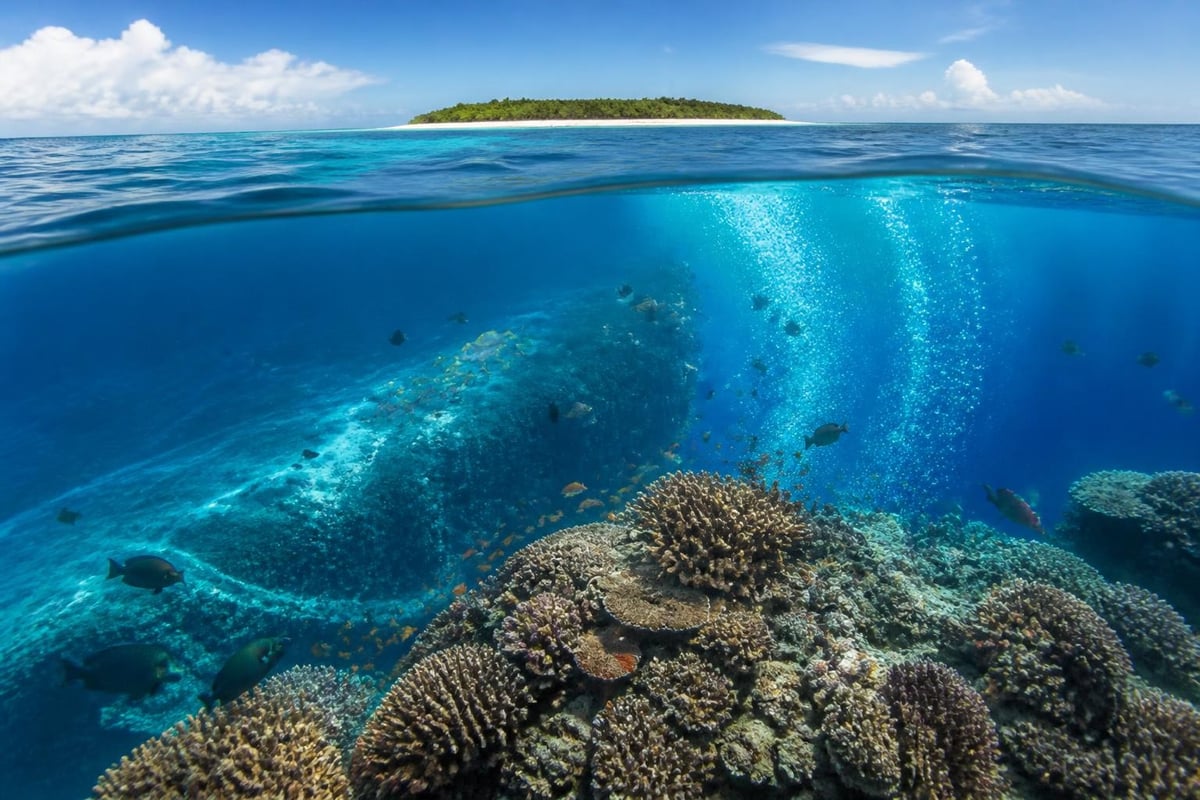
The geological formation of tubbataha reef began millions of years ago as volcanic seamounts that gradually developed into coral atolls. Today, these structures rise from depths exceeding 100 meters, creating dramatic underwater topography that attracts both reef-dwelling species and open-ocean predators.
Legal Protection and Management
Tubbataha achieved UNESCO World Heritage status in 1993, recognizing its outstanding universal value. The Republic Act 10067 established the Tubbataha Management Office (TMO) and created a sustainable funding mechanism through user fees and the TRNP Fund, ensuring long-term protection and effective management.
| Protection Level | Year Established | Area Coverage | Key Regulation |
|---|---|---|---|
| National Marine Park | 1988 | 33,200 hectares | Presidential Proclamation 306 |
| UNESCO World Heritage | 1993 | Original atolls | International recognition |
| Expanded Natural Park | 2006 | 97,030 hectares | Republic Act 10067 |
| No-take zone | Ongoing | Entire park | Fishing strictly prohibited |
The Tubbataha Protected Area Management Plan outlines conservation strategies for 2022-2031, addressing climate change impacts, enforcement challenges, and sustainable tourism management.
Marine Life Encounters at Tubbataha
The diversity and abundance of marine life at tubbataha reef exceeds that of almost any other dive destination in the Philippines. Scientists have documented over 600 fish species, 360 coral species, 11 shark species, and 13 marine mammal species within the park boundaries.
Pelagic Species
Strong currents and deep water proximity make Tubbataha one of the best places in the world to encounter large pelagic species. During any given dive week, experienced divers commonly observe:
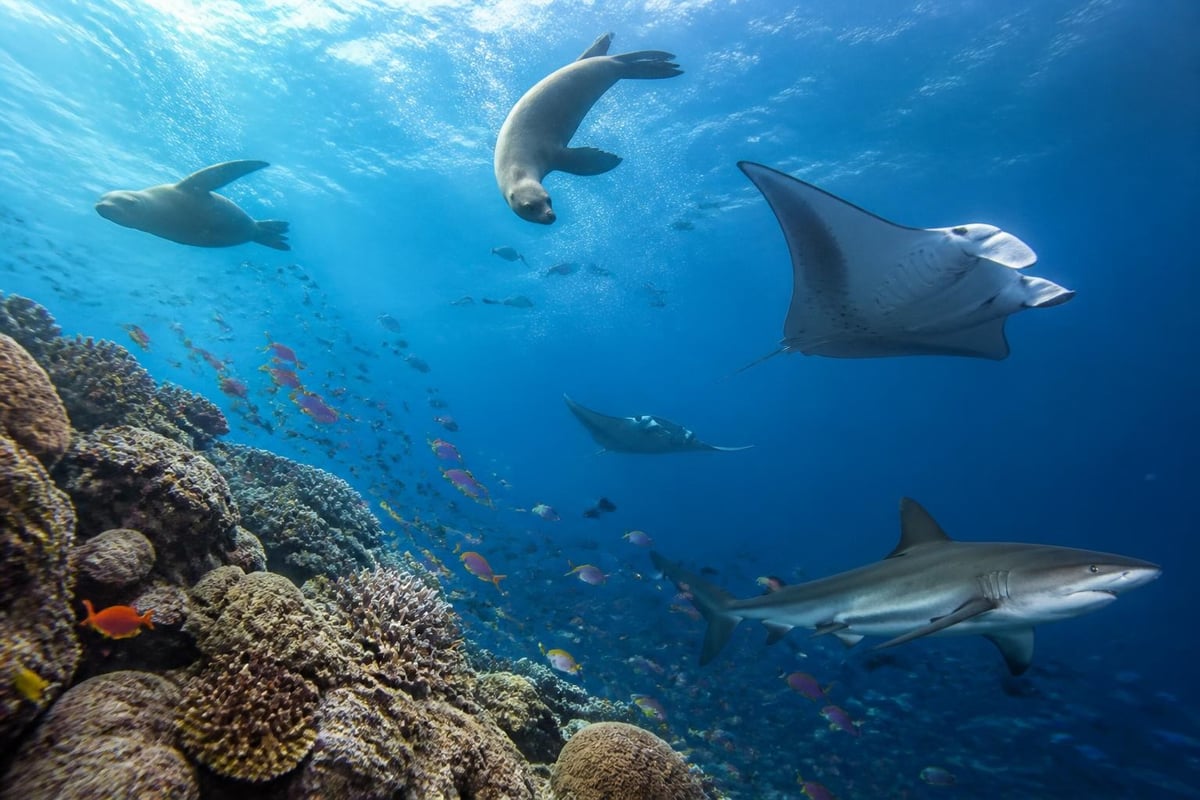
- Sharks: Grey reef sharks, whitetip reef sharks, silvertip sharks, hammerheads, and occasional tiger sharks
- Rays: Manta rays and multiple eagle ray species regularly patrol the walls
- Tuna and jacks: Schools of dogtooth tuna, yellowfin tuna, and giant trevally hunt in the blue
- Barracuda: Massive schools sometimes numbering in the hundreds create living walls of silver
The density of shark encounters at tubbataha reef sets it apart from most other dive destinations. On many dives, sharks remain visible throughout the entire dive, patrolling the reef edge or resting in cleaning stations.
Reef Residents and Macro Life
Beyond the big animals, the reef itself hosts extraordinary biodiversity in excellent condition. Healthy hard coral coverage exceeds 70% in many areas, providing habitat for countless smaller species.
Notable reef species include:
- Turtles: Green sea turtles and hawksbill turtles are seen on virtually every dive
- Groupers: Giant groupers, Napoleon wrasse, and humphead parrotfish reach impressive sizes
- Reef sharks: Whitetip and blacktip reef sharks rest in caves and under overhangs
- Invertebrates: Nudibranchs, cuttlefish, octopus, and Spanish dancers
- Schooling fish: Fusiliers, snappers, and surgeonfish create dense aggregations
Recent research published in PLOS ONE has documented the impacts of ship groundings and associated coral disease, highlighting the ongoing challenges even well-protected reefs face.
Planning Your Tubbataha Expedition
Visiting tubbataha reef requires careful planning due to its remote location and limited seasonal access. Unlike dive sites near El Nido that can be visited year-round, Tubbataha operates under strict seasonal and operational constraints.
Season and Accessibility
The park opens to tourism for approximately four months each year, typically from mid-March through mid-June. This window corresponds to the calmest weather conditions in the Sulu Sea, when wave heights and wind speeds allow safe navigation and diving operations.
Season timeline:
- Mid-March to early April: Early season, potentially rougher seas but fewer boats
- Mid-April to mid-May: Peak season, best weather, highest boat traffic
- Late May to mid-June: Late season, increasing heat and occasional weather systems
No day trips to tubbataha reef are possible. The 10-12 hour journey from Puerto Princesa requires a liveaboard vessel, making this an expedition-style diving experience rather than a casual day trip.
Liveaboard Operations
Multiple Philippine liveaboards operate Tubbataha trips during the open season, with most vessels running 4-day/3-night or 5-day/4-night itineraries. Boats depart from Puerto Princesa, Palawan, typically in the evening to arrive at the reef by morning.
| Itinerary Type | Nights | Diving Days | Approximate Dives | Transit Time |
|---|---|---|---|---|
| Standard | 3 nights | 2.5 days | 10-12 dives | 20-24 hours total |
| Extended | 4 nights | 3.5 days | 14-16 dives | 20-24 hours total |
| Week-long | 6 nights | 5 days | 18-22 dives | 24+ hours total |
Booking well in advance is essential, as spaces on reputable liveaboards fill up six to twelve months before the season begins. First-time visitors should prioritize boats with experienced Tubbataha guides and strong safety records.
Prerequisites and Requirements
Tubbataha diving presents significant challenges that make it unsuitable for beginners. Park regulations and practical safety considerations establish minimum requirements for divers.
Mandatory requirements:
- Advanced Open Water certification or equivalent (minimum 50 logged dives recommended)
- Proven experience in strong currents and deep diving
- Good physical fitness and ability to handle challenging conditions
- Valid dive insurance covering remote locations and evacuation
- Nitrox certification highly recommended for extended bottom time
The remote location means the nearest recompression chamber sits several hours away in Puerto Princesa. Conservative dive profiles and proper safety protocols become even more critical than usual.
Conservation Success and Ongoing Challenges
Tubbataha reef represents one of Southeast Asia's greatest conservation success stories, demonstrating how effective protection can preserve marine ecosystems even as surrounding areas face degradation. WWF Philippines played a crucial role in establishing and supporting the park's protection efforts over decades.
Protection Results
Since achieving full protection, Tubbataha has shown remarkable resilience and recovery. Biomass of commercially important fish species has increased substantially, and coral cover remains among the highest in the Philippines.
Measurable improvements include:
- Fish biomass 30-50% higher than in the 1980s before full protection
- Shark populations maintaining stable numbers despite regional declines
- Coral recruitment and recovery exceeding rates at unprotected sites
- Turtle populations showing positive trends after decades of protection
The Mission Blue Hope Spot designation recognizes Tubbataha's global significance and supports ongoing conservation partnerships.
Current Threats
Despite strong protection, tubbataha reef faces ongoing challenges from both local and global threats. Climate change represents the most significant long-term concern, with rising sea temperatures increasing bleaching risk.
Other challenges include:
- Illegal fishing incursions: Poachers occasionally attempt to enter the park despite ranger patrols
- Ship groundings: Vessels running aground cause severe localized damage
- Ocean acidification: Gradual pH changes affect coral growth and calcification
- Plastic pollution: Debris from distant sources accumulates on the reef despite its remote location
FAO research has documented benthic cover changes and potential eutrophication concerns, highlighting the need for continued monitoring and adaptive management.
Tubbataha Versus Other Philippine Dive Destinations
While tubbataha reef offers unmatched biodiversity and pristine conditions, it's worth understanding how it compares to other Philippine diving destinations, particularly for divers planning their Palawan diving adventure.
Accessibility Comparison
Tubbataha's remote location and liveaboard requirement create a significantly different experience compared to destinations like El Nido, where world-class diving is accessible via daily boat trips. For travelers exploring Palawan diving opportunities, El Nido offers excellent diving without the expedition logistics.
Key differences:
- El Nido: Daily boat diving, all certification levels, year-round access, budget-friendly
- Tubbataha: Liveaboard only, advanced divers, seasonal access, premium pricing
- Coron: Wreck diving focus, moderate accessibility, good for intermediate divers
- Apo Reef: Similar remote reef diving, closer to Manila, seasonal access
Diving Experience Comparison
The quality of diving at tubbataha reef exceeds most Philippine destinations in terms of sheer abundance and pristine conditions, but other sites offer unique attractions that Tubbataha lacks.
| Feature | Tubbataha | El Nido | Coron | Apo Reef |
|---|---|---|---|---|
| Shark encounters | Exceptional | Good | Moderate | Good |
| Coral condition | Pristine | Excellent | Good | Excellent |
| Macro life | Good | Excellent | Moderate | Good |
| Wrecks | None | Limited | Exceptional | None |
| Whale sharks | Occasional | Seasonal | Rare | Occasional |
| Accessibility | Difficult | Easy | Moderate | Difficult |
For divers based in El Nido or considering where to spend their Palawan diving time, combining El Nido diving with a Tubbataha liveaboard creates an ideal Philippine diving adventure.
Preparing for Your Tubbataha Adventure
Proper preparation ensures you maximize your tubbataha reef experience while maintaining safety in this remote environment. Consider both diving skills and practical logistics well before your departure date.
Skills Development
If Tubbataha is your goal but you need to build experience first, El Nido provides an excellent training ground with similar diving conditions on a more accessible scale. The strong currents, wall diving, and drift dive techniques you'll use at Tubbataha can all be practiced at El Nido sites like South Miniloc and Dilumacad Island.
Divers seeking to build their skills before attempting Tubbataha might consider an Advanced Open Water Course to gain experience with deep diving, drift diving, and navigation. These specialized skills become invaluable when diving Tubbataha's challenging conditions.
Recommended preparation:
- Complete at least 50 dives in varied conditions before booking
- Practice drift diving, particularly in strong currents
- Develop proficiency with safety stops and deep diving procedures
- Master buoyancy control for wall diving and photography
- Consider Nitrox certification to maximize bottom time safely
Gear and Equipment
Liveaboards provide tanks, weights, and basic equipment, but bringing your own well-maintained gear ensures comfort and familiarity during critical dives.
Essential personal gear:
- Dive computer with conservative algorithm settings
- Surface marker buoy (SMB) and reel for drift diving
- Reef hook for current management at walls
- Wetsuit appropriate for 27-29°C water (3mm or 5mm depending on personal preference)
- Backup dive light for early morning or late afternoon dives
- Camera system if photography is a priority
Many experienced Tubbataha divers bring two complete regulators and backup computers given the remote location and limited equipment rental options.
Health and Safety Preparation
Remote location diving requires extra health precautions. Schedule a dive medical examination before booking if you have any health concerns or if it's been several years since your last diving medical.
Pre-trip health checklist:
- Current dive medical certificate (within 12 months)
- Comprehensive dive insurance covering evacuation from remote locations
- DAN or equivalent membership for emergency assistance
- Adequate supply of any prescription medications plus extras
- Motion sickness medication if prone to seasickness
- General fitness assessment to ensure comfort with multiple daily dives
The journey to tubbataha reef involves 10-12 hours of ocean passage, which can be rough depending on weather conditions. Divers susceptible to seasickness should prepare accordingly with medication and strategies.
Beyond Tubbataha: Palawan's Diving Ecosystem
While tubbataha reef rightfully claims the title of Palawan's most spectacular diving, the province offers an extraordinary range of diving experiences accessible to all skill levels and schedules. For travelers planning a comprehensive Palawan diving trip, combining multiple destinations creates unforgettable variety.
El Nido's Accessible Excellence
El Nido provides world-class diving without the expedition requirements of Tubbataha. Located in northern Palawan, El Nido's dive sites feature similar ecosystems including dramatic walls, vibrant coral gardens, and abundant marine life, all accessible via comfortable day boats.
The convenience of shore-based diving from El Nido makes it ideal for divers who want excellent underwater experiences combined with comfortable accommodation, diverse dining options, and easy trip planning. Whether you're building skills toward Tubbataha or simply seeking spectacular diving without the liveaboard commitment, El Nido delivers exceptional value.
For those planning an extended stay that combines diving with comfort and convenience, the El Nido Dive & Stay Package offers beachfront accommodation at The Beach House where guests can literally dive from their doorstep, with the dive boat departing directly from the beachfront each morning.
Building Your Palawan Diving Journey
Smart trip planning combines Tubbataha's bucket-list appeal with El Nido's accessibility and comfort. Many divers structure their Palawan adventure with several days of El Nido diving before or after their Tubbataha liveaboard, maximizing dive time while allowing for travel logistics.
Sample two-week Palawan diving itinerary:
- Days 1-3: Arrive El Nido, acclimatization dives, explore town
- Days 4-6: Advanced diving at El Nido's premier sites
- Day 7: Travel to Puerto Princesa, liveaboard departure evening
- Days 8-11: Tubbataha liveaboard expedition
- Day 12: Return Puerto Princesa, travel back to El Nido
- Days 13-14: Relaxation dives, equipment maintenance, departure preparation
This approach ensures you're dive-fit and current before the demanding Tubbataha expedition while providing comfortable recovery time afterward.
The Future of Tubbataha Conservation
Looking ahead, tubbataha reef faces both challenges and opportunities as conservation science, tourism management, and climate adaptation strategies continue evolving. The park's success over three decades demonstrates that effective protection works, even in developing nations where resources are limited.
Adaptive Management Strategies
The Tubbataha Management Office continues refining protection strategies based on monitoring data and emerging threats. Recent initiatives include enhanced ranger patrols, improved vessel monitoring systems, and expanded scientific research programs.
Current conservation priorities:
- Climate resilience research identifying heat-resistant coral strains
- Enhanced enforcement reducing illegal fishing incursions to near zero
- Tourism carrying capacity studies ensuring sustainable visitor levels
- Regional marine protected area networks connecting Tubbataha to other sites
- Community engagement programs building support in surrounding provinces
These efforts ensure tubbataha reef remains protected for future generations while adapting to changing ocean conditions.
Your Role in Conservation
Every diver who visits tubbataha reef contributes directly to its protection through park fees that fund ranger salaries, patrol vessels, and monitoring programs. The park operates on a sustainable tourism model where visitor contributions provide the majority of operating revenue.
Beyond financial contributions, responsible diving practices minimize visitor impact:
- Maintain excellent buoyancy to avoid coral contact
- Never touch, chase, or harass marine life
- Follow guide instructions regarding current management and group positioning
- Properly dispose of all waste and avoid single-use plastics
- Share your experience to build support for marine conservation
The success of tubbataha reef demonstrates how dive tourism, properly managed, becomes a powerful conservation tool rather than a threat to marine ecosystems.
Making Tubbataha Part of Your Diving Journey
Whether Tubbataha sits on your immediate horizon or represents a future goal, understanding this remarkable reef system enriches your appreciation of Philippine marine ecosystems and inspires diving excellence. The standards set by tubbataha reef elevate expectations for what healthy reefs should look like and motivate protection efforts elsewhere.
For divers at any stage of their journey, Tubbataha reminds us why we dive: to witness the ocean's majesty, encounter magnificent creatures in their natural habitat, and participate in protecting these irreplaceable ecosystems. Every dive, whether at tubbataha reef or nearby sites in El Nido, builds skills, creates memories, and contributes to marine conservation through responsible ocean recreation.
The path to Tubbataha begins with building experience and developing skills at accessible sites while maintaining the fitness, training, and certification that challenging diving demands. Meanwhile, the Philippines offers countless extraordinary dive sites where divers of all levels can experience the same ocean magic that makes Tubbataha legendary. Your Palawan diving adventure, wherever it takes you, connects you to one of Earth's most spectacular marine ecosystems.
Tubbataha Reef represents the pinnacle of Philippine diving, offering pristine reefs, extraordinary biodiversity, and world-class pelagic encounters in one of the world's best-managed marine protected areas. Whether you're building toward a future Tubbataha expedition or exploring Palawan's many accessible dive sites, Palawan Diving provides expert guidance, professional instruction, and unforgettable diving experiences throughout this spectacular region. Start your Palawan diving journey today and discover why these waters captivate divers from around the world.