A PADI class is a structured scuba course taught by a PADI instructor, and the one most visitors want is the Open Water Diver course, which takes you from non-diver to certified diver. If you only want a taste, a one-day Discover Scuba experience lets you breathe underwater with an instructor before you commit to anything longer.
This guide walks through which class fits your time, your age and your comfort in the water. It also covers the swim test, depth limits, realistic timing and how to line it all up while you are staying in El Nido.
Which PADI Class Fits Your Trip?
The right PADI class depends on how many days you have and how far you want to take diving, and there are three common starting points for holidaymakers.
- Discover Scuba Diving: a supervised try dive, no certification, suited to a single free day.
- Scuba Diver: a shorter certification with a shallower depth limit.
- Open Water Diver: the full entry-level certification that lets you dive with a buddy around the world.
If you are unsure, start with the try dive. It costs you a day rather than several, and it tells you quickly whether you enjoy breathing underwater. Our guide to the PADI Discover Scuba Diving experience explains what happens from the briefing to the first breaths at depth.
Many travelers also ask whether they need to snorkel first. You do not, but comfort with a mask and fins helps. If your group has mixed interests, a snorkelling day alongside a diving day works well, and we cover that in our snorkeling class article.
The Three Stages of Open Water Certification
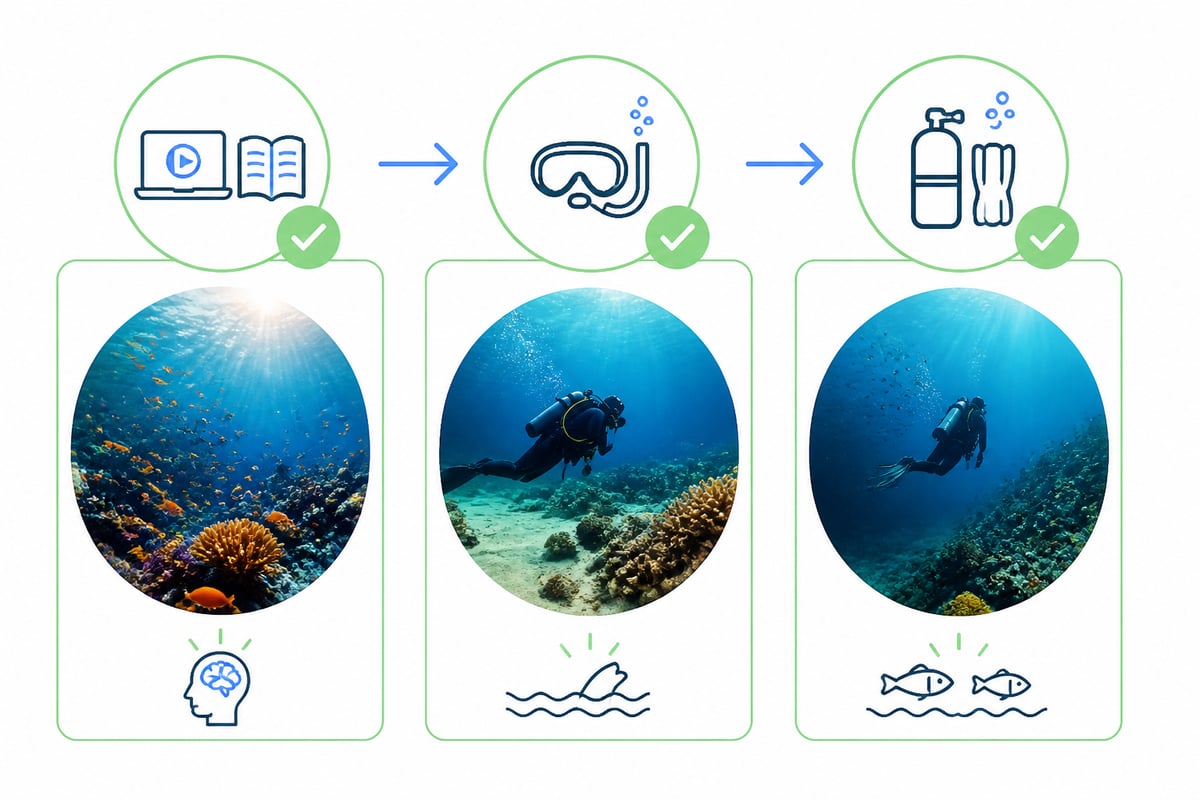
PADI Open Water certification has three stages: knowledge development, in-water training and open-water dives, according to the PADI certification FAQs.
Knowledge development
This is the theory: how pressure affects your body, how to plan a dive, how to use your gear and how to stay safe. Many students finish it through eLearning before they travel, which frees up holiday days for the water. PADI's education page lists eLearning pricing, though what you pay locally varies by dive center.
In-water training
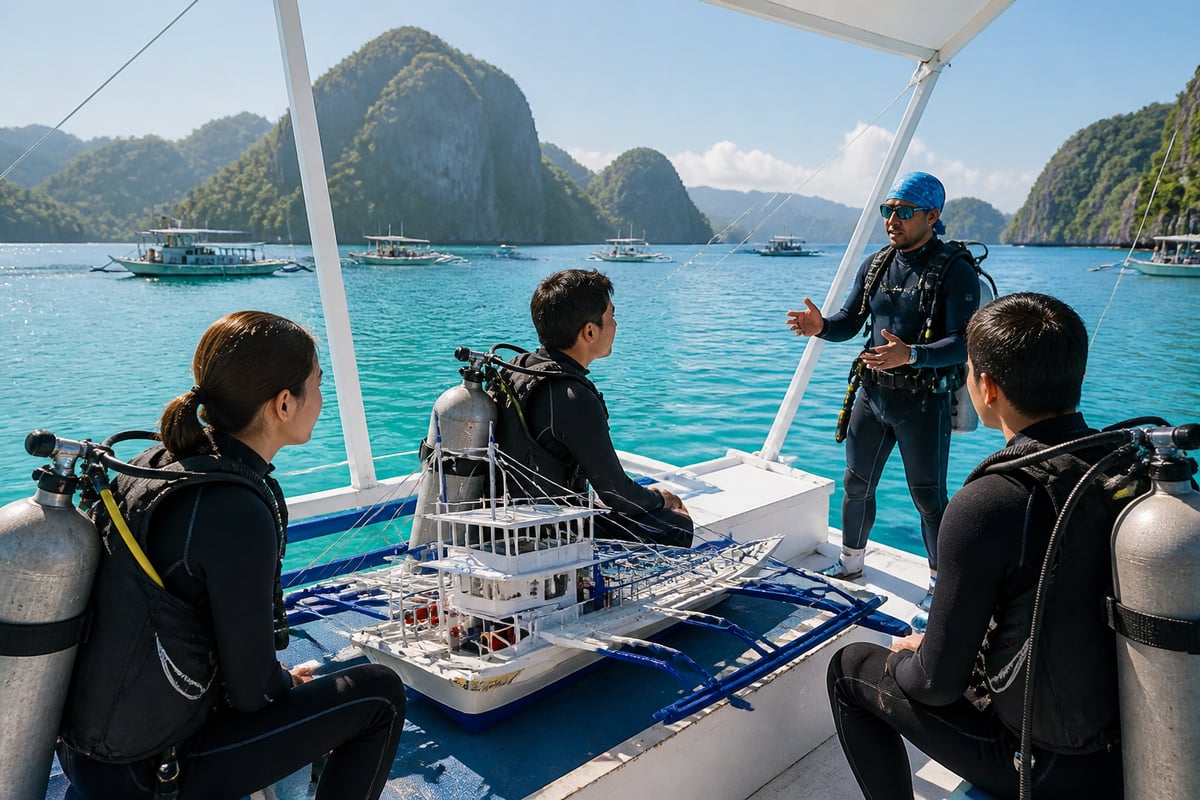
Next you practice core skills in calm, shallow water, such as clearing a flooded mask, recovering your regulator and controlling your buoyancy. Your instructor demonstrates each skill and you repeat it until it feels routine. Nothing is rushed, and you move on only when you are comfortable.
Open-water dives
The course includes four open-water dives, usually completed over two days, as noted in the PADI certification FAQs. You apply the skills you learned in the shallows on real reef sites, with your instructor beside you.
Age Rules, Swim Test and Depth Limits
You can start PADI Open Water training at 10 in most areas, and students under 15 earn the Junior Open Water Diver certification and can upgrade at 15, per the PADI certification FAQs. That makes a family trip realistic, with children and parents learning on the same holiday.
The water-skills assessment is where some people hesitate, so here is exactly what it asks.
- Swim 200 meters/yards without stopping, or 300 meters/yards wearing a mask, fins and snorkel. There is no time limit, so a slow, steady swim passes.
- Float or tread water for 10 minutes.
Both come from the PADI certification FAQs. These are comfort checks, not athletic tests. If you can paddle along at your own pace without panic, you are in a good position.
Depth limits also shape what you will see. The maximum depth during the PADI Open Water course is 18 meters/60 feet, while the Scuba Diver course limit is 12 meters/40 feet, according to PADI’s Open Water course guide. Reefs in the shallower range are often bright and busy, so the limit rarely feels like a loss.
How Long Does a PADI Class Take?
The pace of Open Water certification depends on how much theory you finish before you arrive, so the total time varies from trip to trip (PADI Education). The in-water portion is the fixed part: four open-water dives, usually completed over two days. The theory is the flexible part, which is why where you do it changes your whole week.
Here is how that usually plays out on a holiday:
| Approach | Before the trip | On the island |
|---|---|---|
| eLearning first | Finish theory at home | Skills and four dives, usually over two days |
| Theory on arrival | Nothing | Theory, skills and dives, so plan more days |
Finishing the theory at home is the single best way to protect your holiday. Two days in the water leaves the rest of your week free for island hopping, beach time and a relaxed dinner. If you leave theory for arrival, you are effectively spending your first day or two on a screen or in a classroom while the sea sits waiting outside. That is fine if your trip is long, but it squeezes a short one hard. Weather and sea conditions can shift a schedule, so leave a spare day before your flight rather than booking the last day for the final dive. A swell that delays one dive can be absorbed by a spare day, but not by a departure the next morning.
Taking a PADI Class in El Nido
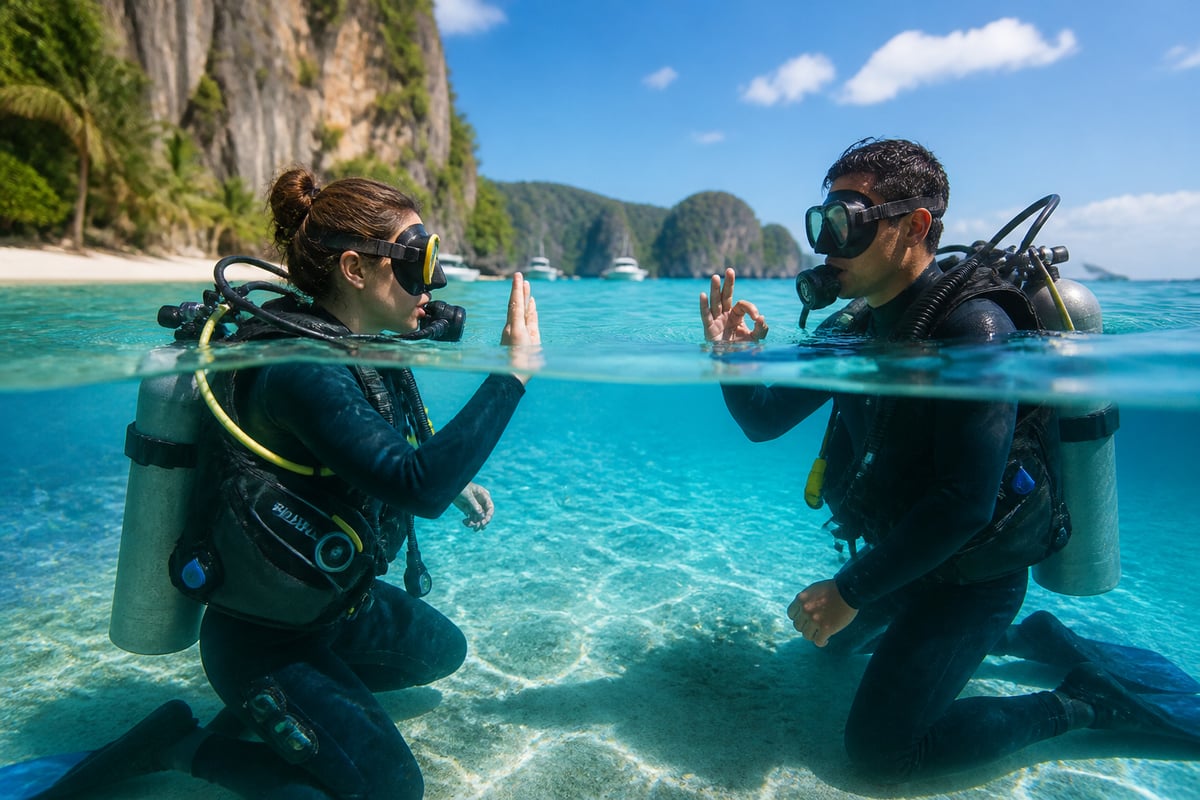
El Nido works well for learning to dive because you can combine a course with a beach holiday, and the logistics are simple when your accommodation and dive center are close together. At Submariner Diving Center, the team has over 15 years of diving experience in El Nido, and PADI instructors bring local knowledge to every session.
The set-up suits holidaymakers. The dive center sits in the same building as The Beach House, our beachfront accommodation, so boats and equipment are close at hand and you skip an early-morning transport across town. After a day in the water, Cloud 9, the rooftop restaurant and bar, is an easy place to talk through your dives over dinner.
Private charters are the other advantage for couples, families and small groups. Dive sites are chosen daily to suit weather and sea conditions, and they are matched to your experience level and interests. That flexibility matters for a student, because calm, forgiving conditions make learning easier than a fixed itinerary would. Divers who need a rigid schedule regardless of weather will find this approach less suitable, since conditions decide each day's plan.
If you are ready to commit to certification, the Open Water Diver Course in El Nido is taught by experienced instructors in small classes.
What Happens After Open Water?
Once you hold an Open Water card, the next step is Advanced Open Water, which builds confidence by having you try different kinds of dives under supervision. Many divers do this after a few trips, when they want deeper sites and new skills such as navigation. It is not a harder exam so much as a guided sampler: you try a handful of dive types with an instructor beside you and find out which ones you enjoy. A sensible gap of a few dives between the two courses lets your buoyancy settle and gives you a better sense of what you want to learn next.
If you are not ready to commit to certification, a try dive keeps the door open. You can always return and credit what you learned toward a full course later, so ask your instructor how earlier training counts. Our overview of a discover scuba class shows how a short experience can lead into the full course. Either route works. Some people certify in one trip, others do a try dive, go home to think about it and come back a year later ready to finish.
For ideas on where certified divers head next, our guide to the best scuba diving spots is a good starting point, and our blog collects more planning advice for the region.
Practical Tips Before You Book
A few habits make any PADI class smoother, and most of them cost nothing.
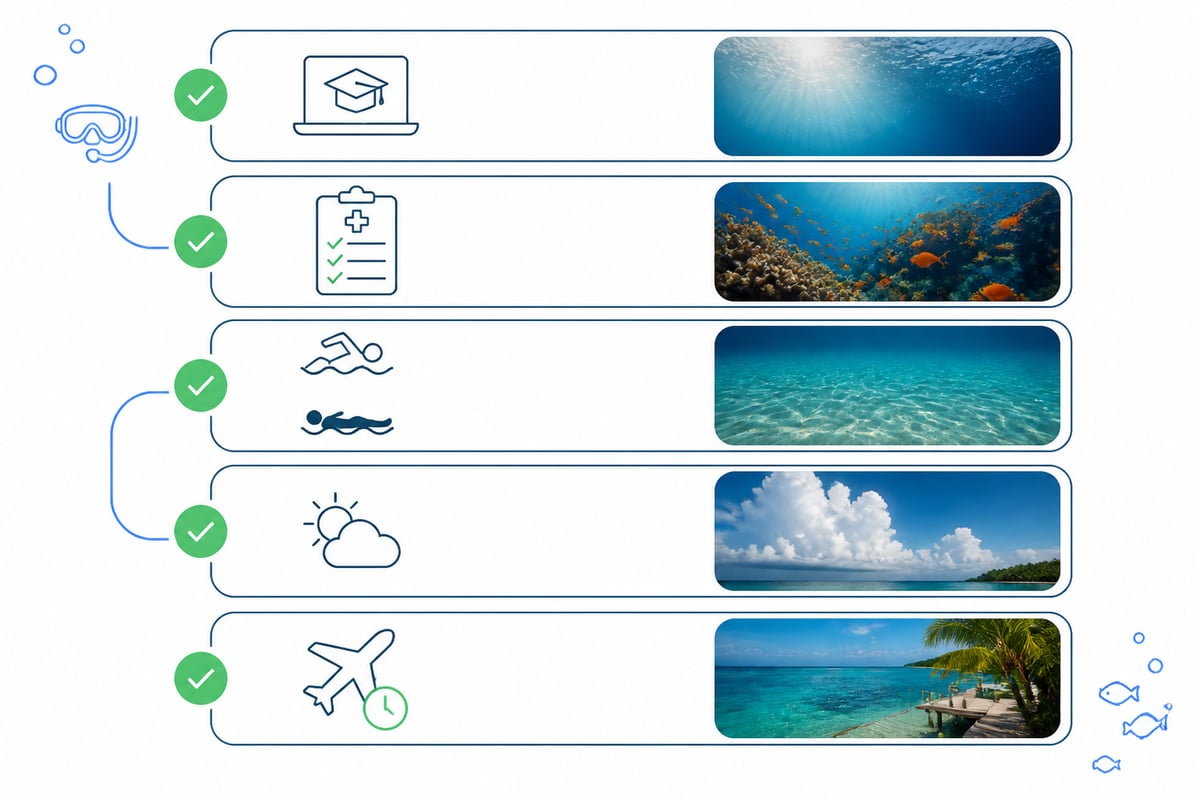
- Do the eLearning early. Finishing theory at home is the biggest time saver. Spread it over a few evenings in the weeks before you fly rather than cramming it the night before, so the ideas about pressure and planning have time to sink in.
- Tell your instructor about medical history. Dive centers use a medical questionnaire, and some conditions need a doctor's approval before you enter the water. If you answer yes to anything on the form, see your doctor before the trip, not on the morning of your first dive.
- Avoid flying right after diving. Leave a gap between your last dive and your flight, and ask your instructor for the guideline they follow.
- Practice floating and swimming beforehand. A few relaxed laps at a pool makes the swim assessment feel easy. Try the 200 meter swim without stopping and a 10 minute float once or twice, since there is no time limit and a slow pace is fine.
- Plan a flexible week. Keep a spare day in case the sea is rough.
Marine life depends on the day and the site, and no one can promise a particular sighting. What you can count on is a patient instructor, a safe site chosen for your level and a calm start to your underwater time.
Choosing Your First PADI Class With Confidence
Start by matching the course to the time you actually have, not the time you wish you had. One free day points to a try dive, and a longer stay gives you room for Open Water. If you land in the middle, say three days, the shorter Scuba Diver certification is worth a look, with its 12 meter/40 foot depth limit instead of the 18 meters/60 feet you get on the full Open Water course. Families with children aged 10 and up can learn together, and the Junior certification upgrades at 15, so a teenager who certifies now does not have to start over later.
Ask each dive center how many students share an instructor, what is included in the price and how weather changes are handled. Those three answers tell you more about the quality of a course than any brochure does. A small class means more time with your instructor on each skill. A clear price list means no surprises for gear rental or certification fees. A straight answer on weather tells you whether the center has a plan for a rough sea day or simply cancels. Then book your dates with a little slack, finish the eLearning at home and arrive ready to enjoy the water.