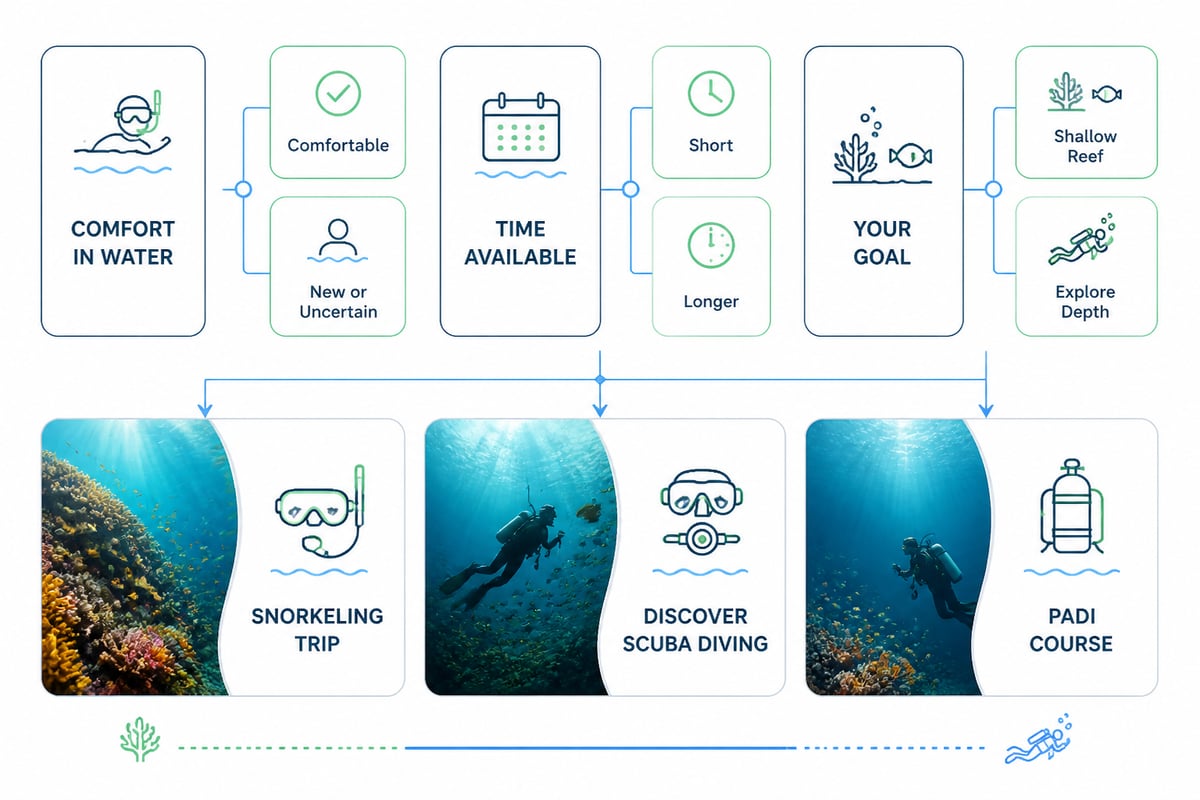
Snorkeling and scuba diving both let you explore the underwater world, but snorkeling keeps you at the surface with a mask, snorkel and fins, while scuba diving uses a tank so you can breathe underwater and spend time at depth. If you're staying in El Nido, you can try either one, and the right choice depends on how much time you have, how comfortable you feel in the water and what you want to see.
This guide breaks down the real differences, what each activity involves in Bacuit Bay, and how to decide before you book.
What Is the Main Difference Between Snorkeling and Scuba Diving?
The main difference is where you breathe from: a snorkeler floats on the surface and breathes through a tube, while a scuba diver carries compressed air and swims below the surface.
That one change shapes everything else. Here is how the two compare:
| Snorkeling | Scuba diving | |
|---|---|---|
| Where you are | On the surface, face down | Underwater, often 5 to 30 m |
| Breathing | Through a snorkel tube | From a tank, via a regulator |
| Training needed | A short briefing | A guided intro session or a PADI course |
| Time underwater | Limited to breath-holds if you dive down | Typically a full dive of 40 to 60 minutes |
| Gear | Mask, snorkel, fins | Mask, fins, BCD, regulator, tank, weights, exposure suit |
| Best for | Shallow reefs and lagoons | Walls, swim-throughs, deeper reef and larger marine life |
Snorkeling is a view from above. Scuba diving puts you inside the scene, where you can hover beside a coral wall, watch a cleaning station up close and move at the pace of the fish around you.
How Snorkeling Works in El Nido
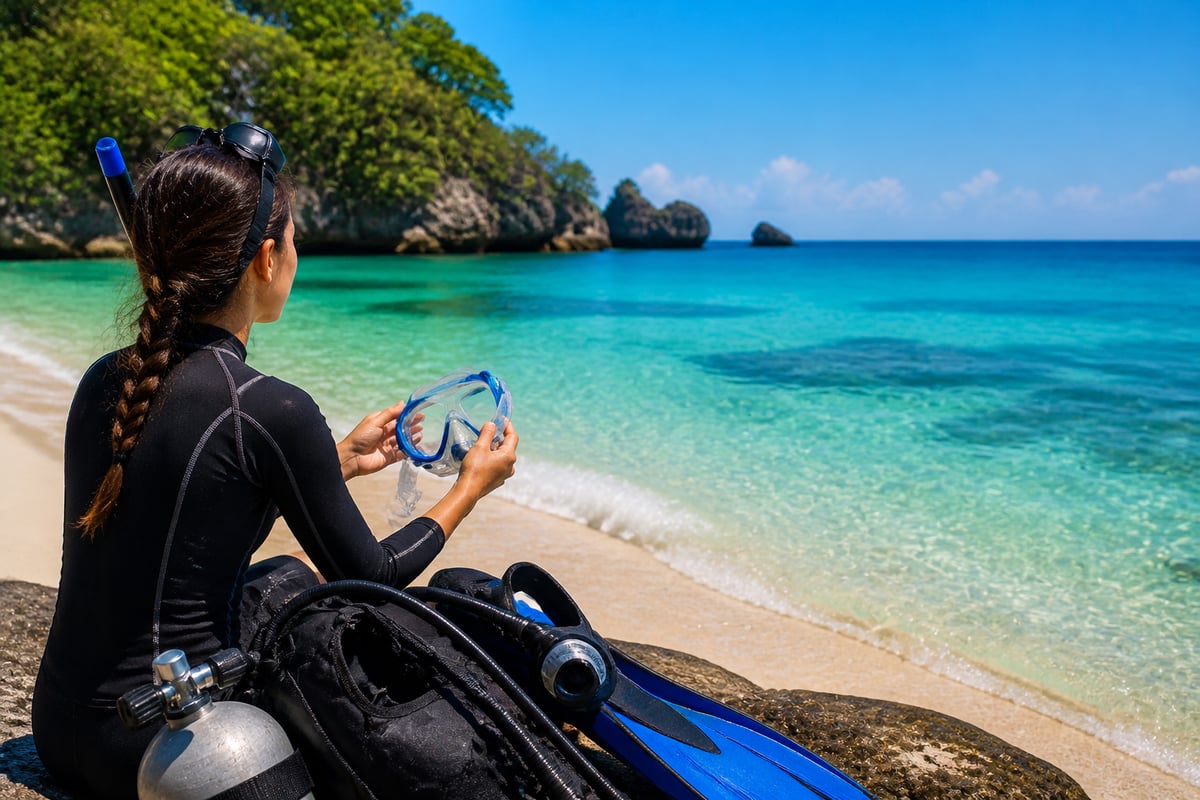
Snorkeling in El Nido means floating over shallow reef and lagoon areas, usually as part of a boat trip around Bacuit Bay, with the reef visible a few meters below you.
The skills are simple. You learn to clear water from the snorkel, breathe calmly through your mouth and keep your fins moving gently rather than kicking hard. Most people pick it up within minutes of getting in the water.
A few practical points help:
- Wear a flotation vest if you're not a confident swimmer. Many operators provide them.
- Apply reef-safe sunscreen or wear a rash guard, since you spend hours face down in strong sun.
- Keep your fins off the coral. Floating too low over shallow reef is how most accidental damage happens.
- Check conditions. Wind and swell reduce surface visibility quickly.
Snorkeling is a good fit for families with young children and for anyone who wants an easy, low-cost day on the water. If that describes you, our snorkeling class overview explains what a first session covers. If shallow-water snorkeling is all you want from the trip, a dive-focused operator like ours won't be the best match, since diving is what we do best.
How Scuba Diving Works for a First-Timer
Scuba diving for a first-timer works by pairing you with a professional instructor who teaches a few core skills, then takes you on a shallow guided dive, with no certification required.
A typical introductory session follows these steps:
- Briefing on equipment, hand signals and how pressure affects your ears.
- Skills practice in shallow water: clearing your mask, recovering your regulator and equalizing.
- The dive itself, kept shallow and slow, with your instructor beside you throughout.
The two things most newcomers worry about are breathing and ear equalization. Breathing through a regulator feels strange for the first minute and then becomes second nature. Equalizing means gently pinching your nose and blowing to balance pressure as you descend, and your instructor will coach you through it.
If you'd like to try this during your stay, the Discover Scuba Diving experience is designed for exactly that: a first dive with a professional instructor in El Nido's clear water, no prior experience needed.
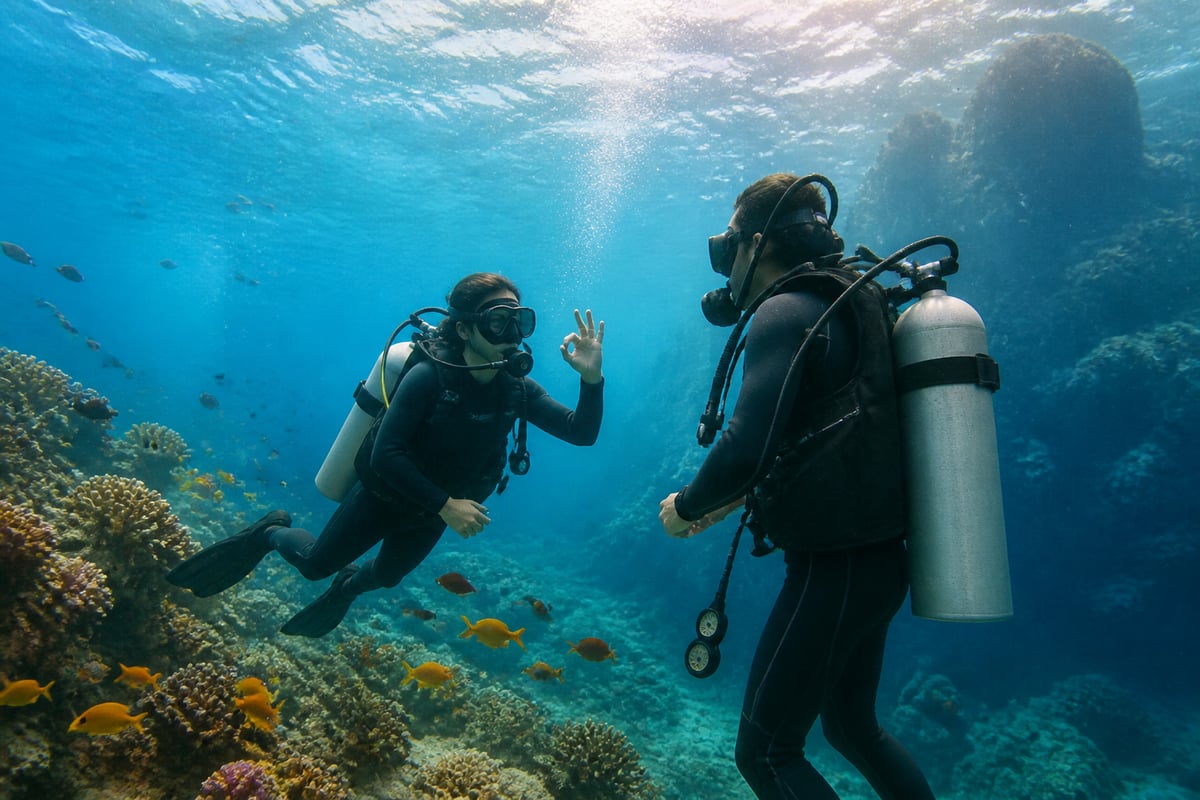
If you decide you love it, the introductory dive is the first step toward a full certification, and our guide to beginner scuba diving lays out the path.
Can Non-Swimmers Do Snorkeling or Scuba Diving?
Non-swimmers can snorkel safely with a flotation vest and close supervision, but scuba diving normally requires basic water comfort and a simple swim and floating test.
For snorkeling, a vest keeps you buoyant without effort, and many people who can't swim well still enjoy it in calm, shallow water. Stay close to the boat or guide and avoid areas with current.
For scuba diving, the bar is a little higher. Scuba certification generally involves a short surface swim and a few minutes of floating, and even an introductory dive assumes you are comfortable being in water over your depth. You don't need to be an athlete. You do need to stay calm in the water. If you're unsure, tell your instructor before booking so they can advise you honestly.
Safety: What to Know Before You Get in the Water
Both activities are safe when done with good supervision, but each has its own risks, and knowing them makes you a better and calmer participant.
Snorkeling safety
Most snorkeling problems are simple: sunburn, tiredness, leg cramps, swallowed water and drifting with the current. Always snorkel with a buddy or guide, and keep an eye on where the boat is.
There is one less obvious risk worth knowing about. Hard, strained breathing in the water is a known contributor to serious problems, so keep your pace easy and your breathing relaxed. If you cough, feel unusually breathless or notice pink or frothy sputum, get out of the water and seek medical attention. Relaxed breathing and an easy pace lower the chance of trouble.
Scuba diving safety
Diving rests on a few firm rules:
- Breathe continuously and never hold your breath on ascent.
- Ascend slowly and make safety stops where required.
- Equalize early and often as you descend.
- Dive within your training and depth limits.
- Allow time before flying. Check the recommended surface interval with your instructor.
Disclose medical conditions, especially asthma, heart or ear problems, before any dive. A reputable operator will ask you to complete a medical questionnaire, and some conditions need a doctor's sign-off first.
Snorkeling and Scuba Diving Compared: Cost, Time and Effort
Snorkeling and scuba diving differ in cost mainly because diving needs more equipment, an instructor and a boat dedicated to the activity.
Snorkeling is usually the cheaper and more casual choice, often bundled into island-hopping tours. Scuba diving costs more, but you get more underwater time per outing and a very different experience. Pricing changes by season and group size, so check current rates on the Submariner Diving Center booking page or ask us directly rather than relying on a guess.
Think about effort too. Snorkeling is physically light but leaves you tired from sun and swimming. Diving is more relaxed in the water, because you float neutrally and move slowly, but it asks more of your attention. A common holiday approach is to snorkel on a lazy day and book a dive on another, so you get the best of both.
What You Can See Diving in El Nido
Diving in El Nido opens up limestone walls, swim-throughs and reef slopes in Bacuit Bay that are mostly out of reach for snorkelers.
Sites in Bacuit Bay are reported to be 15 to 60 minutes from El Nido by boat, and the range suits different levels. According to IN El Nido, the shallow reef at Nat-Nat runs 8 to 18 m and is a place where sea turtles may gather at a fish-cleaning station, though no sighting is ever guaranteed. South Miniloc Wall slopes from about 12 m to 25 m and is described as suitable for beginner-plus divers. The Dilumacad Tunnel is an 18 m-deep swim-through described as an advanced dive, and North Rock, listed at 15 to 30 m with strong currents, is recommended for intermediate-plus divers.
For a side-by-side look at depth, current and difficulty, this El Nido dive spots guide is a useful reference, and our own roundup of the best scuba diving spots covers the standouts.
Because conditions change daily, the right site on a given morning depends on wind, swell and current. At Submariner Diving Center, dive sites are chosen each day to suit weather, sea conditions and each group's experience level and interests, which is a big reason private charters work well in El Nido.
The Best Time of Year for Each Activity
The best time for both activities is generally the dry season, with March to June reported as peak diving season and calmer seas.
IN El Nido reports visibility of 20 to 25 m during March to June, while September to November sees 10 to 15 m visibility when southwest monsoon conditions can make seas rougher.
What that means in practice:
- March to June: best visibility and flattest water for both snorkelers and divers.
- September to November: diving remains possible, but plan for lower visibility and flexibility on sites and timing.
- Any season: surface snorkeling suffers first when the wind picks up, since chop reduces what you can see from above.
Weather can change a plan at short notice, so build some slack into your itinerary instead of stacking a once-only dive on your last day.
Planning a Dive Day Around Your Stay
Planning a dive day is easiest when your accommodation and dive center are in the same place, because you skip the early-morning transfers that eat into a holiday.
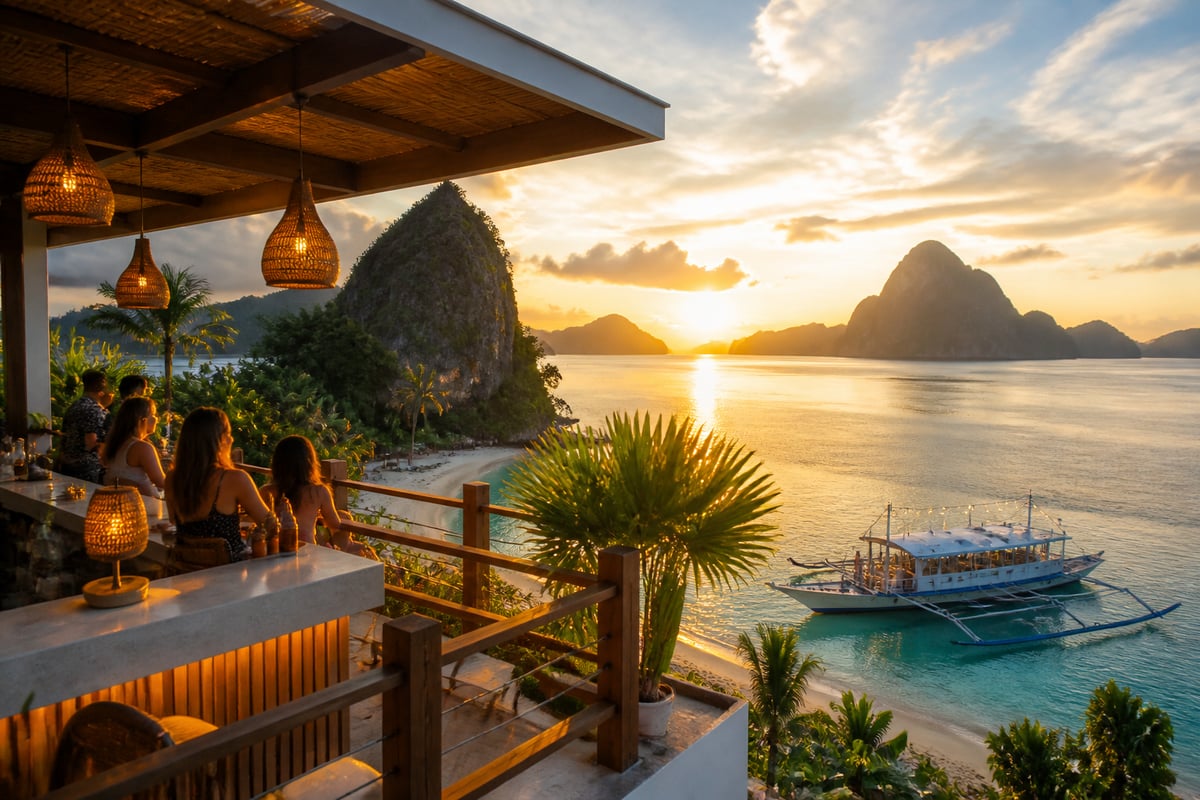
Staying at The Beach House, the beachfront accommodation linked to Submariner Diving Center, means the dive center is in the same building and the boats and equipment are close at hand. After a day on the water, you can have dinner at the Cloud 9 rooftop restaurant and bar without going anywhere.
For couples, families and small groups, a private charter keeps things personal. Submariner Diving Center runs flexible private VIP charters, so your group sets the pace, whether that means a gentle first dive or a deeper reef day for certified divers. Certified divers planning a longer Palawan trip, including those eyeing Tubbataha, can read about Tubbataha Reef scuba diving to see how it fits alongside El Nido. With over 15 years of diving experience in El Nido, professional PADI instructors and modern safety equipment, the team can match a plan to your level.
If you want a broader comparison of the two pursuits from a Palawan angle, our post on snorkeling and scuba diving in Palawan is a good companion read.
FAQ
Do I need a certification to try scuba diving in El Nido?
No, a certification isn't required for an introductory dive. You complete a short briefing and skills practice with an instructor, then dive in shallow water under their direct supervision. A full PADI Open Water course is the route if you want to dive independently later.
Is snorkeling or scuba diving better for seeing marine life?
Scuba diving usually gives a closer, longer look at reef life, walls and swim-throughs, while snorkeling shows shallow reef from above. Neither can guarantee specific animals, since sightings depend on the day and the site. Many visitors enjoy doing both across a trip.
Can I do both on the same trip?
Yes, and it works well to space them out. Snorkel on a relaxed day, then book a dive on another, and remember to allow the recommended surface interval before flying home. Your instructor can advise on timing for your departure.
Your next step is to decide which side of the surface you want to try, then check the dates and weather window for your stay before conditions fill up your calendar. If scuba is the answer, you can start with the Discover Scuba Diving experience, and the team will help you choose a site that suits your level and the day's conditions. To plan a private day on the water or a full course, Submariner Diving Center is ready to help you book your diving in El Nido.