Learning to scuba dive opens the door to an entirely new world beneath the surface. Open water diving courses represent the first major step for anyone who wants to explore coral reefs, shipwrecks, and marine ecosystems with the freedom and skills of a certified diver. Unlike brief introductory experiences, these certification programs provide comprehensive training that qualifies you to dive independently worldwide. Whether you're planning a tropical diving holiday or pursuing a lifelong passion, understanding what these courses involve, how to choose the right training, and what to expect during certification will help you start your underwater journey with confidence.
What Open Water Diving Courses Actually Cover
The core curriculum of open water diving courses combines theoretical knowledge, pool or confined-water skill development, and real-world ocean training. Students learn essential physics and physiology, including how pressure affects the body underwater, gas consumption, buoyancy principles, and decompression theory. This foundation helps divers understand why certain procedures matter and how to make safe decisions below the surface.
Knowledge Development Components
Modern courses deliver theory through multiple formats depending on the training agency and dive center:
- Digital e-learning modules students complete before arrival
- Classroom sessions with instructors covering dive tables, equipment, and planning
- Video presentations demonstrating techniques and safety procedures
- Quizzes and exams testing comprehension of critical concepts
Most programs require passing a final knowledge exam with a minimum score, typically 75% or higher. Students review any missed questions with their instructor to ensure complete understanding before progressing to water training.
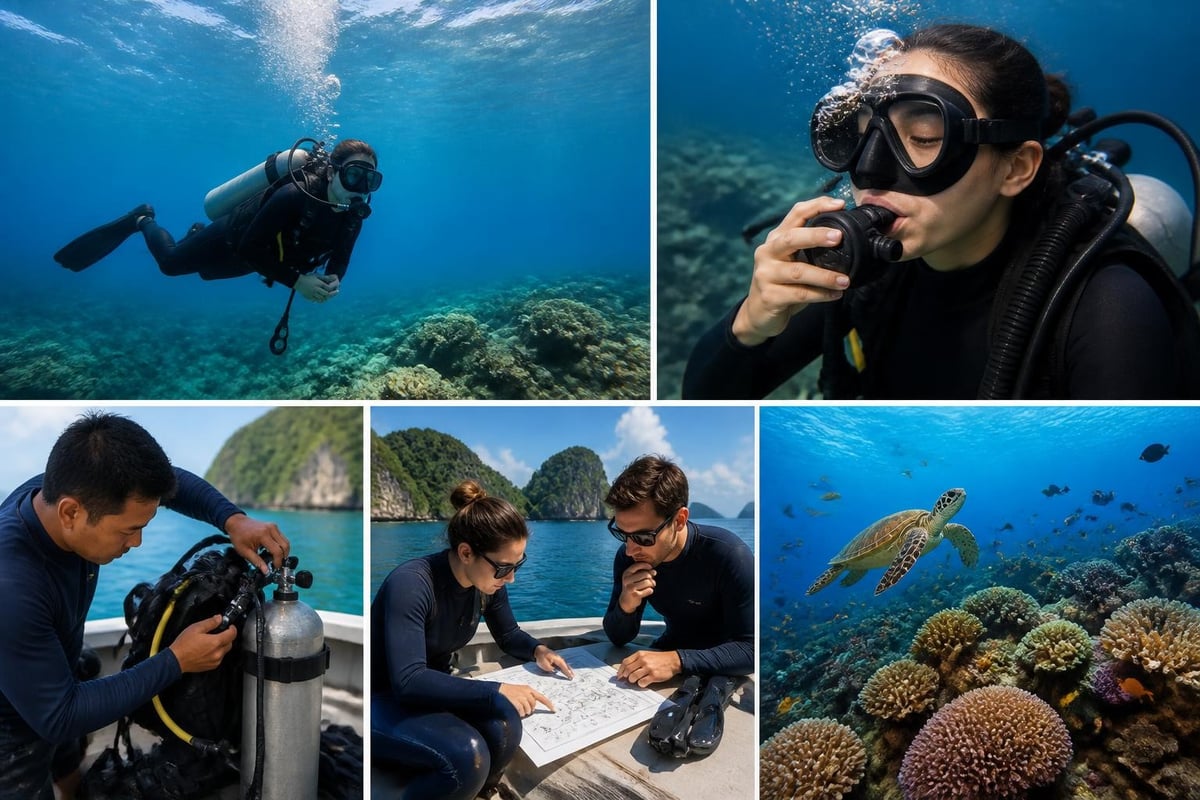
Confined Water Skill Development
Before entering the ocean, students practice fundamental skills in a controlled environment like a pool or calm shallow bay. These sessions build muscle memory and confidence through repetition.
| Skill Category | Key Techniques Practiced |
|---|---|
| Equipment assembly | Regulator setup, BCD inflation, weight system configuration |
| Breathing control | Regulator recovery, alternate air source use, controlled ascents |
| Buoyancy management | Neutral buoyancy, fin pivots, hovering at depth |
| Problem solving | Mask clearing, removing and replacing equipment underwater |
| Safety procedures | Emergency ascents, buddy breathing, surface signaling |
Most certification programs include four to five confined-water sessions, each introducing progressively more complex skills. Students must demonstrate competence in all required exercises before moving to open water training.
Open Water Certification Dives
The final phase involves four ocean dives where students apply everything learned in a real diving environment. These dives typically reach depths of 12 to 18 meters and last 20 to 40 minutes depending on conditions and air consumption.
Each dive has specific objectives. Early dives focus on repeating basic skills from confined water in an ocean setting. Later dives introduce navigation with a compass, exploring natural environments, and conducting proper safety stops. By the fourth dive, students should demonstrate independent dive planning, buddy communication, and safe ascent procedures without constant instructor guidance.
Choosing the Right Training Location and School
Not all dive schools offer the same quality of instruction, safety standards, or learning conditions. The location where you complete your open water diving courses significantly impacts your experience and skill development.
Water conditions matter enormously. Training in clear, warm, calm tropical waters like those around El Nido provides ideal visibility and comfort for learning. Students can focus on skills rather than battling cold, surge, or poor visibility that add unnecessary stress to an already challenging learning process.
Class size directly affects the attention each student receives. Smaller groups mean more personalized coaching, quicker skill correction, and safer supervision. The international standard allows up to eight students per instructor, but many quality schools maintain ratios of four or fewer students per instructor.
Equipment Quality and Availability
Professional dive centers provide well-maintained rental equipment as part of course fees. Check whether the school offers:
- Modern regulators serviced according to manufacturer schedules
- BCDs in various sizes with reliable inflation systems
- Wetsuits or rash guards appropriate for local water temperature
- Properly weighted weight systems and belts
- Backup equipment if something fails during training
Some schools include equipment rental in the course price, while others charge separately. Clarify total costs upfront to avoid surprises.
Instructor Credentials and Experience
Your instructor's qualifications and teaching experience directly impact what you learn. All instructors should hold current teaching status with a recognized agency like PADI, SSI, NAUI, or CMAS. Beyond basic credentials, consider:
- Years of active teaching (not just years since certification)
- Number of students certified and specialty training taught
- Local environmental knowledge of dive sites and conditions
- Language proficiency matching your native language
- Emergency response training including oxygen administration and CPR
Don't hesitate to ask about your instructor's background. Experienced teachers welcome these questions and recognize that students who feel confident in their instructor learn more effectively.
Medical Fitness and Prerequisites
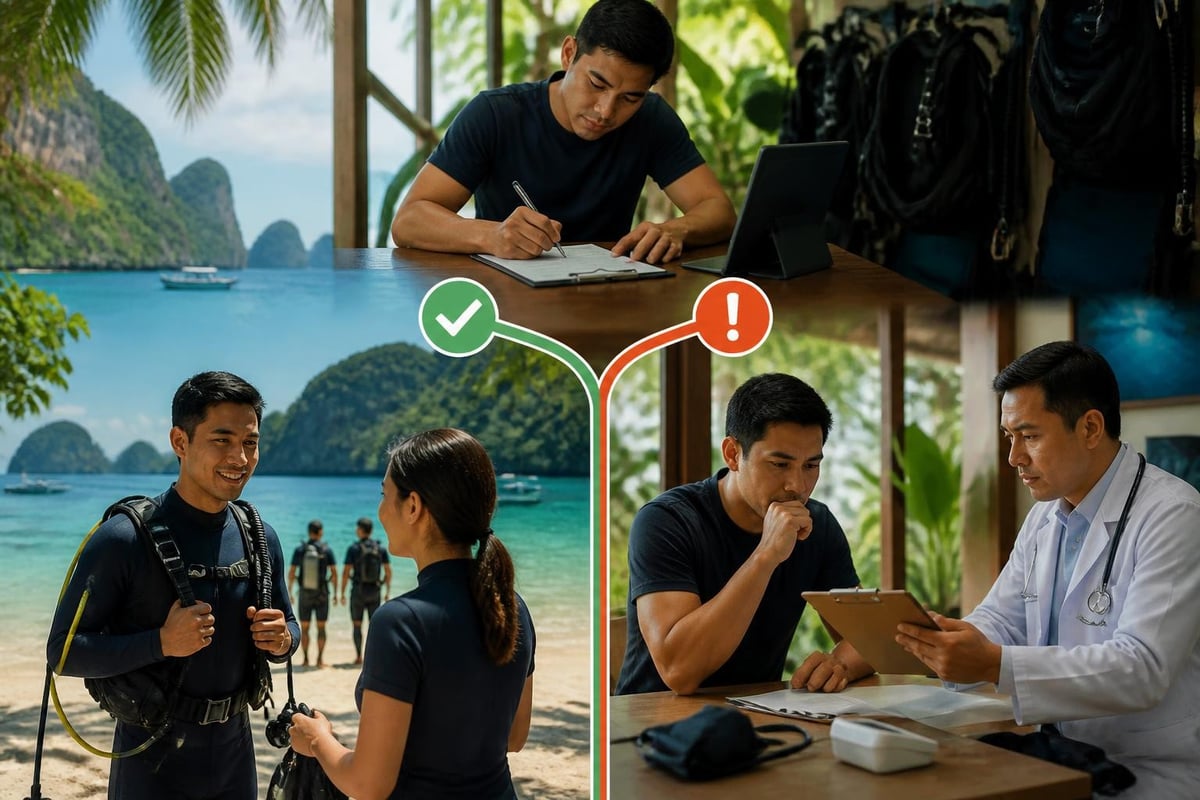
Before enrolling in open water diving courses, students complete a medical questionnaire assessing fitness to dive. The DAN guidelines for medical fitness outline conditions that may require physician clearance.
Certain medical conditions require evaluation by a dive-trained physician before training:
- Asthma or chronic lung disease
- Heart conditions or previous cardiac events
- Diabetes requiring medication
- Seizure disorders
- Inner ear problems or persistent sinus issues
- Pregnancy (diving is contraindicated during pregnancy)
The UHMS recreational diving medical screening provides detailed guidance on specific conditions and restrictions.
Age requirements vary slightly by agency, but most programs certify students from age 10 upward. Junior certifications for younger divers include depth restrictions and require diving with a certified adult. There's no upper age limit, though fitness and medical clearance become more important considerations for older students.
Basic swimming ability is mandatory. Students must demonstrate comfort in water by swimming 200 meters continuously or snorkeling 300 meters without stopping. You don't need competitive swimming skills, but you must be relaxed and capable in deep water.
Course Duration and Time Commitment
Traditional open water diving courses require three to four full days when completed in person. This schedule typically includes:
- Day 1: Knowledge development sessions and first confined water skills
- Day 2: Remaining confined water training and knowledge review
- Day 3: Two ocean certification dives
- Day 4: Final two ocean dives and certification processing
Some dive schools condense courses into three days with longer daily sessions, while others extend training over five to seven days with shorter daily commitments. Neither approach is inherently better-the right pace depends on your learning style, schedule, and comfort level.
E-learning programs allow students to complete all theory before arrival, reducing in-person time to two to three days of water training only. This option works well for travelers with limited vacation time. You study at your own pace beforehand, then focus entirely on practical skills once you reach the dive destination.
Part-time schedules spread training across several weeks, with evening knowledge sessions and weekend pool time followed by ocean dives. This works for locals or extended travelers but isn't practical for most visitors on shorter trips.
What You'll Actually Pay
Costs for open water diving courses vary considerably based on location, included services, and training standards. Budget between $400 and $600 USD for most tropical destinations, though prices range from $300 in Southeast Asia to over $800 in expensive markets like Australia or Europe.
| What's Typically Included | Common Additional Costs |
|---|---|
| All in-water instruction (confined + open water) | Certification card processing fee ($35-50) |
| Rental equipment during course | Digital learning materials (if separate) |
| Pool or confined water facility fees | Dive computer rental (recommended) |
| Boat trips to ocean dive sites | Logbook and slate |
| Instructor time and supervision | Photos or video of certification dives |
| Temporary certification card | Tips for instructor and boat crew |
Always clarify exactly what's included before booking. Some advertised prices exclude equipment rental, certification fees, or digital materials, making the actual cost significantly higher than quoted.
Value isn't just about price. A $350 course with eight students per instructor in poor visibility teaches less than a $500 course with small groups, excellent conditions, and thorough instruction. Consider the complete learning experience, not just the lowest cost.
Certification Recognition and Limitations
Successful completion of open water diving courses results in an internationally recognized C-card (certification card) issued by your training agency. This credential allows you to dive anywhere in the world within the limitations of your certification level.
Standard open water certification qualifies you to:
- Dive to a maximum depth of 18 meters (60 feet)
- Plan and conduct dives with a similarly certified buddy
- Rent scuba equipment from dive shops worldwide
- Join guided boat dives at dive centers globally
- Continue education through advanced courses
You cannot dive deeper than your certification depth limit, dive alone (diving always requires a buddy), or supervise uncertified divers. Many dive sites have specific requirements-wreck penetration, cave diving, or deep diving beyond 18 meters require additional certification.
If you're eager to expand your skills and access more challenging dive sites after certification, the Advanced Open Water Course builds directly on your foundational training. This program introduces deep diving, underwater navigation, and specialty skills through five adventure dives, increasing your maximum depth to 30 meters and opening access to El Nido's more advanced dive sites including walls, channels, and deeper pinnacles.
Agency Differences
PADI (Professional Association of Diving Instructors) certifies more divers globally than any other agency, making it the most widely recognized credential. SSI (Scuba Schools International), NAUI (National Association of Underwater Instructors), and other agencies offer equivalent training with slight curriculum variations.
All major agencies meet or exceed the ISO 24801-2 standard for autonomous diver training, meaning their certifications are mutually recognized by dive centers worldwide. Choose based on instructor quality and local dive school reputation rather than agency brand.
What Happens After Certification
Your learning doesn't end when you receive your certification card. Newly certified divers benefit enormously from gaining experience through guided dives before diving completely independently.
Dive regularly in the months following certification to reinforce skills and build confidence. Infrequent diving leads to skill degradation-divers who wait six months or more between their certification dives and their next diving often need refresher training to regain competency.
Log every dive in your logbook, recording depth, bottom time, conditions, marine life observed, and any issues encountered. This record helps track experience, identify patterns in air consumption, and provides required documentation for advanced training or professional courses.
Stay current with safety research and best practices. Organizations like Divers Alert Network publish incident reports and safety studies that help recreational divers understand common risks and prevention strategies.
Training in El Nido's Waters
El Nido offers exceptional conditions for open water diving courses, combining warm water, excellent visibility, and diverse marine environments ideal for building skills. Water temperature stays comfortable year-round at 27-29°C, eliminating the cold-water stress that complicates learning in many destinations.
The protected bays and reefs around El Nido provide perfect training sites with depths ranging from shallow flats to 18-meter walls within short boat rides. Students gain experience in varied environments-sandy bottoms for skill practice, coral gardens for buoyancy control, and gentle currents for drift diving introduction.
Marine life encounters during certification dives here include turtles, schools of tropical fish, octopuses, and vibrant coral formations. These natural distractions motivate students and create memorable first ocean experiences, though instruction always focuses on skill development rather than sightseeing.
Small dive schools in the area maintain low student-to-instructor ratios and personalized attention. The local diving community emphasizes safety, environmental awareness, and thorough training that prepares divers for varied conditions they'll encounter elsewhere.
Safety Considerations and Risk Management
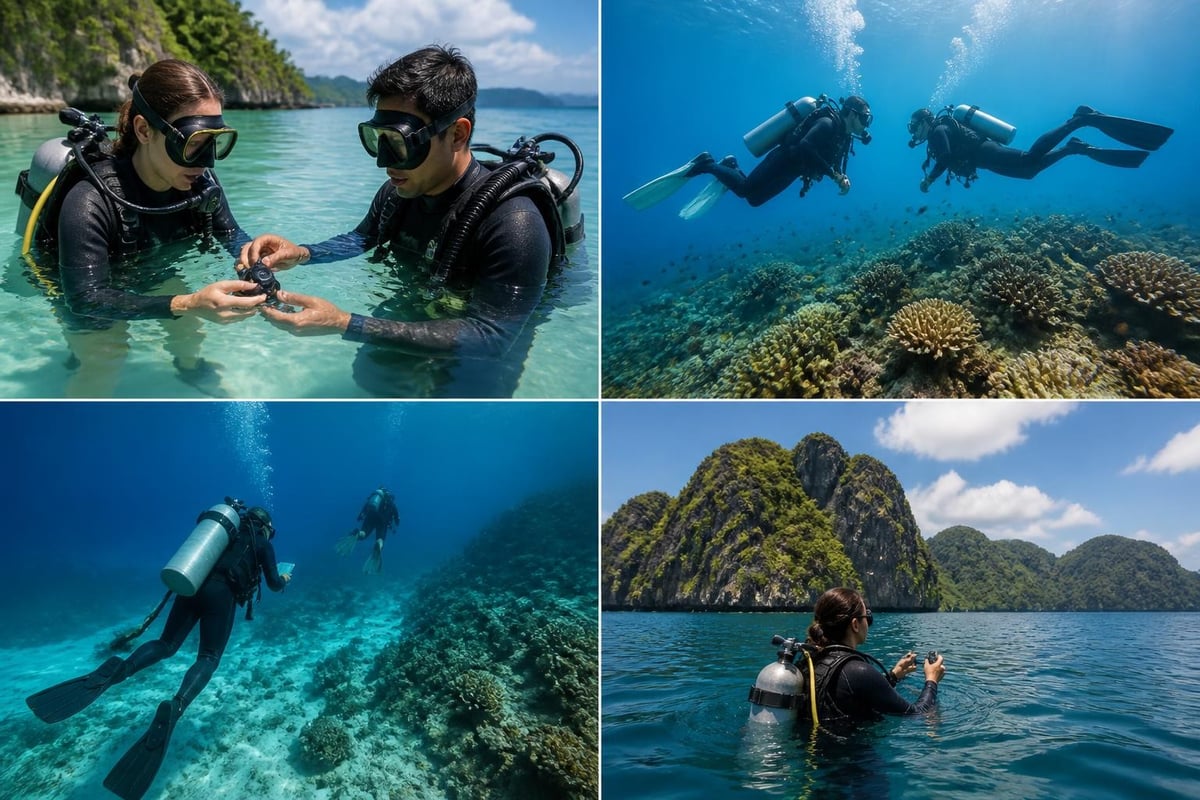
Scuba diving carries inherent risks that proper training, equipment maintenance, and conservative practices minimize to acceptable levels. Understanding these risks helps students make informed decisions and develop safe diving habits from the beginning.
Decompression illness (DCI) remains the most discussed dive injury, though proper training and adherence to dive tables or computer limits makes it rare in recreational diving. Students learn to plan dives within no-decompression limits, conduct safety stops, and avoid bounce profiles or repetitive deep diving that increase DCI risk.
Pulmonary injuries from breath-holding during ascent or rapid emergency ascents pose serious risks. The most fundamental rule in scuba diving-never hold your breath-prevents these injuries. Medical research on immersion pulmonary edema continues to inform screening and prevention strategies that protect divers from this less common but serious condition.
Equipment failure rarely causes serious incidents when divers follow proper procedures. Training emphasizes redundancy (alternate air sources, buddy system), pre-dive safety checks, and emergency responses that keep equipment problems from becoming dangerous situations.
Environmental hazards vary by location but might include boat traffic, surge, marine life, fishing lines, or overhead obstructions. Local instructors teach awareness of site-specific risks and appropriate responses, preparing students for the actual conditions they'll encounter during certification dives and future diving.
Continuing Your Diving Education
Open water certification represents just the beginning of scuba diving education. Most agencies offer structured continuing education through specialty courses, advanced programs, and professional levels.
Specialty courses develop specific skills or knowledge:
- Peak Performance Buoyancy improves control and reduces environmental impact
- Underwater Navigation builds compass and natural navigation proficiency
- Night Diving introduces diving after dark with limited visibility
- Deep Diving extends range to 30-40 meters with appropriate training
- Wreck Diving teaches penetration procedures and overhead environment protocols
- Nitrox Diving allows use of enriched air for extended bottom time
Advanced certifications require completing several specialties or adventure dives, expanding depth limits and qualifying divers for more challenging sites. Many divers pursue Rescue Diver training to develop emergency response skills and contribute to dive buddy safety.
Professional levels begin with Divemaster, qualifying divers to supervise certified divers and assist with instruction. Instructor certifications allow teaching and certifying students, though these require extensive experience and rigorous training.
The pathway from open water through professional levels typically takes several years and hundreds of logged dives. There's no rush-diving offers lifelong learning opportunities at whatever pace suits your interests and goals.
Industry Standards and Quality Assurance
Recreational diving operates under standards established by training agencies and reinforced by industry organizations. While not legally regulated in most jurisdictions, professional dive operators adhere to established protocols that ensure safety and quality.
The NOAA Diving Standards & Safety Manual provides an example of comprehensive institutional diving standards, though governmental programs operate under stricter protocols than recreational diving requires.
Organizations like DEMA track certification trends and market data, providing insight into industry growth, student demographics, and certification patterns. This information helps dive schools and students understand broader trends in recreational diving participation.
Education programs like NOAA’s Ocean Guardian Dive Club demonstrate how diving instruction can integrate environmental stewardship and marine conservation. Many dive schools incorporate similar conservation education into open water diving courses, teaching responsible diving practices that protect the ecosystems students come to enjoy.
Quality dive centers maintain insurance, regular equipment servicing schedules, oxygen administration capabilities, and emergency action plans. Students should verify that their chosen school operates professionally with appropriate safety equipment and procedures before committing to training.
Practical Preparation Tips
Students can prepare for open water diving courses in several ways that make training more productive and enjoyable.
Improve swimming fitness before arrival. While you don't need Olympic conditioning, comfortable swimming ability reduces stress and allows focus on diving skills rather than water anxiety. Practice snorkeling if you're unfamiliar with breathing through a tube or swimming face-down.
Complete e-learning thoroughly if your course includes digital knowledge development. Don't rush through just to finish-understanding theory before water training allows you to concentrate on physical skills rather than splitting attention between concepts and techniques.
Arrive well-rested and hydrated. Travel fatigue, dehydration, and alcohol consumption impair learning and increase risk. Plan to arrive at least a day before course start, giving yourself time to adjust, hydrate, and prepare mentally for training.
Communicate openly with instructors about concerns, questions, or difficulties. Good instructors want to know if you're uncomfortable, confused, or struggling so they can adjust teaching approaches. There are no stupid questions in dive training-asking for clarification prevents misunderstanding that could later create safety issues.
Be patient with yourself. Not everyone masters every skill immediately. Some students achieve neutral buoyancy quickly while others need extra practice. Different people struggle with different skills. Allow yourself time to develop competence without comparing your pace to other students.
Open water diving courses provide the essential foundation for a lifetime of underwater exploration, combining theoretical knowledge with practical skills development in controlled and ocean environments. The certification you earn qualifies you for independent diving worldwide while opening pathways to advanced training and specialized diving disciplines. If you're ready to begin your diving journey in El Nido's exceptional tropical waters, Palawan Diving offers comprehensive training with experienced instructors, small class sizes, and access to some of Southeast Asia's most beautiful dive sites-get in touch to start planning your certification course today.