PADI diving classes in El Nido take you from zero experience to a certified scuba diver, through a mix of theory, shallow-water skills practice and open-water dives. If you only have a day to spare, a Discover Scuba experience lets you try diving with an instructor without committing to a full course.
Holidaymakers often ask where to begin, and the answer depends on how much time you have and how far you want to go. This guide walks through the course options, what each day looks like, what you need to qualify, and how to get the most out of learning in Palawan's warm water.
What Is a PADI Course?
A PADI course is a structured training program from the Professional Association of Diving Instructors, the world's largest scuba training organization, that teaches you specific diving skills and knowledge at a set level of certification.
Every level follows the same rhythm: you learn the theory, practice skills in confined water, then apply them in open water with an instructor beside you. Your certification card is recognized by dive operators worldwide, so what you earn in El Nido can be used at dive operators elsewhere.
For most newcomers, there are three entry points:
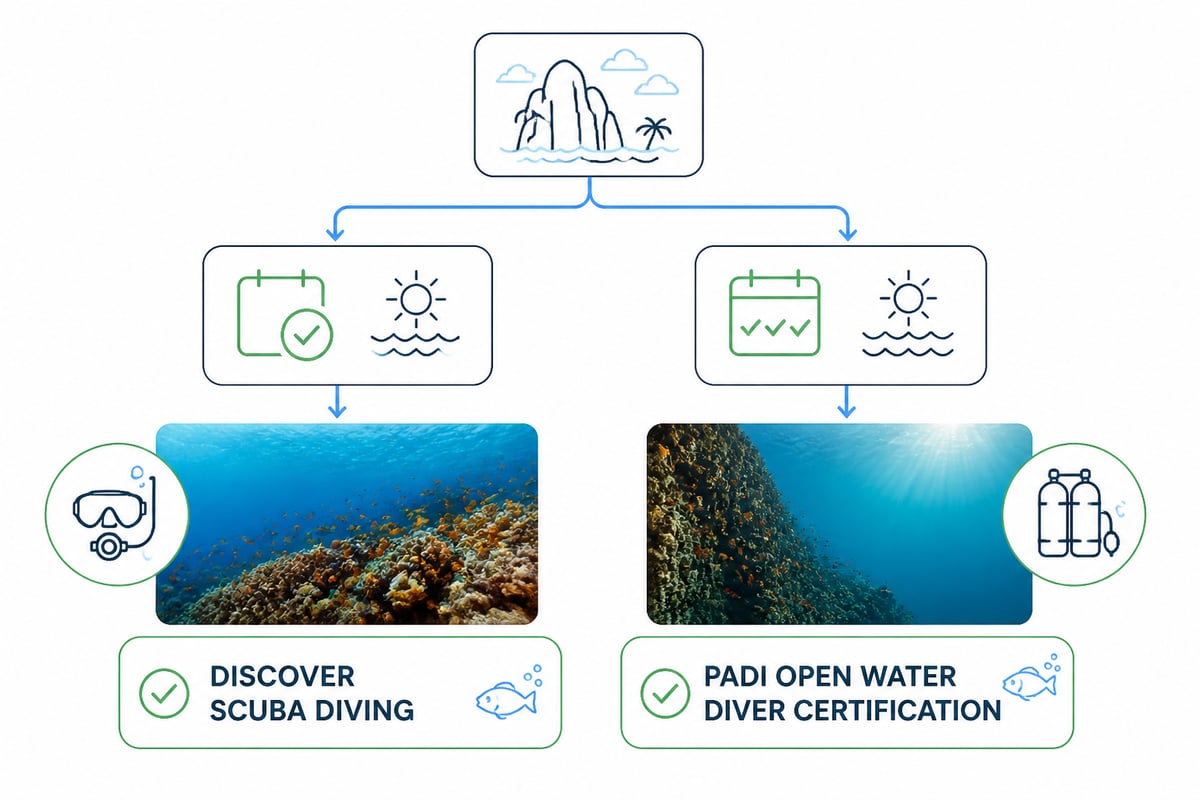
- Discover Scuba Diving: a one-day taster with no certification. You learn basic safety rules, practice a few skills in shallow water, then dive with your instructor.
- Open Water Diver: the full beginner certification, which lets you dive independently with a buddy to a maximum of 18 meters.
- Advanced Open Water and specialties: next-step courses for certified divers who want deeper dives, navigation skills or a focus like wreck or night diving.
Discover Scuba or Open Water: Which One Fits Your Trip?
Choose Discover Scuba if you have one day and want to try diving, and choose Open Water if you have three or more days and want a certification you can use for life.
Discover Scuba is a good fit if you're unsure whether you'll enjoy breathing underwater. You stay shallow, your instructor stays within arm's reach, and there is no exam. The catch is that it doesn't certify you, so you can only dive again with a professional. If you want a closer look at how that experience works, this overview of the Discover Scuba Diving experience covers it in detail.
Open Water takes more time but opens up more diving. Once certified, you can rent gear and dive on future holidays at dive operators around the world. If you're staying in El Nido for a week, Doing the full course early in your trip lets you use your new certification on fun dives before you fly home.
| Discover Scuba | Open Water Diver | |
|---|---|---|
| Time needed | About one day | Typically 3 to 4 days |
| Certification | No | Yes |
| Maximum depth | Shallow, set by instructor | 18 meters |
| Exam | None | Knowledge review and final quiz |
| Dive again afterward | Only with a pro | Independently with a buddy |
How Do PADI Diving Classes Work, Step by Step?
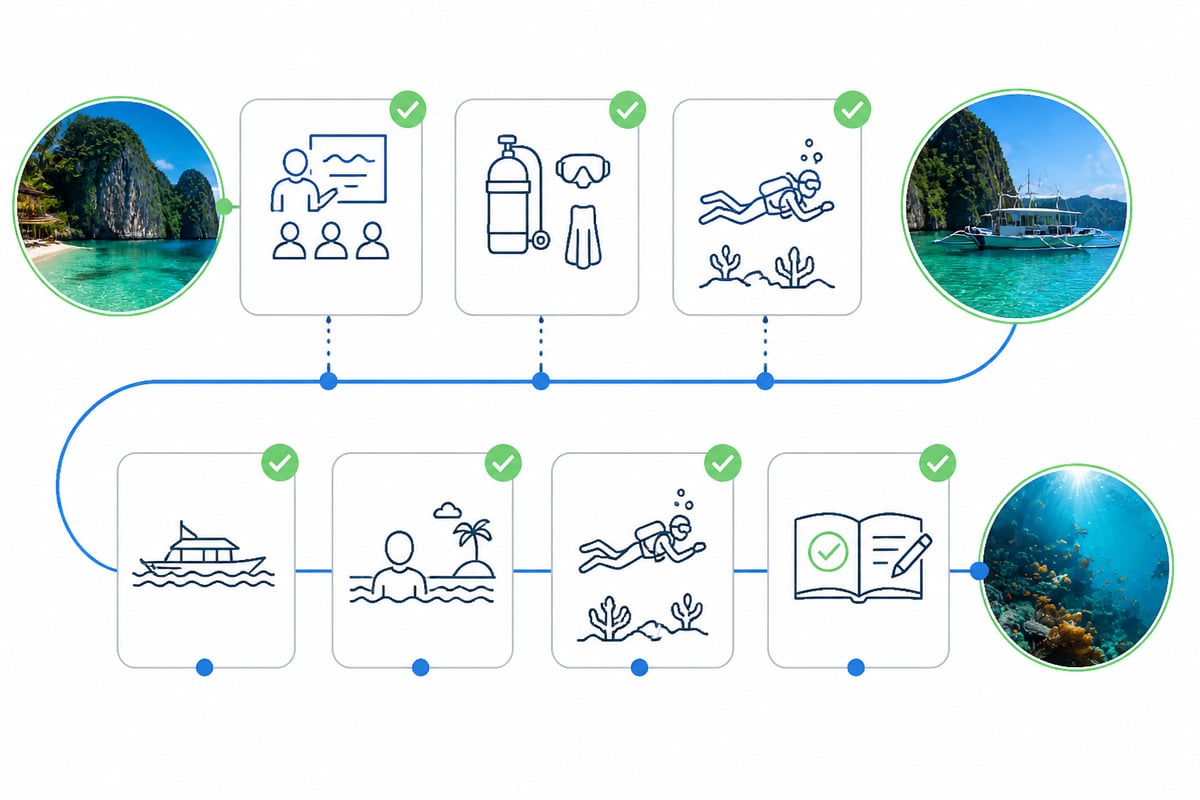
PADI diving classes work in three stages: knowledge development, confined-water skills practice and open-water training dives, according to PADI’s own course outline.
Here is how that usually plays out for a beginner:
- Knowledge development. You learn how pressure affects your body, how to plan dives and how to use your equipment. Many students do this through PADI eLearning before arriving, which frees up your holiday for time in the water. You can also study with an instructor.
- Confined-water skills. In calm, shallow water you practice clearing your mask, recovering your regulator, controlling your buoyancy and signaling to your buddy. This is where most nervous beginners relax, because you can stand up whenever you need to.
- Open-water dives. Students complete four open-water training dives, which PADI says usually take place over two days. The first two dives are limited to 12 meters, while the last two may reach 18 meters.
If you like to understand each dive before you do it, a dive-by-dive explanation of the Open Water course shows which skills you practice and how the depth progression builds.
What Do You Need to Qualify?
You need to be at least 10 years old, be comfortable in the water, and answer a short medical questionnaire honestly.
The water-skills assessment is simpler than most people fear. According to PADI's certification FAQ, you swim 200 meters without stopping, or 300 meters wearing mask, fins and snorkel, then float or tread water for 10 minutes. The swim is completed without stopping and any stroke is fine.
The medical questionnaire flags conditions that need a doctor's sign-off before you get in the water. Asthma, heart conditions, ear problems and some medications are the usual ones. If you answer yes to anything, see your doctor before you travel, because arriving at the dive center with a question mark over your fitness can cost you a day.
Can a 60-Year-Old Do Scuba Diving?
Yes, a 60-year-old can scuba dive, because PADI has no upper age limit and many people learn in their sixties and seventies.
What matters is fitness and health, not the number on your passport. Divers over 60 should get a medical check beforehand, pay attention to hydration, and take the pace of the course seriously. A good instructor will adjust the schedule, add rest between dives and keep the focus on comfort rather than speed. The same logic applies to conditions like thyroid disorders: some are fine to dive with once stable and cleared by a physician, but that call belongs to your doctor, not to a dive center.
What Does a Beginner Course Day Look Like in El Nido?
A typical beginner course day in El Nido starts with a briefing, moves to shallow-water practice or a boat dive, and finishes with a debrief and logbook entry by mid-afternoon.
Learning in El Nido has a practical advantage: the water is warm, so you are unlikely to be shivering through your skills. Dive sites are chosen by conditions on the day, which is how it should work: sea state and weather decide the plan, not a fixed itinerary.
If you stay at The Beach House, the dive centre is in the same building, so the boats and equipment are close at hand and you skip the early-morning transport across town. After your last dive, you can walk upstairs to Cloud 9, the rooftop restaurant and bar, and log the day over a drink.
Taking the Course With Submariner Diving Center
The Open Water Diver Course at Submariner Diving Center is the full beginner pathway: experienced PADI instructors, small class sizes and local knowledge built over more than 15 years diving El Nido.
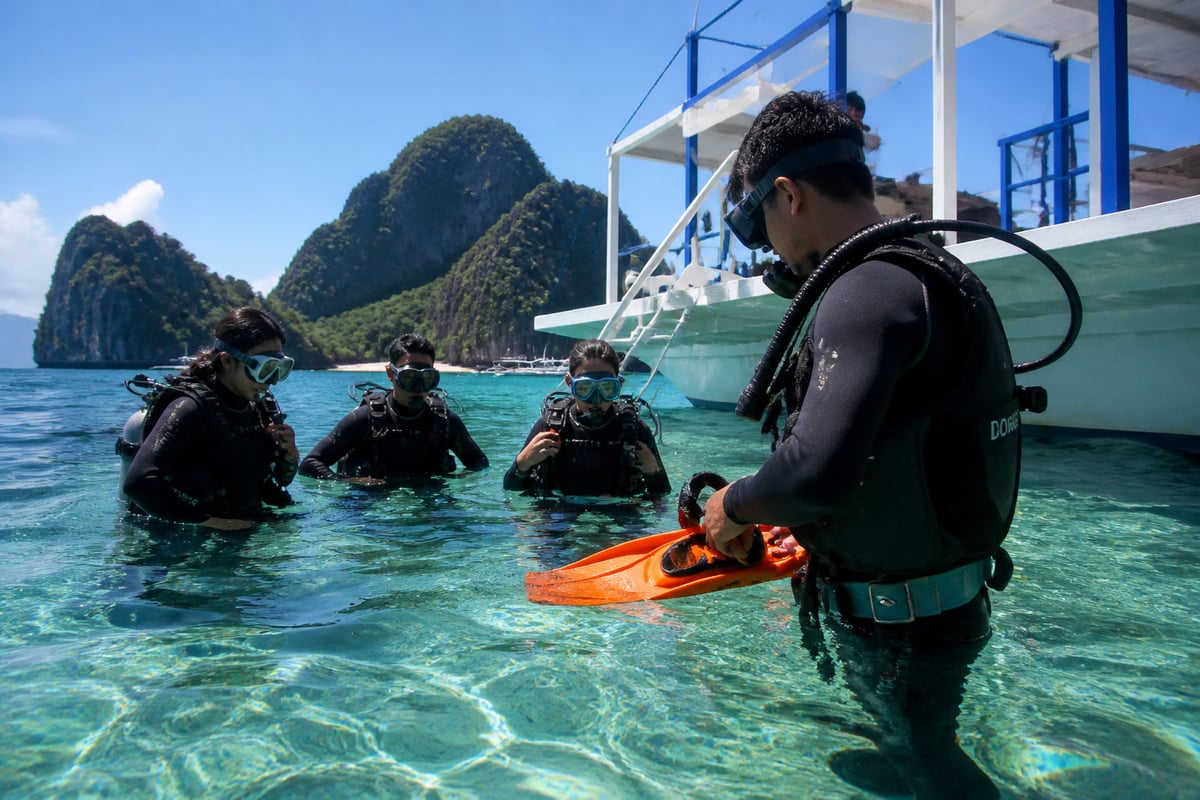
Private VIP charters are also available for anyone who prefers one-on-one attention while learning. Dive sites are selected by experience level, interests and daily conditions. For anyone who wants to see how the course fits around a wider trip, the guide to taking a PADI class in Palawan is a useful companion.
How to Prepare Before Your First Class
You'll get the most out of your first class by finishing the eLearning early, packing a few small items and arriving rested.
- Complete the theory before you fly. Doing it before you arrive means more of your El Nido days can be spent underwater rather than at a desk.
- Practice your swim. Even a few easy laps help you feel confident on assessment day.
- Pack reef-safe sunscreen and a rash guard. You'll spend hours on a boat in strong sun.
- Go easy the night before. Avoid heavy drinking, because dehydration and tiredness make equalizing your ears harder.
- Don't fly right after diving. Leave a gap before a flight after diving, and check the surface-interval guidance from your instructor when planning your trip.
If you want to know what beginner-friendly diving looks like beyond the classroom, these notes on diving as a beginner cover what to expect on early dives.
How Long Does It Take to Become a Scuba Instructor?
Becoming a scuba instructor typically takes several months to a year or more, because you progress through Open Water, Advanced, Rescue Diver and Divemaster before the instructor development course.
The sequence builds experience as well as paperwork. You log dives, learn to manage students and complete both knowledge and in-water assessments. For most holidaymakers this is a long-term goal rather than a trip plan, but it's useful to know that your first Open Water card is the first step on a path some people follow all the way to a career.
Can Certified Divers Keep Learning in Palawan?
Yes, certified divers can continue with Advanced Open Water, specialties or refresher dives in Palawan, and many plan whole trips around it.
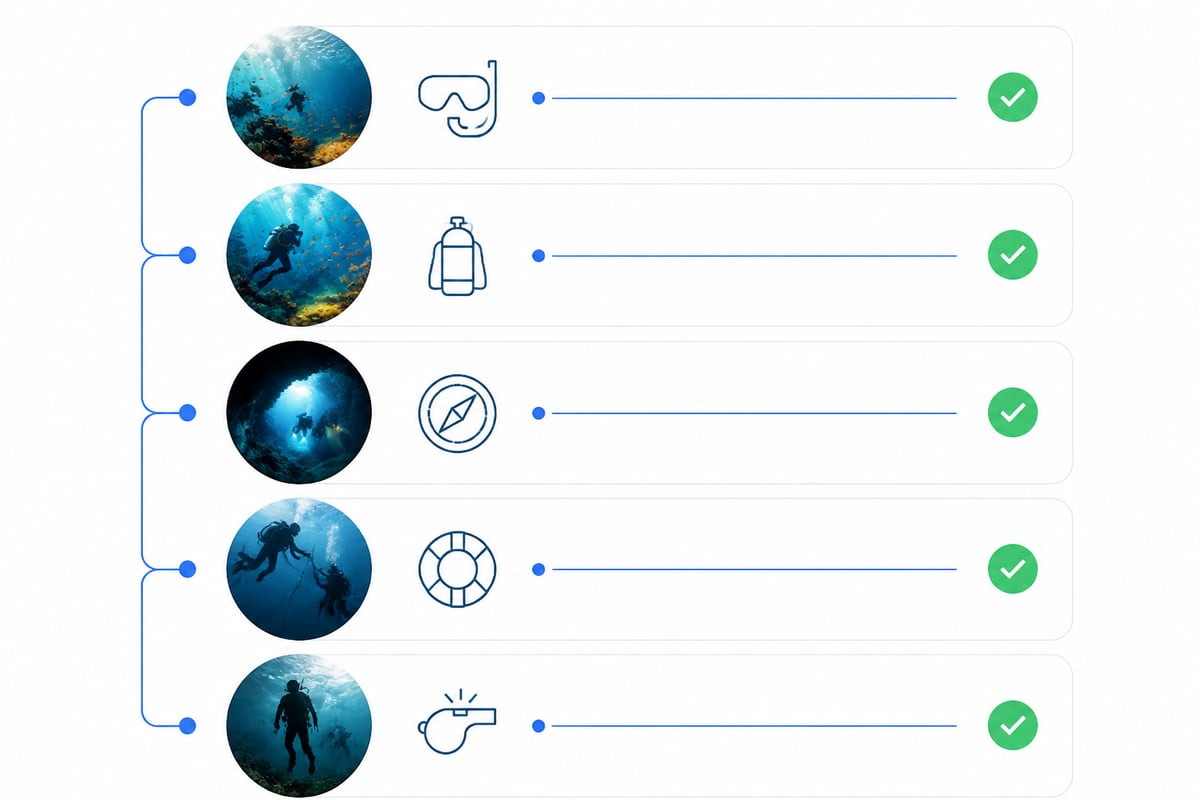
If you're coming specifically to dive, a course adds structure to your itinerary. Advanced Open Water introduces deeper and navigation-based dives, and a specialty course such as night diving or buoyancy lets you build a particular skill while exploring. Divers with bigger ambitions, including a Tubbataha liveaboard, often use the lead-up time in El Nido to sharpen buoyancy and logged experience first. For help choosing where to spend your dives, this guide to the best dive sites is a good starting point, and nothing about marine life is ever guaranteed, so treat any sighting as a bonus.
FAQ
Do I need to know how to swim to take a PADI course?
You need basic water comfort, not competitive swimming ability. You'll complete a short swim and a float or tread test, and any stroke is acceptable, so being relaxed in the water matters more than speed.
What happens if the weather is bad on a course day?
Course schedules in El Nido can shift with sea conditions, because safety comes before the calendar. If you have a flight to catch, build a spare day into your plans and talk to your instructor early so the schedule can be adjusted sensibly.
Is a PADI certification valid outside the Philippines?
Yes, a PADI Open Water card is recognized by dive operators worldwide. It stays valid for life, though if you haven't dived in a while, a short refresher before your next trip is a smart idea.
Your next step is simple: decide whether you're doing a one-day taster or a full certification, then check your dates against the days you have in El Nido. From there, the Open Water Diver Course is the natural place to start, run by Submariner Diving Center's PADI instructors from a beachfront base where the boats are minutes away. If you'd like help matching a course to your trip, or want to stay at The Beach House so you can dive from your doorstep, reach out through Submariner Diving Center and Book Your Diving with a team that has spent more than 15 years in these waters.