PADI scuba diving is a series of training levels run by the Professional Association of Diving Instructors, and in El Nido you can start with a one-day try dive or go straight into the full Open Water Diver certification. The Open Water course takes you from complete beginner to a certified diver who can dive with a buddy anywhere in the world, and the warm, clear water around Palawan is a gentle place to learn.
How PADI Scuba Diving Works From Try Dive to Certification
PADI scuba diving follows a simple ladder: you try diving with an instructor, learn the skills in a certification course, then add experience and specialties as you go.
Most holidaymakers meet it at one of three points:
- Discover Scuba Diving: a supervised introduction with no certification, usually in a single day.
- Open Water Diver: the first full certification, which lets you dive independently with a buddy.
- Advanced Open Water and beyond: deeper dives, specialties and eventually professional levels.
Each step builds on the one before it. You can stop at any of them, and nothing expires if you take a break, though a refresher helps if you have been out of the water for a while.
Which PADI Course Should You Start With in El Nido?
Start with a try dive if you only want to experience scuba on this trip, and choose the Open Water course if you want a card that works worldwide.
A try dive suits people who are not sure yet, who have only a day to spare, or who want to test their comfort underwater before committing. If you already know you love the idea, the certification course saves you from repeating the introduction later. Our guide to PADI Discover Scuba Diving explains what a first session involves in more detail.
If you are already certified, the next step is usually Advanced Open Water, which opens deeper sites and builds navigation and buoyancy skills.
What a Discover Scuba Dive Involves
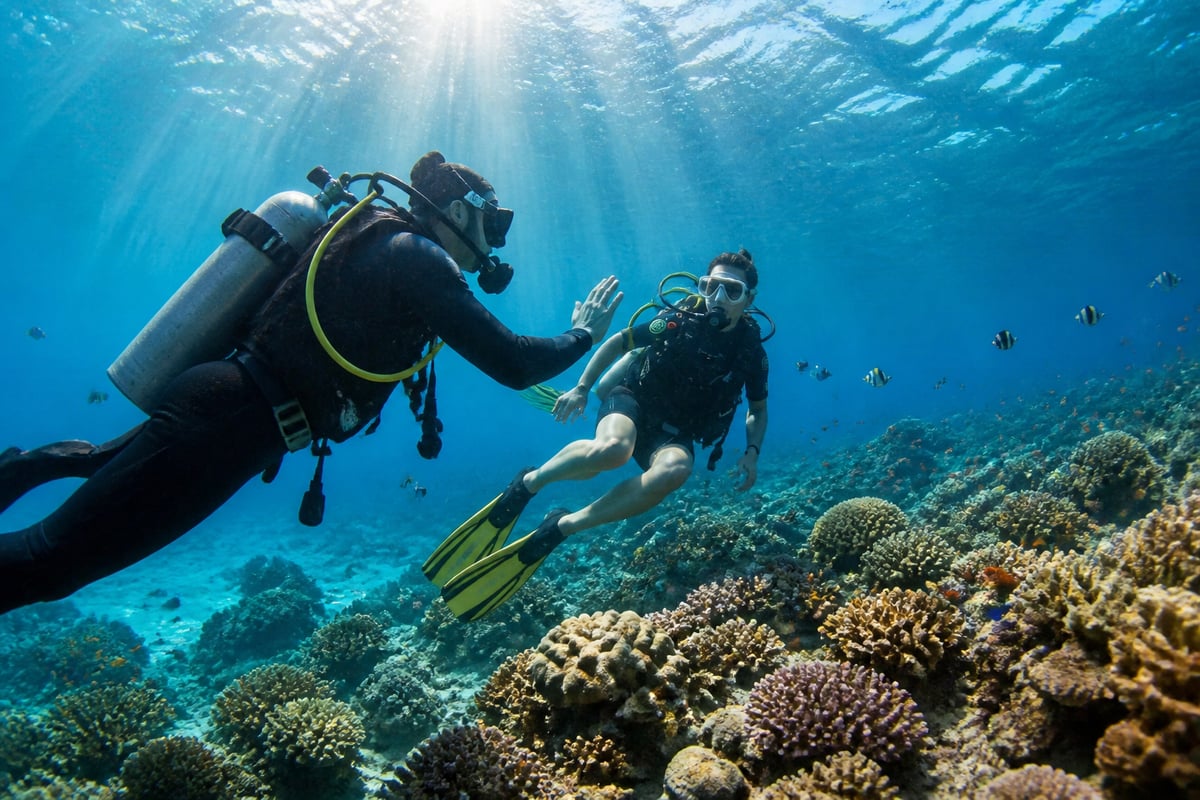
A Discover Scuba Diving session covers a short briefing, basic skills practiced in shallow water, and then a guided dive with your instructor right beside you.
You learn how to breathe through the regulator, clear water from your mask, and equalize the pressure in your ears. Then you swim over a shallow reef at an easy pace, staying close to your instructor throughout. No previous experience is needed, and you do not have to be a strong swimmer, though you should feel comfortable in the water.
It is a good fit if you are already in El Nido for island hopping and want one day that goes below the surface. Submariner Diving Center runs the Discover Scuba Diving experience with professional PADI instructors, with the dive centre in the same building as The Beach House, so there is no early-morning transport to organize.
What the PADI Open Water Diver Course Includes
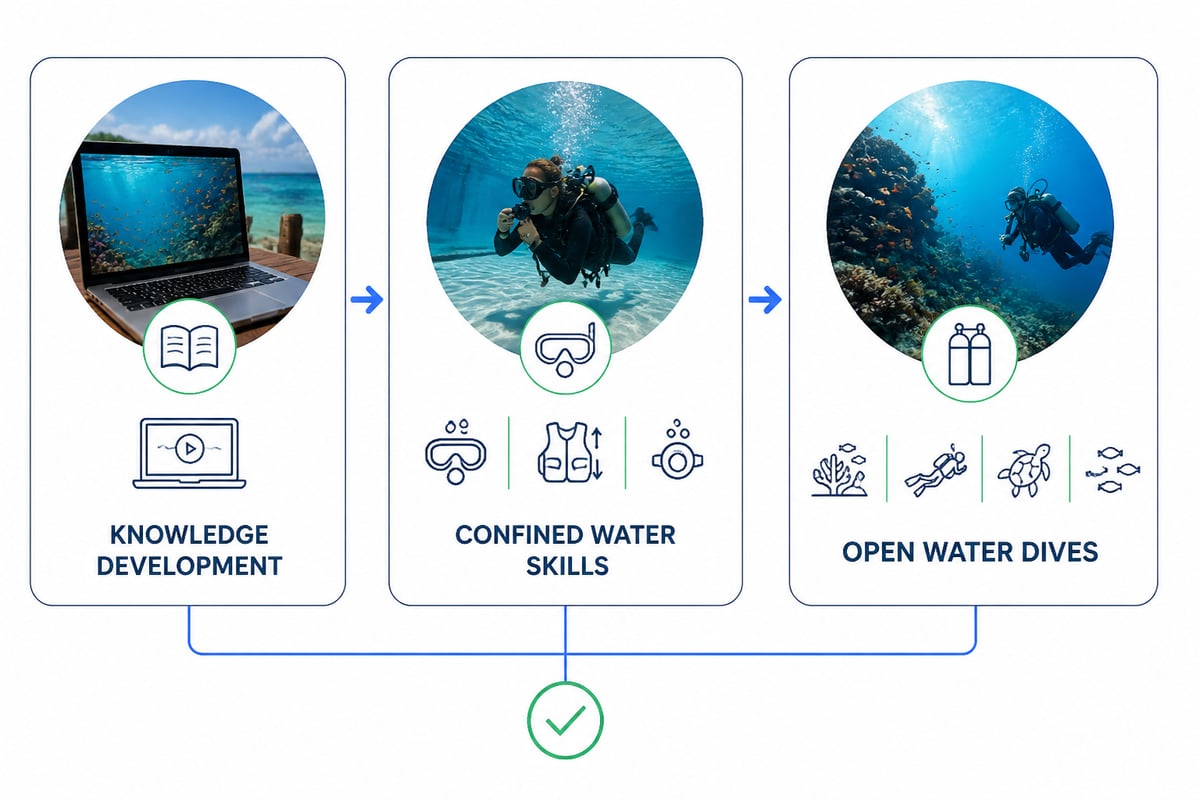
The Open Water Diver course has three parts: knowledge development, confined water skills, and open water dives.
- Knowledge development: theory covering pressure, equipment, dive planning and safety, often completed online before you arrive so your holiday time is spent in the water.
- Confined water sessions: skills practiced in calm, shallow water, such as mask clearing, buoyancy control and regulator recovery.
- Open water dives: PADI requires at least four open-water dives during training, where you repeat those skills in the sea and begin exploring.
Many learners finish the theory at home and then complete the water sessions over a few days in El Nido. For a closer look at how that fits into a trip, see our page on PADI Open Water diving in Palawan.
Age, Swimming and Health Requirements
You can enroll in a PADI Open Water Diver course from age 10, and you need to be able to swim and be in good physical health, according to the PADI Blog.
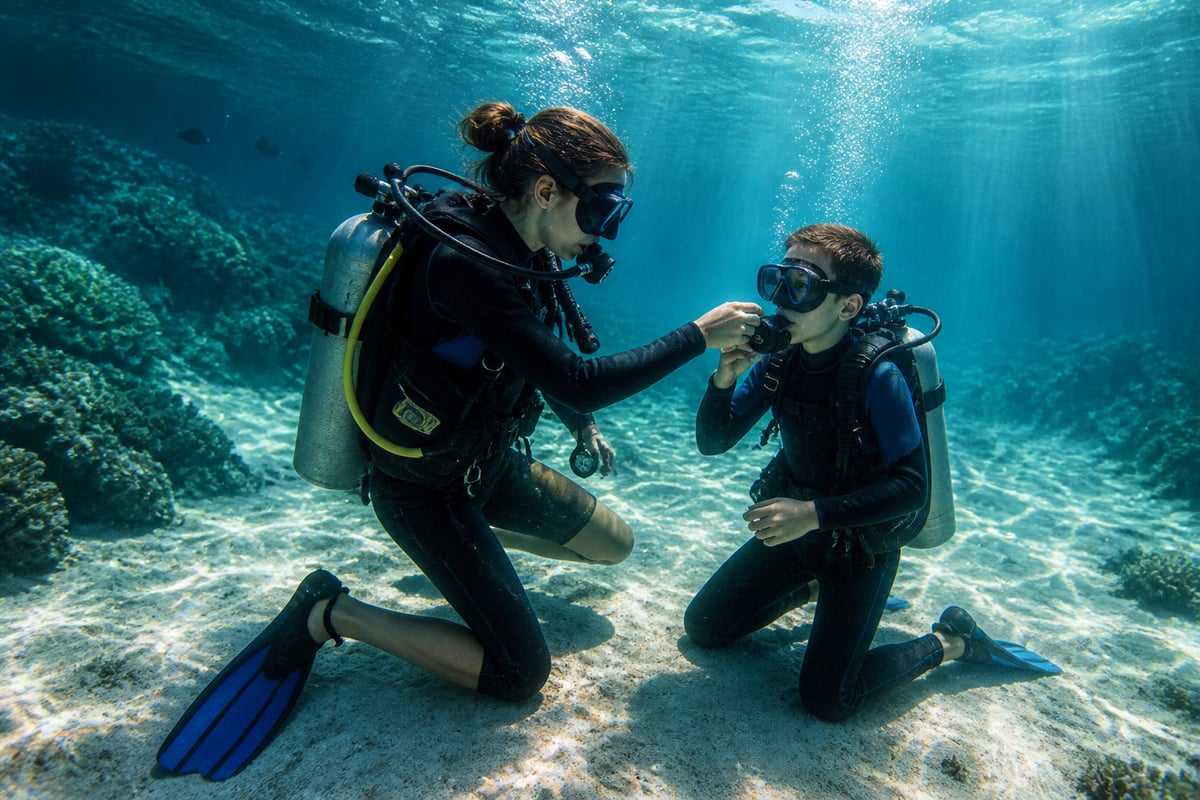
Younger divers certify with depth limits suited to their age, so ask the dive center what applies before you book. Swimming ability means being comfortable in water, not racing speed.
Health matters because pressure changes affect the body. You will complete a medical questionnaire before any dive. If you answer yes to certain conditions, a doctor needs to sign off first, so check this before you travel rather than on the morning of your course. Colds, blocked sinuses and recent illness can also stop you equalizing, which is worth knowing if you are planning a tight schedule.
How Deep Can You Go With a PADI Certification?
A PADI Open Water Diver certification allows dives to a maximum of 18 m (60 ft), or to the shallower depth you reached during training.
Here is how the main levels compare:
| Level | Typical depth limit |
|---|---|
| Discover Scuba Diving | Shallow, set by your instructor |
| Open Water Diver | 18 m (60 ft) |
| Advanced Open Water Diver | 30 m (100 ft) |
Much of the colorful reef life sits in shallower water, so you do not need to go deep to enjoy El Nido's reefs. Sunlight reaches shallow water best, which is why many divers find the upper part of a reef the most vivid. A dive that stays between 5 and 12 m can be just as rewarding as one that touches the limit.
The "shallower depth reached during training" part of the rule matters for newer divers. If your course dives stayed at a modest depth, your instructor will advise on how to build toward 18 m comfortably. Advanced certification becomes useful when you want to reach deeper walls and wrecks. It also adds practice in navigation and buoyancy, which makes every dive feel more relaxed, whatever the depth.
How Long Does PADI Certification Last?
A PADI certification does not expire, so your card stays valid for life.
What fades is skill and confidence. If you have not dived for a year or more, a refresher session with an instructor brings the basics back and is a sensible way to start a dive trip. A refresher usually walks you through the skills you learned in your course: setting up your gear, clearing your mask, recovering your regulator and controlling your buoyancy. Those are the things that feel rusty first, and practicing them in calm, shallow water takes the pressure off your first real dive.
Your logbook helps here. Dive centers ask when you last dived and how many dives you have logged, and an honest answer lets them pick a site and pace that suit you. Certified divers returning to Palawan often begin with an easy dive to check weights and equipment before heading to more demanding sites. Pack your card, your logbook and any gear you own, and give yourself a gentle first day rather than a deep one.
When to Learn to Dive in El Nido
The best time to learn is the drier months, since boat tours may be cancelled between June and October when waves get too high.
The tourism page notes that May can be hot, so expect sunny surface conditions in the warm season. Because sea conditions drive everything, a flexible plan works better than a rigid one. Build a spare day into your schedule if you are completing a certification, so a rough-sea day does not cut your course short.
At Submariner Diving Center, dive sites are chosen each day to suit weather and sea conditions, and sites are matched to experience level and interests. That approach matters for beginners, who benefit most from calm, sheltered water. You can read more about dive sites around El Nido before you decide where to focus.
Can You Dive Without a PADI Card?
You can dive without a certification only on supervised introductory dives, where an instructor stays with you the whole time.
For independent diving with a buddy, boat dives to deeper sites, or equipment rental at most centers, you need a recognized certification. Other training agencies exist, and many operators accept their cards, so a diver certified elsewhere can usually continue in El Nido. Bring your card and logbook, and tell the center your experience level so they can match your dives.
Staying Close to the Water While You Train
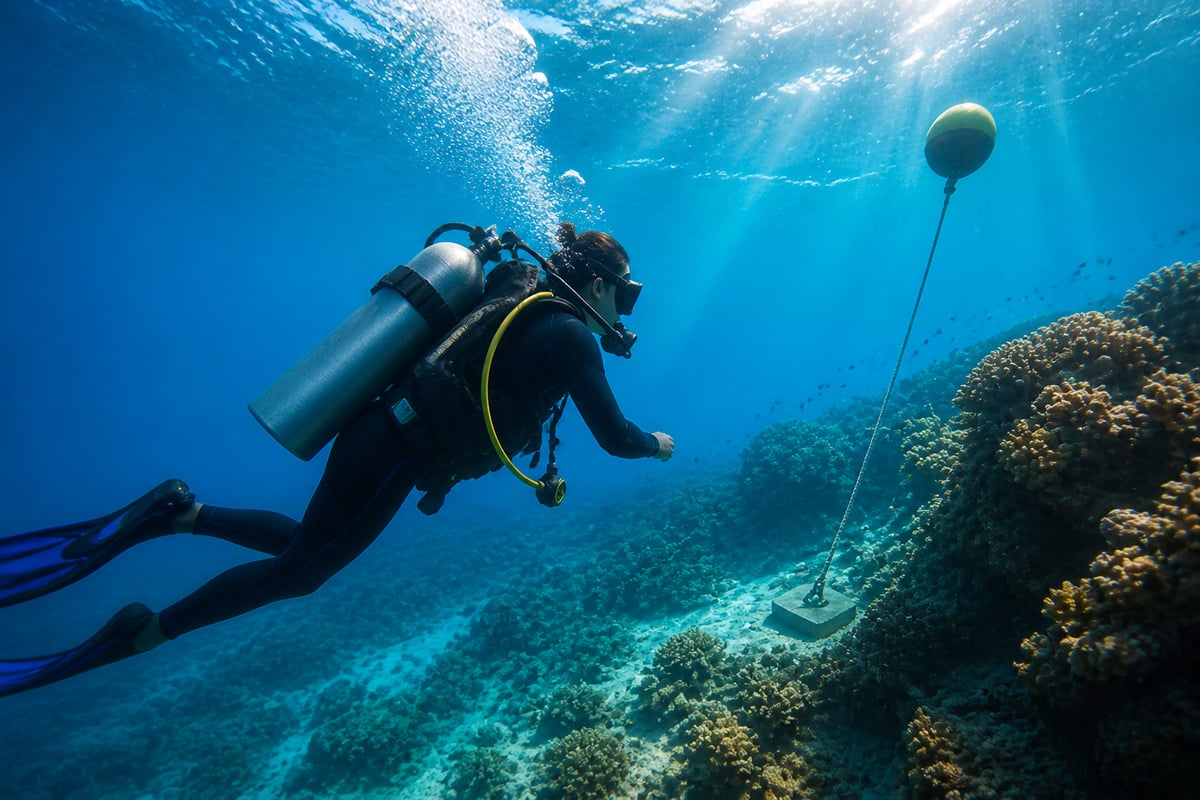
Staying beachfront cuts the logistics out of a course, which helps most when you are juggling theory, practical sessions and rest days.
The Beach House is our beachfront accommodation, with the Submariner Diving Center in the same building, so boats and equipment are close at hand. You can finish a session, rinse your gear and be back at your room in minutes. After a long day of learning, Cloud 9 rooftop restaurant and bar is a relaxed place to unwind while you talk through your dives.
If you plan to add more diving after your course, take a look at the dive packages in El Nido to see how multi-day plans can be arranged. Before you dive, our guide to scuba diving equipment for El Nido dives explains what gear you need and which items are worth bringing.
Planning Beyond Your First Course
Once certified, El Nido is a good base for building experience, and Palawan has much more to offer, including the Tubbataha Reef.
Experienced divers often look toward Tubbataha Reef, which is a dedicated trip in itself. Our overview of Tubbataha Reef scuba diving covers what to plan for.
With years of diving in El Nido behind the team, local knowledge is built into how dives are planned. Guests leave five-star reviews, and the instructors are professional PADI staff using modern safety equipment.
FAQ
Which is bigger, PADI or SSI?
PADI is one of the largest diver training organizations in the world, with a wide network of dive centers. SSI is also a major agency with global reach. Both teach to recognized standards, so the practical difference for a beginner is small.
Is SDI or PADI better?
Neither is simply better, because both train divers to internationally accepted standards. The right choice usually depends on the dive center you are learning with and the instructor you connect with. In El Nido, PADI is the agency most visitors encounter.
Can I switch agencies for my next course?
Yes. A diver certified with one agency can usually continue training with another, as long as the instructor and center accept your existing certification. Bring your card and any logbook records so your experience level is clear.
Your next step is to check the weather window for your travel dates and decide whether a try dive or a full certification fits your schedule. When you are ready, Submariner Diving Center can help you choose, whether that is a first session such as Discover Scuba Diving or a full PADI course based beachfront at The Beach House. Reach out through Submariner Diving Center to book your diving and plan the days around the sea conditions.