Among Southeast Asia's diving destinations, El Nido in northern Palawan stands out for its mix of sheltered beginner sites, limestone-island walls, tunnels and easy access from the beach. If you want a place where first-timers and experienced divers can both find good water in one bay, Bacuit Bay is a strong answer.
This guide explains what diving in El Nido is actually like, which kinds of sites you can expect, when to go, how certification fits in, and how El Nido sits next to Palawan's other big draw, Tubbataha Reef.
Where to Go for the Best Scuba Diving in the Philippines
The best scuba diving in the Philippines is spread across several regions, and Palawan is one of the most varied of them. Within Palawan, El Nido covers shallow reef, wall and tunnel diving in one compact area, while Tubbataha Reef in the Sulu Sea offers remote, liveaboard-only diving for experienced divers.
For most holidaymakers, the practical question is not which spot on the world map wins, but which one fits the days you have. El Nido works well for a week-long trip because you can dive one day, rest the next, and still see the islands above water. If you want a wider look at why this province keeps coming up, our piece on why Palawan is the Philippines’ number one dive destination covers the broader picture.
What Makes El Nido One of Asia's Standout Diving Destinations
El Nido's appeal comes from Bacuit Bay, a protected archipelago of limestone islands with a wide spread of dive conditions. El Nido Tourism reports around 30 dive sites in the bay, with depths ranging from 6 to 30 meters. That range matters. It means a nervous first-timer and a more experienced diver can both get a suitable site on the same day.
The protection side is real too. According to the UNESCO World Heritage Centre, the Philippine government proclaimed Bacuit Bay a marine reserve in 1991, and the El Nido-Taytay protected area includes more than 36,000 hectares of land and 54,000 hectares of marine waters. The same entry lists dugongs, dolphins, marine turtles and reef fishes such as parrotfish, wrasses and groupers among the area's wildlife.
A few things you can reasonably expect in the bay:
- Limestone island scenery both above and below the surface
- Mixed reef, wall and tunnel terrain within short boat rides of each other
- Depths that suit beginners and more experienced divers
- Sheltered sites when weather shifts, since the bay offers options on different sides of the islands
Marine life varies by site, season and luck. No operator can promise a specific sighting, and you should be wary of anyone who does.
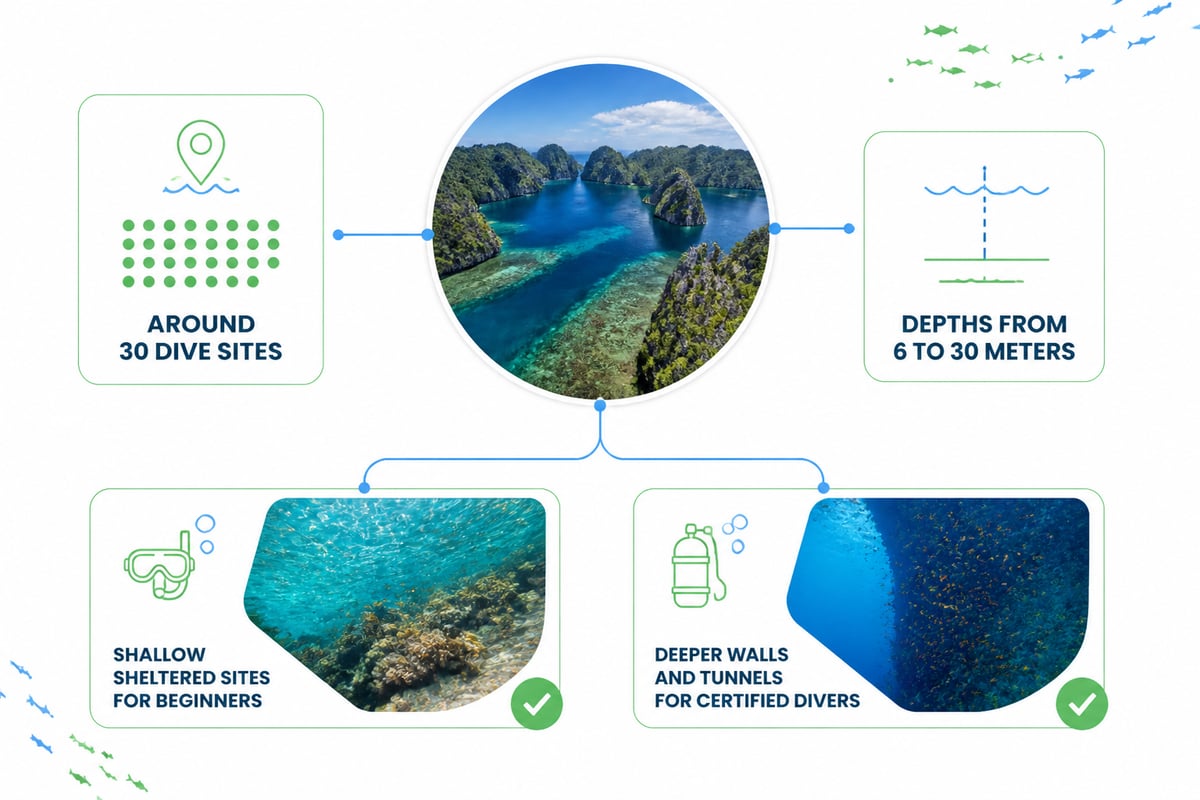
Dive Sites in El Nido by Experience Level
El Nido's dive sites fall into rough tiers, and matching the site to your experience matters more than chasing a famous name. The table below sorts the types of dives you will find, using the figures reported by El Nido Tourism.
| Site type | Example | What to expect | Suited to |
|---|---|---|---|
| Sheltered shallow reef | Nat Nat | Corals, anemones, turtles, seahorses and fish, protected from currents | Beginners, Discover Scuba, refresher dives |
| Tunnel dive | Dilumacad Island tunnel | Reported to lie about 12 meters deep and run 40 meters | Comfortable certified divers |
| Wall and drop-off | Various sites in the bay | Deeper profiles toward the 30 meter end of the range | Advanced or experienced divers |
Nat Nat for Beginners and Rusty Divers
Nat Nat is described by El Nido Tourism as beginner-friendly and sheltered from currents, with corals, anemones, turtles, seahorses and fish. That combination of calm conditions and varied life makes it a sensible choice for first dives and refresher dives after a long break.
The Dilumacad Tunnel for Certified Divers
The Dilumacad Island tunnel is reported to sit about 12 meters deep and extend 40 meters. Tunnels reward good buoyancy and calm breathing, so they are better once you have a few dives behind you rather than on day one of your certification.
Site selection also shifts with the day. Currents, visibility and wind change from morning to morning, which is why a flexible approach beats a fixed itinerary. For a longer list of the region's options, see our overview of the top dive sites in Palawan.
When to Dive El Nido and What Affects Conditions
Conditions in El Nido change with wind, swell and visibility, so the sites you dive will vary by season and even by day. Rather than quote exact month-by-month visibility figures, it is safer to say that calmer weather generally widens your choice of sites, while rougher weather narrows it to sheltered spots inside the bay.
That is the reasoning behind choosing dive sites daily instead of locking a schedule weeks ahead. A good operator reads the sea each morning and picks the site that suits both the conditions and the people on board. If you are also weighing up where to base yourself and how to plan the week, our beginner’s guide to diving in El Nido walks through the practical side.
Some planning habits that help in any season:
- Leave a buffer day in your itinerary in case weather forces a change.
- Tell your dive team your experience level honestly, including how long since your last dive.
- Avoid flying too soon after your last dive, and check current guidance from your certifying agency.
- Pack a rash guard or thin wetsuit, since comfort affects how much you enjoy the dive.
Learning to Dive in El Nido: PADI Courses and Trial Dives
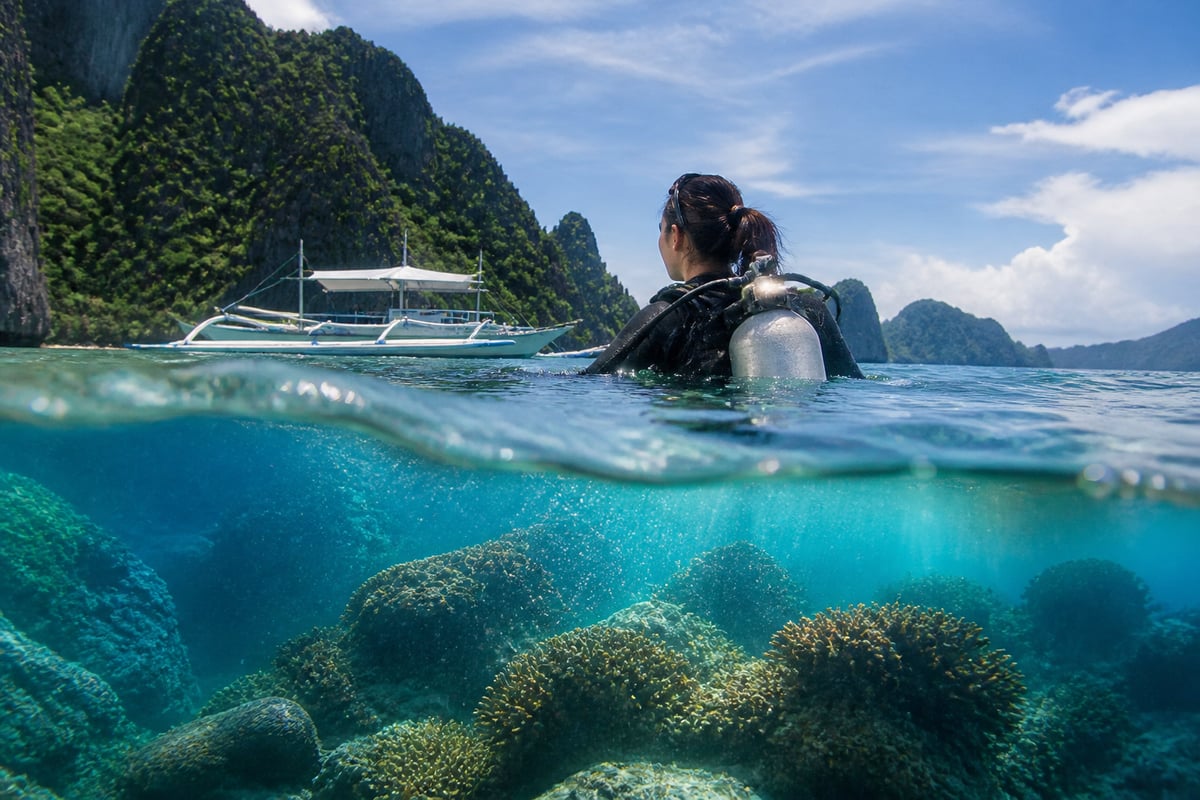
If you are staying in El Nido and have never dived, you can start with a trial dive or work toward certification during the same trip. Professional PADI instructors teach the courses, and the sheltered sites in the bay make early training dives less stressful than open-water conditions elsewhere.
A common question is whether PADI or SSI is better. Both are widely recognized, and the practical difference for most holidaymakers is small. What matters more is the instructor, the group size and the quality of the equipment, so choose the team you trust rather than the logo on the card.
If you are weighing the first step, these resources lay out the options:
- A beginner-focused overview of learning to dive
- A look at the first scuba experience and what it involves
- A comparison of snorkeling and scuba diving if you are undecided
Your certification card does not expire, but your skills do get rusty. If it has been a few years, a refresher before heading deeper is sensible.
Diving El Nido From the Beach: The Logistics Advantage
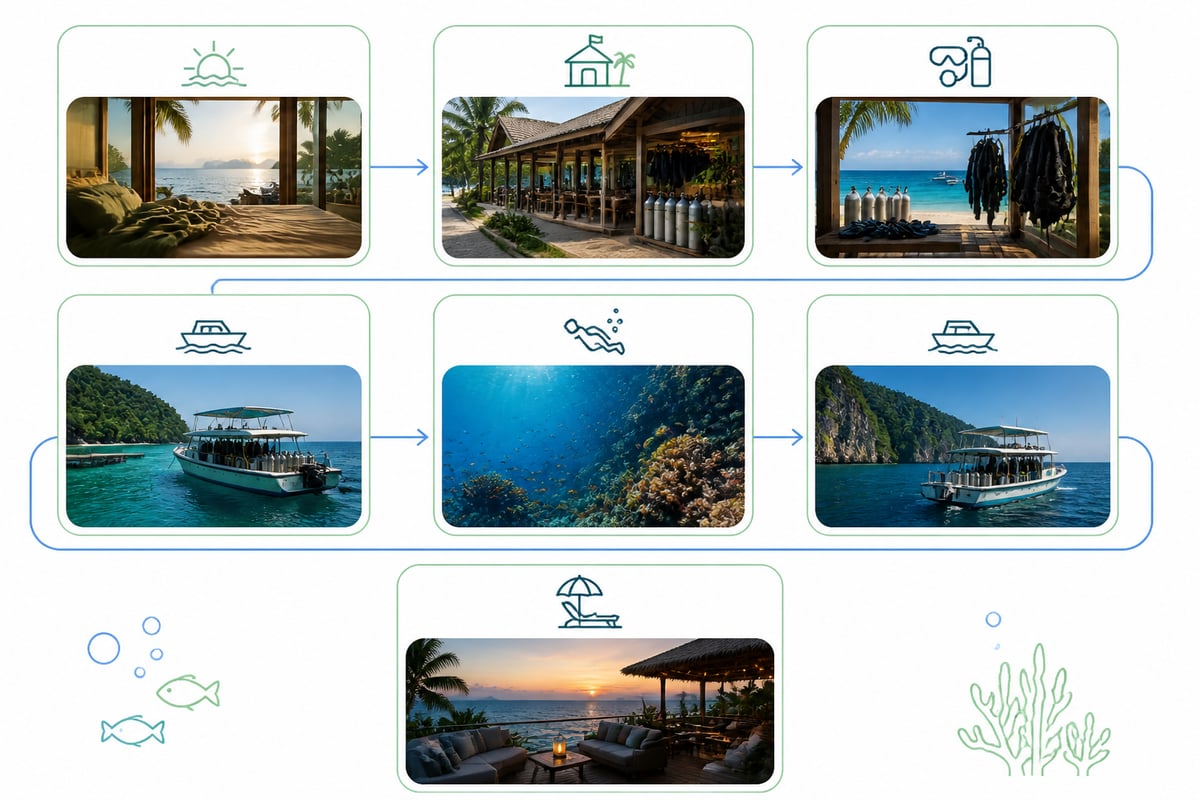
Logistics shape a dive holiday more than people expect, and El Nido is one place where where you sleep affects how much you dive. Many dive trips start with early-morning transfers across town. At Submariner Diving Center, the dive centre sits in the same building as The Beach House, the beachfront accommodation, so boats and equipment are close at hand and there is no early-morning transport across El Nido.
For holidaymakers, that means a simpler day: wake up, walk downstairs, gear up, board. After the dive, the Cloud 9 rooftop restaurant and bar is part of the same stay experience, which makes it easy to log your dive and unwind without another trip across town.
The centre has over 15 years of diving experience in El Nido and has over 40,000 five-star reviews. It also runs flexible private VIP charters, with dive sites chosen daily to suit weather and sea conditions, and sites selected by experience level and interests.
Fun Diving for Certified Divers in El Nido
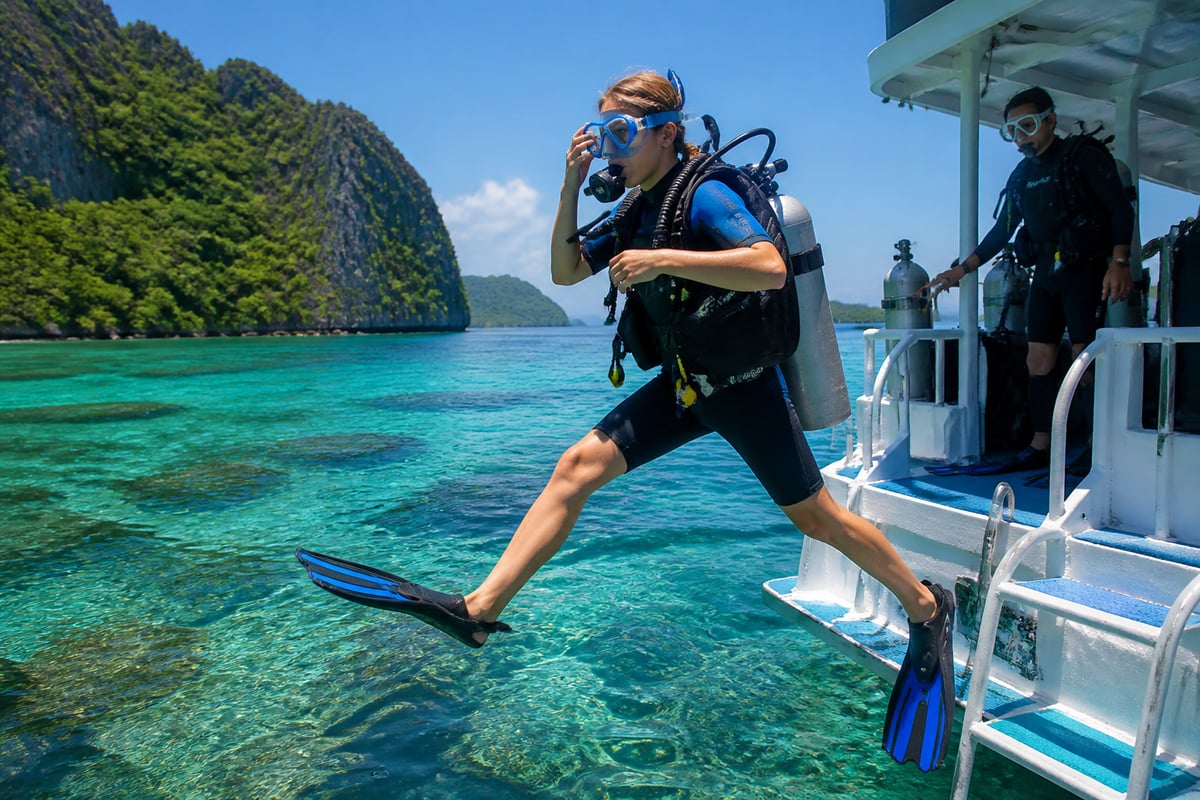
Certified divers staying in El Nido can book daily boat dives to the bay's reefs, walls and marine life without needing a full liveaboard. For anyone who already holds an open-water card, Fun Diving is the straightforward way to spend a few days exploring the bay at your own pace, with sites chosen to match your experience and the day's conditions.
Fun diving suits a few different kinds of trip:
- A holiday where you want one or two dive days between island-hopping and beach time
- A dedicated dive trip where you plan several consecutive diving days
- A return to the water after a break, starting with an easier site before moving deeper
If you want a broader view of what else the area offers on non-dive days, the El Nido activities guide covers island hopping and other options.
El Nido Versus Tubbataha: Choosing Between Two Palawan Experiences
El Nido and Tubbataha Reef are two very different kinds of dive trip, and experienced divers often do both. El Nido is a short boat ride from your bed, with daily site choices, shallower options and a relaxed schedule. Tubbataha is a remote reef in the Sulu Sea that is reached by liveaboard and generally attracts divers with more experience.
For divers considering Tubbataha, El Nido is a useful warm-up. A few days in Bacuit Bay lets you check your buoyancy, settle your gear and get comfortable in tropical water before committing to a longer trip.
If you want to see how Palawan compares with other regions, these pieces on popular diving destinations and great diving destinations give useful context.
FAQ
What is the 120 rule in scuba diving?
The 120 rule is a guideline some divers use to describe a limit on combined depth and time, usually discussed in the context of no-decompression planning. Its details vary by who teaches it, so rely on your dive computer, your training and your dive guide rather than a single rule of thumb.
What is the diving capital of the world?
No single place holds an official title, and different regions claim it. Coral Triangle locations, the Red Sea and parts of Southeast Asia are all frequently mentioned. For Palawan, the more useful question is which site type fits your experience and the time you have.
Do I need to be certified to dive in El Nido?
Not necessarily. Beginners can start with a trial dive under instruction, while certified divers can join regular boat dives. A dive team will ask about your experience and choose a suitable site for your level.
Your next step is simple: check how much time you have in El Nido and decide whether you want a trial dive, a course or a few days of fun dives. If you are already certified, you can look at Fun Diving to see how daily boat dives work, and if you are staying beachfront at The Beach House, the dive centre is in the same building. Our team has over 15 years of diving experience in El Nido and can match dive sites to your level, interests and the day's conditions, so you can Book Your Diving with Submariner Diving Center and start planning with local advice.